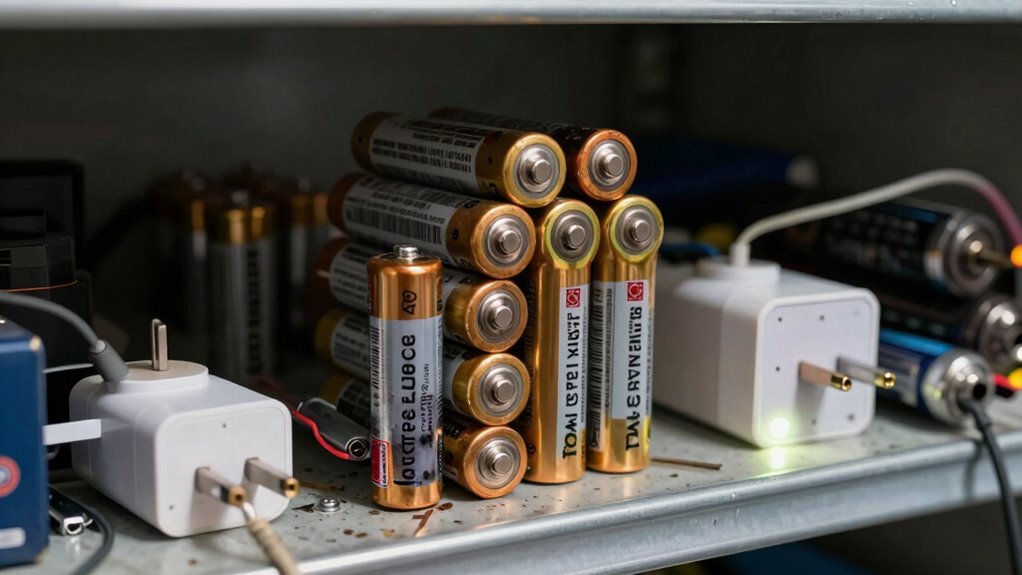

Many people overlook key lithium battery storage rules that can prevent fires. To stay safe, store batteries in a cool, dry place away from flammable materials and direct sunlight. Keep them upright, avoid extreme temperatures, and use the right chargers. Don’t ignore signs of damage, and dispose of damaged batteries properly. Following these simple steps greatly reduces fire risks. If you want to know more about proper storage practices, there’s important information you should consider.
Key Takeaways
- Store batteries upright in a cool, dry place away from flammable materials and direct sunlight.
- Avoid exposing batteries to high temperatures to prevent chemical instability and fire risk.
- Use only certified chargers designed for the specific lithium batteries to prevent overcharging.
- Regularly inspect batteries for swelling, leaks, or discoloration, and dispose of damaged units properly.
- Keep batteries away from physical damage, punctures, or crushing to prevent thermal runaway and fires.

Have you ever wondered how safe your lithium batteries really are? Many people underestimate the risks associated with improper storage and handling. Lithium batteries, while incredibly useful, pose fire hazards if not managed correctly. That’s why understanding fire prevention and handling protocols is essential to keep yourself and others safe. The first step in ensuring safety is to store batteries in a cool, dry place away from flammable materials. High temperatures can cause the internal chemicals to become unstable, increasing the risk of overheating and potentially leading to fire. Avoid storing batteries in direct sunlight or near heat sources, and make sure they’re kept upright to prevent leaks or damage. Proper fire prevention is about minimizing the risk factors that could cause a battery to short circuit or ignite. Additionally, being aware of vetted safety guidelines can significantly improve your handling practices.
Handling protocols are equally important. Always use the original charger or a certified alternative designed specifically for your lithium battery. Using incompatible chargers can lead to overcharging or overheating, which are common causes of battery fires. When handling batteries, avoid puncturing, crushing, or applying excessive force, as physical damage can compromise the internal structure and lead to thermal runaway. If a battery shows signs of swelling, leakage, or significant discoloration, it’s vital to handle it with care and dispose of it properly. Never attempt to repair or modify a damaged battery, as this can drastically increase the risk of fire or explosion.
In addition to proper storage and handling, keep a fire extinguisher rated for electrical fires nearby if you’re working with multiple batteries or charging stations. This simple precaution can make a difference in preventing a small incident from turning into a catastrophe. When charging, always do so in a well-ventilated area, and avoid leaving charging batteries unattended for extended periods. Remember, even a small oversight can have serious consequences. It’s worth investing in education about fire prevention and handling protocols because the potential dangers are real and serious.
Frequently Asked Questions
How Often Should I Inspect My Lithium Battery for Safety?
You should examine your lithium battery at least once a month for safety. Regular battery maintenance helps catch issues early, such as swelling, corrosion, or leaks. Follow proper storage guidelines by keeping the battery in a cool, dry place and avoiding extreme temperatures. During inspections, check for physical damage and ensure terminals are clean and secure. Consistent checks help prevent potential hazards and prolong your battery’s lifespan.
Can Lithium Batteries Be Stored in Extreme Temperatures Safely?
Storing lithium batteries in extreme temperatures isn’t safe. High heat can cause overheating and potential fires, while cold can reduce performance and damage internal components. To protect your batteries, use proper insulation to shield them from temperature swings. You need to keep them in a cool, dry place, avoiding direct sunlight or freezing conditions. Proper storage guarantees safety and extends your battery’s lifespan, even when outside ideal temperature ranges.
What Are the Best Methods to Prevent Lithium Battery Fires?
To prevent lithium battery fires, you should focus on proper storage methods. Use fire-resistant storage containers and make sure batteries are insulated with non-conductive materials to prevent accidental short circuits. Keep batteries away from flammable materials, avoid extreme temperatures, and never expose them to punctures or damage. Regularly inspect batteries for signs of wear, and always follow manufacturer guidelines for safe handling and storage.
Are There Specific Storage Containers Recommended for Lithium Batteries?
You should use fire-resistant, non-conductive containers for battery storage to guarantee safety. Look for storage containers specifically designed for lithium batteries, which often feature venting capabilities and insulation to prevent overheating. Avoid generic plastic boxes or metal containers that can conduct electricity or trap heat. Proper battery storage involves choosing container recommendations that minimize fire risks, keep batteries isolated, and allow for safe venting if needed.
How Do I Safely Dispose of an Old or Damaged Lithium Battery?
Disposing of an old or damaged lithium battery is like handling a ticking time bomb—you need to be cautious. First, follow proper disposal guidelines by taking it to a certified battery recycling center or hazardous waste facility. Never throw it in the trash. Contact your local waste management for specific instructions. This guarantees safe disposal, prevents environmental harm, and adheres to battery recycling laws. Stay safe and responsible!
Conclusion
Just like a delicate flame needs careful tending, your lithium batteries demand respect and proper storage. Ignoring these rules is like sailing into stormy seas without a map—dangerous and unpredictable. By following simple safety tips, you keep the spark alive without risking a wildfire. Think of your batteries as tiny engines of power; treat them with care, and they’ll serve you well. Stay vigilant, stay safe, and keep your energy flowing smoothly.