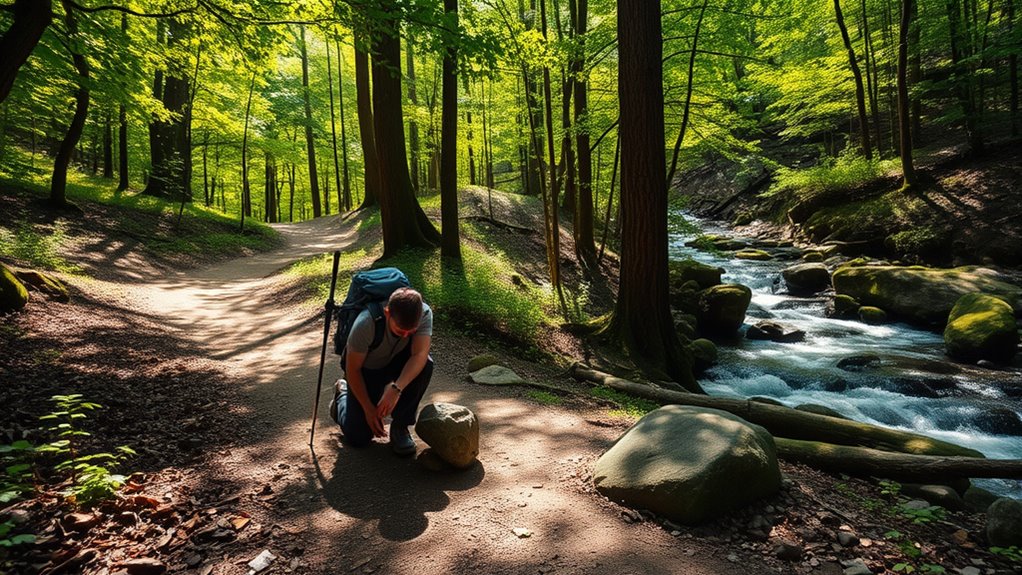

Leave No Trace consists of seven principles designed to help you enjoy the outdoors responsibly while minimizing your impact on nature. By following these guidelines, you can preserve pristine areas, protect wildlife, and maintain the beauty of natural spaces. Simple actions, like using established campsites and managing waste properly, go a long way in supporting ecosystem health. Embracing these principles fosters a culture of stewardship among outdoor enthusiasts, and you’ll discover more about each principle next.
Key Takeaways
- Plan Ahead and Prepare: Research your destination to ensure safety and minimize impact on the environment by following local regulations.
- Travel and Camp on Durable Surfaces: Stick to established trails and campsites to protect vegetation and prevent soil erosion.
- Dispose of Waste Properly: Carry out all trash and leftover food, and follow guidelines for human waste disposal to keep ecosystems clean.
- Leave What You Find: Preserve the natural environment by not removing rocks, plants, or historical artifacts, maintaining the area’s integrity.
- Respect Wildlife: Observe animals from a distance and avoid feeding them to support their natural behaviors and ecosystem health.

Have you ever wondered how your outdoor adventures impact the environment? Every time you hit the trail, set up camp, or bask in nature’s beauty, you’re participating in a delicate balance of outdoor stewardship. Your actions can either preserve the environment or contribute to its degradation. That’s where the principles of Leave No Trace come into play, guiding you to enjoy nature responsibly while minimizing your footprint.
When you practice camping ethics, you’re not just following rules; you’re embracing a mindset that prioritizes the well-being of the environment. Each time you venture into the wilderness, think about how your choices affect the area. Simple decisions, like where to pitch your tent or how to dispose of waste, can make a huge difference. For instance, always choose established campsites that have already endured human activity. By doing so, you prevent further damage to pristine areas and help maintain the natural beauty of our landscapes.
Another vital aspect of outdoor stewardship is respecting wildlife. When you encounter animals, observe from a distance instead of approaching or feeding them. This not only protects their natural behaviors but also ensures your safety. Remember, wildlife is an essential part of the ecosystem, and your interaction with them should be as minimal as possible. By keeping our distance, you’re allowing nature to thrive without human interference.
You’ll also want to pay attention to your waste. Carry out what you carry in, including trash and leftover food. If you’re unsure how to handle certain items, research proper disposal methods before your trip. This is essential for maintaining the integrity of the environment and protecting wildlife from potential hazards. Moreover, if you’re hiking in areas where campfires are allowed, make sure to use established fire rings and only burn dead and downed wood to minimize your impact. Understanding color accuracy in the environment can also help enhance your appreciation of nature’s beauty.
Lastly, educate yourself and others about the principles of Leave No Trace. Share your knowledge with fellow adventurers, encouraging them to adopt similar camping ethics. By fostering a culture of outdoor stewardship, you create a ripple effect that can change how people interact with nature.
Frequently Asked Questions
What Gear Is Essential for Practicing Leave No Trace?
To practice Leave No Trace, you’ll need essential camping gear and hiking essentials. Start with a durable backpack to carry your supplies, including a portable water filter or purification tablets. A compact stove helps you cook without leaving a mess, and eco-friendly soap is key for cleaning up. Don’t forget a trash bag for packing out waste and a first aid kit for safety. These essentials make certain you respect nature while enjoying the outdoors.
How Can I Educate Others About Leave No Trace Principles?
You can educate others about Leave No Trace principles by organizing community workshops and engaging in educational outreach. Have you thought about how impactful hands-on activities can be? Create demonstrations that showcase these principles, making them relatable and fun. Collaborate with local groups to spread awareness and involve your community in clean-up events. By sharing your passion and knowledge, you’ll inspire others to protect our environment for future generations.
Are There Specific Leave No Trace Guidelines for Camping?
Yes, there are specific guidelines for camping that focus on minimizing your impact. Always practice campfire safety by using established fire rings and keeping fires small. Never leave a fire unattended, and make sure it’s completely out before leaving. When it comes to wildlife interaction, store food securely and keep a safe distance from animals. This way, you protect both the wildlife and your camping experience while preserving the environment for others.
Can Leave No Trace Principles Apply to Urban Environments?
Absolutely, Leave No Trace principles can apply to urban environments! When you’re city hiking, focus on urban conservation by respecting green spaces, staying on designated paths, and disposing of waste properly. Avoid trampling on fragile areas, and be mindful of noise levels to protect local wildlife. You can also support local initiatives that promote sustainability and encourage others to do the same. Every small action helps create a more eco-friendly urban landscape!
How Do I Report Violations of Leave No Trace Practices?
To report violations of Leave No Trace practices, you can contact local land management agencies or park authorities. They often have hotlines or online forms for such issues. When reporting, mention specific details and emphasize the importance of ethical hiking and trail etiquette. Sharing your concerns helps maintain the integrity of outdoor spaces, ensuring everyone can enjoy nature responsibly. Don’t hesitate to speak up; your voice can make a difference!
Conclusion
By embracing the Leave No Trace principles, you’re not just protecting nature; you’re also creating unforgettable experiences for yourself and future adventurers. Imagine stumbling upon a pristine campsite or a hidden trail, all because you chose to tread lightly. Each time you hike, camp, or explore, you’ve got the power to make a difference. So, as you head out into the wild, remember: your actions today can spark joy for the next wanderer tomorrow.