To combat jet lag efficiently, prioritize good sleep by creating a dark, quiet space, sticking to consistent schedules, and avoiding caffeine before bed. Use natural or artificial light in the morning to reset your internal clock and adjust your exposure based on your destination. Eat nutrient-rich, hydrating foods to boost recovery, and understand your internal clock to support better syncing. Keep these strategies in mind, and you’ll discover more ways to minimize jet lag without wasting time.
Key Takeaways
- Prioritize quality sleep with a dark, quiet, and comfortable environment, and maintain consistent sleep schedules during travel.
- Use natural light exposure strategically—morning sunlight to advance your clock and avoid screens before bed.
- Incorporate nutrient-dense, hydrating foods like berries, leafy greens, and citrus to boost energy and support recovery.
- Gradually adjust your sleep times pre-travel and align light exposure to synchronize your internal clock efficiently.
- Enhance rest through mindful routines, proper ventilation, and hydration, minimizing fatigue and optimizing recovery without waste.
How Sleep Affects Jet Lag and How to Optimize It

Since sleep plays a crucial role in resetting your internal clock, understanding how it affects jet lag is essential for quick recovery. Your sleep hygiene directly influences how well your body adjusts to new time zones. Poor sleep habits can disrupt your circadian rhythms, making jet lag symptoms worse. To optimize sleep, create a comfortable, dark, and quiet environment, and stick to a consistent sleep schedule, even when traveling. Avoid caffeine and heavy meals before bedtime, and try to wind down with relaxing activities. Proper sleep hygiene helps reinforce your circadian rhythms, allowing your body to adapt more quickly to local time. Incorporating light exposure strategies can further enhance your adjustment process. Additionally, maintaining consistent routines during travel supports your body’s natural adjustment. Establishing a sleep-friendly environment can significantly improve your rest and recovery. Recognizing the importance of circadian rhythm alignment can help you plan better for jet lag recovery. Staying mindful of sleep duration and quality is essential, as both factors influence how effectively your body resets. By prioritizing quality sleep, you support your body’s natural adjustment process, reducing jet lag’s impact and speeding up your recovery.
Using Light Exposure to Reset Your Body Clock
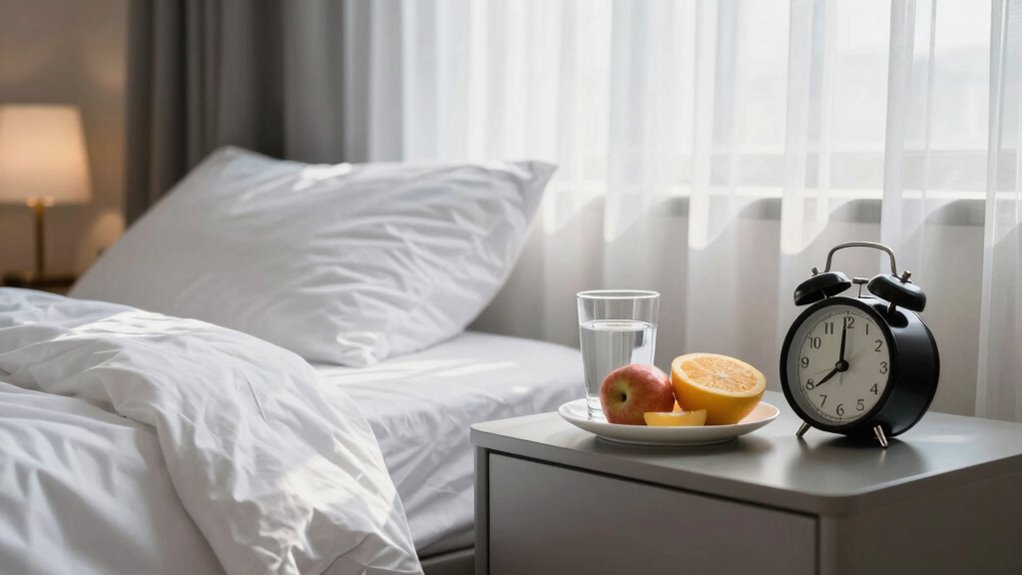
Light exposure is one of the most effective ways to reset your internal body clock after traveling across time zones. Proper light therapy helps achieve circadian alignment, making it easier to adjust to local time. To optimize this process, consider these steps:
- Seek bright sunlight in the morning if you need to advance your clock, aligning wakefulness with daytime.
- Use controlled light exposure in the evening if you need to delay your body’s rhythms.
- Avoid bright screens before bedtime to prevent disrupting your sleep cycle.
- Incorporating light therapy devices can enhance your adjustment, especially during seasons with limited natural sunlight. Additionally, understanding your circadian rhythm can help tailor your light exposure for quicker adaptation.
- Being aware of your body clock can further improve the timing and effectiveness of your light therapy, and paying attention to light exposure patterns can optimize your recovery process.
What Foods Help Your Body Recover From Jet Lag

What foods can help your body recover from jet lag more quickly? Incorporating superfoods boost your energy and help reset your internal clock. Focus on nutrient-dense options like berries, leafy greens, and nuts, which provide antioxidants and essential vitamins to combat fatigue. Hydrating snacks, such as watermelon, cucumber, and citrus fruits, replenish lost fluids and keep you energized. Protein-rich foods like eggs and lean meats support muscle recovery and stabilize blood sugar levels. Avoid processed foods and excessive caffeine, which can disrupt sleep and worsen jet lag symptoms. Instead, opt for whole, natural foods that nourish your body and promote quick recovery. Proper hydration combined with these foods and adequate rest accelerates your adjustment process and helps you feel more alert faster. Additionally, choosing foods rich in melatonin precursors can naturally support your sleep cycle, aiding in faster adaptation to new time zones. Some studies also suggest that incorporating light exposure during the day can further enhance your body’s adjustment to the new environment. Engaging in mindful eating can also improve digestion and overall well-being during recovery. Incorporating antioxidant-rich foods can further combat oxidative stress caused by travel and help you recover more swiftly.
Understanding Your Internal Clock and Its Role in Jet Lag

Your internal clock, known as the circadian rhythm, regulates many bodily functions, including sleep-wake cycles, hormone release, and body temperature. When you travel across time zones, this rhythm can become misaligned, causing jet lag. To understand this better:
- Circadian rhythms follow a roughly 24-hour cycle, influenced by light exposure and melatonin regulation.
- Melatonin, a hormone, signals your body when it’s time to sleep, peaking at night and dropping during the day.
- Disruptions to your internal clock can delay melatonin production, making it harder to fall asleep or wake up at appropriate times.
A Natural Plan to Minimize Jet Lag Without Wasting Time
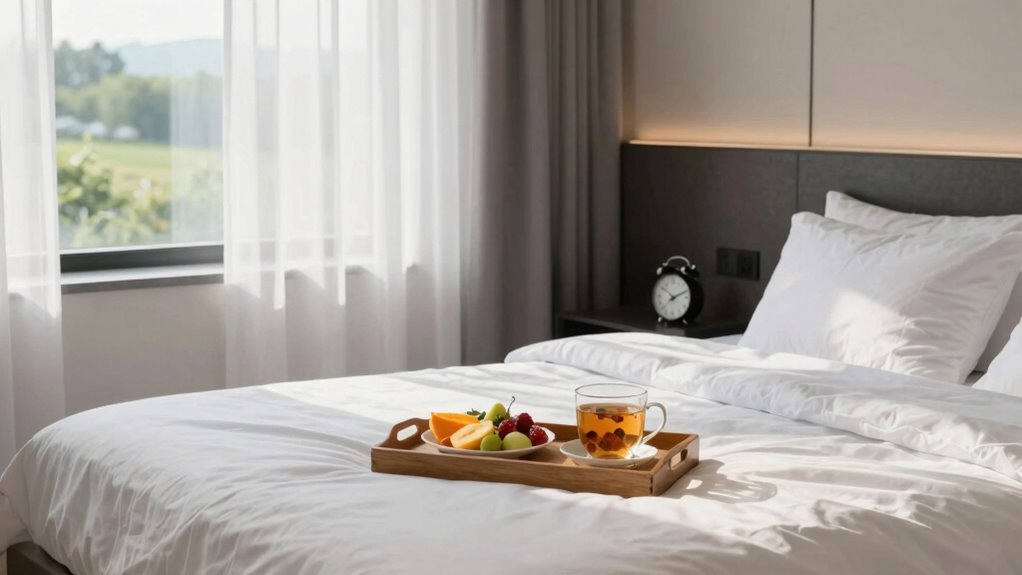
To minimize jet lag efficiently, you can adopt natural strategies that align your internal clock with your travel schedule. Establishing consistent travel routines helps your body adjust smoothly, reducing fatigue and disorientation. Focus on improving your sleep hygiene before and during travel by maintaining a regular sleep schedule, avoiding caffeine late in the day, and creating a comfortable sleep environment. Adjust your sleep times gradually to match your destination’s time zone, and use natural light exposure to reset your internal clock. Staying hydrated and eating light, nutritious meals also support your body’s adaptation. Practicing awareness of your environment and making responsible choices can further enhance your adjustment process. Incorporating ventilation considerations and ensuring proper air quality can also contribute to better rest during travel. Being mindful of air quality and ensuring proper ventilation can help you breathe easier and sleep better. Additionally, being aware of ergonomics and workspace layout can help you maintain comfort during your travel or layovers, reducing physical strain. Incorporating mindful movement and stretching can promote circulation and comfort during long flights. These simple, natural steps help synchronize your internal rhythms, making jet lag less disruptive and saving you time and energy, so you can enjoy your trip sooner.
Frequently Asked Questions
How Does Hydration Influence Recovery From Jet Lag?
Hydration plays a vital role in your recovery from jet lag by maintaining your hydration levels and electrolyte balance. When you stay well-hydrated, your body can better adapt to new time zones, reducing fatigue and headaches. Drinking plenty of water and electrolyte-rich fluids helps your cells function at their best, supports digestion, and accelerates your body’s adjustment to the local environment, making jet lag symptoms less severe and shorter-lived.
Can Exercise Accelerate the Adjustment to New Time Zones?
Did you know that engaging in physical activity can cut jet lag recovery time by up to 30%? Exercise timing is vital; doing it during daylight hours helps reset your internal clock. Physical activity increases alertness and promotes better sleep, aiding your body’s adjustment to new time zones. Incorporate moderate exercise like walking or stretching at ideal times to accelerate your adjustment and feel more refreshed upon arrival.
Are There Specific Supplements That Support Better Sleep During Travel?
Yes, certain supplements can help you sleep better during travel. Natural sleep aids like melatonin supplements are popular because they help regulate your sleep cycle and reduce jet lag symptoms. Taking melatonin before bedtime in your new time zone can signal your body to sleep and wake appropriately. Always consult a healthcare professional before starting any supplements, especially if you’re on medication or have health concerns.
How Does Stress Management Impact Jet Lag Severity?
You can ease jet lag by managing stress through mindfulness techniques and breathing exercises, which gently soothe your mind and body. When you stay calm, your body’s internal clock adjusts more smoothly to new time zones, reducing fatigue and disorientation. Practicing deep breaths and mindful awareness helps lower cortisol levels, making it easier to sleep and adapt. This peaceful approach transforms travel discomfort into a restorative journey.
What Are the Best Strategies for Long-Haul Flight Comfort?
To stay comfortable on long-haul flights, bring a supportive travel pillow to keep your neck relaxed and boost rest. Use in-flight entertainment to distract and relax your mind, helping time pass more easily. Wear loose, breathable clothing, stay hydrated, and move around periodically to avoid stiffness. Adjust your seat for comfort, and consider noise-canceling headphones to block out noise, ensuring a more restful flight experience.
Conclusion
By prioritizing good sleep, smart light exposure, and nourishing foods, you can beat jet lag without wasting time. Some say your body’s internal clock is like a stubborn friend—it needs a little coaxing to reset. notably, research shows that natural light and proper meals can do more than pills. Trust in these simple, natural strategies; they’re backed by science and might just prove that jet lag isn’t inevitable, but a hurdle you can easily clear.