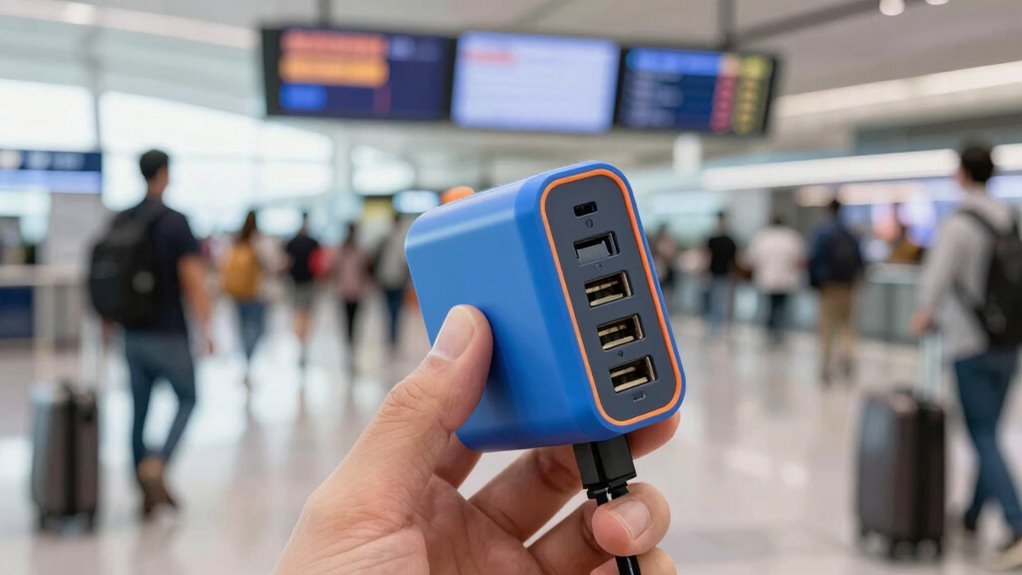

To prevent burning your devices abroad, understand the difference between plug adapters and voltage converters. Many modern gadgets support 100-240V, so you only need a plug adapter for different socket shapes. If your device is fixed at one voltage, you’ll need a voltage converter to match the local power supply. Knowing your device’s specs and choosing the right gear can keep your electronics safe—keep going to learn how to choose the best travel solutions.
Key Takeaways
- Always check your device’s voltage label; devices supporting 100-240V only need plug adapters, not voltage converters.
- Use a voltage converter for devices with fixed voltage ratings outside the local standard to prevent damage.
- Recognize different socket types worldwide and select the correct plug adapter to fit foreign outlets.
- Modern electronics often handle multiple voltages; verify compatibility before use to avoid overheating or malfunction.
- Properly match your travel gear to your device’s specifications to ensure safety and prevent costly damage abroad.
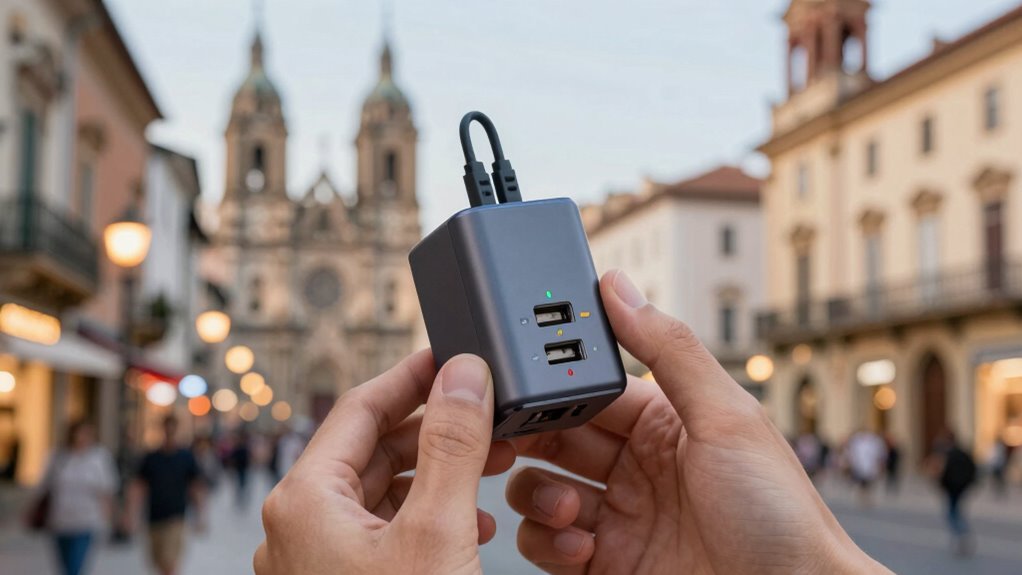
Ever wondered why your electronic devices sometimes need adapters when traveling abroad? The answer lies in the differences in electrical systems across countries. Each nation has its own voltage standards and socket designs, which means your devices might not fit or work properly without the right gear. To keep your gadgets safe and functional, you’ll need plug adapters and possibly voltage converters. Plug adapters are simple devices that allow your plugs to fit into foreign sockets. They don’t change the voltage, only the shape of the plug. So, if your device is compatible with the local voltage, a plug adapter is enough. However, if your device isn’t designed to handle the voltage in the country you’re visiting, you’ll need a voltage converter. Voltage converters actively change the voltage from the local standard to match your device’s requirements, preventing damage caused by voltage mismatch.
Understanding when to use a plug adapter versus a voltage converter is vital. Many modern electronic devices like smartphones, laptops, and cameras are designed to handle a wide voltage range, typically from about 100V to 240V. If your device’s power brick or charger states something like “input: 100-240V, 50/60Hz,” you only need a plug adapter to connect to the foreign socket. But, if your device only supports a specific voltage, or if you’re unsure, a voltage converter is necessary. Using a voltage converter ensures your device receives the proper voltage, avoiding the risk of overheating, malfunction, or permanent damage. Additionally, recognizing the importance of voltage compatibility can help prevent costly mishaps during travel. When traveling, check your devices’ labels or manuals to see their voltage specifications. If you’re packing multiple devices, a universal travel converter can be a lifesaver, as it works with various voltages and socket types. Keep in mind that some voltage converters are designed for continuous use with small electronics, while others are better suited for larger appliances. Be cautious about overloading converters and always follow manufacturer instructions for safe operation.
Frequently Asked Questions
Can I Use a Travel Adapter Without a Voltage Converter?
You can use a travel adapter without a voltage converter if your device’s plug fits the destination’s outlets and the voltage is compatible. Check your device’s voltage rating—if it covers the local voltage range, a plug adapter will do. However, if your device isn’t voltage compatible, you’ll need a voltage converter to prevent damage. Always verify your device’s specifications before plugging in abroad.
Do All Countries Have the Same Voltage and Frequency?
Imagine each country as a unique dance with its own rhythm and steps. Voltage standards and power compatibility vary worldwide; not all countries share the same voltage and frequency. You must check each destination’s electrical standards to avoid damaging your devices. Using a travel adapter alone isn’t enough—sometimes, a voltage converter is essential to match your device’s needs. Respect the dance, and your devices will perform beautifully abroad.
How Do I Identify the Voltage of My Device?
You can identify your device’s voltage by checking its power label or user manual, where it typically lists voltage compatibility, like “110V-240V.” Look for the power plug types too, as they vary worldwide. Ensuring your device supports the local voltage and matching power plug types prevents damage. Always verify these details before plugging in abroad, so you avoid burning out your device or risking electrical hazards.
Is It Safe to Plug My Device Into an Unfamiliar Outlet?
Think of plugging your device into an unfamiliar outlet as exploring a new jungle; you need a clear map first. It’s not always safe to do so without checking plug safety and device compatibility. If the voltage and plug type don’t match, you risk short-circuiting or damaging your device. Always use a reliable adapter or converter, and verify the voltage to keep your device safe and functioning smoothly abroad.
What Are the Signs of a Device Damaged by Voltage Issues?
If your device is damaged by voltage issues, you’ll notice signs like frequent crashes, overheating, or strange noises, which indicate voltage fluctuations. You might also see the device malfunction, such as unresponsive buttons or display errors. These symptoms suggest your device has been affected by inconsistent power supply. To prevent this, always use voltage converters or surge protectors when plugging into unfamiliar outlets, ensuring your device stays safe.
Conclusion
Understanding international voltage is essential to protect your devices abroad. Did you know that over 80% of electronic failures in travelers’ gadgets are caused by voltage mismatches? By using the right adapters and converters, you can avoid costly damages and keep your devices safe. Don’t assume your charger works everywhere—check the voltage, and always be prepared. With a little knowledge, you’ll travel smarter and avoid burning out your gadgets on your next trip.