This guide helps hikers choose a lightweight backpack tailored to their needs and pack it correctly for comfort and efficiency. Suitable for beginners planning day trips or short overnight hikes, this process ensures you carry only what’s necessary without extra weight.

Get travel and outdoor gear delivered free with Prime
- Fast, free delivery on millions of items
- Prime Video, Amazon Music and more included
- Member-only deals all year

BECOJADDE 15L Small Hiking Backpack for Men and Women, Foldable and Ultralight
- ✔ Capacity: 15L
- ✔ Unfolded Dimensions: 17.7 in x 11 in x 5.1 in
- ✔ Folded Dimensions: 7 in x 6.3 in

Lightweight Hydration Backpack with 2L Water Bladder for Running, Cycling, Hiking, and Raves
- ✔ Material: 100% Nylon
- ✔ Capacity: 12 L
- ✔ Water Bladder Capacity: 2 L

G4Free 20L Lightweight Hiking Backpack for Women and Men, Green+Beige
- ✔ Capacity: 20L
- ✔ Dimensions: 11.4 × 5.1 × 18.5 inches
- ✔ Weight: 0.75 lbs
Difficulty: Beginner | Time: 30-60 minutes
What You’ll Need
Tools & Materials:
- Measuring tape
- Pen and paper
Knowledge:
- Basic understanding of hiking gear needs
- Ability to measure your torso length
Prepare a list of essential items for your hike to determine pack capacity. Know your physical measurements for a proper fit. Allocate around 30-60 minutes for selection and packing.
BECOJADDE 15L Small Hiking Backpack for Men and Women, Foldable and Ultralight
<p>This <strong>15L backpack</strong> stands out for its <strong>ultralight weight and foldability</strong>, making it perfect for minimalist hikers who prioritize packing light. Its multiple pockets, including water bottle holders and a zippered phone pocket, give it practical organization. Compared with the G4Free, it’s more compact but offers less capacity, making it less suitable for longer trips or heavy loads. The adjustable chest belt and breathable straps enhance comfort, but its limited volume means it’s best for quick, short excursions or travel daypacks. <strong>Tradeoff:</strong> less capacity for easier portability.</p>
Pros:
- Lightweight and foldable for easy storage
- Multiple organized compartments
- Adjustable chest belt with survival whistle
Cons:
- Limited capacity for longer trips
- Not suitable for heavy loads
- Design may be too compact for some users
Best for: Hikers seeking ultralight, short-distance trips or travel companions
Not ideal for: Long hikes or carrying heavy gear
Bottom line: Ideal for ultralight travelers who prioritize portability over capacity.
“Ideal for ultralight travelers who prioritize portability over capacity.”
Lightweight Hydration Backpack with 2L Water Bladder for Running, Cycling, Hiking, and Raves
<p>This <strong>12L hydration pack</strong> emphasizes water capacity and comfort, making it a top choice for runners, cyclists, and outdoor enthusiasts who need quick access to hydration. Made of <strong>waterproof, tear-resistant nylon</strong>, it offers a <strong>2L water bladder</strong> for extended activity, but its 12L total capacity means limited storage for gear. Compared with the G4Free, it’s more focused on hydration and less on storage, but its adjustable straps and breathable mesh back enhance comfort during vigorous activity. <strong>Tradeoff:</strong> less storage space, more focus on hydration.</p>
Pros:
- Lightweight and comfortable for extended wear
- Waterproof and tear-resistant fabric
- Multiple compartments for accessories
Cons:
- Limited water capacity at 2L
- Adjustments may need fine-tuning for perfect fit
- Less suitable for carrying bulky gear
Best for: Active outdoor users needing hydration on the go
Not ideal for: Longer hikes requiring substantial gear or supplies
Bottom line: Great for active pursuits where hydration and weight are priorities over storage.
“Great for active pursuits where hydration and weight are priorities over storage.”
G4Free 20L Lightweight Hiking Backpack for Women and Men, Green+Beige
<p>The <strong>20L G4Free backpack</strong> offers a compelling balance of capacity and lightweight design, making it suitable for longer day hikes or short overnight trips. Its <strong>water-repellent Taslan nylon</strong> enhances durability and weather resistance. Compared with the smaller BECOJADDE, it provides more space, but at a slightly higher weight. Its multiple pockets help organize gear efficiently, while the foldable design makes packing easier. The adjustable straps and breathable back add comfort for extended wear. <strong>Tradeoff:</strong> increased capacity results in a slight weight increase, but it remains lightweight overall.</p>
Pros:
- Lightweight and compact for easy packing
- Durable water-repellent material
- Multiple organized storage compartments
- Adjustable breathable straps
Cons:
- Limited capacity for very long trips or heavy loads
- May feel small for bulky gear
- Design might be too small for some users
Best for: Hikers needing a versatile, lightweight pack for longer day trips
Not ideal for: Ultralight minimalist travelers or those with minimal gear needs
Bottom line: Best suited for hikers who want extra capacity without sacrificing much weight or portability.
“Best suited for hikers who want extra capacity without sacrificing much weight or portability.”
As an Amazon Associate we earn from qualifying purchases.
Before You Start
Ensure your body measurements are up-to-date, especially torso length, as it affects pack fit. Have a list of gear ready based on planned hike duration and conditions. Avoid overpacking to maintain lightweight benefits.
Step-by-Step Instructions
Step 1: Determine Your Pack Capacity Needs
Estimate the weight and volume of gear needed for your hike. For day hikes, 20-30 liters suffices; for overnight trips, 40-50 liters.
Tip:Add a small buffer for extra clothing or essentials, but avoid exceeding your capacity to keep weight low.
Check: You have a clear capacity target aligned with your trip duration and gear list.
Step 2: Measure Your Torso Length
Use a measuring tape to find your torso length: measure from the C7 vertebra at the base of your neck down to the iliac crest (top of your hips). Record this measurement.
Tip:Have someone assist you for accuracy, especially if measuring yourself is challenging.
Check: You have a precise torso measurement to select a well-fitting pack.
Step 3: Select a Suitable Lightweight Backpack
Choose a pack with a capacity matching your needs, a weight under 2-3 pounds, and adjustable straps. Verify the pack size corresponds to your torso measurement using manufacturer sizing charts.
Tip:Look for features like padded shoulder straps, adjustable hip belts, and ventilated back panels for comfort.
Check: You have a pack that fits well, feels comfortable, and matches your capacity requirements.
Step 4: Adjust Straps for Proper Fit
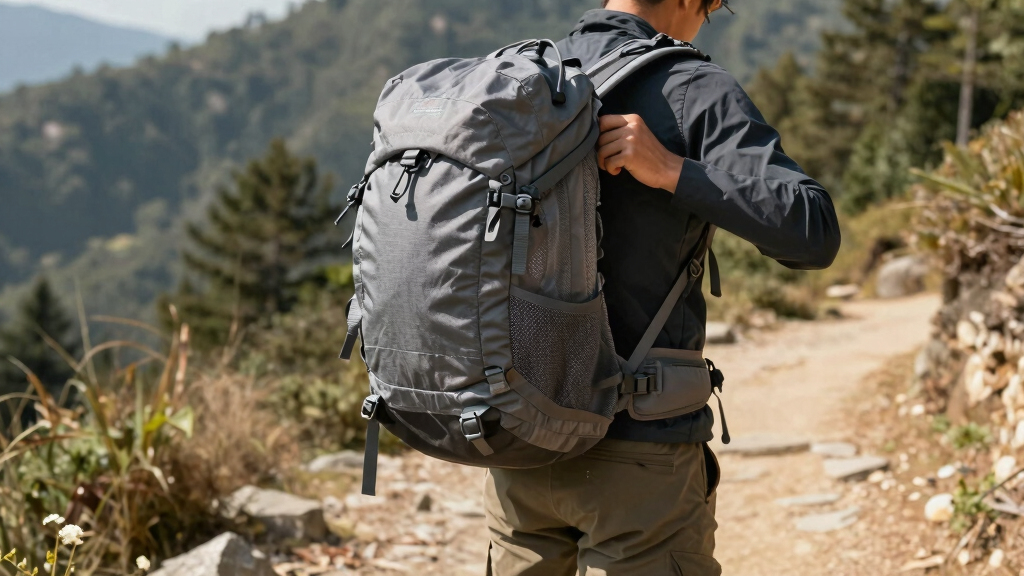
Put on the pack and tighten the shoulder straps so the pack sits snugly against your back without sagging. Adjust the hip belt so it sits on your hips, not your waist or abdomen.
Tip:Ensure the weight is transferred to your hips, reducing shoulder strain. The pack should not shift as you move.
Check: The pack feels stable, and weight is evenly distributed; no excessive movement occurs during walking.
Step 5: Pack Gear in an Organized Manner
Place heavier items close to your back and center, lighter items at the outside. Pack essentials in accessible locations—like rain gear or snacks—near the top or outside pockets.
Tip:Use packing cubes or stuff sacks to organize gear and prevent shifting during movement.
Check: Gear is organized, balanced, and easily accessible, with the pack feeling balanced when worn.
Step 6: Perform a Fit Test and Walk
Walk around with the fully packed pack for 5-10 minutes to assess comfort and stability. Adjust straps if necessary for a secure fit.
Tip:Pay attention to pressure points or shifting; re-adjust straps accordingly.
Check: The pack remains comfortable and stable during movement, with no chafing or excessive sway.
Common Mistakes to Avoid
- Overpacking beyond capacity, making the pack heavy and uncomfortable. — Stick to your estimated capacity; pack only essentials. Use lightweight gear to maximize space.
- Incorrect strap adjustment, causing discomfort or instability. — Adjust straps to transfer weight to hips and keep the pack close to your back. Recheck fit after packing.
- Not organizing gear, leading to difficulty accessing items or shifting weight. — Use packing aids and organize gear by weight and accessibility. Balance load evenly.
- Choosing a pack that doesn’t fit your torso length. — Measure torso length accurately and select a pack size accordingly, trying it on before buying.
Troubleshooting
Problem: The pack shifts or feels unstable when walking.
Solution: Re-adjust shoulder straps and hip belt. Ensure weight is centered and well-distributed.
Problem: Shoulder straps cause discomfort or pressure points.
Solution: Loosen or reposition straps. Use padded straps if available, and check for proper fit.
Problem: Your back feels strained or sore after packing.
Solution: Reduce the weight by removing non-essential items and verify the pack fits correctly with proper strap adjustment.
What Success Looks Like
The backpack fits snugly without sagging, feels comfortable during movement, and carries only what is necessary for your trip. You can walk for at least 10 minutes without discomfort or shifting.
Next Steps
Test your pack on shorter walks before the hike. Clean and maintain your gear regularly. Reassess your needs before longer trips or if your gear list changes.
Frequently Asked Questions
How do I know what capacity backpack I need?
Estimate based on trip length: 20-30 liters for day hikes, 40-50 liters for overnight trips. Consider your gear list to choose a pack that fits your needs without excess weight.
Can I use a regular backpack for hiking?
Regular backpacks lack features like padded straps, hip belts, and ventilation designed for hiking. For comfort and support, choose a pack specifically made for hiking.
How often should I replace my hiking backpack?
Replace if it shows significant wear, tears, or no longer fits properly. A good hiking pack lasts 3-5 years with proper maintenance.
Halloween Picks
halloween
As an affiliate, we earn on qualifying purchases.