
To charge and store your drone batteries safely, always use the original or approved chargers and avoid leaving them unattended during charging. Keep batteries in a cool, dry place, ideally between 20% and 80%, and never let them swell or show damage. Use fireproof containers for long-term storage, and monitor temperatures during charging to prevent overheating. Following these practices helps extend battery life and ensures safety—stick around to learn more tips for hassle-free drone flights.

Get travel and outdoor gear delivered free with Prime
- Fast, free delivery on millions of items
- Prime Video, Amazon Music and more included
- Member-only deals all year
Key Takeaways
- Store batteries between 20% and 80% capacity in a cool, dry, fireproof container for optimal longevity.
- Use only manufacturer-approved chargers and avoid unattended charging to prevent thermal runaway.
- Charge on non-flammable surfaces and monitor batteries for swelling or excessive heat during charging.
- Regularly inspect batteries for damage, swelling, or corrosion, and replace damaged units before use.
- Avoid extreme temperatures during storage and flying to maintain battery safety and performance.
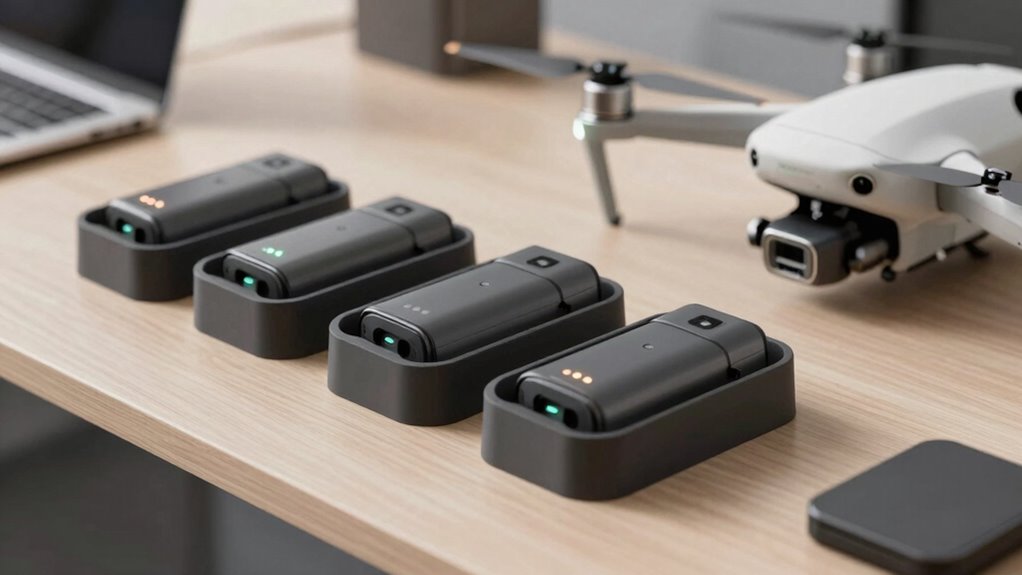
Drone Batteries
Have you ever wondered what powers your drone’s flight? It’s the battery, and understanding how to keep it in top shape is essential for smooth flying sessions. The key factors here are battery longevity and charging safety. If you care for your drone’s battery properly, it’ll last longer and perform better, giving you more flying time and fewer surprises in the air.
First, focus on battery longevity. Lithium-polymer (LiPo) batteries are common in drones because they pack a lot of power into a small package. However, they’re sensitive to how you handle and store them. To extend their life, don’t leave your batteries fully discharged or constantly charged at 100%. Instead, aim to keep them between 20% and 80% when not in use. This range helps prevent the chemical stress that causes capacity loss over time. Also, avoid exposing your batteries to extreme temperatures—hot days or freezing cold can considerably reduce their lifespan. Store them in a cool, dry place, ideally in a fireproof container, especially if you’re not flying for a while. Regularly check the batteries for any signs of swelling, damage, or corrosion. If you notice any issues, it’s best to replace them before attempting to fly again. Additionally, understanding the importance of proper storage and handling can help maintain the safety and performance of your batteries over their lifespan.
Charging safety is equally important. Always use the charger that comes with your drone or one approved by the manufacturer. Using the wrong charger can lead to overcharging or overheating, which can damage the battery or cause safety hazards. When charging, do it on a non-flammable surface and away from flammable materials. Never leave a charging battery unattended, especially if it’s swelling or getting unusually warm. Follow the recommended charging current and voltage settings strictly—overcharging can cause thermal runaway, leading to fires or explosions. Additionally, avoid charging batteries in enclosed spaces where heat can’t dissipate easily. If your drone uses multiple batteries, make sure to charge each one individually and avoid stacking them together during charging, as this can cause uneven charging and potential safety issues. Proper charging practices and safe storage are crucial for battery safety and the longevity of your drone batteries.
Frequently Asked Questions
How Long Do Drone Batteries Typically Last?
Drone batteries typically last around 300 to 500 charge cycles, which equals about 1 to 2 years of regular use. To maximize your battery lifespan, follow proper charging and storage tips, like avoiding overcharging and keeping batteries in a cool, dry place. When you notice reduced flight time or inconsistent performance, it’s time for replacement. Proper maintenance guarantees you get the most out of your drone batteries and know when to replace them.
Can Drone Batteries Be Recycled Safely?
Yes, drone batteries can be recycled safely. About 90% of lithium batteries, including drone ones, are recyclable through eco-friendly recycling programs. You should always follow proper battery disposal methods to prevent environmental harm. Many local recycling centers accept drone batteries, ensuring they’re processed responsibly. By doing so, you help reduce waste and conserve resources, making your drone hobby more sustainable and eco-friendly.
What Are Signs of a Failing Drone Battery?
You’ll notice signs of a failing drone battery when it starts swelling or your drone experiences inconsistent flight times. Voltage drops suddenly or unevenly, indicating the battery’s capacity is diminishing. If you see the battery puffing up or it doesn’t hold a charge like before, it’s time to replace it. Don’t ignore these signs, as they can compromise safety and drone performance. Always handle damaged batteries with care.
Are There Quick Charging Options for Drone Batteries?
Think of fast charging as giving your drone’s battery a quick sip of energy at a gas station. You can find quick charging options that cut down charging time, but be cautious—they can impact your battery’s lifespan if overused. Using these sparingly guarantees your drone stays ready without risking damage. Always follow manufacturer guidelines to balance convenience with battery health and longevity.
How Do Temperature Changes Affect Drone Battery Performance?
Temperature changes can substantially impact your drone battery’s performance. When the temperature fluctuates, thermal expansion occurs, which can strain the battery’s internal components and reduce efficiency. Extreme cold causes capacity loss and slower charging, while high temperatures risk overheating and damage. To maintain ideal temperature stability, store your batteries in a cool, dry place and avoid exposing them to rapid temperature shifts, ensuring longer flight times and battery lifespan.
Conclusion
Now that you know how to safely charge and store your drone batteries, you’re all set to keep them in top shape. Remember, a little care goes a long way—don’t wait for problems to pop up before you take action. By following these simple tips, you can avoid drama and keep flying smoothly. Stay vigilant and treat your batteries right; it’s better to be safe than sorry when it comes to your drone adventures.
Fall Picks
fall essentials
As an affiliate, we earn on qualifying purchases.