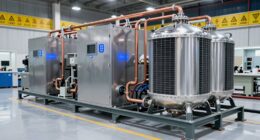
Composting toilets keep odors at bay by using beneficial microbes that break down waste naturally, especially when you separate urine. Diverting urine reduces moisture and nitrogen buildup, which helps prevent foul smells and promotes efficient composting. Proper aeration and moisture control make microbial activity thrive, ensuring your toilet stays odor-free. With these strategies, you’ll discover how composting toilets can be both eco-friendly and surprisingly odorless—stay tuned to learn all the tips and tricks.
Key Takeaways
- Proper urine separation and microbial management are essential for odor-free composting toilets.
- Adequate aeration and moisture control sustain microbial activity, preventing foul smells.
- Urine diversion reduces moisture and nitrogen buildup, significantly minimizing odor issues.
- Regular maintenance, including aeration and moisture balancing, keeps composting toilets odor-free.
- When correctly managed, composting toilets produce odorless, nutrient-rich compost sustainably.

Have you ever considered a more eco-friendly way to handle your waste? Composting toilets offer a sustainable alternative that reduces water use and minimizes pollution. One key aspect of these systems is urine separation, which involves diverting urine away from solid waste to improve composting efficiency and odor control. When urine is separated, it can be managed separately, reducing the moisture content in the solid waste and creating more favorable conditions for microbial processes to occur effectively. This separation helps prevent the buildup of ammonia, which is often responsible for strong odors in traditional toilets. Instead, the microbes involved in composting can thrive, breaking down organic material into rich compost with minimal smell.
The microbial processes at work are the heart of composting toilets’ odor control. Beneficial microbes, including bacteria and fungi, naturally break down waste into simpler compounds. When conditions are right—meaning proper aeration, moisture levels, and temperature—the microbes efficiently decompose solids, producing compost that’s safe to handle and environmentally friendly. Urine separation plays a crucial role here because it reduces the liquid load, keeping the compost dry and aerated, which helps microbes function optimally. This setup diminishes the production of foul gases, meaning you won’t have to deal with persistent smells that often plague traditional toilets. Effective microbial activity is essential for maintaining odorless composting.
You might worry about how these microbial processes stay effective and odor-free, but proper maintenance, such as regularly aerating the compost and managing moisture levels, keeps everything running smoothly. When urine is separated, it’s easier to manage its nitrogen content, which can otherwise lead to strong odors if left mixed with solid waste. Instead, urine can be directed into a separate container or treated with microbial solutions that neutralize odors. This targeted approach not only controls smell but also accelerates the composting process, turning waste into usable soil amendment more quickly.
In essence, composting toilets leverage natural microbial processes, supported by urine separation, to produce odorless, nutrient-rich compost. They’re a clever solution for sustainable living, especially in off-grid or environmentally conscious setups. With proper management, you can enjoy the benefits of a composting toilet without the typical odors associated with waste decomposition. The secret lies in understanding how microbial processes work and how urine separation enhances them. When you embrace this system, you’re not just managing waste—you’re actively contributing to a healthier planet while maintaining a clean, odor-free environment inside your home or outdoor space.
Frequently Asked Questions
How Often Do Composting Toilets Need Maintenance?
You should plan on performing maintenance on your composting toilet every 3 to 6 months, depending on usage. Regular maintenance includes adding composting material, checking for odors, and ensuring proper aeration for odor management. Keep an eye on the compost level and add bulking agents when needed. By sticking to a consistent maintenance schedule, you’ll prevent odors and keep your composting toilet functioning smoothly.
Are Composting Toilets Suitable for Large Households?
Yes, composting toilets suit large households because they effectively manage waste and maintain odor control. You’ll appreciate how they handle high usage, making waste management seamless while keeping odors contained. Imagine a steady flow of waste, effortlessly composted, without overwhelming your system. Their design encourages efficient use, ensuring comfort and cleanliness for everyone, even in busy households. With proper maintenance, these toilets handle large families comfortably and odor-free.
What Is the Typical Lifespan of a Composting Toilet?
A composting toilet typically lasts 10 to 15 years with proper waste decomposition and regular maintenance. You’ll find that effective odor management extends the lifespan by preventing buildup and odors. To maximize its longevity, you should regularly aerate the compost, monitor moisture levels, and empty the compost bin as needed. With diligent care, your composting toilet can serve you well for many years while controlling odors naturally.
Can Composting Toilets Be Used in Cold Climates?
In cold climates, you can definitely use composting toilets, but winter operation requires extra insulation. For example, a cabin in Minnesota insulated its composting system with foam to prevent freezing. You’ll need to guarantee proper ventilation and perhaps add a heat source to keep composting efficiently. Insulation needs are vital; without them, cold temperatures can slow decomposition or cause freezing, but with proper planning, your composting toilet will work year-round.
Do Composting Toilets Require Any Special Permits or Regulations?
You do need to verify local regulations and permits required before installing a composting toilet. Regulations vary by location, so it’s essential to consult your local health or building department. Some areas may require permits, inspections, or specific composting methods. Failing to follow these rules could lead to fines or installation issues. Always research your area’s rules to ensure you’re compliant and avoid any legal complications.
Conclusion
Think of a composting toilet as a quiet guardian, turning waste into renewal. It symbolizes your connection to nature’s cycle—embracing sustainability with each flush. By understanding its odor-control secrets, you harness the power to transform what’s discarded into life-giving compost. Embrace this simple, yet profound act, and become part of the ongoing dance between waste and renewal. In doing so, you’re not just managing odors—you’re nurturing the planet’s future, one cycle at a time.