
R-value measures how well a sleeping pad insulates you from the cold, with higher numbers providing better warmth. For summer, a pad with an R-value of 1-2 may suffice, while shoulder seasons need around 3-4. For winter camping, aim for 5 or higher. Choosing the right R-value depends on your comfort needs and the season you’ll camp in. If you’re curious about picking the perfect pad for any conditions, there’s more to learn so you stay warm and safe.

Get travel and outdoor gear delivered free — and shop member deals
- Fast, free delivery on millions of items
- Access to Prime Big Deal Days deals on October 6–7
- Prime Video, Amazon Music and more included
Key Takeaways
- R-value measures insulation effectiveness; higher values mean better warmth for colder conditions.
- Match R-value to seasonal needs: 1-2 for summer, 3-4 for shoulder seasons, 5+ for winter.
- Consider personal warmth preferences and environment when choosing the appropriate R-value.
- Foam and air pads offer different R-values; select based on weight, packability, and comfort.
- Advances in insulation technology improve thermal performance, aiding in selecting the best sleeping pad for any season.

Have you ever wondered how well insulation can keep your home warm or cool? The same principle applies when choosing a sleeping pad for different seasons. Just as insulation types in your house have specific properties, sleeping pads come with various R-values that indicate their ability to insulate. R-value is a measure of thermal resistance, and understanding it helps you pick the right pad for the conditions you’ll face. Higher R-values mean better insulation, which is essential for colder environments, while lower R-values suit milder temperatures.
Understanding R-values helps you choose the right sleeping pad for every season.
When selecting a sleeping pad, consider the temperature ratings associated with different R-values. These ratings help you determine how well a pad will perform in specific conditions. For instance, a pad with an R-value between 1 and 2 is ideal for summer camping in warm weather, where insulation isn’t a priority. If you’re heading into shoulder seasons like spring or fall, a pad with an R-value around 3 or 4 offers a comfortable balance of warmth and weight. For winter camping or extremely cold environments, look for pads with R-values of 5 or higher, providing maximum insulation against the cold ground.
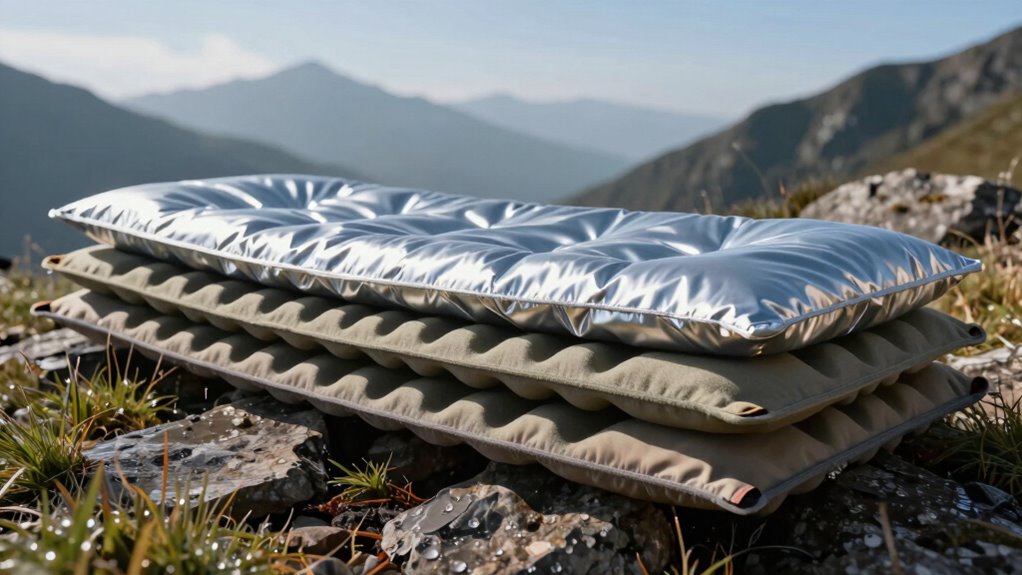
Knowing the types of insulation used in sleeping pads is just as important as understanding their R-values. Different insulation types—such as foam, air, or hybrid designs—offer varying levels of warmth and durability. Foam pads tend to have consistent R-values and are very affordable, making them a good choice for casual or warm-weather camping. Air pads, which often use reflective or layered insulation, can be lightweight and packable, with R-values tailored to different seasons. Hybrid pads combine foam and air insulation to maximize comfort and thermal performance, especially in colder conditions.
Additionally, the technology behind insulation in sleeping pads continues to advance, offering even more efficient ways to retain heat while reducing weight. Temperature ratings are not standardized across all brands, so it’s wise to check manufacturer guidelines and reviews. They often provide recommended R-values for specific weather conditions, but personal comfort also plays a role. If you tend to feel cold easily, opting for a higher R-value pad even in milder weather can ensure a good night’s sleep. Conversely, if you sleep warm, a lower R-value pad might be enough, saving weight and space.
In essence, understanding the relationship between insulation types, R-values, and temperature ratings empowers you to choose a sleeping pad that matches your camping needs. Whether you’re summer hiking, fall backpacking, or winter mountaineering, selecting the right insulation level ensures warmth, comfort, and safety. Think of R-value as your guide to matching your gear to the environment, so you can sleep soundly no matter the season.
Frequently Asked Questions
How Does R-Value Relate to Sleeping Bag Insulation?
R-value measures how well your sleeping pad insulates, but it doesn’t directly relate to sleeping bag insulation. Instead, it helps you compare the insulation layer of pads for different conditions, ensuring compatibility with your sleeping bag. For ideal warmth, choose a sleeping pad with a higher R-value to complement your sleeping bag’s insulation, creating a balanced system that keeps you warm regardless of the season or environment.
Can a High R-Value Sleeping Pad Be Too Warm?
You might find a high R-value sleeping pad can be too warm, especially if you’re camping in milder weather. About 60% of campers report discomfort when overheating during sleep. A high R-value provides excellent insulation, but it can hinder temperature regulation and reduce comfort levels if it traps too much heat. Always match your pad’s R-value to your environment to stay cozy without overheating.
Is R-Value Consistent Across Different Brands?
R-values aren’t always consistent across brands because of manufacturing variations and different testing standards. You might find that one brand’s R-value doesn’t exactly match another’s, even if labeled similarly. To guarantee comfort and warmth, check independent reviews and consider testing different pads if possible. Trusting brand consistency can help, but always verify R-values through multiple sources to find the best sleeping pad for your needs.
How Often Should I Replace My Sleeping Pad Based on R-Value?
You should replace your sleeping pad when durability concerns arise, like noticeable wear or loss of insulation, which can affect its R-value. Regular use and exposure to the elements can degrade materials over time, impacting its effectiveness and increasing environmental impact if it ends up in a landfill. Check for signs of damage annually, and consider replacing it every 3-5 years to guarantee maximum insulation and reduce environmental footprint.
Does R-Value Impact Weight and Packability?
Yes, R-value impacts weight and packability because higher R-value pads typically have more insulation, making them thicker and heavier. This can raise pad weight and reduce packability, especially if you’re aiming for a lightweight setup. If you prioritize a compact pack and lower weight, choose a sleeping pad with the appropriate R-value for your season that balances insulation needs with ease of packing.
Conclusion
Now that you understand R-values, choosing the right sleeping pad is simpler. Think of it as balancing comfort and insulation—like a cozy blanket in summer versus a warm sweater in winter. Just as a lightweight pad keeps you cool on hot nights, a high R-value keeps you warm in cold conditions. With this knowledge, you’re prepared to pick the perfect pad for any season, ensuring restful nights no matter where your adventures take you.
Halloween Picks
halloween
As an affiliate, we earn on qualifying purchases.