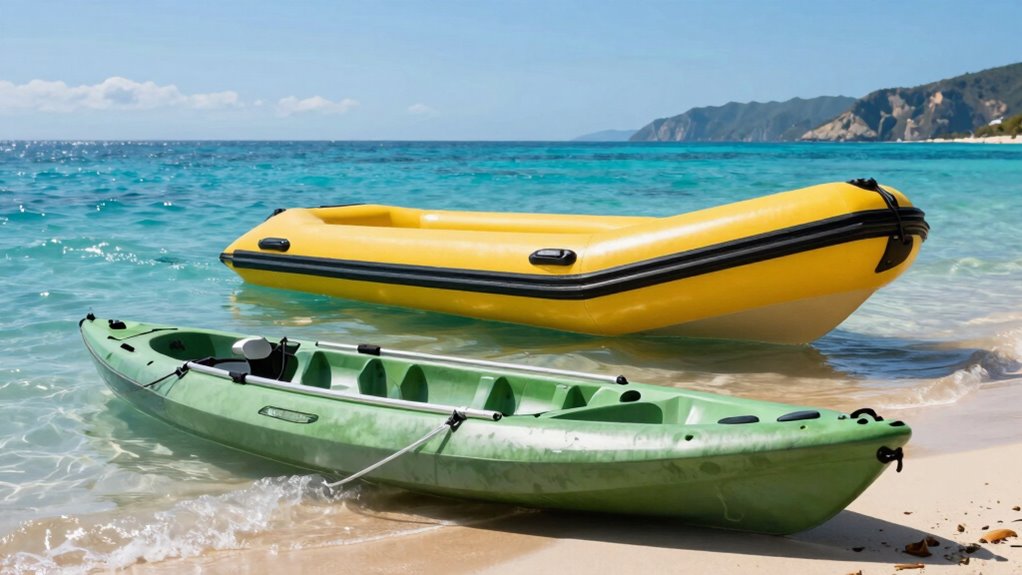

If you prioritize portability and quick setup, inflatable watercraft are perfect since they’re lightweight, easy to inflate, and pack into small spaces. For rugged conditions or frequent adventures, folding watercraft offer better durability and stability with rigid panels. Your choice depends on your water conditions and storage needs—whether you want something lightweight for calm waters or a sturdy option for rougher seas. Keep exploring to find the best fit for your travel style and environment.

Get travel and outdoor gear delivered free with Prime
- Fast, free delivery on millions of items
- Prime Video, Amazon Music and more included
- Member-only deals all year
Key Takeaways
- Choose inflatable watercraft for calm waters, quick trips, and easy portability; opt for folding models for rougher conditions and durability.
- Inflatable boats are lightweight and compact, ideal for frequent travelers with limited storage space.
- Folding watercraft offer greater resistance to punctures and stability in challenging environments.
- Inflatable options are more susceptible to damage but easier to pack; folding models are more robust but slightly heavier.
- Consider your water conditions, travel frequency, and storage needs to select the best option for your adventures.
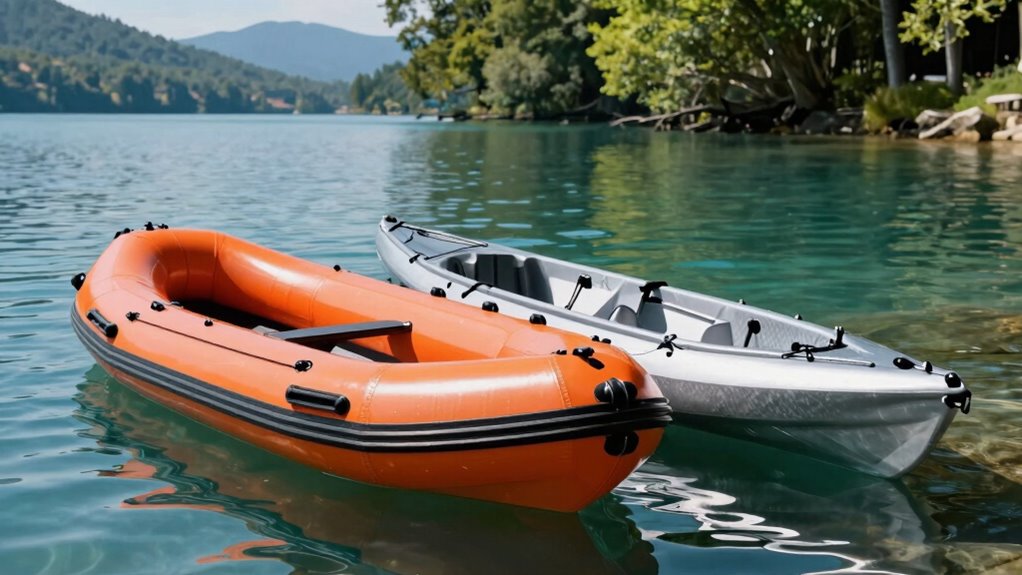
Are inflatable and folding watercraft truly the best options for your aquatic adventures? When choosing between them, you need to evaluate how well they align with your travel style and safety priorities. Both types offer unique benefits, but your decision should hinge on factors like marine safety and storage convenience. Inflatable watercraft are popular because they’re lightweight and portable, making them easy to carry and store. You can deflate them after use, saving space in your garage or car trunk. This portability is a huge plus if you’re constantly on the move or have limited storage options. On the other hand, folding watercraft, which typically use rigid panels and folding mechanisms, also excel in compact storage, often folding into manageable sizes. They’re sturdy and designed to be carried easily, fitting into smaller spaces without sacrificing performance or durability. Additionally, marine safety is a critical consideration, as the materials and construction can influence how well the craft withstands rough conditions. When it comes to marine safety, both types have their strengths. Inflatable boats are made from durable, puncture-resistant materials, but because they’re air-filled, they might be more susceptible to punctures or tears, especially in rocky or debris-filled waters. Proper maintenance and careful handling are essential to guarantee safety. Folding watercraft tend to be more rigid and resistant to punctures, offering a stable platform that can handle rougher conditions more confidently. Their solid construction can give you peace of mind in challenging environments. However, the safety of either craft depends on proper use, regular inspections, and adherence to safety guidelines, regardless of the design. Storage convenience is where both inflatable and folding watercraft shine, especially for travel enthusiasts. Inflatable models are often lighter and easier to pack into a small bag or a backpack, making them perfect for quick trips or limited storage spaces. Folding watercraft, while slightly heavier, still fold down into compact forms that can be stored in closets, trunks, or storage units without hassle. Their robust build often means they’re more suitable for frequent use and longer trips where durability matters. Ultimately, your choice depends on how you prioritize portability, safety, and durability. If you prefer something lightweight, easy to pack, and suitable for calm waters, an inflatable watercraft might be your best fit. If you need something more rigid, capable of handling rougher conditions, and still easy to store, a folding watercraft could be the better choice. Both options offer excellent storage convenience, but evaluating your specific needs will help you select the one that truly fits your type of travel.
Products Worth Considering

GoPro HERO Compact Waterproof 4K Action Camera

DJI Osmo Mobile 8 Standard Combo Phone Gimbal Stabilizer

DJI Osmo Mobile 7P with Mic Mini TX (Infinity Black) Gimbal Stabilizer
As an affiliate, we earn on qualifying purchases.
Frequently Asked Questions
Which Watercraft Is Better for Extreme Weather Conditions?
You’ll find folding watercraft better for extreme weather because of their superior weather resilience and material strength. Folding models are often built with durable, rigid materials that withstand harsh conditions, including strong winds and rough waters. In contrast, inflatables may struggle with extreme weather, as they’re more susceptible to punctures and deflation. So, if you’re planning adventures in challenging environments, a folding watercraft offers the durability and resilience you need.
How Long Does It Take to Set up Each Type?
You can set up an inflatable watercraft in about 10-15 minutes, thanks to its quick setup speed and ease of portability. Folding watercraft takes longer, typically around 30-60 minutes, because you need to carefully assemble and secure the panels. If quick setup matters, inflatables win with their portability ease and minimal assembly time. Folding options suit those who prefer a more durable, long-term solution despite the longer setup process.
Are Folding Watercraft More Durable Than Inflatables?
Back in the days of wooden ships, durability was everything. Today, folding watercraft are generally more durable than inflatables because of their high-quality materials like aluminum or reinforced composites, making them resistant to tears and punctures. When considering portability, folding models excel due to their compactness, while inflatables are easier to store but may need more careful handling to prevent damage. So, if durability is your priority, folding watercraft are a solid choice.
What Are the Storage Requirements for Each?
You’ll find that inflatables require less storage space since they deflate easily and can be rolled up, making them highly portable. Folding watercraft, on the other hand, need more storage space due to their rigid structure, but they’re still designed for portability with compact folding features. Both options offer ease of transport, but inflatables generally excel in simplicity and minimal storage needs, making them ideal if space is limited.
Can Both Types Be Used for Overnight Trips?
Yes, both inflatable and folding watercraft can be used for overnight trips. Inflatable kayaks offer good stability, but you need to take into account their weight, as they tend to be heavier and less portable. Folding kayaks are lighter and easier to pack, making them more convenient for overnight adventures. Both require proper setup and secure storage, but with the right equipment, you can enjoy extended trips on the water comfortably.
Conclusion
Choosing between inflatable and folding watercraft is like selecting the perfect pair of shoes—each offers unique comfort and versatility. Think of your adventure as a voyage across uncharted waters; your watercraft is the vessel that carries your spirit. Whether you prefer the flexibility of inflatables or the compact strength of foldables, remember that the right choice will be your trusted ship, guiding you smoothly through every wave and whisper of the water’s song.