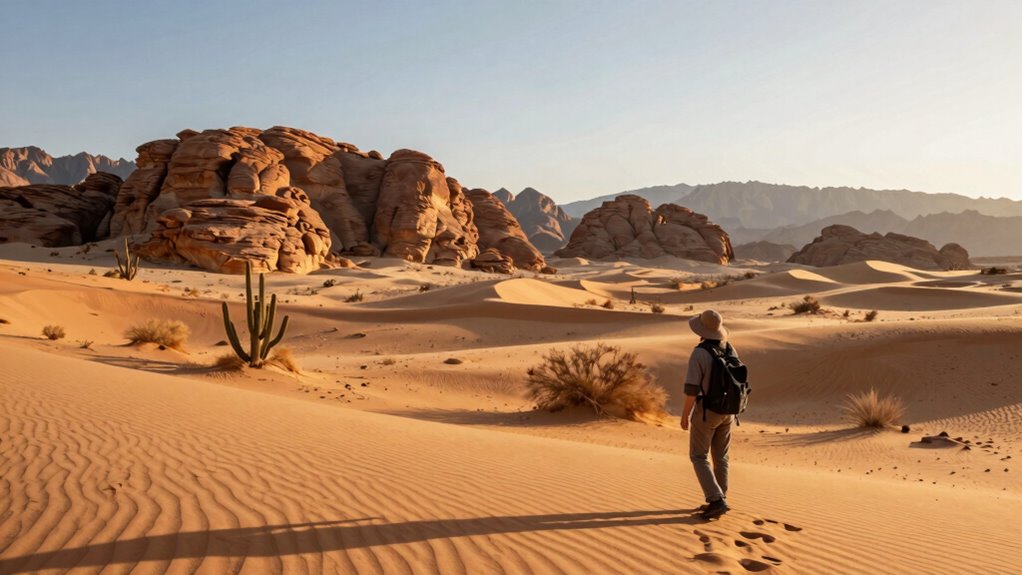

To be a better visitor in desert landscapes, stick to established trails to protect fragile plants and avoid picking or damaging native flora. Keep a safe distance from animals, using binoculars to observe without disturbance, and never feed or touch them. Manage waste properly, conserve water, and respect signs and cultural sites. By practicing eco-friendly behaviors and respecting the environment, you’ll help preserve these delicate ecosystems. There’s more to learn about ensuring your visits support conservation efforts and leave a minimal impact.

Get travel and outdoor gear delivered free with Prime
- Fast, free delivery on millions of items
- Prime Video, Amazon Music and more included
- Member-only deals all year
Key Takeaways
- Stick to established trails and avoid damaging native plants to protect delicate desert ecosystems.
- Observe wildlife from a distance using binoculars, without feeding or touching animals.
- Carry out all trash, conserve water, and minimize resource use to reduce human impact.
- Respect cultural, historical, and natural sites by following signs and barriers.
- Educate yourself about local species and ecosystem importance to foster responsible visitation.
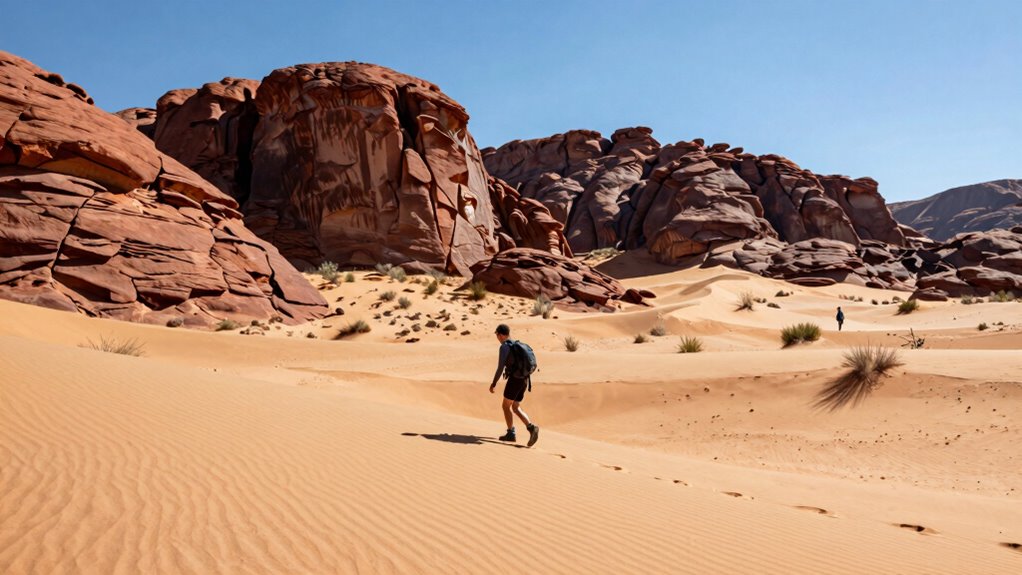
Have you ever wondered how to enjoy desert landscapes responsibly? Visiting these vast, arid regions offers incredible sights and unique experiences, but it also comes with a responsibility to protect their delicate ecosystems. One of the best ways to do this is by respecting desert flora. These plants, like cacti and drought-resistant shrubs, are adapted to survive in harsh conditions and can take years to grow. When you explore, stick to established trails to avoid trampling these fragile plants and causing long-term damage. Remember, picking or damaging desert flora doesn’t just harm individual plants; it disrupts the entire ecosystem, affecting animals that depend on them for food and shelter. By staying on designated paths, you help preserve the natural beauty and health of the landscape for future visitors and the native species. Protecting these delicate ecosystems is essential for maintaining biodiversity and ensuring the resilience of desert environments. Understanding the importance of native plant adaptations can deepen your appreciation of how these ecosystems thrive despite extreme conditions. Recognizing the significance of soil stability helps prevent erosion and further habitat degradation during your visit.
Wildlife conservation is another key aspect of responsible desert tourism. Many animals in these regions have evolved to survive extreme temperatures and scarce water, making them especially vulnerable to human disturbance. Keep a safe distance from wildlife; approaching or feeding animals can alter their natural behaviors and make them more dependent on humans or vulnerable to predators. Use binoculars or a camera with a zoom lens to observe animals without getting too close, and never attempt to touch or move them. This not only ensures your safety but also minimizes stress for the creatures. Educate yourself about the species native to the area, so you understand their habits and the importance of conserving their habitats. Supporting local conservation initiatives or volunteer programs can also make a positive impact, reinforcing your commitment to protecting desert ecosystems. Understanding the fragile balance of these ecosystems highlights the importance of minimizing human impact while visiting. Additionally, being aware of the endangered species that inhabit these regions can deepen your appreciation and motivate more responsible behavior.
Another way to be a responsible visitor is to manage your waste properly. Dispose of trash in designated containers or pack it out with you, ensuring no debris is left behind that could harm plants or animals. Water conservation is equally critical—bring limited supplies and avoid unnecessary waste, since resources are scarce in desert environments. Be mindful of your impact, not just on the landscape but also on the cultural and historical sites you may encounter. Respect signs and barriers, and avoid collecting souvenirs or disturbing artifacts. Your goal should be to leave the desert as pristine as you found it, or better, by practicing thoughtful, eco-friendly behaviors. When you approach your visit with respect and awareness, you’re helping to ensure these stunning landscapes and their wildlife remain protected and vibrant for generations to come.
Products Worth Considering

DJI Osmo Mobile 8 3-Axis Smartphone Gimbal Stabilizer

Samsonite Freeform 2-Piece Hardside Luggage Set, Carry-On and Large Checked Suitcase, Black

Bose QuietComfort Ultra Earbuds (2nd Gen), Deep Plum
As an affiliate, we earn on qualifying purchases.
Frequently Asked Questions
What Gear Is Essential for Desert Visits?
You’ll need essentials like a wide-brimmed hat, sunglasses, and sunscreen to protect against the sun. Pack plenty of water to stay hydrated, sturdy hiking boots for uneven terrain, and a camera to capture desert flora and cultural landmarks. A map or GPS helps you navigate, while a lightweight jacket keeps you comfortable during temperature swings. These items guarantee you enjoy your visit safely while respecting the desert’s delicate ecosystem.
How Do I Protect Wildlife During My Visit?
You protect wildlife during your visit by observing them quietly and from a distance, guaranteeing your presence doesn’t disturb their natural behavior. Stick to designated trails to prevent habitat destruction, and avoid touching or feeding animals. Respect their environment by not removing plants or rocks. Your mindful wildlife observation and commitment to habitat preservation help maintain the fragile desert ecosystem and guarantee future visitors can enjoy its beauty.
Are There Specific Safety Tips for Desert Navigation?
When traversing deserts, always carry plenty of water, wear sun protection, and plan your route carefully. Stay on marked paths to protect delicate desert flora and avoid damaging cultural landmarks. Watch for sudden weather changes and be cautious of wildlife. Use a GPS or map, and inform someone of your plans. These safety tips help you enjoy your adventure while respecting the unique environment and preserving its beauty.
How Do I Handle Extreme Temperature Changes?
You should adjust your clothing and pace quickly to handle extreme temperature changes, since desert temperatures can swing over 40°F in a single day. Stay hydrated and avoid strenuous activity during peak heat, and seek shade when possible. Remember, desert flora and cultural history reveal adaptations to these shifts—like cacti conserving water. Embracing these strategies helps you enjoy your visit safely while respecting the desert’s delicate environment.
What Are the Best Times of Year to Visit Deserts?
You should visit deserts during spring and fall when temperatures are mild, making it easier to explore and enjoy the desert flora. These seasons also highlight the cultural significance of desert landscapes, as many communities celebrate their unique traditions. Visiting during these times helps you appreciate the vibrant desert flora without the extreme heat, allowing for a more comfortable and respectful experience of the area’s natural beauty and cultural heritage.
Conclusion
Remember, “Take only pictures, leave only footprints.” As a visitor, your actions can help preserve the stunning desert landscapes for future explorers. Stick to designated trails, avoid disturbing wildlife, and pack out all trash. By respecting this fragile environment, you guarantee its beauty endures. Be mindful and considerate—your responsible visit can make a difference. After all, a little care goes a long way in keeping these deserts wild and wonderful for everyone to enjoy.