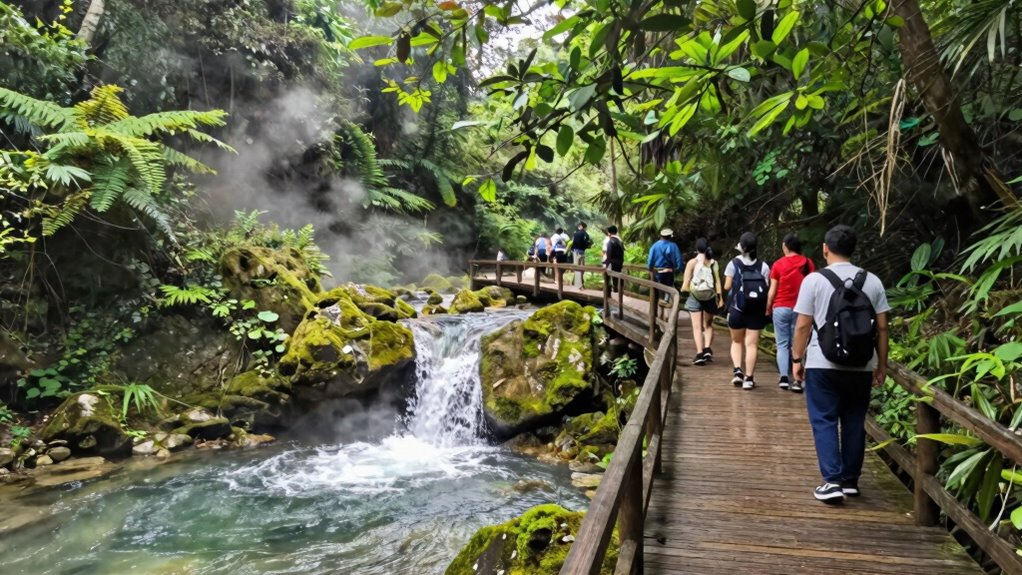

To visit waterfalls responsibly, stick to designated trails and avoid shortcuts or wandering off-path. Use zoom lenses or find higher vantage points instead of climbing over rocks, and always respect signs and barriers. Carry out all trash and wait for muddy areas to dry before proceeding. Learn about the environment and wildlife, and support conservation efforts. Following these steps helps protect the landscape. Keep exploring to discover more ways to enjoy waterfalls without causing erosion.

Get travel and outdoor gear delivered free with Prime
- Fast, free delivery on millions of items
- Prime Video, Amazon Music and more included
- Member-only deals all year
Key Takeaways
- Stick to designated trails and avoid creating shortcuts to prevent soil disturbance.
- Use zoom lenses or viewpoints instead of climbing on rocks for photography.
- Carry out all trash and avoid leaving food wrappers or plastic behind.
- Observe signs and barriers that protect sensitive areas from erosion.
- Learn about the environment to understand how erosion affects the landscape and promote conservation.
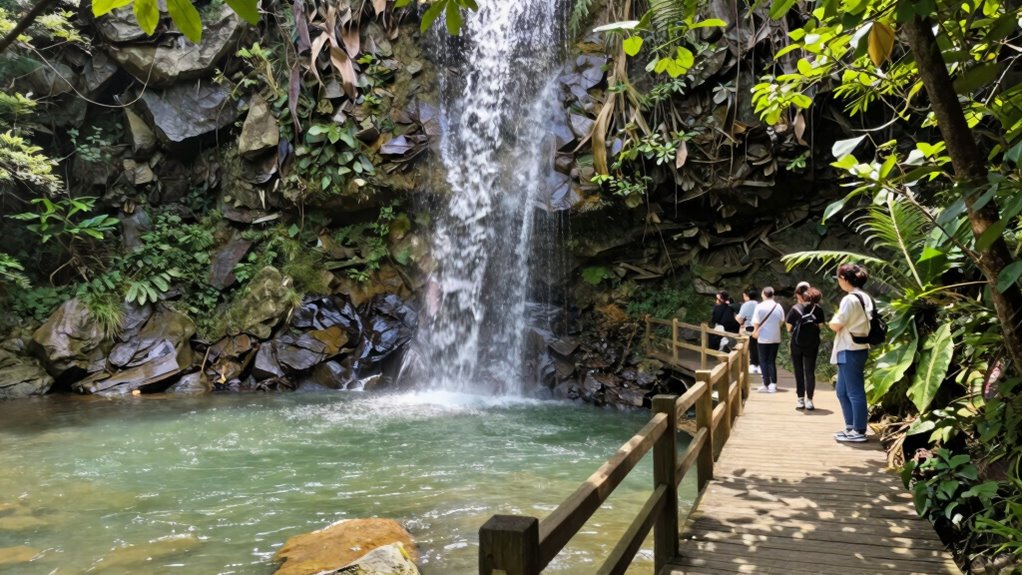
Visiting waterfalls is a breathtaking experience, but it’s essential to do so responsibly to prevent erosion from spreading. Waterfalls often draw crowds, but your actions can make a significant difference in preserving the natural beauty and health of these ecosystems. When exploring, stay on designated trails and avoid creating shortcuts or wandering off-path. Straying from established routes can disturb fragile soil and plant life, accelerating erosion and damaging habitats crucial for wildlife preservation. Remember, every step you take should be mindful of the environment’s delicate balance.
Respect trails, stay on designated paths, and protect the environment for future waterfall visitors and wildlife.
If you’re interested in photography, it’s tempting to get as close as possible to capture that perfect shot. However, practicing photography ethics means respecting the environment and wildlife around you. Use zoom lenses or higher vantage points instead of climbing over rocks or venturing into restricted areas. This approach not only keeps you safe but also minimizes your impact on the terrain and wildlife. Be conscious of where you set up your equipment—avoid trampling vegetation or disturbing animals that rely on the area for shelter or food. By following these principles, you help maintain the natural state of the waterfall’s surroundings for future visitors and the creatures that call them home.
Your presence can inadvertently contribute to erosion if you don’t follow best practices. Water runoff tends to increase when vegetation is trampled or soil is disturbed, leading to further erosion. To help prevent this, always walk on established paths and avoid creating new trails. If the trail is muddy or eroded, choose another route or wait until conditions improve. Carry out all trash, especially items like plastic or food wrappers, which can pollute the environment and harm wildlife. Respect barriers and signs that mark protected areas, as they’re there to safeguard vulnerable sections from human impact. Additionally, educating yourself about local environment, wildlife, and the ecological balance of the area can help you make more informed decisions during your visit. Learning about the impact of erosion can motivate visitors to take extra care to prevent soil loss and habitat destruction. Being aware of soil stability and how human activity affects it can further guide your actions to minimize disturbance. A deeper understanding of these factors can also help you recognize signs of environmental stress and advocate for conservation efforts in the area.
Being a responsible visitor also means educating yourself about the local environment and wildlife. Learn about the species that inhabit the area and how human activity can threaten their survival. Your goal should be to leave as little trace as possible while enjoying the natural wonder of waterfalls. By acting with care and respect, you contribute to wildlife preservation and help maintain the ecological integrity of these stunning sites. Remember, the beauty of waterfalls depends on our collective effort to protect and preserve them for generations to come. Your mindful actions are crucial in ensuring these natural landscapes remain vibrant and accessible to everyone.
As an affiliate, we earn on qualifying purchases.
Frequently Asked Questions
Are There Specific Times of Year Best for Eco-Friendly Waterfall Visits?
You should visit waterfalls during the shoulder seasons, like spring or fall, when seasonal changes lessen environmental impact. During these times, wildlife activity is more balanced, and trails are less crowded, reducing erosion risk. Avoid peak summer or winter when heavy foot traffic or weather conditions can accelerate erosion. Traveling during these ideal periods helps protect the delicate ecosystem, ensuring future visitors can also enjoy the waterfall’s beauty responsibly.
What Gear Should I Bring to Minimize Environmental Impact?
You should bring eco-friendly footwear like biodegradable or recycled material shoes, which minimize soil disturbance and protect plant roots. Responsible packing is essential—carry reusable water bottles, containers, and utensils to reduce waste. Pack lightweight, durable clothing, and avoid single-use plastics. By choosing eco-friendly gear and responsible packing, you help preserve the natural beauty of waterfalls while enjoying your adventure sustainably.
Can Guided Tours Help Prevent Erosion and Habitat Damage?
Guided tours can definitely help prevent erosion and habitat damage. By following the guides’ instructions, you support wildlife preservation and guarantee trails are properly maintained. Guides often educate visitors on staying on designated paths, reducing trail widening and soil erosion. Your participation encourages responsible tourism, which helps protect delicate ecosystems. So, joining a guided tour is a smart way to enjoy waterfalls while actively contributing to trail maintenance and preserving the environment.
How Do Local Communities Support Sustainable Waterfall Tourism?
You might think local communities just sit back and watch tourists wreak havoc, but they’re actually champions of sustainable waterfall tourism. They support community involvement and lead conservation initiatives, ensuring tourism benefits everyone without damaging the environment. By promoting eco-friendly practices, setting visitor limits, and educating tourists, locals protect the waterfalls’ beauty. Your visit becomes a shared effort, helping preserve these natural wonders for generations, not just a fleeting Instagram shot.
Are There Any Regulations or Permits Required for Eco-Conscious Visits?
Yes, there are permitting requirements and conservation regulations you need to follow for eco-conscious visits. You should check with local authorities or park management to obtain any necessary permits before your trip. These regulations help protect the environment and ensure sustainable tourism. By adhering to permitting requirements and conservation rules, you contribute to preserving the waterfall’s natural beauty while enjoying your visit responsibly. Always prioritize eco-friendly practices during your trip.
Conclusion
By following these simple tips, you can enjoy the breathtaking beauty of waterfalls without turning your visit into a disaster for nature. Stick to designated paths, pack out all trash, and avoid creating new trails. Your mindful actions can protect these natural wonders from erosion and destruction. Remember, your care can preserve this paradise for generations to come—like a guardian angel watching over the Earth’s most precious treasures. Every small step counts in saving our planet’s awe-inspiring waterfalls.
Halloween Picks
halloween
As an affiliate, we earn on qualifying purchases.