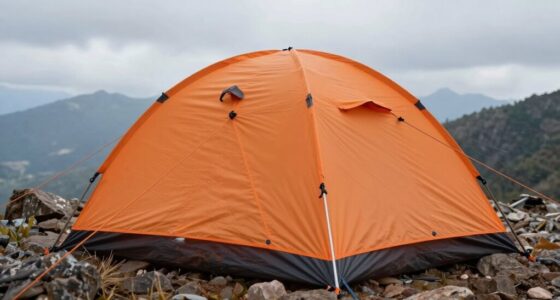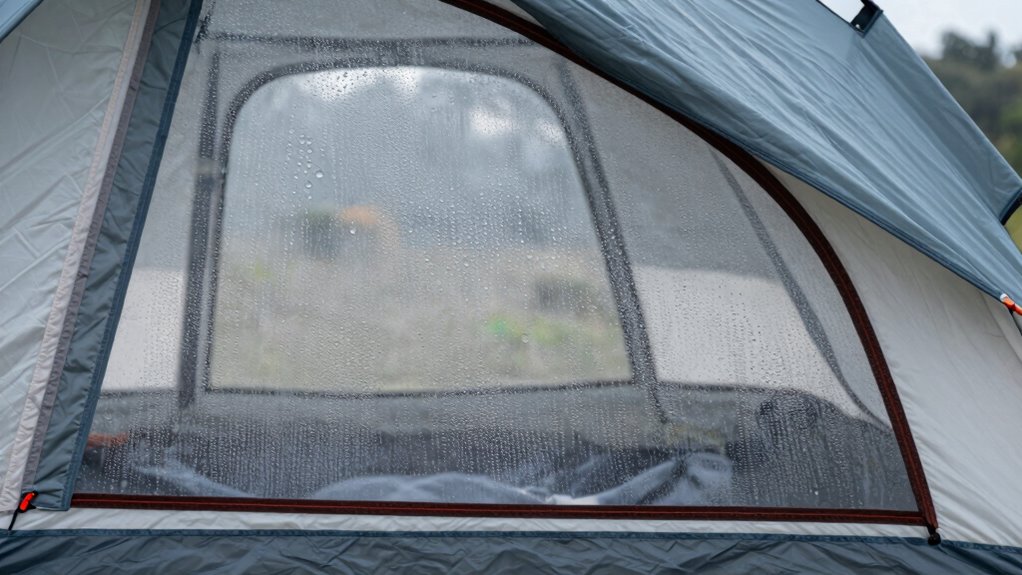

To stop waking up damp from tent condensation, guarantee good ventilation by opening vents and facing them into the wind during sleep. Avoid storing wet gear inside and keep damp clothes outside or sealed away. Use moisture absorbers like silica gel packs and prevent overheating by managing heat sources carefully. Proper setup—unobstructed vents and choosing breezy spots—helps reduce humidity. For more tips on keeping your tent dry and comfortable, keep exploring how to manage moisture effectively.
Key Takeaways
- Ensure proper ventilation by opening vents and windows to allow moist air to escape.
- Keep wet gear outside or sealed in bags to reduce indoor humidity levels.
- Choose a campsite with good airflow and set up the tent with vents facing into the wind.
- Avoid overheating the tent by managing heat sources and maintaining a comfortable temperature.
- Use moisture absorbers like silica gel packs to help retain a dry interior environment.
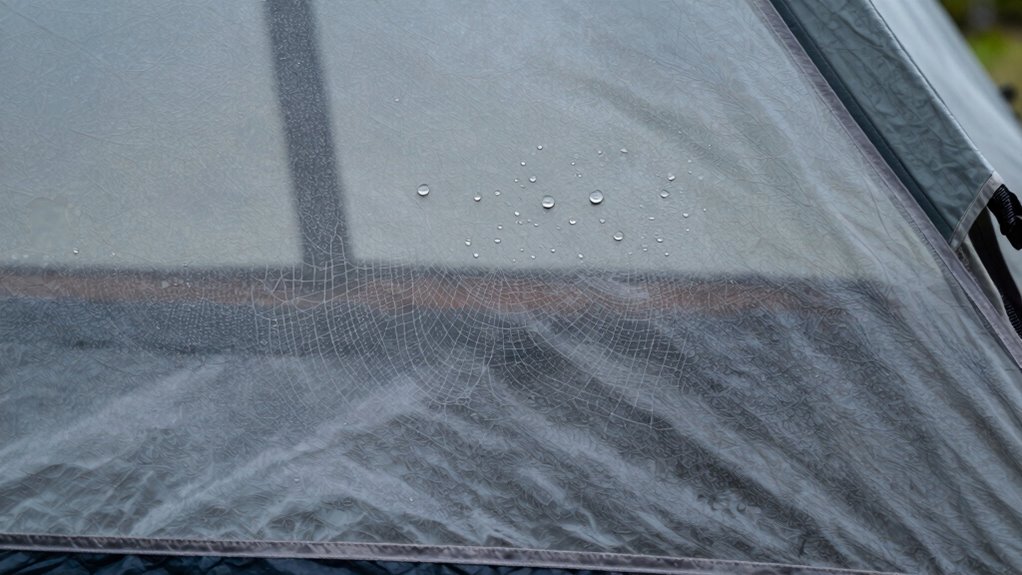
When you camp in a tent, condensation is a common issue that can make your experience uncomfortable. It often leaves you waking up damp and soggy, ruining what should be a peaceful night outdoors. The key to preventing this problem lies in effective moisture control and finding the right ventilation solutions. Understanding how to manage moisture inside your tent is essential to keeping the interior dry and comfortable.
First, recognize that condensation happens when warm, moist air inside your tent comes into contact with cooler surfaces, like the walls or ceiling. As the air cools, it releases moisture, which then settles as water droplets. To combat this, you need to reduce the amount of moisture inside your tent and improve airflow. Moisture control starts with being mindful of what you bring inside. Avoid storing wet gear, damp clothes, or sweaty sleeping bags in the tent overnight, as these introduce extra humidity. If you need to bring wet items, keep them outside or in a sealed bag to minimize moisture buildup.
Equally important are ventilation solutions. Proper airflow helps exchange humid indoor air with drier outdoor air, considerably reducing condensation. Use tents that feature multiple vents, windows, or breathable fabric panels to promote cross-ventilation. When you set up your tent, position it so that vents are not blocked and are facing into the wind, encouraging fresh air circulation. During the night, keep vents slightly open if possible, even if it’s chilly outside, to maintain airflow. If your tent doesn’t have built-in vents, consider using a small battery-operated fan or a portable fan to improve air exchange inside.
Another effective moisture control tip is to manage how you heat your tent. If you’re using a portable heater or stove, ensure it’s designed for indoor use and that you have proper ventilation to prevent buildup of warm, moist air. Overheating can increase humidity levels, making condensation worse. Additionally, placing a moisture-absorbing product, like silica gel packs or specialized dehumidifier bags, inside your tent can help absorb excess moisture and keep the air drier. Proper ventilation techniques are essential to maintaining a comfortable, dry environment inside your tent.
Ultimately, controlling condensation requires a combination of good habits and proper equipment. Regularly check and adjust your tent’s vents, keep wet items outside, and pay attention to airflow. By doing so, you’ll greatly reduce the chances of waking up in a damp mess, making your camping nights more enjoyable and restful. With some simple moisture control strategies and effective ventilation solutions, you can keep your tent interior dry and comfortable, no matter the weather.
Frequently Asked Questions
Can Certain Fabrics Prevent Tent Condensation Better Than Others?
Yes, certain fabrics can prevent tent condensation better than others. Look for tents made from breathable fabrics, which allow moisture to escape, reducing dampness. Fabrics with waterproof coatings also help by preventing external moisture from entering, while still allowing internal vapor to escape. Combining high breathability with effective waterproof coatings creates a better balance, keeping you dry and comfortable during your outdoor adventures.
How Does Campsite Location Influence Condensation Levels?
Your campsite location can make condensation feel like a relentless storm. If you camp in an area with high humidity or limited breeze, your tent’s interior will be soaked, no matter how good your gear is. Wind exposure helps keep the air moving, reducing moisture buildup. Conversely, a sheltered spot with stagnant air traps humidity, turning your tent into a damp sponge. Choose a breezy, dry site to keep your tent dry and comfy.
Are There Specific Ventilation Accessories That Reduce Moisture Buildup?
Yes, you can use specific ventilation accessories like tent vents and mesh panels to improve airflow, reducing moisture buildup inside your tent. Installing adjustable tent ventilation allows you to regulate moisture levels effectively. Additionally, moisture barriers or ground sheets help prevent dampness from the ground, keeping the interior drier. Properly using these accessories ensures better airflow and minimizes condensation, helping you wake up dry and comfortable.
What Are the Signs of Excessive Condensation Harming Tent Material?
You notice your tent fabric feels sticky or develops a musty smell, which signals excessive condensation. This moisture buildup can lead to fabric deterioration over time, weakening the material and reducing its lifespan. Watch for visible water spots or mold growth, as these are clear signs your tent’s fabric is suffering. Addressing these issues early helps safeguard your gear and ensures you stay dry and comfortable during your adventures.
Does the Type of Sleeping Bag Affect Condensation Inside the Tent?
Yes, the type of sleeping bag affects condensation inside your tent. If you choose a bag that’s too warm or too insulating, it can cause excess moisture from your body, leading to increased condensation. Opt for a bag suited to the temperature, which helps maintain sleep comfort and improves temperature regulation. When your body breathes better, there’s less moisture buildup, reducing dampness and making your camping experience more pleasant.
Conclusion
To keep your tent dry and your mornings fresh, remember that controlling condensation is key. Think of your tent as a home that breathes—ventilate well, stay warm, and avoid dampness. Don’t let moisture sneak in and steal your comfort; instead, take control and create a sanctuary amid the elements. With these simple steps, you’ll wake up dry and ready to embrace each new adventure—because a dry tent isn’t just a shelter, it’s your secret to better mornings.