To keep your backpacking tent stable in strong winds, choose one with durable, ripstop fabric that resists tearing. Use flexible, sturdy poles like aluminum to support your shelter and distribute wind force evenly. Always pitch your tent in a sheltered spot, secure guy lines tightly to strong anchor points, and use proper stakes suited for the terrain. Confirm all tension and stability before leaving. Continue exploring for expert tips to maximize your tent’s wind resistance.
Key Takeaways
- Use high-quality, durable fabrics and ripstop materials to prevent tearing during strong winds.
- Choose flexible, strong poles like aluminum to support the tent and distribute wind forces evenly.
- Pitch the tent in sheltered locations and secure poles tightly with proper tensioning techniques.
- Attach guy lines to sturdy anchors, tighten them well, and select appropriate stakes for terrain.
- Conduct final setup checks, tighten all lines and stakes, and make adjustments to ensure maximum wind resistance.

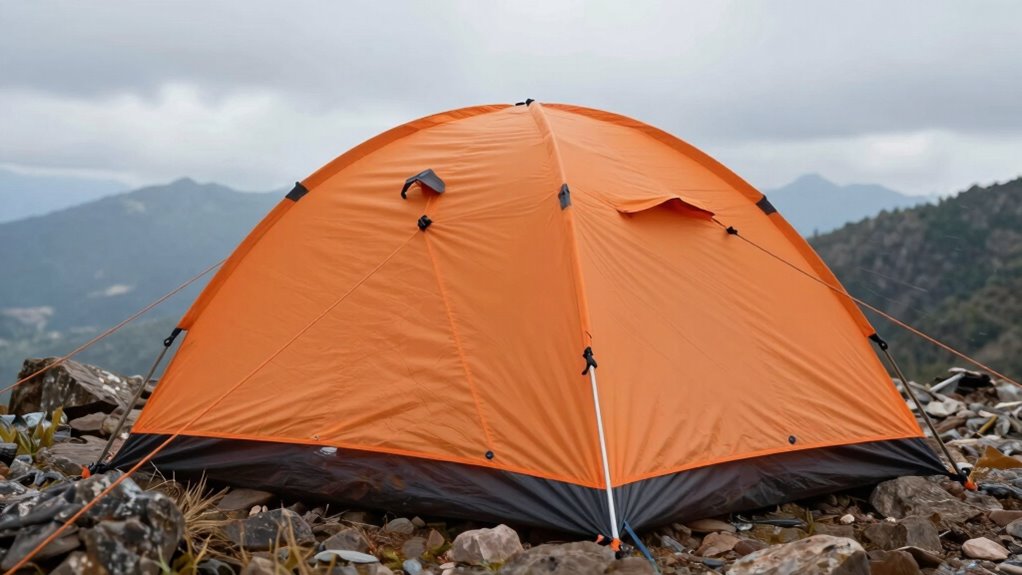
When you’re backpacking in windy conditions, choosing a tent designed to withstand gusts is essential. The durability of your tent fabric plays a critical role in resisting tearing and wear caused by strong gusts. Look for tents made with high-quality, ripstop materials that can handle the stress of wind without compromising your shelter’s integrity. These fabrics are lightweight yet tough, ensuring they won’t give way easily when the wind picks up. Equally important is the wind resistant pole design. Poles crafted with strong, flexible materials like aluminum provide the necessary support and resilience. They’re less likely to snap or bend under pressure, maintaining the tent’s shape and stability. A well-designed pole structure distributes wind forces evenly across the tent, reducing stress points and preventing failure.
Choose durable, ripstop tents with flexible aluminum poles to withstand fierce winds and stay secure on your backpacking adventures.
When pitching your tent in windy conditions, it’s crucial to set it up correctly. Start by selecting a sheltered spot, ideally behind natural barriers like shrubs or rocks, to reduce wind impact. When assembling your tent, ensure all poles are properly secured and fitted tightly. Many tents feature overlapping pole sleeves or clip systems that add extra stability, so take the time to confirm these are correctly positioned. Tensioning your guy lines properly is equally vital. Attach them to sturdy anchor points and tighten them to keep the tent taut. This prevents flapping and potential damage caused by whipping winds, which can weaken fabric seams or pull stakes loose. Using proper staking techniques can greatly improve your tent’s wind resistance.
Staking your tent properly is another key step in wind resistance. Use high-quality stakes suited for the terrain, and drive them deep into the ground at a 45-degree angle for maximum hold. In particularly gusty conditions, consider adding extra stakes or dead-man anchors to reinforce your shelter. This additional support helps prevent the tent from shifting or collapsing under pressure. When pitching, avoid loose or uneven ground, as it can undermine stake stability. If you’re dealing with sandy or rocky terrain, adapt by using specialized stakes or burying stakes deeper to ensure they stay put.
Finally, always check your setup before leaving your campsite. Tighten all guy lines and stakes, and double-check the tension of your tent fabric and poles. In high winds, quick adjustments can make the difference between a secure night’s sleep and waking up to a collapsed tent. By paying close attention to your tent’s fabric durability, employing a wind resistant pole design, and executing proper pitching techniques, you considerably boost your chances of staying comfortable and safe, no matter how fierce the wind gets.
Frequently Asked Questions
How Do I Choose the Best Tent for Strong Wind Conditions?
To choose the best tent for strong wind conditions, look for durable tent materials like ripstop nylon or polyester with reinforced seams. Prioritize wind resistance features such as low-profile designs, aerodynamic shapes, and sturdy pole systems. Confirm it has well-placed guy lines and secure stakes. This combination of materials and design elements helps your tent withstand high winds, keeping you safe and comfortable in challenging weather.
What Are the Signs of Wind Damage on a Tent?
Wind damage on your tent often shows as tent fabric tears that look like tiny scars from a storm. You might also notice guy line slack, which indicates the stakes or lines have shifted or loosened. These signs suggest your tent has battled strong winds. Inspect carefully after gusts, and tighten or repair any tears or slack to keep your shelter secure and ready for the next wind adventure.
Can I Use Household Items to Reinforce My Tent Against Wind?
Yes, you can use household item alternatives for DIY reinforcement of your tent against wind. For example, use shoelaces or bungee cords to secure loose guy lines, and heavy objects like rocks or water bottles to weigh down stakes or corners. You might also repurpose duct tape to patch small tears. These simple household items help improve your tent’s stability and protect it from strong gusts, ensuring a safer, more secure shelter.
How Does Wind Affect Tent Fabric Longevity?
Wind is like a relentless sculptor that can wear down your tent fabric over time. It causes fabric deterioration by stretching and abrading the material, reducing its strength and lifespan. Strong gusts also threaten seam integrity, increasing the risk of leaks or tears. To protect your tent, choose durable fabrics, reinforce seams, and pitch it properly. Doing so helps your gear withstand wind’s persistent push and keeps it in good shape longer.
Are There Specific Brands Known for Wind-Resistant Backpacking Tents?
Yes, some brands are known for their wind-resistant backpacking tents. Look for brands with a strong reputation for durability, like MSR, Big Agnes, and Hilleberg. They use high-quality, durable materials that withstand strong winds and harsh weather. These brands focus on engineering tents with sturdy poles, reinforced seams, and wind-resistant fabrics, giving you peace of mind in windy conditions. Prioritize their models for reliable performance on your outdoor adventures.
Conclusion
When you choose the right backpacking tent and set it up properly, you’re building a fortress against the wind’s relentless push. Remember, guy lines, sturdy poles, and smart pitching are your trusted allies in battling nature’s gusts. With these tools, your tent becomes a sailboat’s sturdy hull, guiding you safely through the storm. Embrace these tips, and you’ll find that even the strongest winds can’t shake your adventure’s foundation.