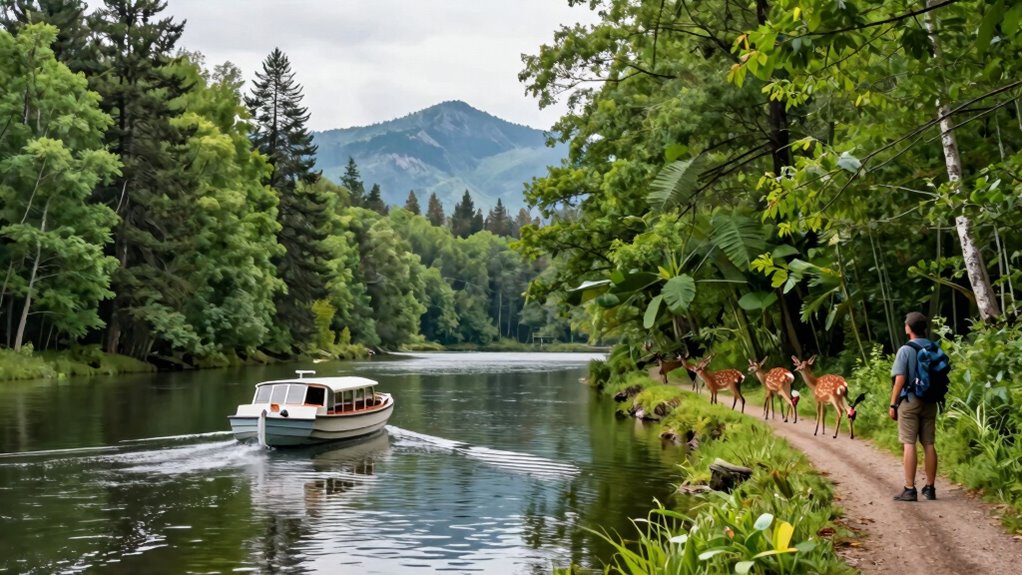

When wildlife spotting from boats, roads, or trails, it’s essential to respect animals and their habitats. Keep a safe distance to avoid causing stress or disrupting feeding and breeding behaviors. Stay on designated paths, avoid loud noises, and don’t disturb nests or fragile environments. Responsible actions promote healthy ecosystems and ensure future encounters remain possible. If you want to understand how to observe wildlife ethically and sustainably, there’s more to take into account below.
Key Takeaways
- Maintain a safe distance to prevent stress and disturbance to wildlife and their habitats.
- Use established paths and designated observation points to minimize habitat damage.
- Avoid loud noises and sudden movements that can startle and disrupt animals’ natural behaviors.
- Follow local guidelines and signage to ensure responsible and sustainable wildlife viewing practices.
- Educate oneself on wildlife sensitivity to promote respectful and ethical nature encounters.
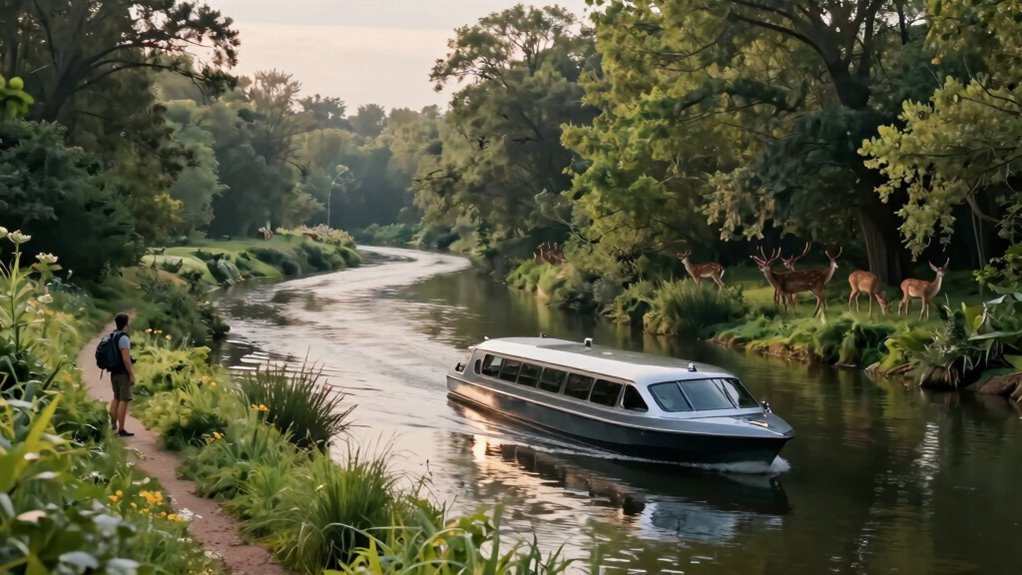
Have you ever wondered if your enthusiasm for spotting wildlife might be causing more harm than good? It’s a valid concern, especially when you’re out on boats, driving along roads, or walking trails in natural habitats. While your curiosity and love for nature are admirable, your actions can unintentionally lead to animal disturbance and habitat disruption. Recognizing this impact is the first step in ensuring your wildlife encounters remain ethical and sustainable.
Enjoy wildlife responsibly by respecting animals and habitats to ensure future generations can appreciate nature’s beauty.
When you approach wildlife too closely or make sudden movements, you risk causing animal disturbance. Animals can become stressed, which affects their feeding, breeding, and resting behaviors. For example, a boat speeding through a calm bay might scare away seabirds or marine mammals, disrupting their daily routines. Similarly, driving past animals on a trail can make them wary, forcing them to leave their nests or young or retreat into less suitable areas. Even walking quietly on trails can disturb shy or sensitive species if you’re not careful. Your presence, if not mindful, can interfere with their natural activities and cause unnecessary stress. Maintaining a respectful distance helps ensure animals feel safe and undisturbed in their environment.
Habitat disruption is another concern. When you venture into sensitive environments—such as nesting sites, breeding grounds, or fragile ecosystems—you risk damaging the very habitats that wildlife depend on. Trampling on vegetation, disturbing soil, or causing erosion can have long-term effects. For instance, driving off designated roads or trails can crush plants, disturb nesting sites, or compact soil, making it harder for plants to grow and for animals to find shelter. Boats anchoring in delicate coral reefs or seagrass beds can physically damage these habitats, which are vital for countless marine species. Your actions, even if unintentional, can contribute to habitat fragmentation, reducing the available space for wildlife to live and breed. Also, being aware of the importance of designated observation areas can help minimize these impacts and promote responsible wildlife viewing.
To minimize these impacts, it’s essential to follow guidelines that promote responsible wildlife viewing. Keep your distance, avoid loud noises, and stick to established paths and designated observation points. Respect warning signs and barriers that protect sensitive areas. By doing so, you help reduce animal disturbance and habitat disruption, ensuring that future generations can enjoy the thrill of wildlife spotting without harming the ecosystems they love. Your enthusiasm for wildlife can be a force for good if paired with respect and mindfulness, fostering a harmonious relationship between humans and the natural world. Being informed about the effects of human activity can further enhance your efforts to protect wildlife while enjoying nature.
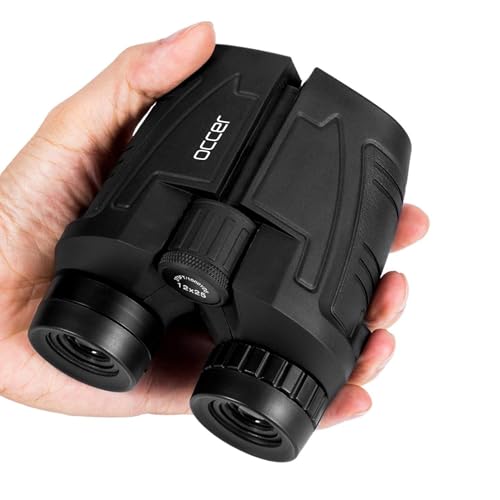
Occer 12×25 Compact Binoculars for Adults and Kids
- High Magnification and Wide Field of View: 12x magnification with 25mm lens, 273ft/1000yds view
- Adjustable Eyecups for Comfort: Fits glasses wearers and non-wearers comfortably
- FMC Broadband Coating for Clear Images: Multi-layer coatings enhance image quality
As an affiliate, we earn on qualifying purchases.
As an affiliate, we earn on qualifying purchases.
Frequently Asked Questions
How Can I Identify Wildlife Species Responsibly During Spotting?
To identify wildlife responsibly, you should observe from a distance to avoid disturbing their habitat preservation. Use binoculars or cameras with zoom to get a clear view without encroaching. Educate yourself on species features beforehand and take ethical photography by respecting animals’ space. Avoid loud noises or sudden movements, and never feed or chase wildlife. These practices guarantee respectful spotting, helping preserve ecosystems while accurately recognizing species.
Are There Specific Times or Seasons Best for Ethical Wildlife Viewing?
Think of the seasons as nature’s grand stage—timing your wildlife viewing during migration or breeding seasons respects their performance. Spring and fall often showcase seasonal migration, while breeding seasons vary by species. By planning your outings during these times, you minimize disturbance and foster harmony with wildlife. Always research specific species, and choose times when animals are most active and least stressed, ensuring your encounter stays ethical and enriching.
What Should I Do if I Accidentally Disturb Wildlife?
If you accidentally disturb wildlife, immediately stop your activity and give the animals space to recover. Avoid loud noises or sudden movements that may cause wildlife disturbance. Practice ethical observation by maintaining a respectful distance and using binoculars or zoom lenses. Remember, your goal is to enjoy nature without impacting it negatively. If needed, move quietly away to minimize further disturbance and protect the animals’ natural behavior.
How Can Technology Assist in Ethical Wildlife Observation?
Imagine technology as your silent partner in wildlife observation. You can use cameras to capture images ethically, respecting animals’ space and avoiding disturbance. Drone usage, when done responsibly, offers a bird’s-eye view without intruding on wildlife. Remember, camera ethics matter—always prioritize animals’ well-being over a perfect shot. By embracing these tools thoughtfully, you help protect nature while enjoying its beauty, turning technology into a respectful observer rather than a disruptor.
Are There Legal Restrictions on Wildlife Spotting in Protected Areas?
Yes, there are legal restrictions on wildlife spotting in protected zones. You must follow Wildlife Laws that regulate activities within these areas to prevent disturbance and habitat damage. In protected zones, certain behaviors like loud noises or using motorized boats might be prohibited. Always check local regulations before your visit, as violating these laws can lead to fines or other penalties, ensuring you respect the conservation efforts in place.
Conclusion
Ultimately, practicing ethical wildlife spotting is like walking a tightrope—you need to stay balanced between enjoying nature and respecting it. By keeping your distance, minimizing noise, and avoiding disturbance, you show that your passion doesn’t have to come at the expense of the animals’ well-being. Remember, your actions can either be a gentle breeze that supports wildlife or a storm that disrupts their world. Choose to be a considerate observer, and nature will thank you.