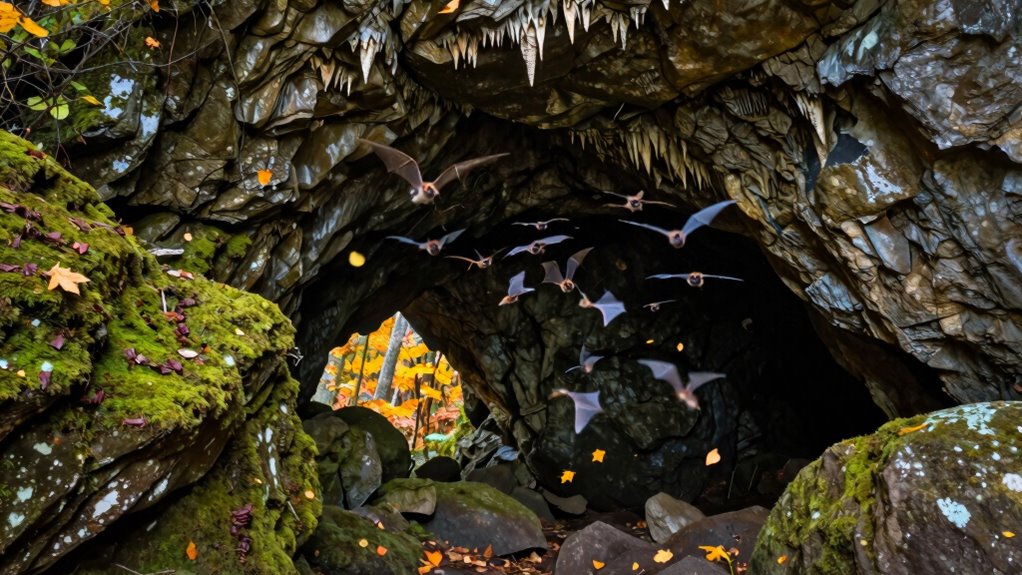

To protect bats, you should pause cave tours during their critical seasons, like hibernation in winter and maternity in spring and early summer. Human disturbance during these times can stress bats, cause them to abandon roosts, or even reduce their populations. Avoid visiting when bats are migrating or raising pups, and look for signs of stress or agitation. Staying aware of these seasons helps keep cave ecosystems healthy—if you want to learn more, there’s important information ahead.
Key Takeaways
- Tours should pause during bat hibernation in winter to prevent disturbing resting bats.
- Avoid visits during the maternity season when females give birth and raise pups.
- Refrain from cave tours during migration periods to prevent disrupting bat travel and energy use.
- Monitor signs of bat stress or disturbance, halting tours if bats show agitation or abandon roosts.
- Schedule visits outside critical periods, aligning with ecological knowledge to minimize human impact.
What Do Bats Do in Caves Throughout the Year?
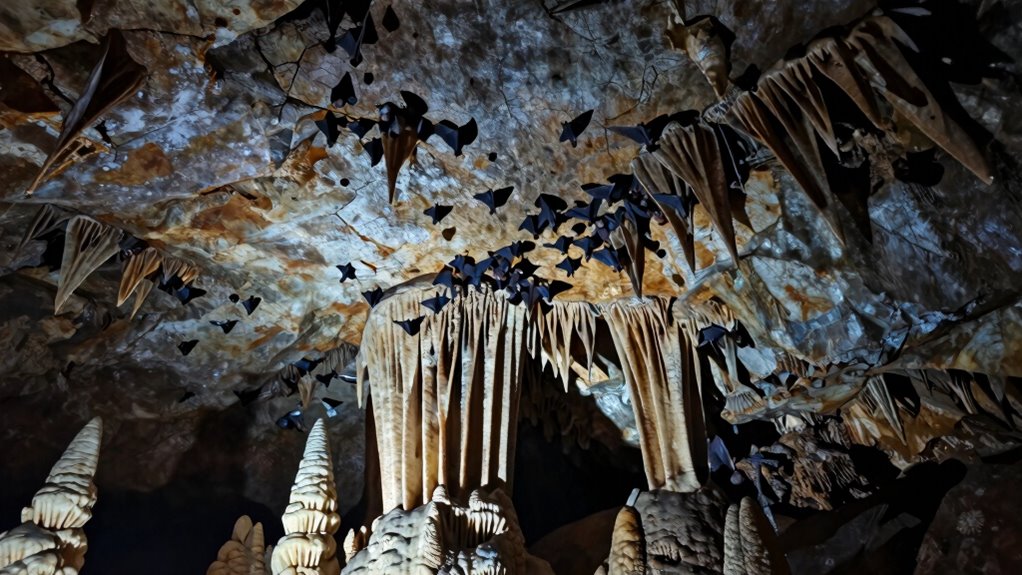
Bats spend a significant part of the year inside caves, but their activities vary with the seasons. During winter, many bats enter bat hibernation to survive the cold months when insects are scarce. They slow their metabolism and conserve energy, often clustering together in tight groups. As spring approaches, bats emerge from hibernation to prepare for the upcoming maternity season. During this time, females gather in caves to give birth and raise their pups. The maternity season is vital for their survival, as young bats depend on the warmth and safety of the cave. Additionally, maintaining optimal temperature and humidity levels is crucial for successful hibernation and rearing of young. Proper cave conditions also help prevent the spread of disease, which can be a concern in densely populated roosts. Monitoring cave environments is essential for understanding and managing bat health and population stability. These environmental factors can influence the overall bat behavior and reproductive success. Protecting these caves is essential for preserving bat populations and their ecological roles. Once the pups are old enough, bats resume foraging and migrate or return to their summer habitats, completing their annual cycle of cave activity.
Why Is Timing Your Cave Visits Important for Bat Conservation?
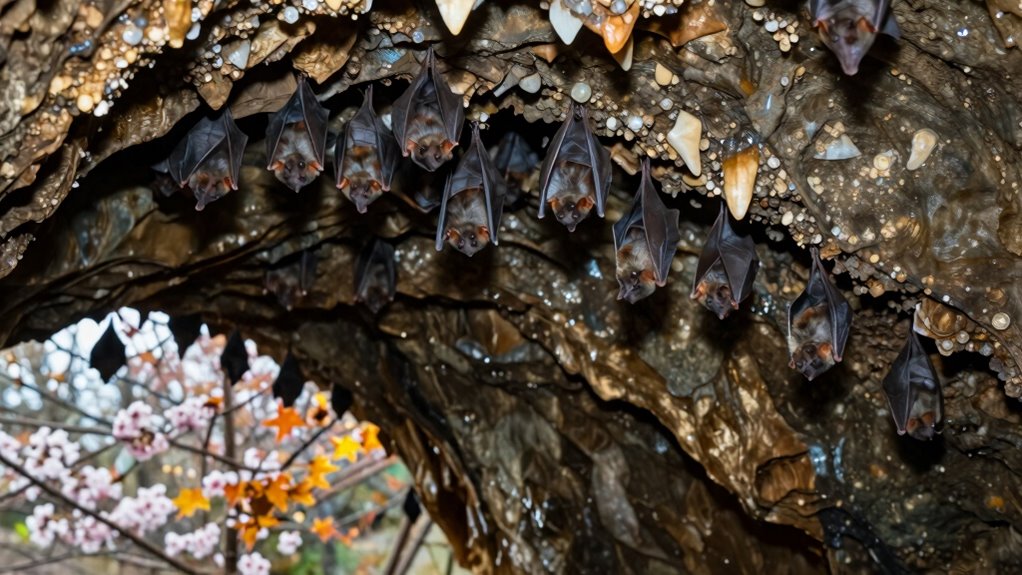
Timing your cave visits carefully is essential because it helps protect bats during their most vulnerable periods. During seasonal migration, bats travel between roosts, making them especially sensitive to disturbances. Visiting caves during this time can disrupt their migration patterns, leading to increased stress and energy depletion. Additionally, roost disturbance from human presence can cause bats to abandon their shelters, which affects their survival and reproductive success. By choosing the right times to explore caves—typically outside of breeding and hibernation seasons—you minimize the risk of interfering with these critical activities. Respecting seasonal cycles ensures you support bat health and conservation efforts, allowing these crucial creatures to thrive without unnecessary human interference. Proper timing also aligns with seasonal behavior patterns that emphasize minimizing ecological impact.
How Human Presence Affects Cave Ecosystems During Sensitive Seasons?
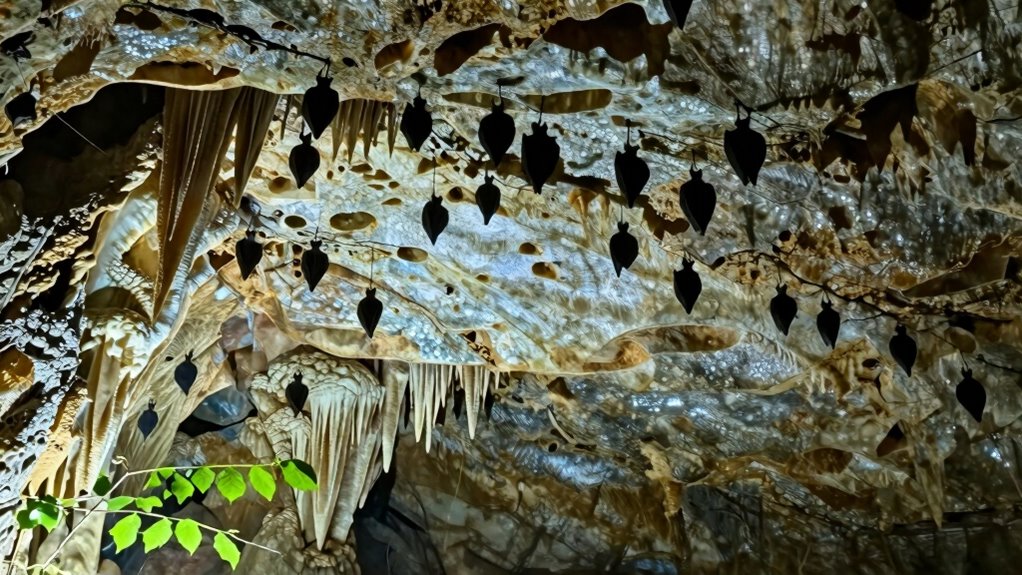
Human presence in caves during sensitive seasons can considerably disrupt the delicate balance of these ecosystems. When you enter during critical times, your human disturbance can scare away bats and other wildlife, preventing necessary behaviors like feeding, mating, and resting. This ecological impact may weaken populations and alter natural cycles. Sensitive species rely on stable conditions; even small disturbances can have outsized effects. Your footsteps, lights, and noise increase stress levels for cave inhabitants, especially during vulnerable periods like hibernation or breeding. Recognizing how human disturbance affects these ecosystems can guide better management and conservation efforts. By understanding how human disturbance affects these ecosystems, you can help protect their integrity. Limiting visits during key seasons minimizes ecological impact, ensuring that cave environments remain healthy and resilient for the creatures that depend on them. Cave ecology is highly sensitive to human activity, emphasizing the importance of responsible visitation practices. Recognizing the importance of seasonal disturbances can guide better management and conservation efforts.
Signs That It’s Time to Pause Cave Tours for Bats?
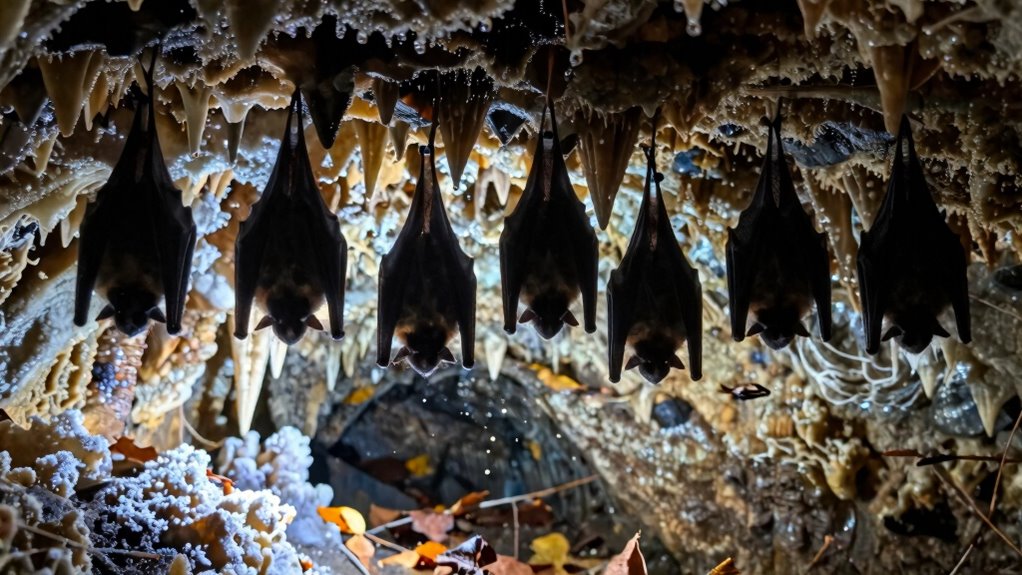
When signs of stress or disturbance become evident inside a cave, it’s a clear signal to pause tours for bats. During bat hibernation, bats are especially vulnerable to disruptions that can force them to wake prematurely, draining essential energy reserves. If you notice increased movement or agitation among the bats, it indicates that the cave disturbance is impacting their rest. Disrupting hibernating bats can lead to higher mortality rates and long-term population declines. Additionally, if you observe bats abandoning their roosts or showing signs of stress, it’s time to halt tours immediately. Protecting their hibernation period is indispensable for their survival. Recognizing these signs ensures you minimize human impact and support the health of cave ecosystems during sensitive times. Understanding hibernation biology helps in identifying the appropriate moments to avoid disturbance and preserve bat populations effectively. Being aware of protective behaviors displayed by bats can also serve as an indicator that their habitat needs undisturbed conditions. Moreover, monitoring cave disturbance indicators can provide early warnings to prevent long-term harm to these vital species. Paying close attention to bat activity patterns can further help in determining when to limit access to sensitive caves.
Best Practices for Planning Cave Tours to Protect Bats?

When planning cave tours, you need to consider the timing to minimize disturbance during critical bat activity periods. Using appropriate equipment and maintaining proper behavior can further protect these sensitive species. By focusing on these key points, you help ensure your tours support bat conservation efforts effectively. Additionally, understanding air quality within caves can help prevent disturbances caused by strong odors or pollutants that may affect bat health. Monitoring environmental conditions can also help identify potential threats to bats, enabling more informed management decisions. Implementing necessary cookies can ensure that data collected about environmental conditions is accurately recorded for ongoing conservation efforts. Recognizing the importance of Youngster Choice in educational outreach can foster greater awareness and support for bat preservation initiatives. Incorporating research findings about bat habitats and behaviors can further enhance your tour planning and conservation strategies.
Timing of Tours
Timing of cave tours is crucial for protecting bats, as their most sensitive periods occur during specific seasons. During migration and hibernation, disturbances can cause stress, disorientation, or abandonment of roosts. Planning tours around these critical times minimizes impact on bat populations. Understanding cave geology helps identify key bat habitats and migration corridors, guiding tour schedules to avoid peak activity periods. Tours should be scheduled outside of late summer to early fall, when bats are migrating, and winter hibernation months, typically from late fall to early spring. Proper planning ensures that caves remain a safe refuge, allowing bat populations to thrive. Seasonal activity patterns can help inform the best times for tours, ensuring minimal disruption to bats. Sticking Wall Decor techniques can also be employed to minimize physical disturbances within caves during tours.
Equipment and Behavior
Planning cave tours with appropriate equipment and behavior is essential for minimizing disturbance to bats. Proper gear helps reduce noise and physical contact, protecting sensitive species during bat migration periods. Always carry clean, non-reflective lighting to avoid startling bats and ensure safe cave maintenance. Wear clothing that covers skin to prevent scent transfer, which can alert bats to human presence. Use quiet, slow movements to avoid unnecessary disturbance. Limit tour group sizes to prevent overcrowding, and educate visitors on the importance of respecting bat habitats. By following these best practices, you help preserve critical roosts and support healthy bat populations during sensitive times, ensuring tours are both enjoyable and environmentally responsible.
Partnering With Experts to Support Responsible Cave Tourism?
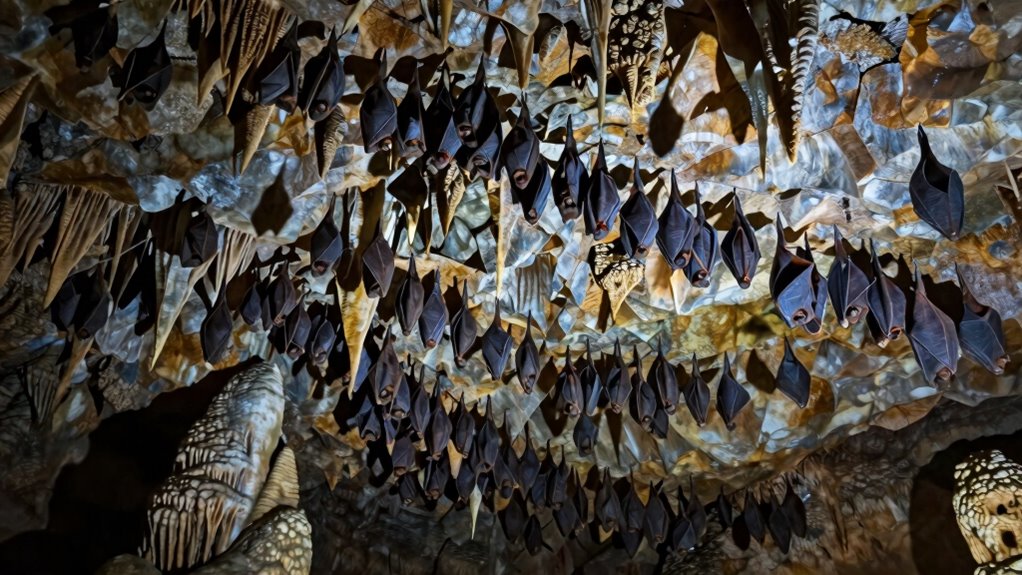
Partnering with experts is essential to guarantee that cave tourism remains responsible and sustainable. Professionals specializing in bat migration can help identify critical times when human presence might disturb roosting bats, especially during migration seasons. Experts in cave acoustics can assess how tour activities impact natural sounds, ensuring that visitor noise doesn’t interfere with bat communication or navigation. By collaborating with scientists and conservationists, you’ll gain valuable insights into the cave’s delicate ecosystem, guiding your tour schedules and practices. This partnership helps prevent unnecessary stress on bats and preserves the integrity of their habitat. Additionally, understanding the importance of bat migration, which is sensitive to human activity, allows for more informed decision-making regarding tour timing. Incorporating conservation strategies into your planning can further minimize ecological disruption and promote sustainable tourism. Ultimately, working with these experts ensures that your cave tours support conservation efforts while providing meaningful experiences for visitors.
Frequently Asked Questions
How Do Different Bat Species Respond to Human Disturbances?
You’ll notice that different bat species respond to human disturbances through various behavioral adaptations; some may quickly leave roosts or reduce activity, while others tolerate more noise. These responses depend on species-specific sensitivities, which influence their stress levels and survival strategies. By understanding these differences, you can minimize impacts on bats, ensuring their habitats remain undisturbed and healthy during human activities.
Are There Legal Restrictions on Cave Visits During Certain Seasons?
Like a guardian of nature’s rhythm, you must heed legal cave restrictions during certain seasons. Yes, seasonal cave closures are often mandated by law to protect hibernating bats and their habitats. These legal cave restrictions aim to minimize human disturbance during sensitive periods, ensuring ecological balance. By respecting these rules, you help preserve the delicate cave ecosystems and support conservation efforts, making your visit both responsible and meaningful.
What Are the Long-Term Impacts of Frequent Cave Tours on Bat Populations?
Frequent cave tours can harm bat populations by causing habitat disruption and increasing disease transmission risks. When you visit often, you disturb their roosting sites, making it harder for bats to reproduce and find shelter. Additionally, human contact can spread diseases like White-nose Syndrome, which decimates colonies. To protect bats, limit tour frequency, follow guidelines, and support conservation efforts that prioritize their habitat health and disease prevention.
How Can Visitors Identify Signs of Bat Distress During Tours?
You can spot signs of bat distress during tours by paying attention to peculiar behaviors. Listen for unusual bat vocalizations that sound distressed or frantic, and watch for wing fluttering or erratic movements. If bats seem agitated, vocalize loudly, or flutter wildly, it indicates they’re uncomfortable or disturbed. Recognizing these signs helps you understand when to step back, ensuring the bats’ safety and helping protect their delicate habitats.
What Role Do Local Communities Play in Bat Conservation Efforts?
You can support bat conservation by engaging with community-led initiatives that focus on protecting local bat populations. Your participation in education and awareness programs helps spread important information about bats’ essential roles and threats they face. By collaborating with local communities, you contribute to conservation efforts, promote responsible tourism, and guarantee bats receive the protection they need for healthy ecosystems. Your active involvement makes a meaningful difference.
Conclusion
Remember, “a stitch in time saves nine.” By respecting bat habitats and timing your cave visits wisely, you help protect these crucial creatures and their ecosystems. Following seasonal guidelines and partnering with experts guarantees your tours remain responsible and sustainable. When you prioritize conservation, you’re not just enjoying nature – you’re helping preserve it for generations to come. So, plan thoughtfully and act now; every small step makes a big difference.