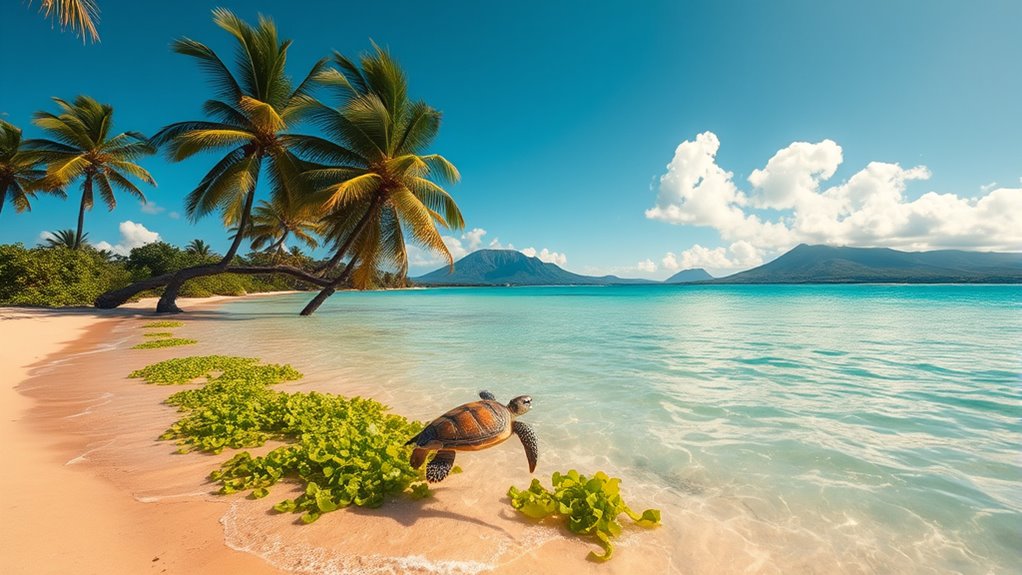

The beaches of the Cook Islands are prime nesting spots for green and hawksbill turtles, especially from October to March. You’ll want to keep your distance from marked nesting areas to prevent disturbing these remarkable creatures. Participating in local conservation programs can greatly help protect their habitats, while guided tours offer insight into their life cycles and the challenges they face. Discover how you can support these efforts and enjoy the breathtaking beauty of these islands further.
Key Takeaways
- Beaches in the Cook Islands serve as vital nesting grounds for green and hawksbill turtles from October to March.
- Respect marked nesting sites to prevent disturbances that can lead to nest abandonment by turtles.
- Participate in local conservation programs to help protect and restore turtle habitats.
- Join guided night walks for educational experiences about sea turtle nesting and lifecycle.
- Support local organizations focused on safeguarding sea turtle nesting sites through donations and volunteer work.

The stunning beaches of the Cook Islands are not just a paradise for sun-seekers; they also serve as essential nesting grounds for sea turtles. Each year, from October to March, these sandy shores become a critical sanctuary during the nesting season for several species, including the green turtle and the hawksbill turtle. As you walk along the coastline, you might catch a glimpse of these majestic creatures emerging from the ocean, making their way to lay eggs in the warm sand. It’s a beautiful sight, but it also highlights the significance of protecting these delicate ecosystems.
The beaches of the Cook Islands are vital nesting grounds for sea turtles, showcasing nature’s beauty and the need for conservation.
You may be wondering how you can contribute to conservation efforts while enjoying the beauty of the Cook Islands. First, it’s imperative to respect the nesting areas. When you’re on the beach, keep your distance from any marked nesting sites. These turtles need a safe and quiet environment to lay their eggs, and disturbances can cause them to abandon their nests. Just imagine the impact your consideration could have on guaranteeing the survival of these incredible animals.
Participating in local conservation programs is another fantastic way to get involved. Many organizations in the Cook Islands focus on sea turtle protection and habitat restoration. By volunteering your time or even making a donation, you can help guarantee that these turtles have a safe place to nest and thrive. Plus, you’ll gain valuable insight into the challenges these species face and what locals are doing to combat them.
If you’re lucky enough to be there during nesting season, consider joining a guided night walk. These tours often take you to nesting sites and provide an educational experience about the life cycle of sea turtles. You’ll learn about their migration, nesting habits, and the threats they encounter, such as poaching and habitat loss. Additionally, understanding the importance of protecting delicate ecosystems can enhance your appreciation of these magnificent creatures and their environment.
Frequently Asked Questions
What Time of Year Do Sea Turtles Nest in the Cook Islands?
Sea turtles typically nest in the Cook Islands from November to March, coinciding with their nesting season. During this time, you’ll notice increased activity as turtles come ashore to lay their eggs. The mating season also peaks around this period, so if you’re lucky, you might witness some unique behaviors. Be sure to respect their nesting areas and keep the beaches clean, helping guarantee these incredible creatures have a safe place to thrive.
Are There Guided Tours Available for Sea Turtle Watching?
Amazing guided tours for turtle watching await you. You’ll find several local operators offering unforgettable experiences, allowing you to witness these magnificent creatures in their natural habitat. As you glide through crystal-clear waters, your knowledgeable guide will share fascinating facts about sea turtles and their behaviors. Don’t miss the chance to explore this enchanting experience, where you can connect with nature and create memories that’ll last a lifetime.
Can I Volunteer for Sea Turtle Conservation Efforts?
Yes, you can definitely volunteer for sea turtle conservation efforts! Many organizations offer volunteer opportunities that focus on protecting these magnificent creatures. You’ll participate in conservation programs where you can help with nesting surveys, beach clean-ups, and educational outreach. It’s a rewarding experience that not only helps sea turtles but also allows you to connect with like-minded individuals. Just research local organizations to find the right program that fits your schedule and interests!
What Should I Do if I Find a Stranded Sea Turtle?
If you find a stranded sea turtle, don’t panic! First, check its condition and keep it calm. Follow rescue procedures by carefully moving it to a shaded area if it’s in danger. Then, immediately contact local wildlife authorities or a marine rescue group to report the situation. They’ll provide specific reporting protocols and send help. Remember, your quick action can make a big difference in the turtle’s recovery!
Are There Specific Behaviors to Avoid Around Nesting Turtles?
You should avoid disturbing nesting turtles by keeping a safe distance and not shining lights on them. Don’t approach or touch the turtles, as this can stress them out. Also, resist the temptation to feed turtles; it disrupts their natural behavior and can harm their health. Respect their space, and if you see nesting activity, observe quietly from afar to make certain they can complete their process undisturbed.
Conclusion
As you explore the stunning beaches of the Cook Islands, remember that these shores are more than just paradise—they’re a sanctuary for sea turtles. By choosing to support conservation efforts and respecting their nesting sites, you can help protect these magnificent creatures for generations to come. After all, our actions today shape the world of tomorrow. So, let’s leave footprints of kindness in the sand, ensuring that the gentle turtles continue to grace our beaches with their presence.