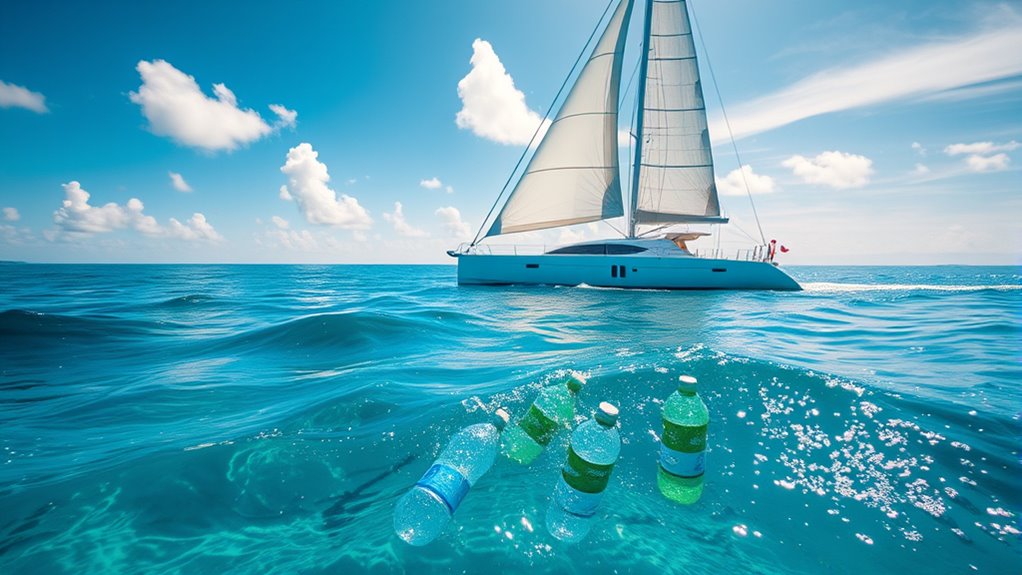

Low-impact yachting means you’re sailing consciously, using eco-friendly materials, renewable energy, and smart waste management to protect our oceans. You can harness wind power with sails and solar panels, reducing fossil fuel use. By avoiding single-use plastics and recycling, you lessen your waste footprint. This approach helps preserve marine ecosystems and promotes respect for nature. If you’re curious about more sustainable practices you can adopt while yachting, there’s plenty more to explore.
Key Takeaways
- Utilize renewable energy sources like solar panels and wind turbines to power onboard systems and reduce fossil fuel reliance.
- Implement effective waste management practices, including reusable containers and recycling systems, to minimize onboard waste and plastic use.
- Choose eco-friendly vessel materials, such as recycled aluminum and responsibly sourced wood, to lessen the environmental impact of yacht construction.
- Educate crew members on marine conservation to protect ecosystems and avoid damaging seabeds and wildlife habitats during voyages.
- Embrace low-impact yachting practices that promote sustainability and responsible behavior among sailors for a healthier marine environment.

As you set sail into the open waters, embracing the thrill of yachting doesn’t have to come at the expense of the environment. You can enjoy the beauty of the ocean while also being mindful of your ecological footprint. One way to achieve this is by choosing vessels made from eco-friendly materials. Many modern yachts are constructed using sustainable resources, such as recycled aluminum and responsibly sourced wood, which considerably reduce the environmental impact of your sailing adventures. By opting for boats built with these materials, you’re contributing to a healthier planet and ensuring that future generations can experience the same joy of yachting.
Embrace eco-friendly yachting by choosing sustainable materials for your vessel, ensuring a healthier planet for future generations.
In addition to selecting eco-friendly materials, consider how you power your yacht. Renewable energy sources, like solar and wind power, have transformed the yachting experience. Equipped with solar panels, your yacht can harness the sun’s energy to power onboard appliances and systems. This not only cuts down on fossil fuel consumption but also minimizes emissions. If you’re sailing in an area with consistent breezes, you might even explore using wind turbines to generate additional energy. By integrating these renewable energy solutions, you can sail with peace of mind, knowing you’re making a positive contribution to the environment.
While you’re enjoying the open seas, it’s also essential to think about waste management. Aboard a yacht, waste can accumulate quickly, but being proactive about it makes a world of difference. Carry reusable containers for food and drinks to minimize single-use plastics. Set up a recycling system on your yacht for various materials, like glass and aluminum. By adopting these practices, you can greatly reduce your waste footprint while cruising the coastlines and exploring hidden coves.
Embracing low-impact yachting isn’t just about the vessel or the energy you use. It’s about fostering a mindset focused on preservation and sustainability. Educate your crew and fellow sailors about the importance of protecting marine life and ecosystems. Simple actions, such as avoiding anchor damage to seabeds and respecting wildlife, can go a long way in ensuring that the beauty of the ocean remains intact.
Frequently Asked Questions
What Are the Best Sustainable Materials for Yacht Construction?
The best sustainable materials for yacht construction include biodegradable composites and recycled aluminum. Biodegradable composites offer durability while minimizing environmental impact, breaking down naturally when disposed of. Recycled aluminum, on the other hand, is lightweight yet strong, reducing energy consumption during production. By choosing these materials, you not only enhance the yacht’s performance but also contribute to a greener future. It’s a smart choice for eco-conscious sailors like you!
How Can I Reduce Fuel Consumption While Yachting?
To reduce fuel consumption while yachting, you’ve gotta balance sail efficiency with engine optimization. When the wind’s right, hoist those sails and let nature do the heavy lifting. Conversely, during calm days, make sure your engine runs at its peak performance by maintaining it regularly. Adjusting your speed can also help; cruising at a moderate pace often uses less fuel. By mastering these techniques, you’ll sail further while consuming less.
What Are Eco-Friendly Alternatives to Traditional Yacht Cleaning Products?
You can switch to eco-friendly alternatives like biodegradable cleaners and natural solvents for your yacht. These products effectively clean without harming marine life. For tough stains, try using vinegar or baking soda as natural options. They’re safe for the environment and won’t pollute the water. When you’re ready to clean, look for labels that emphasize sustainability, ensuring you’re making choices that protect our oceans while keeping your yacht sparkling clean.
How Can I Properly Dispose of Waste While at Sea?
When you’re out at sea, proper waste management is essential for protecting marine wildlife. Start by segregating your waste—recyclables, food scraps, and hazardous materials all need separate storage. Use designated marine waste disposal systems at marinas when you return. Make sure to avoid dumping anything overboard; it harms the ecosystem. By being mindful of your waste, you’ll help keep the ocean pristine and its creatures thriving.
Are There Regulations for Low-Impact Yachting in Different Countries?
Yes, there are regulations for low-impact yachting in different countries. You’ll need to familiarize yourself with maritime regulations specific to each location, as they can vary considerably. Many countries adhere to international standards set by organizations like the International Maritime Organization. It’s crucial to research these regulations before your trip, ensuring you comply with waste disposal, emissions, and other environmental guidelines to minimize your impact while enjoying the sea.
Conclusion
Incorporating low-impact practices in yachting isn’t just a trend; it’s a necessity for preserving our oceans. Did you know that recreational boating contributes to nearly 25% of all marine pollution? By being mindful of wind, waste, and water use, you can markedly reduce your environmental footprint while enjoying the open seas. So, next time you set sail, remember that every small change counts. Embrace sustainable yachting, and let’s protect our blue planet together!