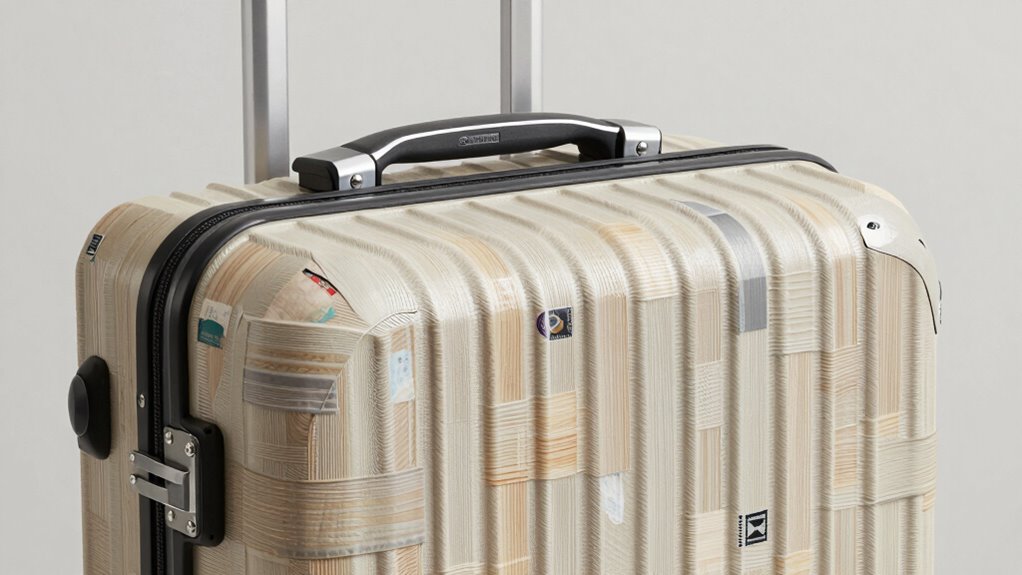

When choosing recycled luggage, remember that genuine eco-friendly products clearly disclose their recycled content and often carry certifications like GRS or OEKO-TEX. Be cautious of vague marketing claims that boast small recycled percentages or use eco-friendly words without proof. Authentic materials come from transparent manufacturing practices that minimize waste and energy use. To truly make sustainable choices, look for verified proof and trusted brands — and what follows will help you spot the real from the marketing hype.
Key Takeaways
- Verify recycled content percentages on labels; look for clear, specific claims rather than vague marketing language.
- Check for eco certifications like GRS or OEKO-TEX, which confirm genuine recycled materials and sustainable practices.
- Research brands’ manufacturing transparency to ensure eco-friendly processes reduce waste, energy use, and emissions.
- Be cautious of products claiming small recycled content as fully eco-friendly; authenticity depends on full lifecycle sustainability.
- Prioritize products with verified certifications and transparent sourcing to distinguish real recycled materials from marketing hype.

Have you ever wondered if your luggage could be both durable and eco-friendly? These days, many brands claim their products are made from recycled materials, but it’s worth digging a little deeper. Not all recycled claims are equal, and understanding what’s behind those promises can help you make smarter choices. When examining recycled luggage, it’s essential to consider the process behind its production. Sustainable manufacturing practices play a crucial role here, ensuring that materials are sourced responsibly and that the entire process minimizes environmental impact. Brands that prioritize sustainable manufacturing often hold eco friendly certifications, which verify their commitment to eco-conscious procedures. Certifications like Global Recycle Standard (GRS) or OEKO-TEX confirm that a product’s materials are genuinely recycled or environmentally friendly, providing you with a layer of assurance that the luggage isn’t just marketing hype.
Choose recycled luggage with certified eco-friendly materials and transparent manufacturing practices to ensure genuine sustainability.
Many companies highlight their use of recycled plastics or fabrics, but it’s important to question how much of that material is genuinely recycled versus what’s marketed as such. Some brands may use a small percentage of recycled content but still promote their products as eco-friendly, which can be misleading. Always check if the luggage’s labeling clearly states the percentage of recycled materials and whether it’s certified by recognized standards. This transparency helps distinguish between genuine eco-friendly products and those simply riding the sustainability wave for marketing purposes.
Furthermore, a lot of recycled materials used in luggage are processed through eco friendly manufacturing practices, which focus on reducing waste, conserving energy, and limiting harmful emissions. Look for brands that openly share their manufacturing processes, demonstrating their commitment to sustainability. When a company invests in eco friendly certifications, it indicates they meet strict environmental and social standards, reinforcing that their recycled materials are part of a broader sustainable approach rather than a superficial label. Additionally, understanding the thermal behavior of recycled materials can provide insight into their durability and performance over time, especially under varying travel conditions.
In the end, choosing recycled luggage isn’t just about the materials; it’s about trusting the entire lifecycle behind the product. Verified eco friendly certifications and transparent sustainable manufacturing practices show that a brand genuinely values environmental responsibility. So, when you’re shopping, take the time to read labels, research brands, and ask questions. Your choices can support companies that prioritize eco-conscious methods, helping reduce waste and protect the planet while still getting a durable, stylish piece of luggage. Remember, the real eco-friendly luggage isn’t just about what it’s made of but about the integrity of the process behind it.
Frequently Asked Questions
How Durable Are Recycled Material Luggage Compared to Traditional Options?
Recycled material luggage can be quite durable, often matching traditional options in quality, especially with high-grade materials. You’ll find that material quality varies with design, but many brands use recycled plastics or composites that withstand daily wear and tear. While some recycled options may feel lighter or less rigid, advancements in manufacturing guarantee they’re resilient enough for frequent travel, making them a smart, eco-friendly choice without sacrificing durability.
Are Recycled Materials in Luggage Environmentally Sustainable Long-Term?
Recycled materials in luggage can be environmentally sustainable long-term if upcycling trends continue and eco label credibility remains strong. By choosing products backed by trusted eco labels, you support responsible resource use and waste reduction. As upcycling gains popularity, these materials are more likely to be reused efficiently, reducing environmental impact. Just make certain you verify the eco claims to truly benefit from sustainable luggage options and contribute to ongoing eco-friendly practices.
Do Recycled Luggage Options Meet Airline Weight Restrictions?
Recycled luggage options generally meet airline weight restrictions because the recycling process often reduces material weight, and the sourcing of recycled materials allows for lightweight designs. You might find that these bags are comparable in weight to traditional luggage, thanks to innovative materials and manufacturing techniques. Just check the product specs, and you’ll see that recycled materials can be lightweight, durable, and airline-friendly, making your travel easier without sacrificing sustainability.
What Certification Marks Indicate Genuine Recycled Content?
You’ll want to look for certification marks like GRS (Global Recycled Standard) or RCS (Recycled Claim Standard), which honestly make it easier to spot genuine recycled content. These recycled material labels aren’t just marketing fluff; they follow strict certification standards that verify your luggage’s eco-credibility. Ironically, if a label claims recycled but lacks certification, it’s probably just recycled rhetoric. So, check for these marks to guarantee authenticity and make greener choices.
How Does Recycled Material Luggage Impact Overall Product Safety?
Using recycled material in your luggage generally doesn’t compromise safety if the manufacturer follows proper safety standards. Recycled material safety is guaranteed through rigorous testing, so the luggage impact remains minimal while maintaining durability. You can trust that eco-friendly luggage meets safety regulations, and it won’t weaken the structure or cause hazards. Overall, choosing recycled material luggage offers a safer, more sustainable option without sacrificing your security during travel.
Conclusion
So, as you venture into the world of recycled luggage, remember that not all that glitters is eco-friendly gold. Some brands dye their promises with vibrant marketing hues, while others genuinely craft bags from second chances. Like choosing a sturdy bridge over a shaky plank, pick your luggage wisely—trust genuine recycled materials that stand the test of time and travel. Your journey isn’t just about reaching destinations, but making a mindful splash along the way.