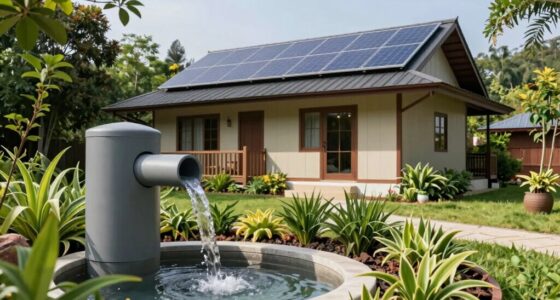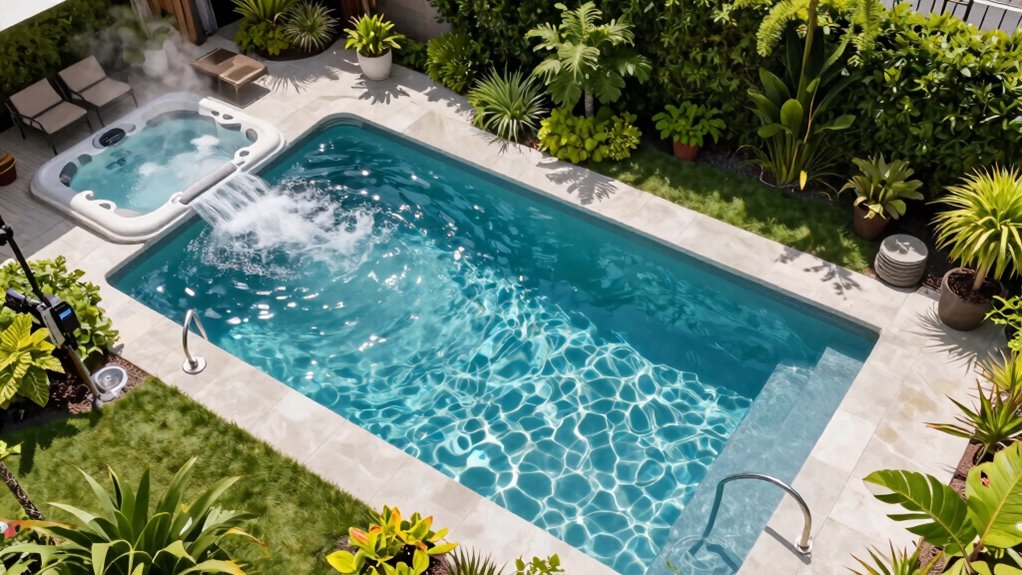

Pools and hot tubs offer relaxation but carry a hidden environmental footprint through water use, chemical runoff, and high energy consumption. By choosing eco-friendly options like solar heating, energy-efficient pumps, and natural filtration, you can markedly reduce your impact. Smart maintenance, water-saving features, and sustainable landscaping further help. If you want to discover simple ways to enjoy your backyard oasis while protecting the planet, there’s plenty more to explore.
Key Takeaways
- Traditional pools and hot tubs consume significant water, energy, and chemicals, harming local ecosystems.
- Using solar heating, energy-efficient equipment, and eco-friendly filtration reduces environmental impact.
- Natural and biological filtration systems minimize chemical use and energy consumption.
- Implementing water-saving practices and leak prevention helps conserve water and reduce waste.
- Sustainable design choices, such as native landscaping and eco-friendly materials, lower the overall ecological footprint.
Why Your Pool and Hot Tub Might Be Harming the Environment
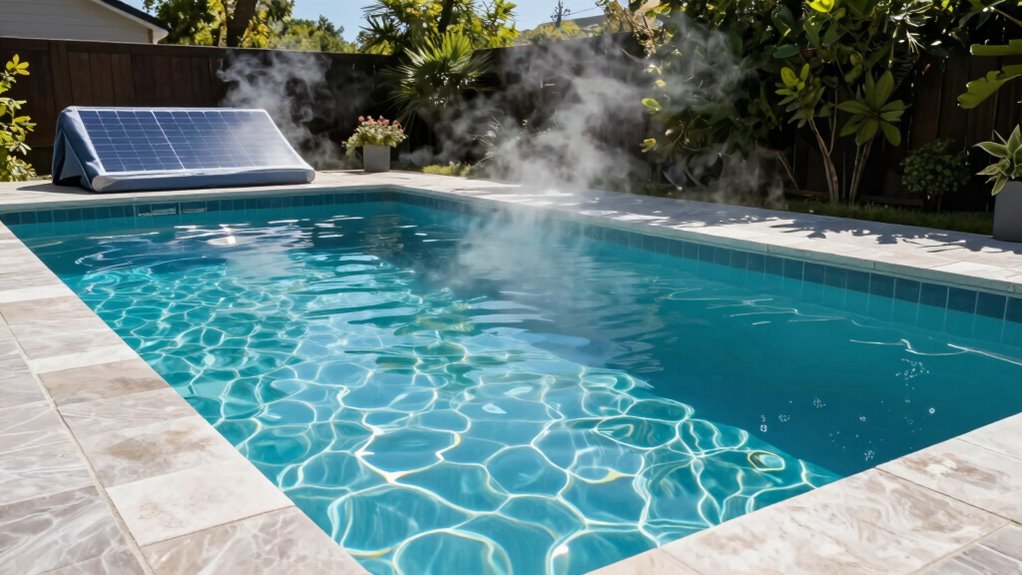
Even though pools and hot tubs provide relaxation and enjoyment, they can also harm the environment if not managed properly. One major concern is the use of pool chemicals, which often include chlorine and other disinfectants. When overused or improperly handled, these chemicals can leach into nearby water sources, harming wildlife and polluting the environment. Additionally, many pool owners overlook water conservation, wasting large amounts of fresh water through evaporation, splashing, or leaks. Filling a pool repeatedly or running pumps excessively increases water consumption and strains local water supplies. Properly maintaining essential oils for water safety and adopting water-saving practices can further reduce your environmental impact, ensuring that your oasis remains a source of joy without harming the planet. Incorporating energy-efficient pump systems can also help decrease electricity use and minimize carbon footprint associated with pool operation. Being aware of the water chemistry and how it affects both your pool and the environment is crucial for sustainable management.
How Energy Use Affects Your Pool’s Environmental Footprint
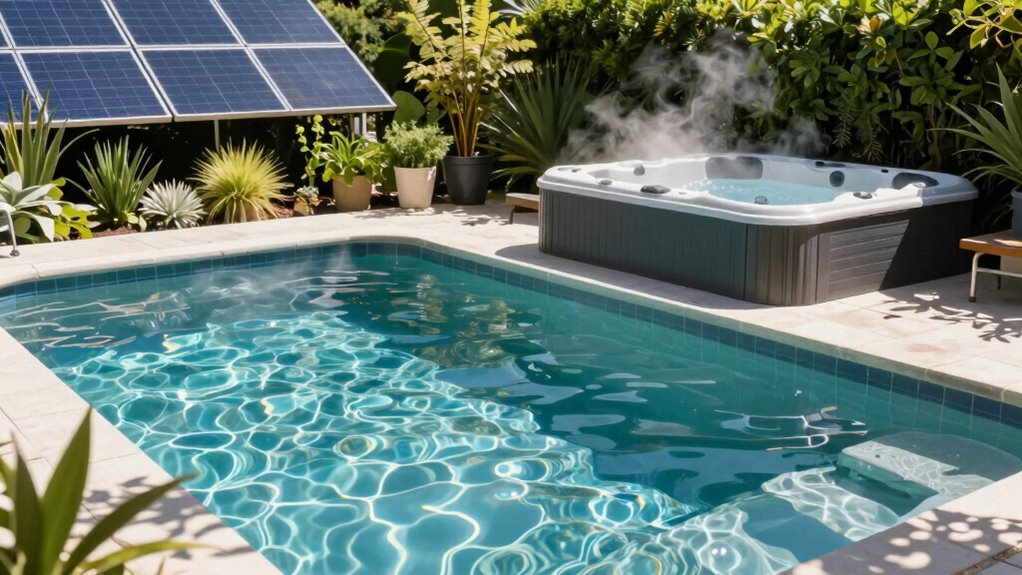
Your pool’s energy habits directly impact its environmental footprint. By understanding your energy consumption patterns, you can find ways to reduce waste and save money. Choosing eco-friendly maintenance options makes it easier to keep your pool green and sustainable.
Energy Consumption Patterns
Energy consumption patterns profoundly impact your pool’s environmental footprint, as the way you operate and maintain your pool determines how much energy is used and wasted. Using solar power for heating can markedly reduce reliance on grid electricity, lowering your carbon footprint. Additionally, adopting water conservation practices, like covering your pool when not in use and fixing leaks promptly, helps minimize unnecessary energy needed for water treatment and heating. Properly managing pump schedules and maintaining equipment ensures efficient operation, reducing energy waste. Implementing natural filtration systems can further decrease chemical and energy use, promoting a more sustainable backyard environment. Being mindful of these patterns encourages energy-efficient practices that can lead to significant environmental benefits. Incorporating smart energy management systems can optimize your equipment’s operation for even greater efficiency. Utilizing home automation to control your pool equipment remotely allows for more precise scheduling and reduces unnecessary energy use. Being aware of battery technologies and their efficiencies can help you choose the most sustainable options for your setup. By being mindful of these patterns, you can cut down on energy consumption, save money, and lessen your environmental impact. Small adjustments in your routine can make a meaningful difference in the sustainability of your pool.
Eco-Friendly Maintenance Options
Choosing eco-friendly maintenance options can substantially reduce your pool’s environmental impact by minimizing energy consumption. Natural filtration systems, such as biological filters or plant-based filters, lessen reliance on energy-intensive equipment, cutting your carbon footprint. Switching to biodegradable chemicals also supports sustainability; these eco-friendly products break down more easily and reduce harmful runoff into waterways. Regularly maintaining your pool with these options prevents the need for excessive chemical treatments or energy-heavy cleaning methods. By adopting natural filtration and biodegradable chemicals, you not only protect the environment but also create a healthier swimming environment. Small changes in your maintenance routine can lead to significant benefits, making your pool both eco-conscious and cost-effective over time.
Water and Chemical Waste in Traditional Pool Maintenance
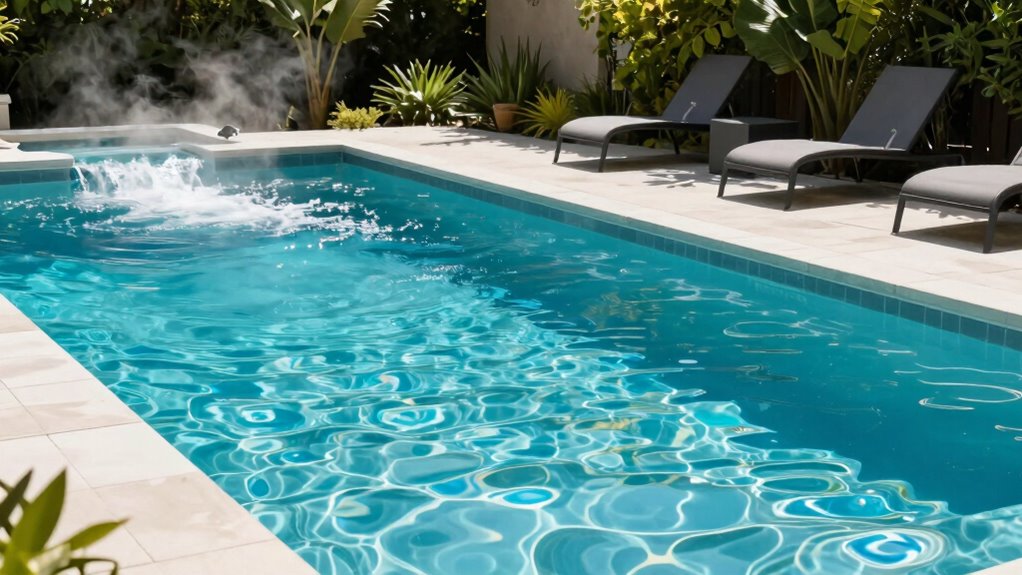
Traditional pool maintenance often results in significant water and chemical waste. You may notice frequent water wastage from draining and refilling your pool to maintain proper levels. Additionally, chemicals like chlorine can lead to chemical runoff, contaminating local waterways and harming ecosystems. Common issues include:
- Overdosing chemicals, which increases runoff and pollution
- Excess water used for backwashing filters and refilling
- Leaks or evaporation leading to unnecessary water loss
This cycle not only wastes valuable water but also introduces excess chemicals into the environment. Implementing sauna and cold-plunge systems can reduce reliance on chemical treatments and promote more sustainable water management practices. The chemicals you add to keep your pool clean often end up in runoff, impacting nearby plants and wildlife. Incorporating eco-friendly water treatment methods can further minimize environmental impact and enhance sustainability. For example, water-saving devices can significantly reduce overall consumption. Adopting smart water management techniques can help monitor and reduce unnecessary water use. Additionally, understanding water chemistry helps optimize chemical use and minimize waste. Reducing this waste is essential for a more sustainable approach to pool ownership.
Eco-Friendly Design Ideas for Pools and Hot Tubs
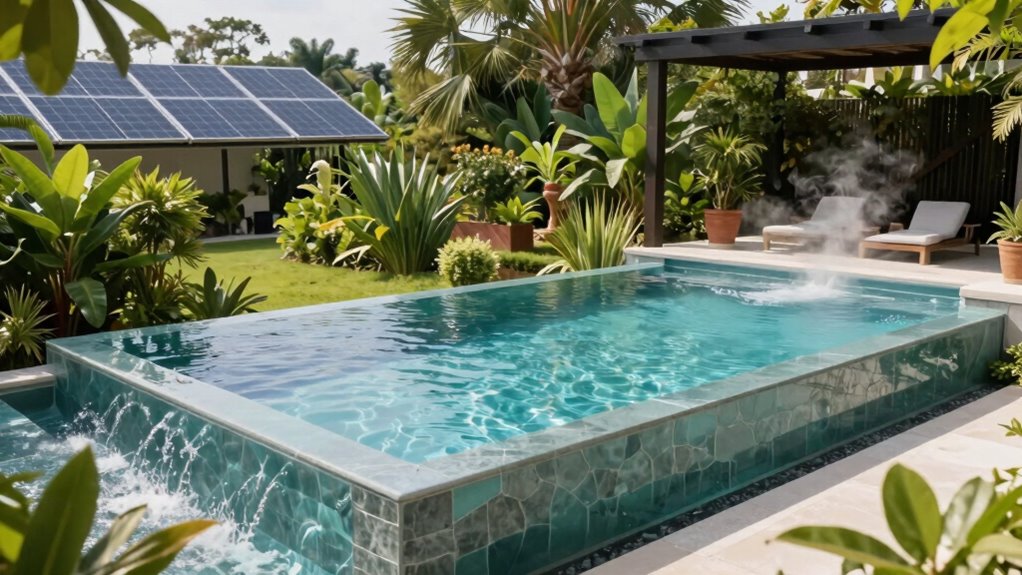
To make your pool or hot tub more eco-friendly, start by incorporating sustainable design features that minimize environmental impact. Opt for energy-efficient pool safety measures, such as solar-powered lighting and automatic covers that reduce heat loss and evaporation. Choose hot tub accessories made from eco-friendly materials that last longer and cut down on waste, like reusable filters and biodegradable cleaning products. Incorporate natural landscaping around your pool to reduce water runoff and avoid chemical-heavy treatments. Use shaded areas or awnings to minimize heat gain, reducing cooling needs. Installing LED lighting not only enhances safety but also lowers energy consumption. Additionally, selecting air purifiers for your outdoor spaces can improve air quality by reducing pollutants and allergens near your pool area. Incorporating sustainable landscaping practices can further reduce water usage and chemical runoff, promoting a healthier environment. Utilizing smart technology in your pool management can further optimize energy use and maintenance routines, leading to a more sustainable experience. For example, automated pool systems can monitor water quality and adjust chemical levels automatically, reducing waste and ensuring safety. Incorporating renewable energy sources, such as solar panels, can significantly decrease your pool’s carbon footprint. These eco-conscious choices help you enjoy your pool or hot tub while supporting a healthier planet.
Choosing Sustainable Heating and Filtration Systems

When selecting heating and filtration systems, you want options that are both effective and eco-friendly. Solar heaters and heat pumps offer sustainable ways to warm your pool or hot tub, reducing energy use. Additionally, upgrading to efficient filtration technologies helps keep your water clean while minimizing environmental impact. For added peace of mind, choosing systems with proper sizing and load-planning tools ensures reliable operation and energy efficiency. Incorporating energy-efficient equipment can further lower your carbon footprint and operational costs over time, especially when paired with renewable energy sources to maximize sustainability.
Eco-Friendly Heating Options
Opting for eco-friendly heating options allows you to reduce your environmental impact while maintaining a comfortable pool or hot tub experience. Solar heating harnesses the sun’s energy, providing a cost-effective and renewable source of warmth. Geothermal systems use the earth’s stable underground temperature to efficiently heat water, cutting energy use considerably. Consider these sustainable options:
- Installing solar panels dedicated to pool or hot tub heating
- Using geothermal heat pumps for consistent, eco-friendly warmth
- Combining passive solar designs with insulation to minimize energy needs
Utilizing thermal efficiency techniques further enhances your system’s sustainability and performance. These methods lower your carbon footprint and save money over time. By choosing solar heating or geothermal systems, you create a more sustainable backyard oasis that’s kinder to the environment without sacrificing comfort. Incorporating advanced materials can also improve the durability and effectiveness of your heating system, ensuring long-term savings and performance.
Efficient Filtration Technologies
Choosing sustainable filtration systems can substantially reduce your pool or hot tub’s environmental impact while maintaining ideal water quality. Solar powered pumps are a smart choice, harnessing sunlight to operate efficiently and cut energy consumption. They eliminate the need for grid electricity, lowering your carbon footprint. Additionally, biodegradable filters offer eco-friendly water filtration, breaking down naturally instead of adding to landfill waste. These filters can be replaced without harming the environment, ensuring your system stays effective without compromising sustainability. Upgrading to these technologies not only helps protect the planet but also saves you money over time through reduced energy and waste disposal costs. By selecting solar powered pumps and biodegradable filters, you make a conscious choice that benefits both your pool’s performance and the environment.
Low-Impact Maintenance Tips for Your Backyard Spa
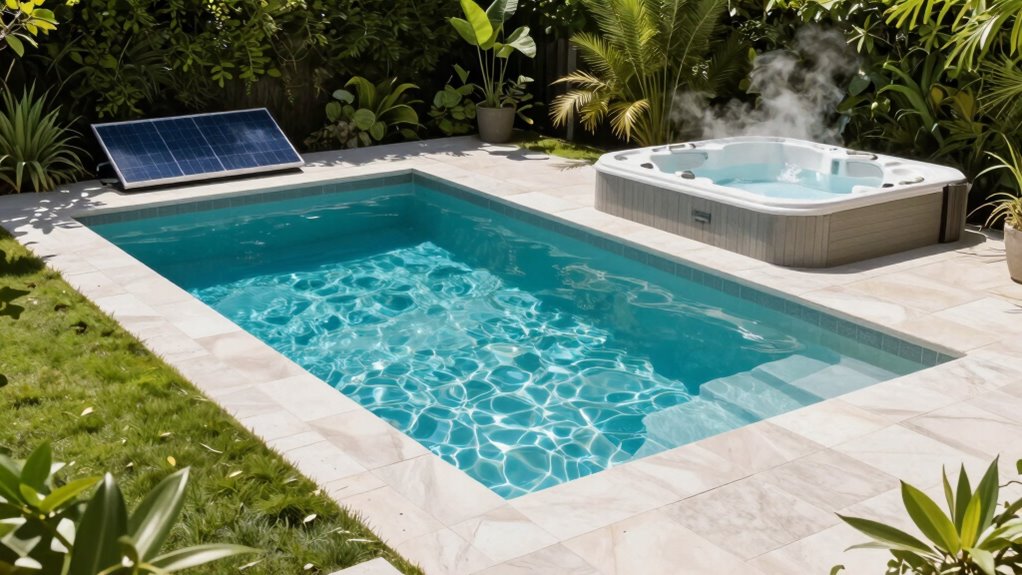
Maintaining your backyard spa doesn’t have to be labor-intensive or wasteful. Simple, mindful practices can keep it clean and safe while reducing environmental impact. Start by regularly inspecting your hot tub cover; a sturdy cover prevents debris, conserving energy and maintaining pool safety. Use energy-efficient filters and keep them clean to minimize water and chemical use. Cover your spa when not in use to retain heat and reduce evaporation. Additionally, avoid overusing chemicals by testing water levels often and adjusting accordingly.
- Use a hot tub cover to retain heat and prevent debris
- Schedule regular safety checks for pool safety
- Opt for eco-friendly cleaning products to reduce chemical runoff
Eco-Friendly Features for Relaxing Without the Environmental Cost
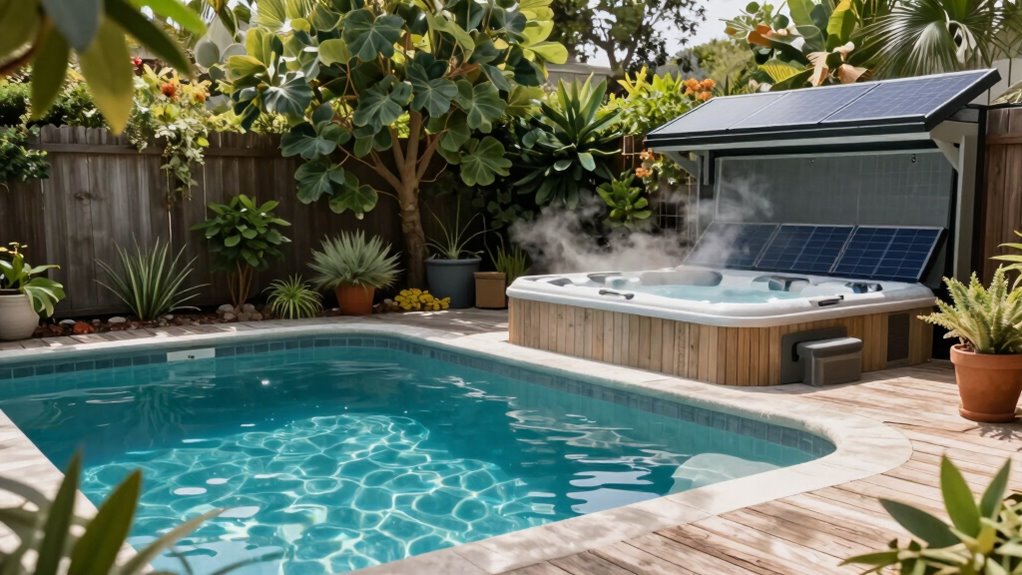
Creating an eco-friendly backyard spa experience is easier than you might think. Focus on features that reduce environmental impact while maintaining pool safety and proper water chemistry. Use solar-powered pumps and energy-efficient heaters to cut electricity use. Incorporate natural filtration methods like plant-based systems to minimize chemical reliance. Consider self-cleaning systems that keep water clear without harsh chemicals. Visualize your options:
| Solar heating | Chemical-free water treatment | Energy-efficient pumps |
|---|---|---|
| Natural filtration | LED lighting | Low-impact covers |
| Rainwater harvesting | Ozone sanitation | Eco-friendly cleaners |
| Pool safety alarms | pH balancing kits | Insulation for energy saving |
These features help you relax guilt-free, knowing you’re protecting water quality and reducing your footprint while enjoying your spa.
Best Brands and Products for Eco-Conscious Pools and Hot Tubs
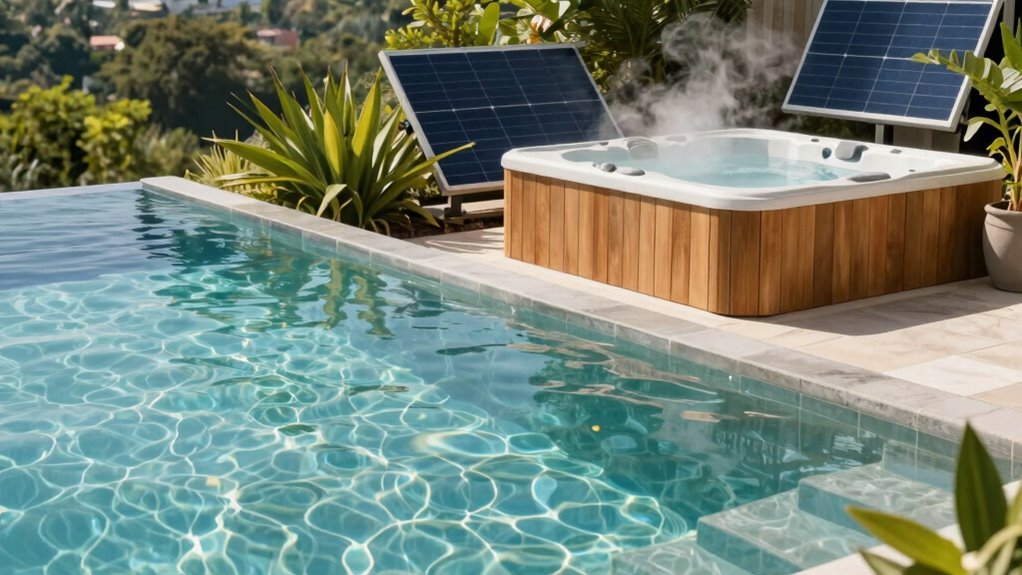
When selecting eco-friendly features for your pool or hot tub, the brands and products you trust make all the difference. Top eco-conscious brands prioritize water chemistry, guaranteeing safe, balanced water with minimal chemical use. They also emphasize pool safety by offering sustainable solutions that reduce environmental impact.
Look for products that include:
- Energy-efficient pumps and filters that lower power consumption
- Natural water treatment systems, like salt or mineral sanitizers
- Eco-friendly pool covers that conserve heat and reduce evaporation
These brands help you maintain ideal water chemistry while minimizing harmful chemicals. Choosing reputable, eco-focused brands not only supports pool safety but also ensures your hot tub or pool stays environmentally friendly, reducing your overall footprint.
Simple Steps to Reduce Your Pool’s Carbon Footprint
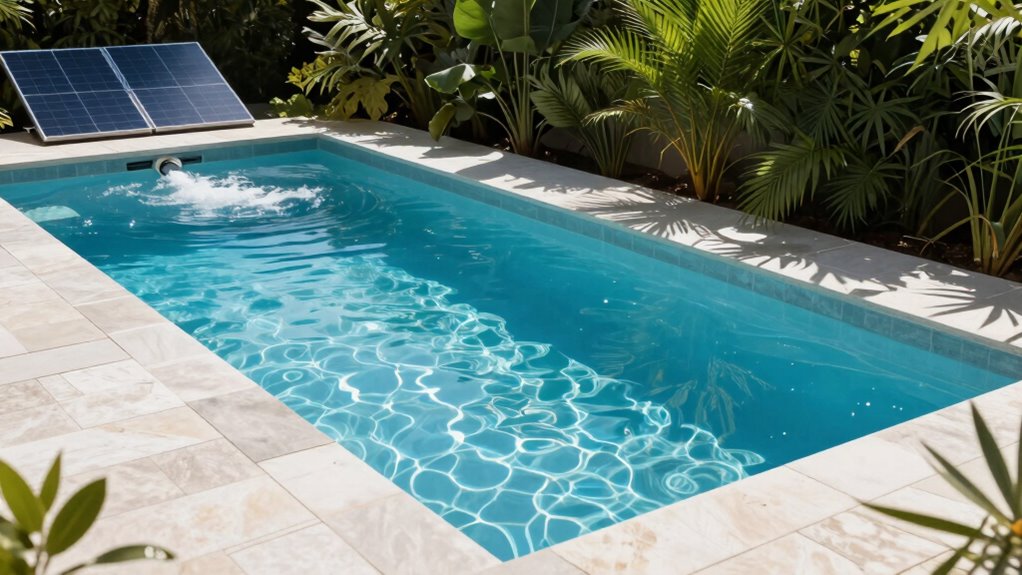
Reducing your pool’s carbon footprint starts with making simple, deliberate changes to how you operate and maintain it. Prioritize pool safety by regularly checking equipment and ensuring proper filtration, which can reduce energy waste. Use energy-efficient pumps and heaters to lower electricity consumption. Enhance your pool landscaping with native plants and shade trees to naturally cool the area, reducing the need for energy-intensive cooling or heating. Cover your pool when not in use to minimize heat loss and evaporation, conserving energy and water. These small steps not only cut emissions but also improve safety and aesthetics. By being mindful of maintenance routines and landscaping choices, you create a more sustainable, eco-friendly pool environment that benefits both your family and the planet.
Frequently Asked Questions
How Can I Measure My Pool’s Environmental Impact Accurately?
You can measure your pool’s environmental impact by tracking water conservation efforts and energy efficiency. Monitor water usage regularly, fixing leaks and using covers to reduce evaporation. Assess your energy consumption by checking your pump and heater efficiency, opting for energy-efficient equipment when possible. Keep a record of maintenance and utility bills to see how well you’re minimizing your pool’s footprint, helping you make greener choices moving forward.
Are There Eco-Friendly Alternatives to Traditional Pool Chemicals?
Think of eco-friendly sanitizers as the green guardians for your pool. You can swap traditional chemicals for options like mineral-based systems, saltwater chlorination, or UV sterilizers. These chemical alternatives are gentle on the environment, reducing harmful runoff and chemical use. Eco-friendly sanitizers keep your pool clean and safe while protecting aquatic life and your family’s health, making your swimming experience both revitalizing and responsible.
What Are the Long-Term Cost Savings of Sustainable Pool Options?
Sustainable pool options offer long-term cost savings by enhancing energy efficiency and water conservation. You’ll spend less on electricity through efficient pumps and solar heating, and reduce water bills by using smart covers and filtration systems. Over time, these savings add up, making your pool more affordable and eco-friendly. Plus, you’ll contribute to conserving resources, ensuring a better environment for future generations.
Can Natural Pools Be Maintained With Minimal Environmental Impact?
Natural pools are like ecosystems in your backyard, thriving with minimal environmental impact. You can easily maintain them using natural filtration and plant integration, which reduce chemical use and energy consumption. Regularly tending to aquatic plants and ensuring proper circulation keeps the water clean and healthy. With these eco-friendly practices, you’ll enjoy a beautiful, sustainable pool that blends seamlessly with nature, all while minimizing your ecological footprint.
What Government Incentives Exist for Eco-Friendly Pool Installations?
You can tap into government rebates and eco grants when installing eco-friendly pools. Many local and national programs encourage sustainable choices by offering financial incentives, making green pool options more affordable. Look into specific rebates for solar heating, energy-efficient pumps, or natural filtration systems. These incentives help you reduce costs while minimizing your environmental impact, making eco-friendly pool installations both practical and budget-friendly.
Conclusion
By choosing eco-friendly options, you can reduce your pool and hot tub’s carbon footprint by up to 50%. Remember, traditional pools use about 20,000 gallons of water annually, much of which goes to waste or chemical runoff. Small changes—like installing energy-efficient systems or using natural cleaning methods—make a big difference. Enjoy your backyard oasis guilt-free, knowing you’re helping to protect the environment while relaxing in your sustainable spa.