

Great hotel food waste programs focus on tracking different waste sources, setting clear goals, and involving staff through ongoing training. They adjust menus and portion sizes based on detailed data, partner with charities and composting efforts, and continuously monitor results to improve. Using technology and guest feedback helps identify waste patterns and optimize practices. If you explore these strategies further, you’ll discover how to create a more sustainable and efficient food operation.
Key Takeaways
- Implement real-time waste tracking systems to identify sources and reduce excess during preparation and service.
- Set measurable goals and regularly review waste metrics to ensure continuous improvement.
- Train staff consistently on waste reduction practices and foster a culture of sustainability.
- Adjust menus, portion sizes, and offer flexible options based on waste data to minimize leftovers.
- Collaborate with charities and composting programs to divert surplus food and reduce landfill waste.
Identify Hotel Food Waste Types and Sources
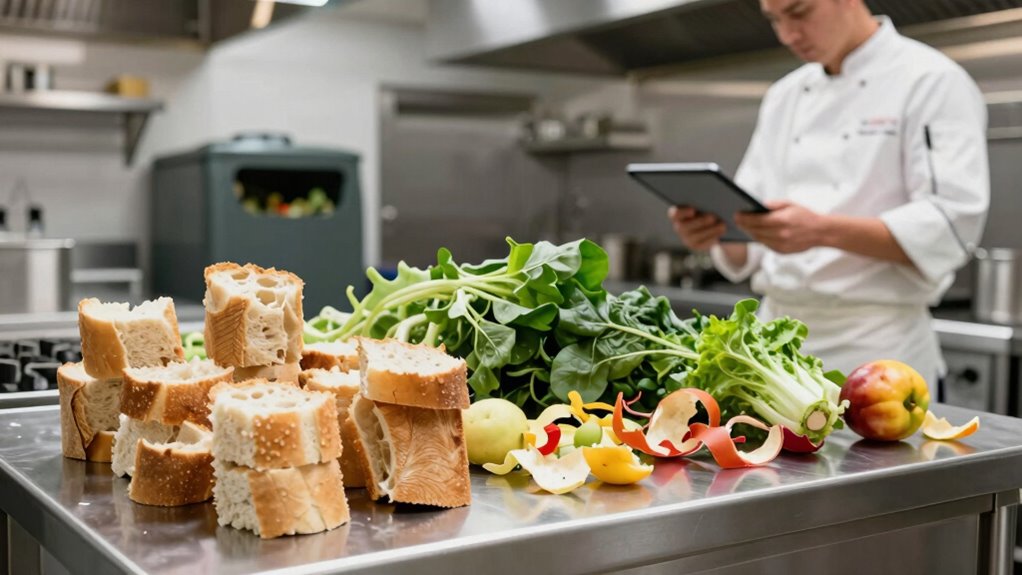
Understanding the different types and sources of hotel food waste is essential for developing effective reduction strategies. You need to identify where waste occurs, whether during food preparation, service, or at guest departure. Common sources include overproduction, spoilage, expired inventory, and plate waste from guests. Recognizing these patterns helps you target specific areas for food waste reduction. For example, excess ingredients often lead to unnecessary disposal, while buffet setups may generate significant leftover portions. Implementing waste management strategies begins with tracking waste sources accurately. Tracking waste sources is a crucial step in this process. This proactive approach minimizes waste, improves efficiency, and supports sustainability goals within your hotel’s operations. Incorporating smart waste monitoring technology can further enhance your ability to identify waste patterns quickly and precisely. Additionally, understanding waste patterns allows for better staff training and more effective menu adjustments. Leveraging data-driven insights from waste data analysis can optimize inventory control and reduce unnecessary disposal.
Set Clear Goals and Metrics to Reduce Waste
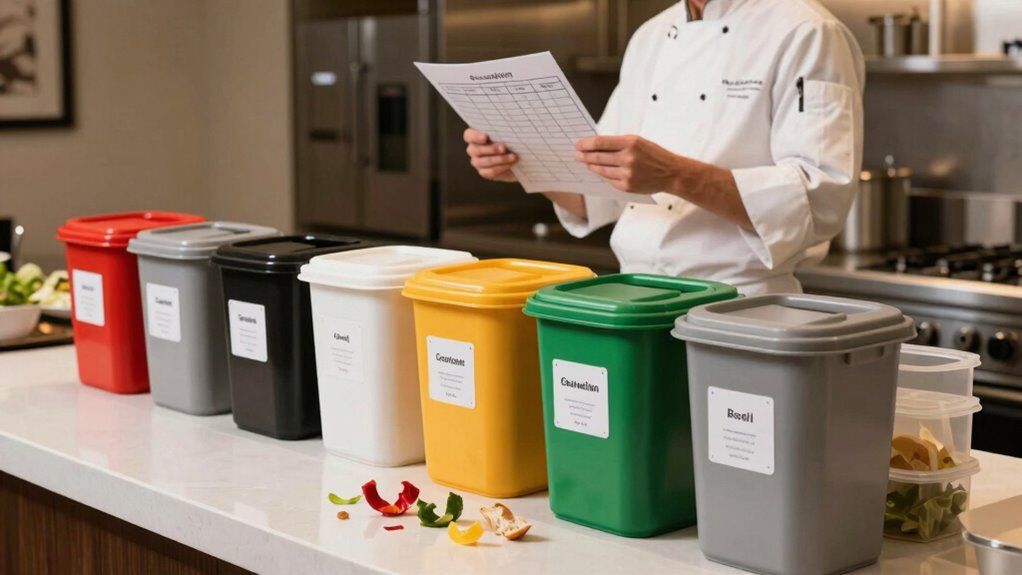
Setting clear goals and measurable metrics is essential for effectively reducing hotel food waste. By establishing specific targets, you can track progress and identify areas for improvement. Use guest feedback to understand guest preferences and adjust portions or menus accordingly, minimizing waste. Incorporate sustainability certifications as benchmarks to align your waste reduction efforts with industry standards and demonstrate your commitment to environmental responsibility. Define metrics such as waste volume, cost savings, and customer satisfaction to evaluate success. Regularly reviewing these metrics keeps your team focused and motivated. Clear goals provide direction, while measurable metrics allow you to measure impact and refine your strategies. This structured approach ensures your waste reduction initiatives are purposeful, transparent, and continuously improving. Tracking compliance with industry standards helps ensure your programs remain effective and credible, and staying informed about best practices in sustainability can further enhance your initiatives. Additionally, understanding body jewelry measurements and materials can inspire innovative ways to reduce waste through sustainable sourcing and reusable options. Furthermore, leveraging power tools and equipment for waste management projects can streamline your efforts and improve efficiency. Engaging with effective waste management strategies can also help optimize your overall waste reduction efforts.
Engage and Train Staff on Waste Reduction Practices
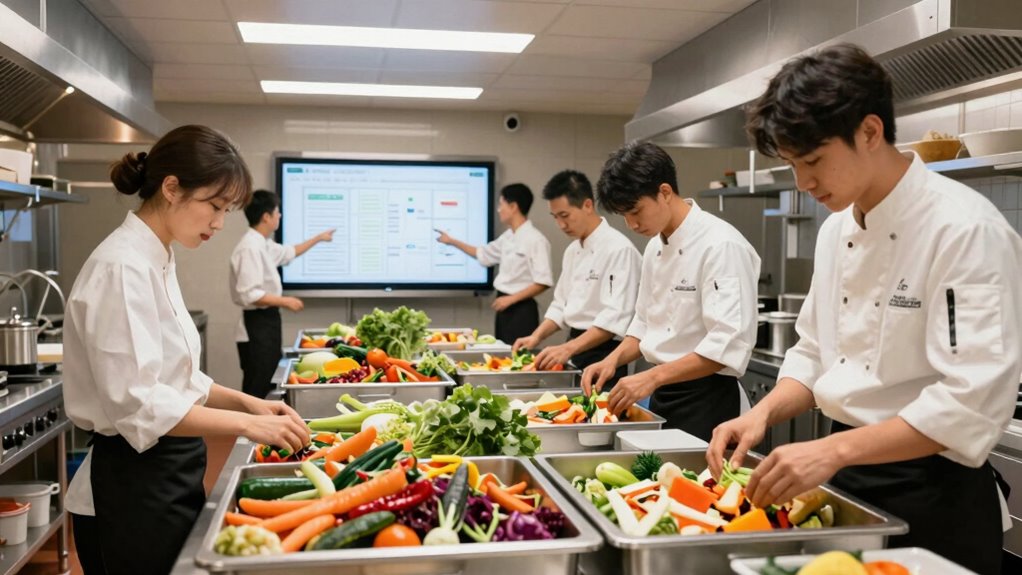
You need to hold staff training sessions to guarantee everyone understands waste reduction practices. Providing clear waste guidelines helps staff make consistent decisions in their daily routines. Keep education ongoing to reinforce these practices and adapt to new strategies over time. Incorporating training best practices ensures the information remains engaging and effective. Regular feedback and visual cues can further enhance staff comprehension and retention. Incorporating effective communication strategies can improve understanding and adherence to waste reduction initiatives. Additionally, using educational techniques rooted in proven learning principles can boost overall staff engagement and retention of waste management practices. Emphasizing training consistency helps establish a culture of continuous improvement in waste reduction efforts.
Staff Training Sessions
Effective staff training is essential for reducing food waste in hotels, as employees are on the front lines of food preparation and service. Well-designed training sessions can boost staff communication and reinforce waste reduction strategies. To motivate your team, consider these key points:
- Use employee incentives to recognize waste reduction efforts,
- Clearly explain the impact of waste on costs and sustainability,
- Offer hands-on demonstrations to reinforce best practices,
- Foster open communication, encouraging staff to share ideas and concerns.
- Incorporate knowledge of Gold IRA Markets to help staff understand the importance of sustainable investments and responsible resource management.
Clear Waste Guidelines
Clear waste guidelines are essential for ensuring staff understand and consistently follow best practices to reduce food waste. When your program clarity is high, employees know exactly what steps to take, minimizing confusion and errors. Well-defined guidelines help staff identify wasteful practices and adopt more sustainable habits. Make these rules straightforward, actionable, and visible in key areas like the kitchen and service stations. Regularly update and reinforce the guidelines to keep waste reduction top of mind. Clear instructions empower your team to make informed decisions and take ownership of waste management. Implementing visual aids and signage can further reinforce proper practices and keep waste reduction at the forefront. Consistent communication and training sessions ensure staff stay engaged and knowledgeable about waste reduction techniques. Providing ongoing feedback and accountability also encourages continuous improvement and adherence to waste reduction goals. Additionally, establishing standard operating procedures for handling leftover food can significantly minimize unnecessary disposal. Creating a culture of waste awareness is crucial for sustaining long-term reduction efforts. Ultimately, precise waste guidelines create a cohesive approach, making waste reduction efforts more effective and sustainable across your hotel.
Ongoing Education Efforts
Ongoing education is essential for sustaining waste reduction efforts and ensuring staff stay informed about best practices. Regular training keeps everyone aligned and empowers staff to implement waste reduction strategies effectively. To deepen your impact, focus on:
- Reinforcing guest engagement techniques to encourage mindful consumption.
- Incorporating community outreach programs that highlight your hotel’s sustainability efforts.
- Updating staff on new waste reduction tools and innovations.
- Sharing success stories to motivate continuous improvement.
Use Data and Technology to Track Food Waste Patterns
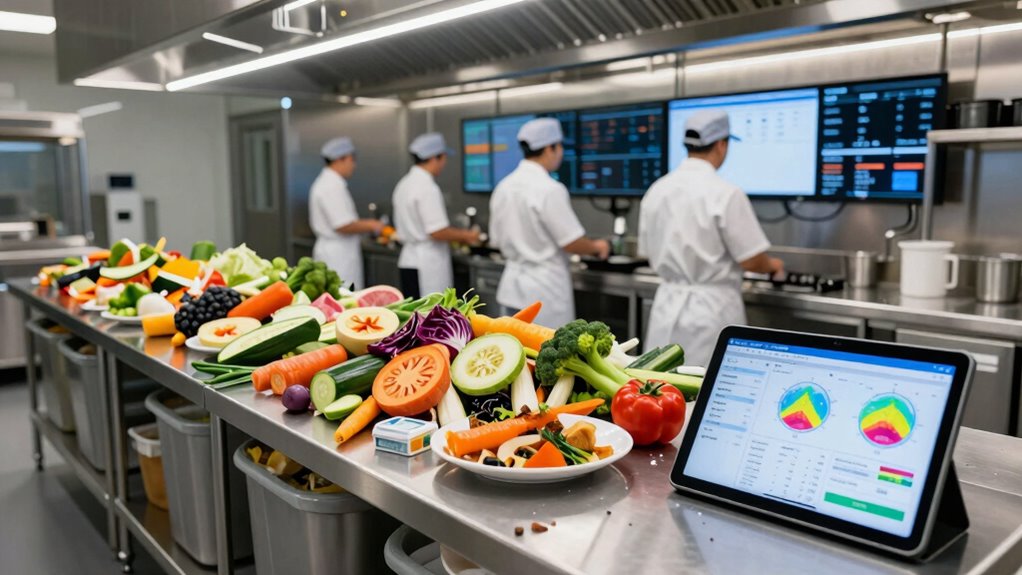
Using data and technology helps you identify where food waste occurs most often. By implementing waste tracking systems, you can monitor patterns and spot areas for improvement. Leveraging this information allows you to make informed decisions that reduce waste and boost efficiency. Incorporating smart appliances can further automate and optimize your waste management processes. Additionally, integrating data-driven strategies ensures ongoing improvements and sustainable practices. Regularly reviewing this data supports continuous waste reduction efforts and helps establish best practices for long-term success.
Implement Waste Tracking Systems
Implementing waste tracking systems allows hotels to gather precise data on where and when food waste occurs, enabling targeted interventions. With accurate insights, you can improve guest satisfaction by reducing waste-related issues and refine menu innovation to better match guest preferences. To maximize impact, consider these steps:
- Use digital tools to monitor waste at different service points and times.
- Identify patterns that reveal high-waste dishes or inefficient prep practices.
- Adjust menus based on waste data to enhance guest satisfaction and reduce excess.
- Train staff to interpret waste reports for continuous improvement.
Analyze Waste Generation Trends
Analyzing waste generation trends is essential for understanding where food waste originates and how it fluctuates over time. By leveraging data and technology, you can identify patterns in waste production, helping to optimize surplus management strategies. Tracking these trends enables you to pinpoint specific areas where waste peaks, so you can adjust procurement and preparation accordingly. This insight supports waste diversion efforts by highlighting opportunities to redirect excess food to donation programs or composting. Regular analysis keeps your hotel’s food waste management proactive rather than reactive, ensuring you stay ahead of waste issues. Ultimately, understanding these patterns empowers you to implement targeted interventions, reduce overall waste, and improve your sustainability efforts.
Leverage Data for Improvements
Leveraging data and technology can substantially enhance your ability to identify food waste patterns and make informed improvements. By analyzing waste data, you can:
- pinpoint peak waste periods, enabling better planning
- optimize menu offerings to match guest preferences and reduce surplus
- improve guest satisfaction by serving fresher, well-managed portions
- strengthen supplier collaboration through detailed demand insights
Using sensors, digital tracking, and analytics tools helps you stay ahead of waste issues. When you understand patterns, you can adjust purchasing and preparation strategies effectively. This data-driven approach not only minimizes waste but also boosts guest satisfaction, as guests receive more tailored and quality service. Ultimately, technology empowers you to create a more efficient, sustainable hotel operation.
Adjust Menus and Portion Sizes to Minimize Excess
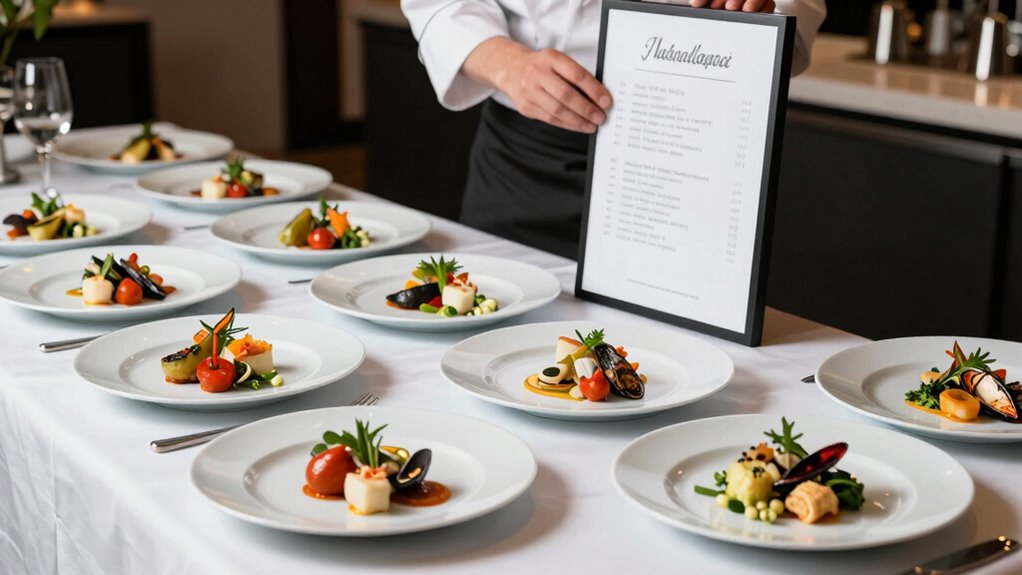
Adjusting menus and portion sizes is one of the most effective ways to reduce food waste in hotels. By implementing menu adjustments and focusing on portion control, you can better match guest demand, minimizing leftovers. Tailoring options based on guest preferences and consumption patterns helps avoid over-preparation. Use the table below to plan appropriate portion sizes and menu options:
| Meal Type | Recommended Portion | Adjustments for Waste Reduction |
|---|---|---|
| Breakfast | 4-6 oz. | Offer smaller or customizable portions |
| Lunch | 6-8 oz. | Include shared or family-style options |
| Dinner | 8-10 oz. | Use flexible serving sizes |
| Desserts | Single servings | Provide individual portions instead of large plates |
| Beverages | 8 oz. or less | Refill stations to prevent excess waste |
Monitoring consumption and adjusting accordingly helps cut waste, saving resources and costs.
Partner With Charities and Composting Programs
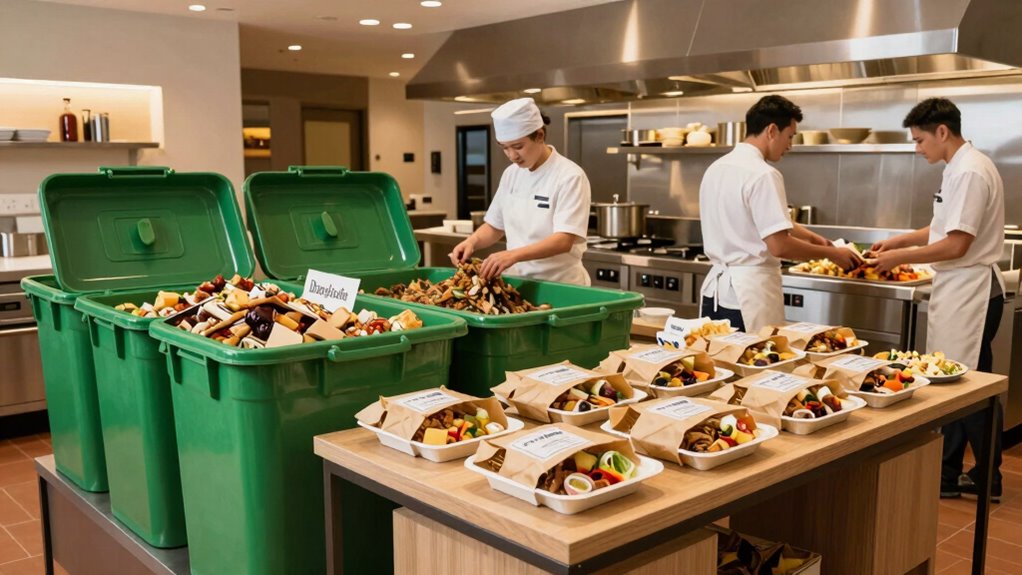
Partnering with charities and composting programs offers a practical way to divert hotel food waste from landfills and benefit the community. To build effective charity partnerships and composting initiatives, consider these steps:
Partner with charities and compost programs to reduce waste and support the community.
- Identify local organizations that accept surplus food and align with your values.
- Establish clear protocols for safe food donation, ensuring compliance with health regulations.
- Implement composting initiatives for unavoidable food scraps, reducing waste volume.
- Communicate your partnerships internally and externally to showcase your commitment to sustainability.
Monitor Results and Continuously Improve Your Waste Program
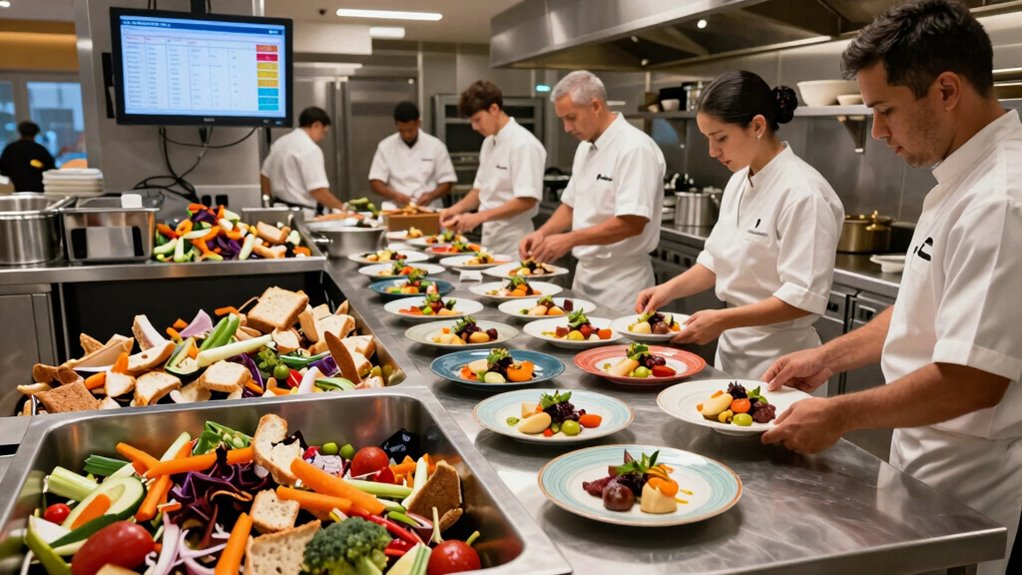
To effectively manage your hotel’s food waste program, you need to regularly monitor its results and identify areas for improvement. Review data on waste volume, disposal methods, and costs to track progress. Guest feedback can reveal insights into meal quality and portion sizes that influence waste levels. Pay attention to patterns, such as specific outlets or times with higher waste, and adjust accordingly. Tracking these metrics helps you understand the environmental impact of your efforts and demonstrates your commitment to sustainability. Continuously analyzing results allows you to refine strategies, minimize waste, and enhance operational efficiency. By staying proactive and responsive, you ensure your program evolves effectively, making a meaningful difference for both your guests and the planet.
Frequently Asked Questions
How Can Guest Behavior Impact Hotel Food Waste Reduction Efforts?
Your guest behavior greatly impacts hotel food waste reduction efforts. When you engage guests through behavioral incentives, you encourage mindful consumption and waste reduction. Simple actions like choosing smaller portions, reusing leftovers, or participating in food donation programs make a difference. Your participation in guest engagement initiatives not only supports sustainability goals but also fosters a culture of responsible dining, helping hotels minimize waste and promote environmental responsibility.
What Are Innovative Ways to Repurpose Leftover Hotel Food Safely?
You can creatively convert leftover hotel food through clever composting initiatives and community food donation programs. Composting transforms scraps into soil, reducing waste and supporting sustainability. Meanwhile, food donation allows you to safely share untouched leftovers with local shelters or charities, preventing waste and helping those in need. These innovative ideas guarantee leftovers are repurposed responsibly, benefiting both the environment and the community, all while maintaining food safety standards.
How Does Weather Influence Food Waste Patterns in Hotels?
Weather influences your hotel’s food waste patterns through seasonal fluctuations and climate adaptation. During hot or humid periods, perishable items spoil faster, increasing waste. Cold weather may reduce outdoor dining or events, decreasing leftover food. You should adapt your inventory and storage methods accordingly. By monitoring these climate shifts, you can better plan portions and reduce waste, ensuring your operations stay efficient and eco-friendly regardless of seasonal changes.
What Role Do Suppliers Play in Reducing Hotel Food Waste?
Like a modern-day telegraph, your suppliers connect you to fresh, quality ingredients, playing a crucial role in reducing hotel food waste. Through supplier collaboration, you can improve inventory management, ensuring you order precisely what’s needed. This reduces excess, spoilage, and waste. When you work closely with suppliers, you get better forecasts and timely deliveries, helping you cut waste and serve guests sustainably, just like a well-orchestrated symphony.
How Can Hotels Balance Guest Satisfaction With Waste Minimization?
You can balance guest satisfaction with waste minimization by paying close attention to guest feedback and offering menu flexibility. Encourage guests to customize their orders, reducing unwanted leftovers. Regularly gather feedback to identify popular dishes and adjust menus accordingly. Communicate your sustainability efforts, showing guests you care about waste reduction. This approach guarantees guests feel valued while your hotel minimizes food waste, creating a win-win situation for everyone.
Conclusion
By embracing thoughtful strategies and fostering teamwork, you can turn waste into opportunity. Small adjustments and smart tracking help you create a more sustainable, efficient operation—one that benefits both your guests and the environment. Remember, every effort counts, and with dedication, you’ll find that even the most subtle changes lead to meaningful progress. Keep refining your approach, and watch how your hotel’s commitment to reducing waste blossoms into lasting success.