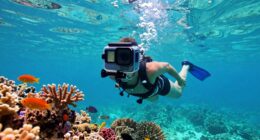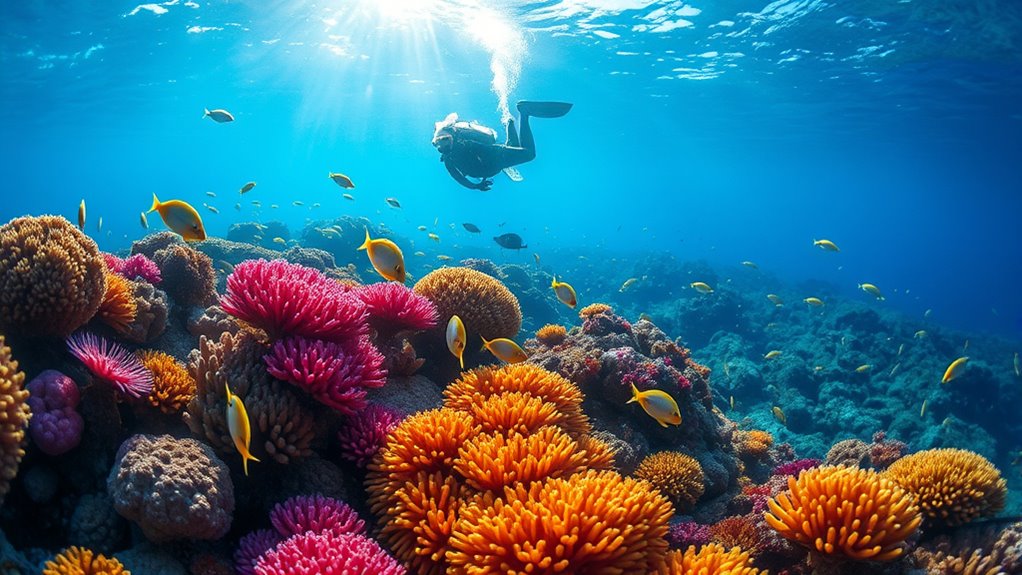

When snorkeling or diving in the Osa Peninsula, use reef-safe gear and opt for sunscreen that’s gentle on corals. Avoid touching the reefs and swim calmly to respect marine life. It’s vital to engage in responsible practices to protect the vibrant ecosystems. Join local conservation efforts and educational programs to deepen your connection with this underwater paradise. Keep exploring ways to contribute to the preservation of this remarkable environment. Discover more tips to enhance your experience!
Key Takeaways
- Use reef-safe sunscreen to protect coral reefs from harmful chemicals while snorkeling and diving in the Osa Peninsula.
- Opt for short fins and reef-friendly gear to minimize your impact on delicate marine ecosystems during your aquatic adventures.
- Avoid touching corals and stirring up sediment to preserve the integrity of the underwater habitat and its inhabitants.
- Participate in local conservation initiatives and educational programs to deepen your understanding and support coral reef preservation efforts.
- Engage in responsible snorkeling practices and share your experiences to raise awareness about the importance of marine ecosystem protection.

When you explore the vibrant underwater world of the Osa Peninsula, you’ll find a stunning array of marine life teeming around its coral reefs. These reefs aren’t just beautiful; they’re essential to the health of marine ecosystems. As you glide through the crystal-clear waters, you’ll likely encounter colorful fish dancing around the corals, graceful rays gliding by, and perhaps even the majestic sea turtles that call this area home. However, it’s important to remember that these delicate ecosystems depend on your actions as you snorkel or explore.
To protect these precious reefs, you must practice reef-safe snorkeling and diving techniques. Before you even enter the water, take a moment to think about your equipment. Make sure your fins are short and your gear is reef-friendly. Avoid using any sunscreen that contains harmful chemicals, as these can damage coral and disrupt marine life. Opt for reef-safe sunscreen instead; it’ll keep your skin protected while also safeguarding the environment.
As you descend into the water, be mindful of your movements. Avoid touching the coral or stirring up sediment, as both can harm the delicate balance of marine ecosystems. Remember, corals are living organisms, and disturbing them can have lasting effects. Swim calmly and keep a respectful distance, allowing you to enjoy the scenery without causing harm.
Participating in coral conservation initiatives while you’re there can also enhance your experience. Many local organizations offer educational programs and volunteer opportunities that allow you to contribute to the preservation of these ecosystems. Not only will you learn about the challenges facing coral reefs, but you’ll also gain insights into how you can help restore them. Engaging with these efforts fosters a deeper connection with the underwater world, making your time in the Osa Peninsula even more meaningful.
After your snorkeling or diving adventure, think about sharing your experiences with others. By spreading the word about the importance of coral conservation and responsible snorkeling practices, you can inspire fellow travelers to act responsibly, too. The more people who understand the significance of protecting marine ecosystems, the greater chance we have of preserving these underwater treasures for future generations. Additionally, learning about passive voice detection can enhance your writing skills, helping you communicate your experiences more effectively. So, immerse yourself, explore, and help protect the vibrant reefs of the Osa Peninsula!
Frequently Asked Questions
What Is the Best Time of Year for Snorkeling in Osa Peninsula?
The best time for snorkeling in the Osa Peninsula is during the dry season, from December to April. You’ll enjoy the best weather with clearer waters and calmer seas, making it easier to spot marine life. During this time, you’ll encounter vibrant coral reefs and diverse species. Keep in mind that marine life seasons vary, so visiting in early summer can also offer great sightings, especially if you’re keen on seeing specific species.
Are There Any Age Restrictions for Snorkeling or Diving Activities?
There aren’t strict age restrictions for snorkeling or diving activities, but it often depends on the operator’s guidelines. Most places offer beginner-friendly options, allowing kids and adults to participate safely. Younger snorkelers usually need adult supervision, while diving may require a minimum age of around 10-12, depending on the program. Always verify with the local provider to confirm you find the best activity for your age group and experience level.
What Should I Bring for a Snorkeling or Diving Trip?
Did you know that nearly 70% of the Earth’s surface is covered by water? For your snorkeling or diving trip, you’ll want to bring essential gear like a mask, snorkel, and fins. Don’t forget a wetsuit for warmth and buoyancy. Also, pack safety equipment, including a life jacket and a first aid kit. Sunscreen is crucial too—just make sure it’s reef-safe! Staying prepared ensures you have a fantastic underwater adventure.
Is It Necessary to Have Prior Snorkeling or Diving Experience?
No, you don’t need prior snorkeling or diving experience to enjoy your adventure. Many beginner-friendly locations offer guided tours, ensuring you’re safe and comfortable. Just make sure you have the right equipment, as some places provide gear for you. Whether you’re trying snorkeling for the first time or diving, the instructors will help you learn the basics. So, get ready to explore the underwater world without any worries!
Are There Guided Tours Available for Snorkeling and Diving?
Yes, there are guided tours available for snorkeling and diving, making your underwater adventure a breeze. These tours are perfect for those who want to dip their toes into the vibrant marine world without worrying about the details. You’ll receive all the necessary snorkeling equipment, and experienced guides will guarantee you explore safely. It’s a fantastic way to enjoy the beauty below while leaving the planning to the professionals. You won’t regret it!
Conclusion
So, when you’re planning your next underwater adventure in the Osa Peninsula, remember: it’s not just about dodging sunburn or avoiding the occasional jellyfish. You’re on a noble quest to save the coral while pretending to be a mermaid. Just imagine the fish applauding your eco-friendly choices as you glide gracefully through the water, leaving nothing but bubbles behind. Dive smart, snorkel safe, and let the ocean’s applause be your only souvenir!