When wildlife viewing in Yoho National Park, remember to respect the animals’ space. Never feed them, as it disrupts their natural behavior and can lead to dangerous encounters. Always keep a safe distance and use binoculars for a closer look. Be mindful of mothers with young ones and recognize their stress signals. Avoid sudden movements and loud noises. Your actions contribute to conservation, so stay informed and enjoy observing these majestic creatures responsibly. More tips await to enhance your experience!

Get travel and outdoor gear delivered free with Prime
- Fast, free delivery on millions of items
- Prime Video, Amazon Music and more included
- Member-only deals all year
Key Takeaways
- Never feed wildlife to maintain their natural foraging instincts and prevent risky human-animal encounters.
- Always keep a safe distance from animals to reduce stress and avoid disrupting their natural behaviors.
- Be aware of young animals and give extra space, as mothers may become defensive if approached.
- Do not attempt to touch or disturb wildlife, and avoid sudden movements or loud noises.
- Use binoculars for better observation and respect the environment by leaving no trace of your visit.
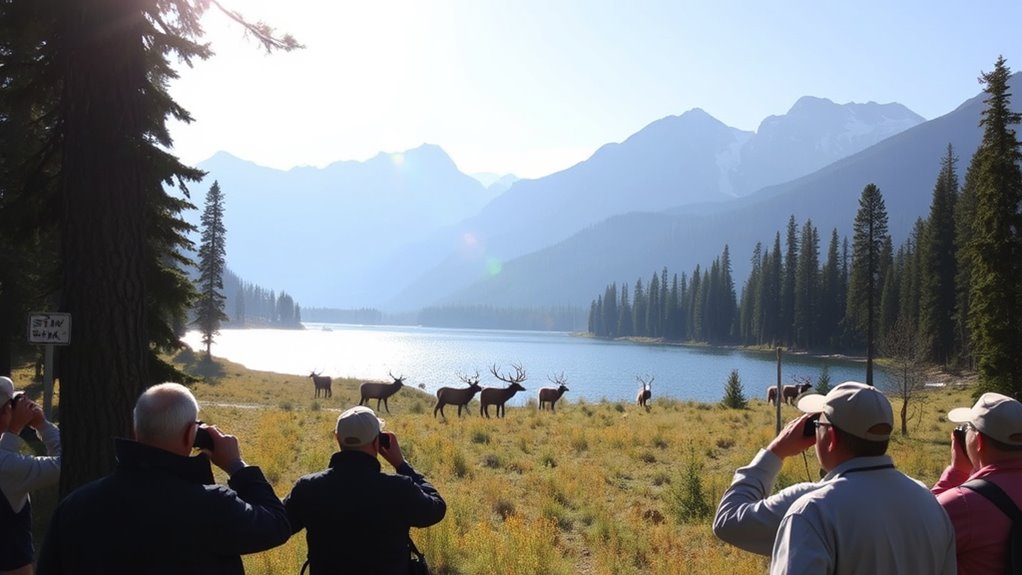
When you venture into nature to observe wildlife, it’s essential to remember that you’re a guest in their home. Yoho National Park, with its stunning landscapes and diverse animal life, offers incredible opportunities to connect with nature. However, while you’re enjoying this majestic environment, you must follow a few key etiquette guidelines to ensure a safe and respectful experience for both you and the animals.
One of the most important rules is to avoid feeding wildlife. It might seem harmless to toss a few crumbs to a curious squirrel or bird, but this practice can have detrimental effects on their health and behavior. Animals that become accustomed to humans providing food may lose their natural foraging instincts, leading to dependency on human handouts. This can also create dangerous situations, as animals may approach people too closely, increasing the risk of conflict. By resisting the urge to feed wildlife, you’re helping them maintain their natural behaviors and promoting their overall well-being.
Avoid feeding wildlife to help them maintain natural behaviors and prevent dangerous human-animal interactions.
Maintaining distance is another crucial aspect of wildlife viewing. You should always keep a respectful distance from any animal you encounter. It’s tempting to get close for a better photo or to see them up close, but doing so can stress the animals and disrupt their natural activities. Different species have varying comfort zones, so familiarize yourself with the recommended distances for the wildlife you might encounter. For instance, large mammals like bears or moose require much more space than smaller creatures. Using binoculars or a zoom lens can help you enjoy the experience without encroaching on their territory.
Moreover, be aware of your surroundings. Animals may have young ones nearby, and it’s vital to give them extra space during these times. Mother animals can be protective, and approaching too closely can lead to defensive behavior. Always observe from a safe vantage point, and if you notice animals exhibiting stress signals, such as fleeing or vocalizing, take that as a cue to back away. Lastly, respecting wildlife also means understanding their behaviors and habitats, which is essential for any wildlife viewing experience.
Frequently Asked Questions
What Should I Do if I Encounter an Aggressive Animal?
If you encounter an aggressive animal, stay calm and don’t run. Make yourself look bigger by raising your arms and speaking firmly. Back away slowly while keeping your eyes on the animal. If it charges, use safety precautions like standing your ground or taking cover. Always have an emergency response plan in place, including knowing the nearest exit or calling for help. Your safety’s paramount, so be prepared and vigilant!
Are There Specific Seasons for Wildlife Viewing in Yoho?
Yes, there are specific seasons for wildlife viewing in Yoho. Spring and summer are ideal for observing animals during their breeding seasons, as many species are more active and visible. You’ll also witness seasonal migration, with various birds and mammals moving through the park. Fall is great for spotting elk during their rutting season. Winter, while quieter, offers a chance to see tracks and signs of wildlife in the snow.
Can I Bring My Pet When Wildlife Viewing?
No, you can’t bring your pet when wildlife viewing. Park regulations prioritize the safety of both wildlife and pets. Pets can disturb animals, leading them to react unpredictably. Keeping your pet at home guarantees their safety and protects the natural behaviors of wildlife. If you want to enjoy the park, consider visiting when you can leave your furry friend behind, so you can focus on the experience without distractions.
What Should I Wear for Wildlife Viewing?
When you’re heading out for wildlife viewing, think of yourself as an explorer from the 1800s, ready to discover nature’s wonders. Wear appropriate clothing like breathable, moisture-wicking fabrics, and layer up for changing weather. Sturdy boots are a must for those rugged trails. Don’t forget your safety gear; a hat and sunscreen protect you from the sun, while binoculars let you observe animals from a safe distance. Enjoy your adventure!
Are There Guided Tours for Wildlife Viewing in the Park?
Yes, there are guided tour options for wildlife viewing in the park! You’ll find various wildlife viewing programs led by knowledgeable guides who help you spot animals safely and responsibly. These tours often cover the best spots for sightings and provide insights into the park’s ecosystem. Booking a guided tour enhances your experience, ensuring you don’t miss the chance to see the incredible wildlife while learning about their habitat.
Conclusion
In conclusion, practicing proper wildlife viewing etiquette not only ensures your safety but also protects the incredible creatures of Yoho National Park. Did you know that nearly 80% of visitors report spotting wildlife during their visit? By keeping a respectful distance, minimizing noise, and avoiding feeding animals, you contribute to their well-being and help preserve the park’s natural beauty for future generations. So, the next time you’re out exploring, remember to be a considerate wildlife observer!
Fall Picks
fall essentials
As an affiliate, we earn on qualifying purchases.