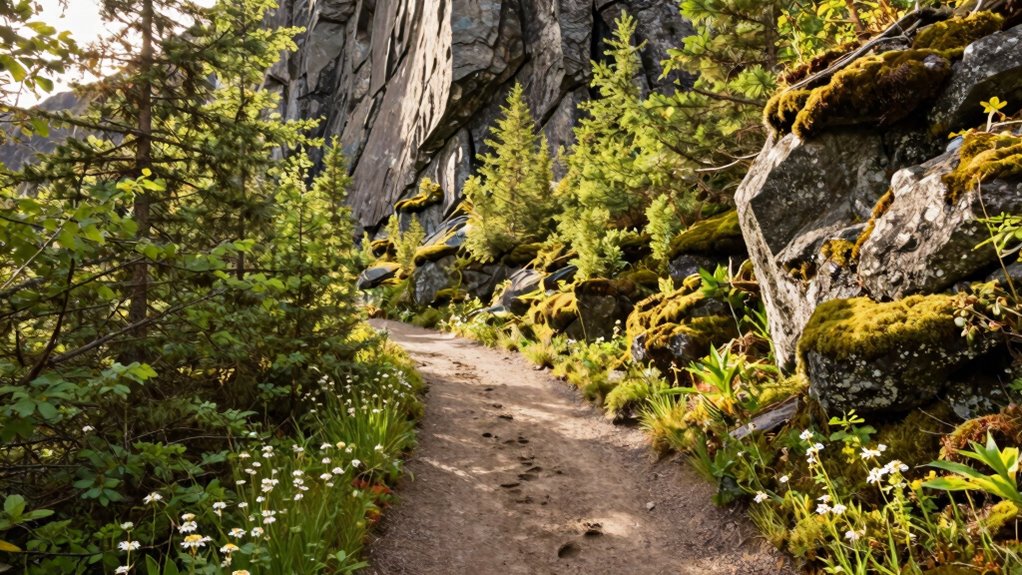
To explore Gros Morne responsibly, focus on low-impact practices like sticking to established trails, packing out all waste, and respecting wildlife distances. Choose eco-friendly activities such as kayaking or wildlife watching, and use reusable gear to minimize your footprint. Support local businesses and community efforts to help preserve the area’s natural beauty. Following these simple steps guarantees you can enjoy Gros Morne while keeping its environment pristine—continue to discover more ways to explore sustainably.
Key Takeaways
- Follow Leave No Trace principles by staying on designated trails and packing out all waste.
- Respect wildlife by observing from a distance and avoiding feeding or disturbing animals.
- Choose well-maintained, eco-friendly trails and activities that support conservation efforts.
- Use reusable gear, pack biodegradable snacks, and conserve water during outdoor adventures.
- Support local communities and promote responsible tourism to help preserve Gros Morne’s natural beauty.
Why Low-Impact Tourism Matters in Gros Morne

Because Gros Morne’s delicate ecosystems are easily disturbed, low-impact tourism is essential for preserving its natural beauty. By choosing eco conscious travel, you help protect the environment and ensure future visitors can enjoy the area’s stunning landscapes. Your mindful approach reduces pollution, minimizes trail erosion, and prevents habitat destruction. Wildlife preservation is also a key benefit, as less intrusive activities allow animals to thrive undisturbed. When you respect designated paths, avoid littering, and follow park guidelines, you contribute to maintaining the area’s fragile balance. Practicing low-impact techniques and mindful exploration further enhances conservation efforts. Engaging in sustainable travel practices ensures that your visit supports the preservation of Gros Morne’s pristine wilderness for generations to come. Your conscious choices make a meaningful difference in safeguarding this pristine wilderness for generations to come, especially by understanding the importance of ecological integrity.
How to Plan Your Gros Morne Trip for Minimal Environmental Impact

Planning your Gros Morne trip with care guarantees you can enjoy its stunning landscapes while keeping its fragile ecosystems intact. To minimize your environmental impact, consider these steps: 1. Choose eco-friendly accommodations that prioritize conservation and waste reduction. 2. Respect wildlife observation guidelines by maintaining a safe distance and avoiding feeding animals. 3. Stick to established trails to support trail maintenance efforts and prevent erosion. 4. Pack out all trash and minimize noise to preserve the serene environment for both wildlife and visitors. Additionally, being aware of passive voice detection tools can help you improve your writing clarity and reduce passive constructions in your travel writing. Incorporating environmental awareness into your packing and activity choices further enhances your positive impact on this delicate ecosystem. Engaging in sustainable tourism practices ensures your visit benefits the local community and preserves the natural beauty for future travelers. By following these practices, you help protect fragile habitats and ensure future generations can experience Gros Morne’s beauty. Your mindful planning makes a difference, allowing you to enjoy pristine scenery while contributing to sustainable tourism. Additionally, being aware of pet considerations regarding ice cream can be helpful if you plan to travel with pets, ensuring their health and safety during your trip.
Selecting Sustainable Trails and Activities in Gros Morne

When choosing trails in Gros Morne, look for well-maintained paths that minimize erosion and habitat disturbance. Opt for eco-friendly activities like wildlife watching or kayaking that leave a smaller footprint. By prioritizing sustainable options, you help preserve the area’s natural beauty for future visitors. Incorporating low-impact trail design principles can further reduce environmental impact and enhance your outdoor experience. Selecting trails with environmentally conscious planning can also contribute significantly to conservation efforts. Additionally, choosing routes that follow stewardship practices ensures your visit supports ongoing preservation initiatives. Emphasizing sustainable trail maintenance can help maintain the area’s ecological integrity over the long term. Incorporating ecological restoration techniques into trail planning can also support habitat preservation and biodiversity.
Trail Selection Tips
Choosing the right trails and activities in Gros Morne is essential for minimizing your environmental impact. To do so, consider these trail selection tips:
- Assess trail difficulty to match your skill level, preventing erosion and unnecessary strain.
- Prioritize trails leading to scenic viewpoints, which are often well-maintained and designed for minimal disturbance.
- Stick to designated paths to protect fragile vegetation and wildlife habitats.
- Research trail conditions beforehand to avoid muddy or fragile areas that could be easily damaged.
- Ensure your equipment and supplies are appropriate and well-maintained, such as using the correct oil for your gear, to prevent leaks and environmental contamination. Additionally, choosing trails with proper maintenance helps reduce habitat disturbance and ensures a more sustainable outdoor experience.
- Be mindful of Leave No Trace principles during your hike to further minimize your footprint and preserve the natural beauty of Gros Morne.
- Incorporating auditory awareness techniques can also help hikers stay attentive to their surroundings, reducing unintentional environmental impact. Being aware of trail erosion signs can help you avoid heavily damaged areas and contribute to trail preservation efforts.
Eco-Friendly Activity Options
Opting for eco-friendly trails and activities in Gros Morne helps preserve its natural beauty for future visitors. Choose designated trails to minimize habitat disturbance and stick to established pathways. For wildlife photography, approach animals quietly and maintain a respectful distance to avoid stressing them. When camping, follow proper camping etiquette by using designated sites, packing out all trash, and avoiding campfires where prohibited. These practices help keep the environment pristine and support local ecosystems. Participating in guided eco-tours or nature walks can deepen your understanding of the area’s unique flora and fauna while ensuring your activities remain sustainable. Additionally, being mindful of environmental impact encourages responsible tourism and helps protect Gros Morne’s delicate ecosystems. Making low-impact choices such as using reusable gear and conserving water further reduces your footprint. By making thoughtful choices, you contribute to conserving Gros Morne’s landscape, allowing others to enjoy its wilderness just as you do.
What to Pack for Eco-Friendly Hiking in Gros Morne
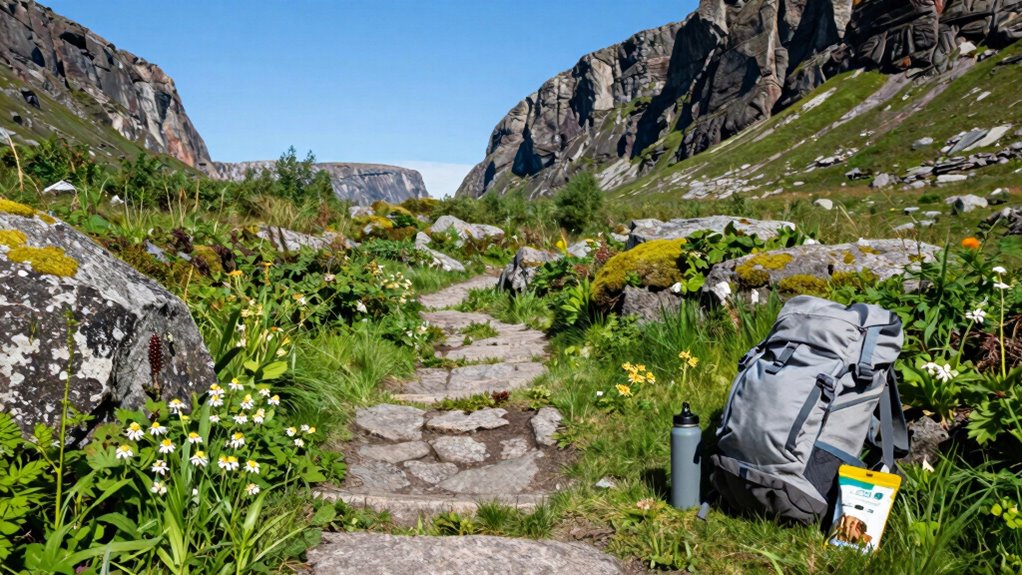
When planning your eco-friendly hike in Gros Morne, start by packing reusable water bottles to reduce plastic waste. Opt for eco-friendly snacks that come with minimal or biodegradable packaging to lessen your environmental impact. Small changes like these make your adventure more sustainable while still enjoying all the beauty the park offers. Additionally, choosing activities that promote sustainable practices can help preserve the natural beauty for future visitors.
Pack Reusable Water Bottles
Bringing reusable water bottles is essential for eco-friendly hiking in Gros Morne, as they help reduce plastic waste and keep you hydrated sustainably. By choosing a durable, BPA-free bottle, you minimize single-use plastic consumption and lessen your environmental footprint. To maximize efficiency, consider these items:
- A lightweight, collapsible bottle for easy packing
- An insulated bottle to keep water cold during long hikes
- A bottle with a leak-proof cap to prevent spills
- A filtering attachment for refillability at natural water sources
Using reusable water bottles supports plastic waste reduction, helping preserve Gros Morne’s pristine environment. Staying hydrated without relying on disposable bottles ensures your hike remains low-impact and eco-conscious, aligning with responsible outdoor exploration.
Choose Eco-Friendly Snacks
Choosing eco-friendly snacks is a simple way to minimize your environmental impact while exploring Gros Morne. Opt for zero waste options like homemade trail mix in reusable containers or fruit and nuts in compostable packaging. Avoid plastic-free snacks that generate less waste and reduce plastic pollution. Pack snacks in reusable silicone bags or stainless steel containers instead of single-use plastic wrappers. Consider bringing dried fruits, nuts, or energy bars made with natural ingredients and minimal packaging. These choices help cut down on waste and support the preservation of the pristine landscape. By being mindful of what you pack, you contribute to keeping Gros Morne’s environment healthy and beautiful for future visitors. Small changes in your snack choices make a big difference in maintaining a sustainable hiking experience.
How to Practice Leave No Trace in Gros Morne

Practicing Leave No Trace in Gros Morne starts with being mindful of your impact on the environment. To support wilderness preservation, follow these essential steps:
Practicing Leave No Trace in Gros Morne helps preserve its natural beauty for everyone.
- Stick to established trails to prevent erosion and habitat damage.
- Pack out all trash, leftover food, and waste to keep the area pristine.
- Minimize campfire impact by using designated fire rings or portable stoves.
- Respect wildlife by observing from a distance and avoiding feeding animals.
Respecting Wildlife and Preserving Natural Resources
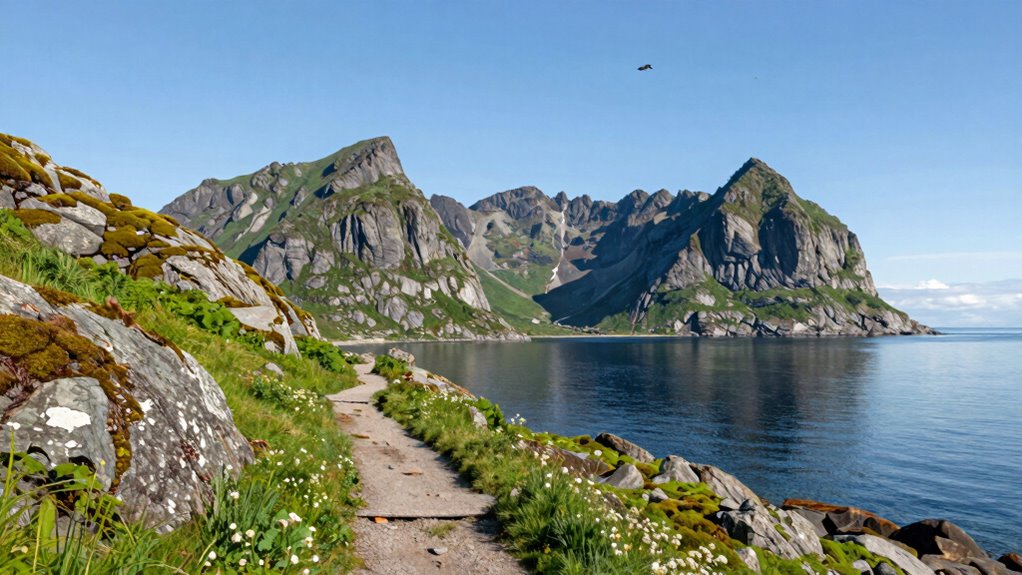
Respecting wildlife and conserving natural resources are essential to maintaining Gros Morne’s pristine environment. By engaging in wildlife conservation and practicing responsible resource management, you help protect native species and their habitats. Avoid approaching animals or making loud noises, which can disturb their natural behaviors. Stick to marked trails to minimize habitat disruption. Here’s a visual of common wildlife encounters:
| Animal Sightings | Suitable Actions |
|---|---|
| Caribou | Observe from a distance |
| Bald Eagles | Do not feed or disturb nests |
| Moose | Keep a safe distance |
| Marine Life | Respect protected zones |
| Small Mammals | Avoid leaving food or trash |
Your small actions ensure Gros Morne remains vibrant and balanced for generations to come.
Sharing Your Responsible Tourism Experience and Supporting the Community

Sharing your responsible tourism experience allows you to inspire others to follow suit and helps build a stronger connection between visitors and the local community. Your stories can highlight positive community involvement and encourage sustainable practices. To support this effort, consider:
- Promoting local businesses on social media to boost their visibility.
- Participating in community-led events or initiatives to foster genuine connections.
- Sharing tips on respectful tourism that protect natural resources and wildlife.
- Encouraging fellow travelers to adopt low-impact behaviors during their visit.
Frequently Asked Questions
How Can I Identify Eco-Friendly Tour Operators in Gros Morne?
To identify eco-friendly tour operators in Gros Morne, look for those with eco label certifications and a clear commitment to sustainability. You can check their websites or ask directly about their eco practices. Sustainable tour operators prioritize low-impact activities, respect local ecosystems, and support community efforts. Reading reviews and choosing operators with recognized eco credentials guarantees you support responsible tourism and minimize your environmental footprint during your trip.
Are There Specific Times of Year Best for Low-Impact Tourism?
The best visiting seasons for low-impact tourism in Gros Morne are during the shoulder months of spring and fall. During these off-peak times, you’ll experience fewer crowds, reduce environmental stress, and enjoy the area’s natural beauty more peacefully. Traveling outside peak summer months allows you to minimize your footprint while still exploring stunning landscapes. Plan your trip during these seasons for a more sustainable and enjoyable experience.
What Are Common Mistakes to Avoid When Practicing Leave No Trace?
You might think leaving no trace is simple, but prevent common mistakes like trampling fragile vegetation or disturbing wildlife. While it’s tempting to explore every trail, remember that excessive foot traffic causes trail erosion and disturbs animals’ natural habitats. Stay on designated paths, pack out all waste, and keep noise levels down. These actions protect the environment and ensure future visitors can enjoy the beauty without harming it.
How Can I Reduce My Carbon Footprint While Traveling to Gros Morne?
To reduce your carbon footprint traveling to Gros Morne, choose sustainable transportation options like carpooling, biking, or taking the bus instead of flying. Stay in eco-friendly accommodations that prioritize energy efficiency and waste reduction. Bring reusable items such as water bottles and utensils to minimize waste. Planning ahead helps you make greener choices, ensuring your visit is environmentally responsible while still enjoying the stunning scenery.
Are There Volunteer Opportunities for Conservation During My Visit?
You might stumble upon local conservation efforts during your visit. Many programs welcome volunteers for wildlife monitoring and habitat restoration projects. It’s a great way to connect with nature and give back, often aligning with your low-impact goals. Check with park rangers or visitor centers for current opportunities. Your hands-on help can make a real difference, ensuring Gros Morne’s beauty endures for future explorers like you.
Conclusion
By embracing low-impact tourism in Gros Morne, you become part of the landscape—your footprints fade into the wild, leaving only memories. Picture yourself wandering lush trails, cradled by towering cliffs and shimmering lakes, all while respecting nature’s delicate balance. Your mindful choices help conserve these breathtaking vistas for future explorers. When you leave no trace, you ensure that Gros Morne’s untouched beauty continues to inspire wonder long after you’ve gone.