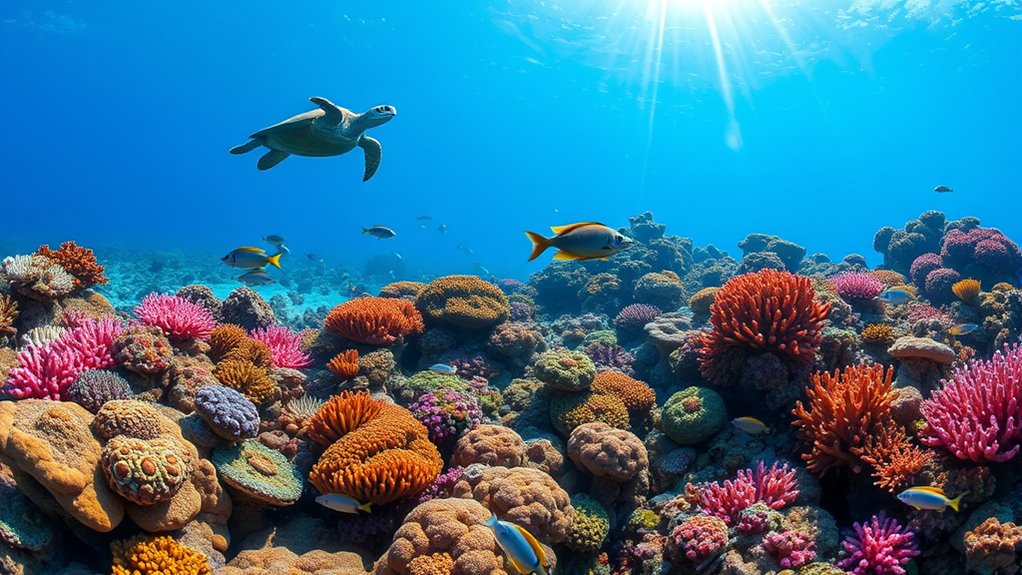

To enjoy reef-safe snorkeling and diving in the Great Barrier Reef, choose eco-friendly sunscreen to safeguard coral. Maintain your gear to avoid damaging the reef and practice buoyancy control to navigate without disturbing habitats. Always observe marine life from a distance and never feed or touch animals. Joining guided tours with responsible operators ensures a respectful approach to the ecosystem. There’s more to discover about protecting this natural wonder as you explore further.
Key Takeaways
- Choose reef-safe sunscreen free from harmful chemicals to protect coral and marine life during snorkeling and diving activities.
- Always check and maintain snorkeling or diving gear to prevent damage to the delicate reef ecosystem.
- Practice buoyancy control and avoid touching or standing on coral to preserve its structure and health.
- Participate in guided tours with eco-conscious operators to learn about reef conservation and sustainable practices.
- Observe marine life from a respectful distance to minimize stress and disruption to their natural behaviors.
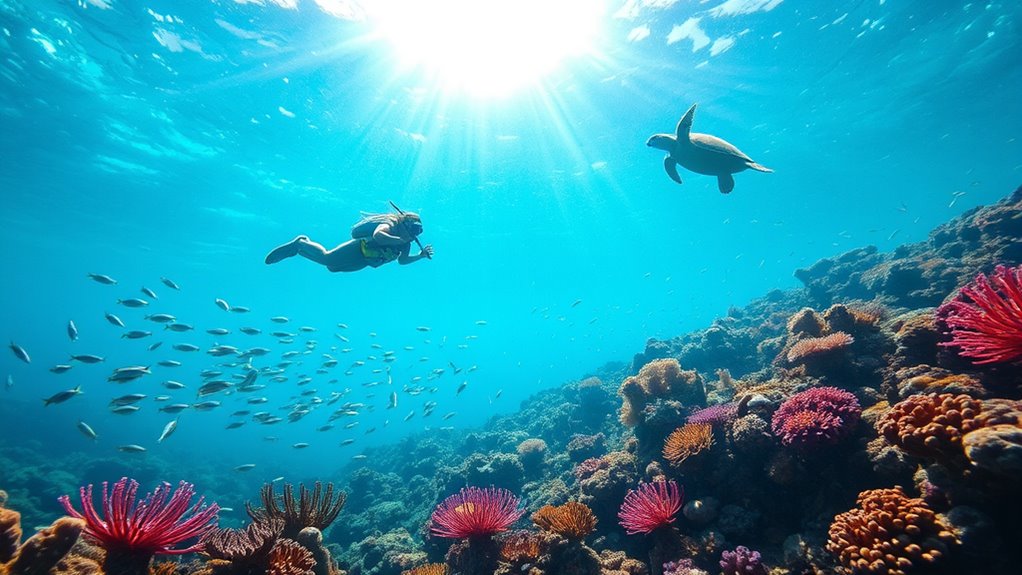
When you explore the mesmerizing underwater world of the Great Barrier Reef, it’s essential to prioritize reef-safe practices. The delicate ecosystem teems with vibrant marine life, and your actions can considerably impact its health. By following a few simple guidelines, you can enjoy your snorkeling and diving adventures while contributing to marine conservation.
First, think about your equipment. Choosing the right gear not only enhances your experience but also ensures equipment safety. Opt for environmentally-friendly sunscreen that’s labeled reef-safe. Regular sunscreens often contain harmful chemicals that can bleach coral and harm marine organisms. By skipping these products, you’re doing your part to protect the reef. Additionally, ensure your snorkeling or diving gear is well-maintained. Faulty equipment can lead to accidents that could damage the reef or harm its inhabitants. Check for any wear and tear before heading out, and always follow safety protocols to minimize risks.
As you glide through the crystal-clear waters, be mindful of your movements. Avoid touching the coral or standing on the reef. Even a small amount of pressure can cause considerable damage to these fragile structures. Instead, practice buoyancy control while snorkeling or diving, which helps you navigate without disturbing the habitat. Staying at a safe distance from the coral not only protects it but also allows you to observe marine life without causing stress to the creatures that call the reef home.
When you encounter marine wildlife, remember that feeding or touching them disrupts their natural behaviors. Observe from a distance, and marvel at the wonders of the underwater world without interfering. This practice not only enhances your experience but also contributes to long-term marine conservation efforts.
Participating in guided tours led by responsible operators can further enhance your reef-safe experience. These professionals are trained in marine conservation and can provide valuable insights into the ecosystem while ensuring you follow best practices. By choosing eco-conscious tours, you support businesses that prioritize the protection of the reef. Moreover, using HEPA filters in your home can reduce indoor air pollutants, which helps maintain overall health and wellness, enhancing your enjoyment of outdoor activities like snorkeling and diving.
Frequently Asked Questions
What Is the Best Time of Year for Snorkeling in the Reef?
The best time for snorkeling is between June and October. During these months, the seasonal weather is typically dry, offering calm seas and warm temperatures. You’ll enjoy excellent marine visibility, often exceeding 20 meters, which makes it easier to spot vibrant coral and diverse marine life. Avoid the stinger season from November to May to guarantee a safe snorkeling experience. Plan your trip during this period for the best underwater adventure.
Are There Age Restrictions for Snorkeling and Diving Activities?
Yes, there are age restrictions for snorkeling and diving activities. Typically, kids as young as eight can snorkel, while diving usually requires certification and a minimum age of 10. Did you know that nearly 40% of snorkeling participants are under 18? If you’re considering diving, check for certification prerequisites specific to the provider. Always make certain that children are supervised and comfortable in the water for a safe and enjoyable experience.
Is It Safe to Snorkel or Dive Alone?
It’s generally not safe to snorkel or dive alone. Solo safety is a major concern, as unexpected situations can arise. Using the buddy system is highly recommended; having someone with you guarantees that help is readily available if needed. Your buddy can watch out for you while you explore, making the experience safer and more enjoyable. So, for your safety and peace of mind, always dive or snorkel with a partner.
What Marine Life Can I Expect to See While Snorkeling?
While snorkeling, you can expect to see a vibrant array of coral species, from hard corals to soft corals, creating a stunning underwater landscape. You might also spot marine mammals like dolphins and seals swimming gracefully nearby. Don’t forget to keep an eye out for colorful fish darting among the corals. Each dive offers a unique experience, so enjoy the diverse marine life that thrives beneath the waves!
Are There Any Health Risks Associated With Snorkeling or Diving?
Yes, there are health risks associated with snorkeling or diving, but don’t let that scare you! With the right health precautions, you can enjoy the underwater world safely. Always check your equipment for any issues before diving in, and make certain it fits properly. Be mindful of your physical condition; dehydration or ear problems can pose risks. By staying informed and prepared, you’ll navigate these waters like a pro, keeping your adventure thrilling yet safe!
Conclusion
As you glide through the vibrant underwater world of the Great Barrier Reef, remember that your enjoyment shouldn’t come at the cost of its beauty. While the allure of breathtaking marine life tempts you to explore, your actions can either preserve or harm this fragile ecosystem. By choosing reef-safe practices, you guarantee future generations can experience the same wonders you do today. So, immerse yourself responsibly—your adventure can coexist with the reef’s delicate balance.