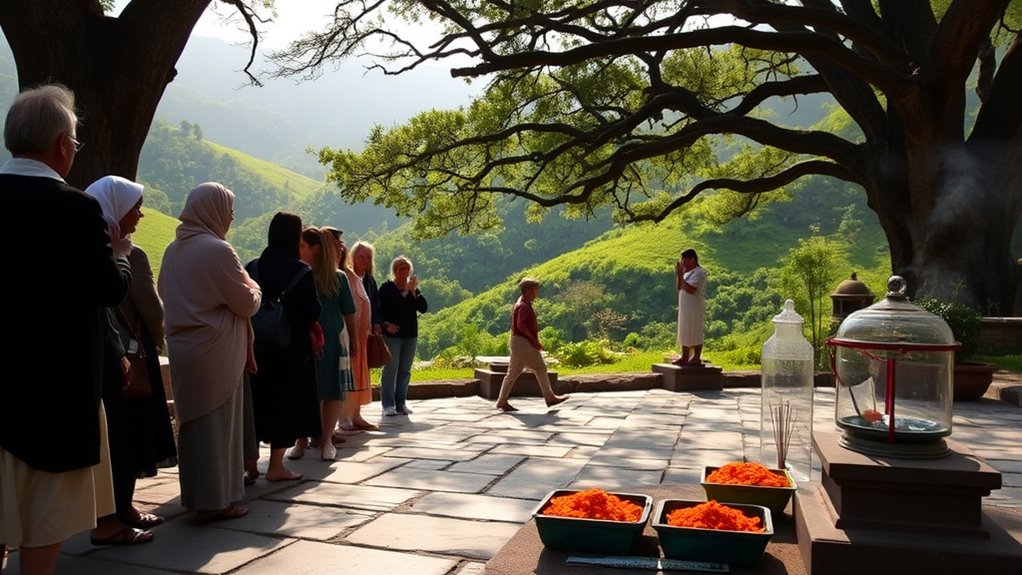

To respect sacred sites and local customs, start by researching the traditions and dress codes of the area. Observe local behaviors, listen to conversations, and ask for guidance when unsure. During your visit, keep noise to a minimum and avoid prohibited photography. If invited to participate in rituals, do so respectfully but know when to step back. This approach fosters genuine connections and honors the site’s significance. There’s much more to explore about this delicate balance.
Key Takeaways
- Research local customs, traditions, and dress codes before visiting sacred sites to ensure respectful engagement.
- Observe local behaviors and interactions to understand appropriate conduct while at the site.
- Maintain a low voice volume and minimize distractions to preserve the site’s contemplative environment.
- Honor restrictions on photography and refrain from disruptive actions to show respect for the sacred space.
- Participate in community rituals with openness and humility, stepping back if your involvement is not welcomed.
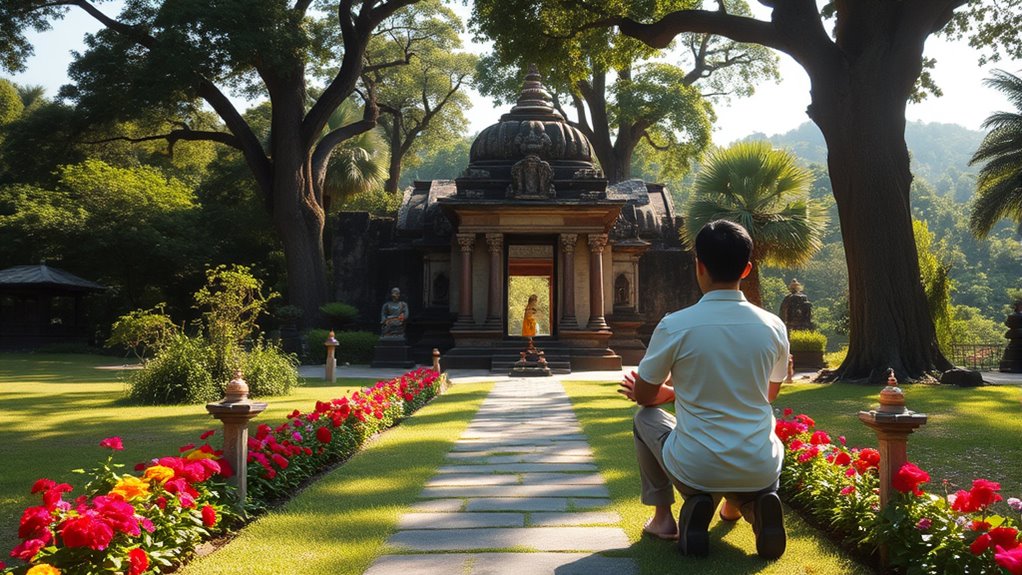
When you visit sacred sites, it’s crucial to understand their significance and the customs that surround them. These places often hold deep spiritual meaning for local communities, and they serve as a tangible connection to their beliefs and history. By approaching these sites with cultural sensitivity, you can show respect for the traditions and practices of those who hold these places dear. Understanding local traditions can enhance your experience, allowing you to connect more authentically with the culture.
Before you set foot on sacred ground, take the time to research the customs of the area. Each culture has its unique way of honoring its sacred sites, and being aware of these practices will go a long way in ensuring that you don’t unintentionally offend anyone. For instance, some places may require you to dress modestly, while others might have specific rituals that visitors should observe. Familiarizing yourself with these norms can help you navigate your visit with grace and respect.
When you arrive, observe how locals interact with the site. Watch their behaviors, listen to their conversations, and pay attention to the atmosphere. This will give you a better understanding of what’s appropriate and guide your actions while you’re there. If you’re unsure about something, don’t hesitate to ask. Most people appreciate your willingness to learn and will gladly share their insights.
It’s also good practice to minimize noise and distractions. Sacred sites are often places for reflection and contemplation, so keeping your phone silent and your voice low shows that you respect the space. Avoid taking photos in areas where it’s prohibited or where locals express discomfort. Remember, some sites may not welcome photography at all, and it’s important to honor that.
Participating in local traditions can deepen your appreciation for the site. If there are ceremonies or rituals taking place, consider respectfully joining in, if permitted. This can provide a richer understanding of the culture and allow you to connect with the community on a more personal level. However, always approach these situations with an open heart and mind, and be willing to step back if your involvement isn’t welcomed. Engaging in local customs can also help you foster meaningful connections and demonstrate your respect for the community.
Top picks for "respect sacr local"
As an affiliate, we earn on qualifying purchases.
Frequently Asked Questions
What Should I Wear When Visiting Sacred Sites?
When visiting sacred sites, you should wear appropriate attire that reflects the site’s significance. Opt for respectful clothing, like long pants or skirts and tops with sleeves. Avoid anything too revealing or flashy, as it can be seen as disrespectful. Comfortable shoes are also a good idea since you might be walking or standing for a while. Always check specific guidelines for each site to make sure your outfit aligns with local customs.
Are Photography and Videography Allowed at These Locations?
When you step into a sacred space, it’s like walking into a living painting, rich with stories. However, photography restrictions often apply. Before snapping away, check for signs or ask locals about their videography guidelines. Some sites cherish their silence, while others welcome your lens. Respecting these rules not only honors the culture but also deepens your experience, allowing you to truly soak in the beauty without distractions.
Can I Bring Food and Drinks to Sacred Sites?
You typically can’t bring food and drinks to sacred sites due to food restrictions and beverage policies in place. Many of these locations aim to preserve their sanctity and cleanliness, so it’s best to check specific guidelines beforehand. If you’re unsure, consider enjoying your snacks and drinks before or after your visit. Always remember, respecting these rules helps maintain the site’s integrity and shows appreciation for its cultural significance.
How Do I Find Local Customs Specific to Each Region?
You can find local customs by researching cultural etiquette and regional traditions online before your trip. Websites, travel blogs, and social media can offer insights into what to expect. Once you arrive, engage with locals and ask questions; they’ll often share valuable information. Visiting cultural centers or attending community events can also deepen your understanding. Remember, being observant and respectful will help you navigate different customs effortlessly.
What Are the Consequences of Disrespecting Sacred Sites?
Disrespecting sacred sites can lead to consequences as severe as a volcano erupting in your backyard! You risk offending local communities, damaging cultural heritage, and facing legal repercussions. Cultural sensitivity is essential; ignoring it could result in fines, bans, or even criminal charges. Plus, you might miss out on meaningful experiences and connections. Always remember, respecting these places enriches your journey and fosters understanding between cultures. So, tread lightly and honor their significance.
Conclusion
By respecting sacred sites and local customs, you not only honor the cultures that nurture these places but also foster a deeper connection to the world around you. Did you know that over 80% of the world’s population identifies with a religious belief? This statistic highlights the importance of understanding and valuing diverse traditions. So, when you visit these sites, take a moment to appreciate their significance and engage thoughtfully with the local community.