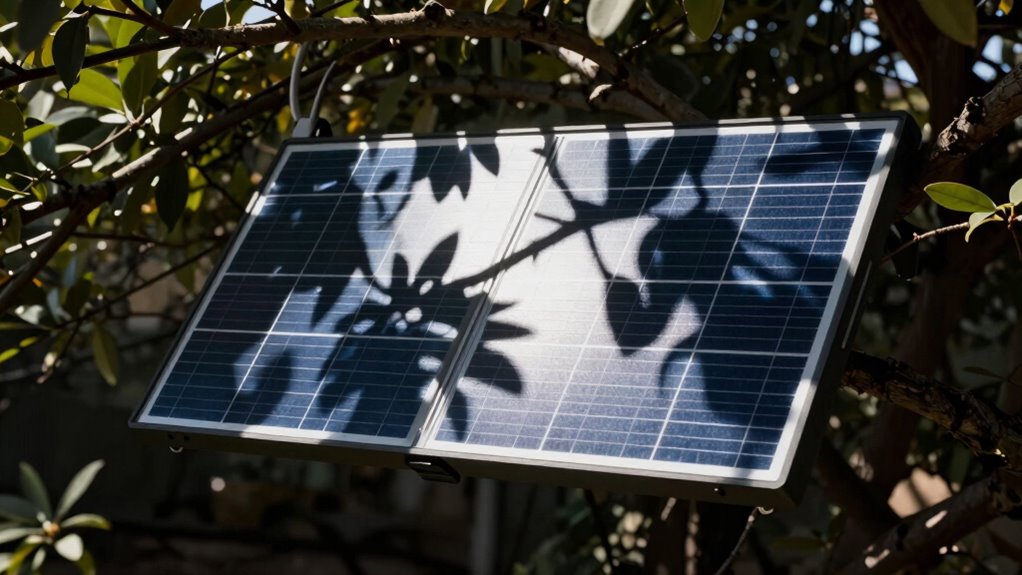
Shade quietly destroys your portable solar system’s performance by causing sudden drops in efficiency that may go unnoticed. Even brief shading affects multiple panels, especially when interconnected, leading to significant power loss and faster panel degradation. This reduced energy flow prevents your batteries from charging properly, shortening their lifespan. Over time, shading accelerates wear and tear, making your system less reliable. Want to learn how to prevent these silent damages and keep your system running smoothly?
Key Takeaways
- Shading causes immediate drops in solar panel efficiency, reducing overall power output silently.
- Even brief shading can significantly impair system performance without obvious signs.
- Shading stresses individual cells, accelerating panel degradation and long-term efficiency loss.
- Interconnected panels amplify shading effects, quietly diminishing total energy generation.
- Reduced power from shading hampers battery charging, accelerating system wear over time.
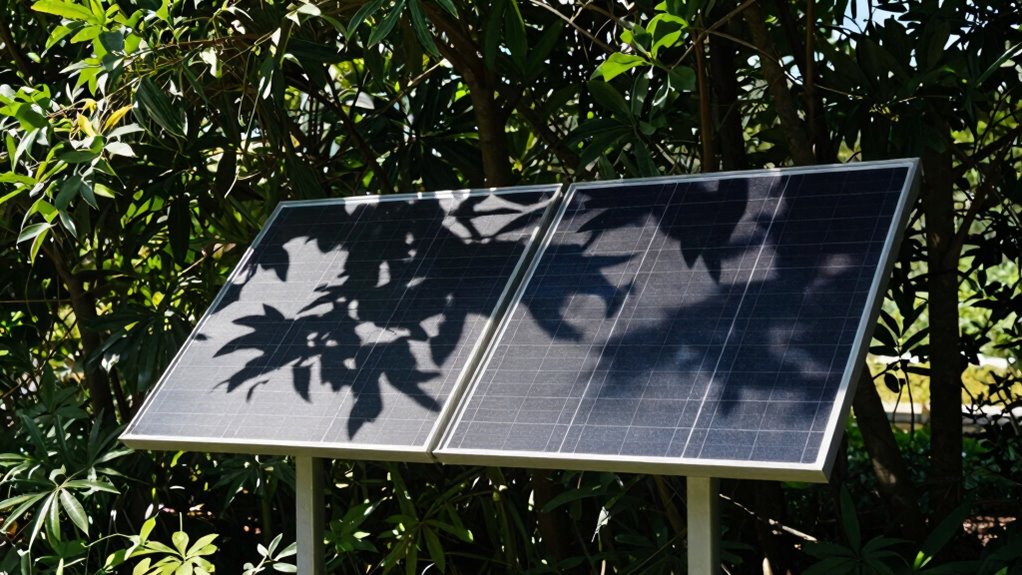
While portable solar panels offer a convenient way to harness renewable energy on the go, shading—even briefly—can silently but profoundly diminish their performance. When part of your solar setup is shaded, it doesn’t just reduce the immediate power output; it can also have long-term effects on your system’s health. One key aspect affected by shading is battery efficiency. As your portable solar panels produce less energy due to shading, the battery receives less charge, leading to inefficient energy storage. Over time, this inconsistency can cause your battery to cycle improperly, reducing its overall lifespan and capacity. Instead of charging fully and maintaining optimal performance, your battery may deteriorate faster because it’s not receiving stable, sufficient power. This creates a cycle where your system becomes less reliable, forcing you to replace batteries sooner than expected.
Shading reduces solar efficiency, causing battery wear and faster system degradation over time.
Moreover, shading contributes to solar panel degradation, which further hampers your system’s performance over time. When parts of your panel are shaded, the uneven distribution of sunlight causes stress on individual cells. This uneven stress accelerates the wear and tear on the material, leading to micro-cracks and other forms of damage. The result is a gradual decline in the panel’s efficiency, meaning it produces less power even when fully exposed to sunlight. This degradation is often subtle at first, making it easy to overlook, but over months or years, it can significantly diminish your portable solar system’s capability. As the panels degrade, you’ll notice a drop in energy generation, which can leave you scrambling for alternative power sources. Proper solar panel maintenance can help mitigate some of these issues and prolong system life.
To make matters worse, many portable solar systems are designed with multiple panels connected in series or parallel, which means shading on one part can affect the entire system’s output. This interconnectedness magnifies the impact of shading, making it even more critical to keep your panels in full sun. You might think a quick shadow passing over your setup won’t matter, but even brief shading can cause a ripple effect, reducing power output and stressing your system components. Over time, this continuous stress and reduced efficiency can lead to increased wear on your system, requiring repairs or replacements sooner than you’d like. Recognizing the importance of system design can help prevent some shading issues and optimize overall performance.
In short, shading quietly undermines your portable solar system’s performance by impairing battery efficiency and accelerating solar panel degradation. Even small shadows can have outsized impacts, making it essential to position your panels carefully and keep them free from obstructions. By doing so, you’ll optimize your system’s longevity and ensure you get the most reliable, sustainable power wherever you go. Paying attention to solar panel degradation and avoiding shading can help prolong the life of your setup and ensure consistent energy supply.
portable solar panel shade protector
As an affiliate, we earn on qualifying purchases.
As an affiliate, we earn on qualifying purchases.
Frequently Asked Questions
Can Shading Effects Be Reversed on Portable Solar Panels?
Yes, shading effects can be reversed on portable solar panels through shade mitigation techniques. You should reposition your panels to minimize shadows and guarantee maximum sunlight exposure, which helps optimize panel performance. Regularly check for new shade sources and clean your panels to maintain efficiency. By actively managing shading issues, you improve overall output and panel optimization, ensuring your portable solar setup works effectively even when shadows appear.
How Does Partial Shading Impact Overall Power Output?
Ah, the art of solar optimization—except when partial shading steps in as the unwelcome guest, sabotaging your power dreams. Partial shading drastically reduces overall power output because it causes uneven current flow and hot spots. Shade mitigation techniques, like bypass diodes, help preserve efficiency. Ignoring shade effects quietly wrecks your setup, so embrace proper shading strategies to maximize your solar investment and keep your energy flowing smoothly, even when the sun’s mood swings.
Are There Portable Solar Panels Designed to Resist Shading?
Yes, there are portable solar panels designed to resist shading. These panels incorporate shade mitigation features like bypass diodes and panel optimization techniques, which help minimize power loss caused by shading. By using such technology, you can guarantee more consistent performance even when parts of your panel are shaded. These advancements allow you to maintain a steady power output, making portable solar solutions more reliable and efficient in diverse shading conditions.
What Tools Can Detect Shading Issues on Portable Solar Setups?
Think of your solar setup as a stage; shadow mapping tools are your spotlight, revealing hidden shading issues. You can use apps like Solmetric SunEye or PVsyst for detailed shading analysis, helping you identify problematic shadows. These tools assist in shading mitigation by showing where shadows fall, so you can reposition panels. With their help, you’ll keep your portable solar performance shining brightly, even in challenging conditions.
How Often Should I Check for Shading Obstructions?
You should check for shading obstructions at least once a month to maintain ideal sunlight and shadow management. Regular inspections help you identify new obstructions like overgrown trees or debris that could block sunlight. During seasonal changes, especially in spring and fall, check more frequently to guarantee your portable solar setup stays efficient. Consistent monitoring allows you to maximize sunlight exposure and prevent shadows from quietly reducing your solar performance.
solar panel maintenance kit
As an affiliate, we earn on qualifying purchases.
As an affiliate, we earn on qualifying purchases.
Conclusion
So, don’t dismiss the impact of shade on your portable solar setup. Even brief shadows can considerably reduce your system’s efficiency, especially if you’re relying on it for critical power needs. While some might think adjusting your position is inconvenient, it’s a small effort compared to the energy loss you’ll avoid. Keep an eye on the sun and position your panels carefully—your power supply depends on it, no matter how small the shade.
solar panel micro-crack repair kit
As an affiliate, we earn on qualifying purchases.
As an affiliate, we earn on qualifying purchases.
solar panel interconnection protection
As an affiliate, we earn on qualifying purchases.
As an affiliate, we earn on qualifying purchases.