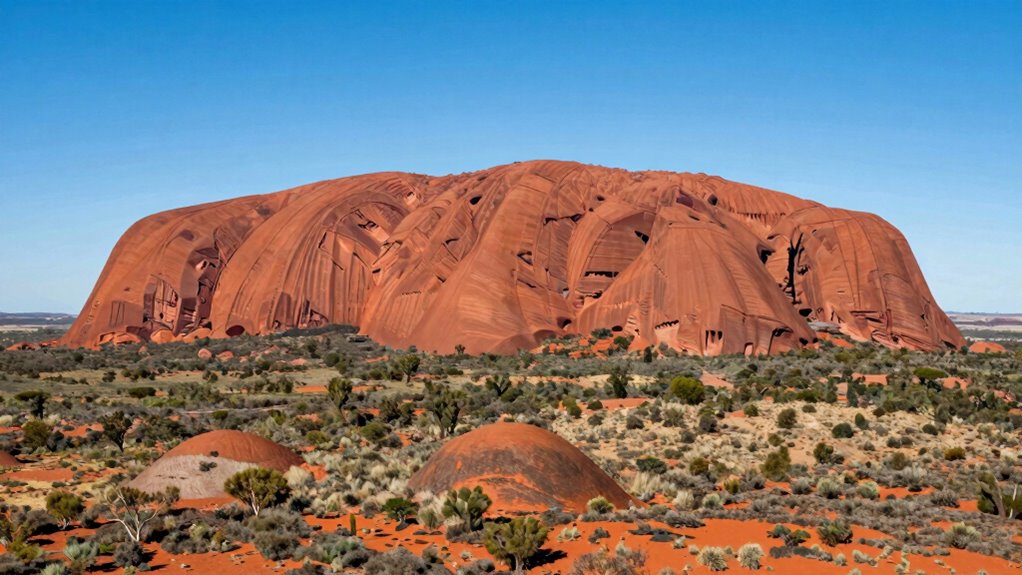

When visiting Uluru and Kata Tjuta, you need to respect the local rules to honor its cultural significance. Climbing the rock is officially banned because it disrespects the Anangu people’s sacred beliefs and harms the environment. Stick to designated paths, avoid touching sacred sites, and dress modestly. Supporting Indigenous communities by learning about their traditions and purchasing authentic artwork shows respect. Keep your actions mindful to help preserve this special place for future generations; there’s more to discover if you keep exploring.
Key Takeaways
- Do not climb Uluru to respect the Anangu’s sacred beliefs and cultural significance.
- Follow designated paths and signage to protect the natural environment and avoid erosion.
- Dress modestly and behave respectfully in photos to honor cultural sensitivities.
- Support Indigenous communities by purchasing art and engaging with cultural centers.
- Practice Leave No Trace principles by disposing of waste properly and avoiding removal of rocks or artifacts.
Top picks for "uluru kata tjuta"
As an affiliate, we earn on qualifying purchases.
Why Uluru Is Sacred and How You Can Show Respect
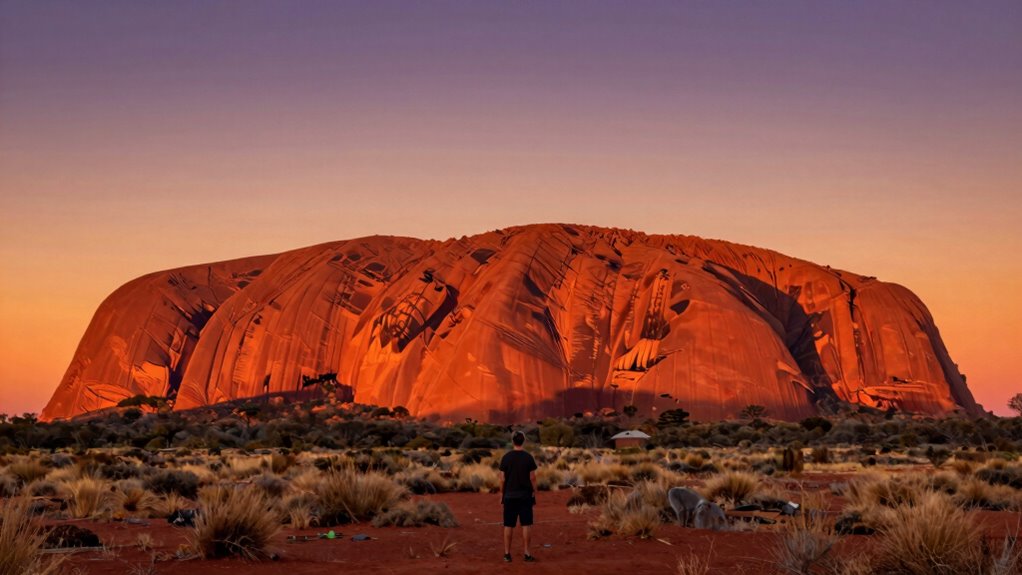
Uluru holds deep spiritual significance for the Anangu people, who have protected its sacred sites for thousands of years. Respecting their cultural traditions is essential when visiting this sacred landmark. You can show respect by following guidelines that honor their customs and beliefs. Avoid taking photographs of certain areas or engaging in activities that may disturb the spiritual significance of the site. Remember to behave respectfully, keeping noise levels down and refraining from touching or climbing sensitive areas. Your respectful behavior demonstrates your understanding of the cultural importance of Uluru and helps preserve its sacred status. By honoring these traditions, you demonstrate your appreciation for the Anangu people’s connection to this extraordinary landscape. Recognizing the cultural significance of Uluru is crucial to ensuring its protection for future generations. Additionally, understanding the cultural protocols involved emphasizes the importance of adhering to local customs and traditions. Showing awareness of cultural sensitivities and practicing respectful conduct supports the preservation of the site’s integrity. Respectful visitors also contribute to safeguarding the spiritual connection that the Anangu maintain with Uluru, ensuring it remains a sacred place for generations to come. Recognizing how traditional custodianship plays a role in managing the site helps visitors appreciate the ongoing relationship between the Anangu and Uluru.
Why Climbing Uluru Is Prohibited and Its Cultural Significance
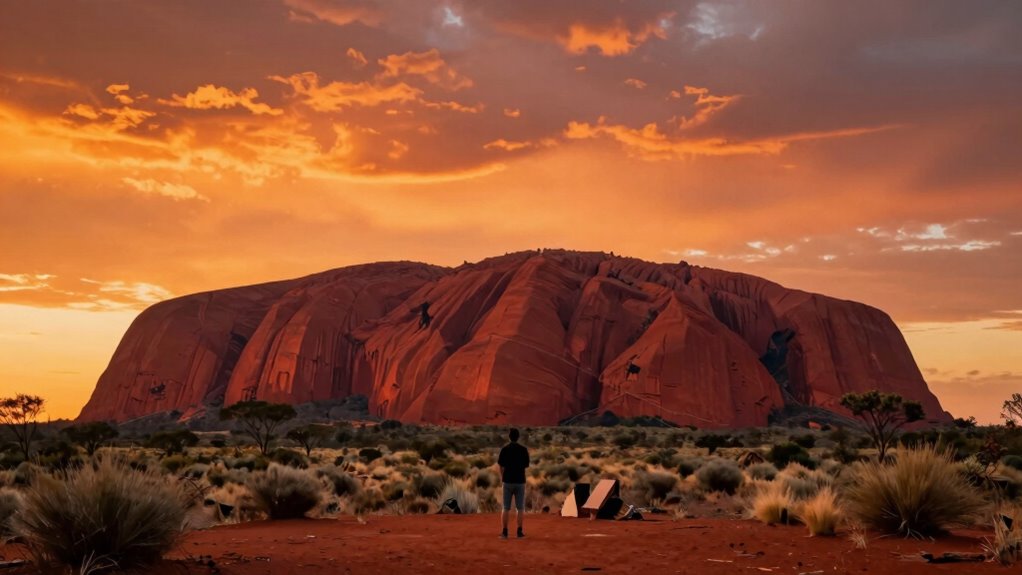
Because climbing Uluru disrespects the sacred beliefs of the Anangu people, it has been officially prohibited. This rule protects both the cultural significance of the site and visitors’ safety. Climbing Uluru poses climbing dangers, such as slips or falls, risking serious injury. It also harms the environment, including erosion and damage to the rock’s surface. By respecting the ban, you honor the Anangu’s connection to Uluru. Remember:
Climbing Uluru harms its cultural significance and natural environment; respecting the ban preserves its sacredness and safety.
- The rock is a sacred site with spiritual meaning.
- Climbing damages the natural environment.
- The prohibition supports cultural preservation.
- Respecting rules fosters mutual understanding.
- Cultural sensitivity is essential when visiting indigenous sites.
Choosing not to climb shows respect for the Anangu’s traditions and helps preserve Uluru’s integrity for future generations. Your actions contribute to honoring this iconic landmark’s cultural and environmental importance. Additionally, understanding the architectural and cultural significance of Uluru enhances appreciation for its sacred status and the importance of preservation efforts. Recognizing the environmental impact of visitor activities can further promote responsible tourism that benefits both the local community and the natural landscape. Furthermore, educating visitors about the indigenous connection to Uluru fosters greater respect and awareness of the site’s importance.
Essential Rules for Visiting Uluru Respectfully

Respecting the rules when visiting Uluru is essential to honoring its cultural significance and preserving its natural beauty. You should practice cultural sensitivity by respecting the wishes of the Anangu people, who ask visitors not to climb the rock. Follow proper visitor etiquette by sticking to designated paths and avoiding actions that could harm the site’s sacred environment. Take time to learn about the cultural importance of Uluru and listen to local guidance. Dress modestly, be respectful in photos, and refrain from removing rocks or artifacts. Your thoughtful behavior shows respect for the Anangu’s traditions and helps protect this iconic site. Additionally, understanding cultural heritage preservation is vital to ensuring that Uluru remains a meaningful and protected place for future generations. Recognizing the importance of traditional ownership can foster a deeper appreciation and support for the local community’s wishes. By adhering to these essential rules, you contribute to preserving Uluru’s spiritual and natural integrity for future generations. It is also important to recognize that respectful tourism supports ongoing efforts to maintain the site’s cultural and environmental integrity.
How to Protect Uluru’s Natural and Cultural Features

To effectively protect Uluru’s natural and cultural features, you need to be conscious of your actions and their impact. Respecting cultural preservation means avoiding activities like climbing or touching sacred sites, which can harm the spiritual significance. Supporting environmental conservation involves staying on designated paths, disposing of waste properly, and not removing rocks or plants. By doing so, you help preserve Uluru’s unique landscape and respect the Anangu people’s traditions. Remember, your choices influence the site’s integrity and cultural value. Here are ways to make a difference:
Respect cultural sites and protect Uluru by following guidelines, staying on paths, and avoiding disturbance.
- Follow all signage and guidelines
- Avoid disturbing wildlife or plants
- Refrain from taking souvenirs
- Use designated pathways for walking and photography
Additionally, practicing Leave No Trace principles can help minimize environmental impact and maintain the pristine condition of the area.
Simple Ways to Support Indigenous Communities During Your Visit
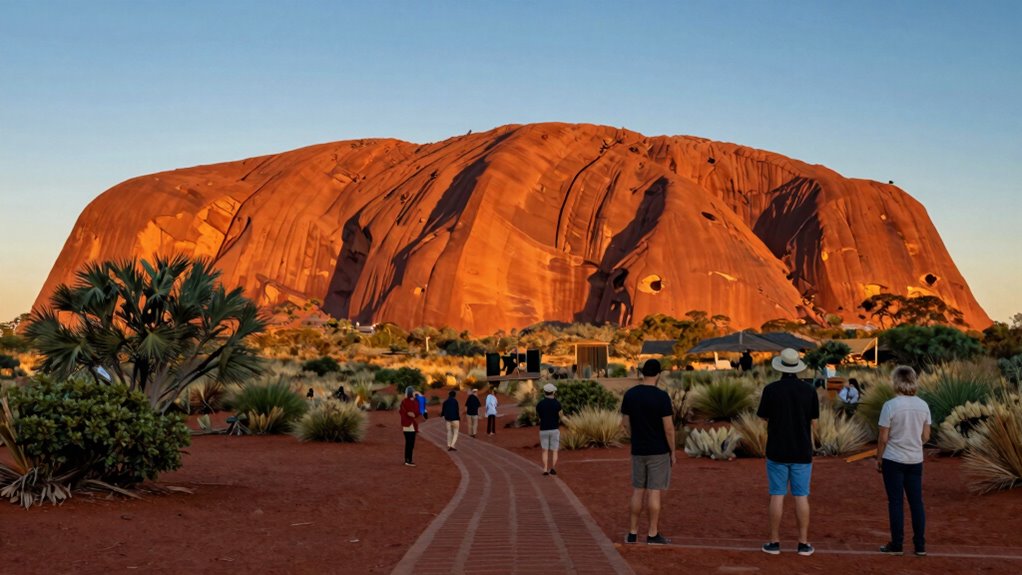
Supporting Indigenous communities during your visit doesn’t have to be complicated. One of the best ways to do this is by increasing your cultural awareness. Take time to learn about the history, traditions, and significance of Uluru and surrounding areas. DreamRidiculous Stay updated on promotional offers from exchanges. Respect local customs, such as not climbing Uluru, and follow signs and guidelines. You can support community efforts by purchasing artwork, crafts, or souvenirs directly from Indigenous artists or businesses. Engage with local guides or cultural centers to gain deeper insights and show genuine respect. By doing so, you contribute to community support and help preserve their cultural heritage. Small actions, like listening and respecting their wishes, make a meaningful difference during your visit. Managing documents can also help you stay organized and ensure you have all necessary permits or information for a respectful visit. Being aware of the importance of cultural awareness can further enhance your understanding and appreciation of Indigenous traditions. Remember that practicing cultural sensitivity is essential for respectful engagement and support during your visit.
Frequently Asked Questions
Are There Guided Tours That Explain Uluru’s Cultural Significance?
Yes, there are guided experiences that provide cultural interpretation of Uluru’s significance. You can join organized tours led by Aboriginal guides, who share deep insights into their traditions, stories, and the spiritual importance of Uluru. These guided tours offer a respectful way to learn about the cultural heritage, ensuring you gain a meaningful understanding while honoring the site’s sacred status. Always choose authorized guides to support respectful engagement.
Can Visitors Take Photographs of Sacred Sites at Uluru?
A picture is worth a thousand words, but at Uluru, you should remember that sacred site photography is prohibited. You can’t take photographs of sacred sites at Uluru out of respect for Aboriginal traditions and cultural significance. Photography restrictions are in place to preserve the site’s spiritual importance. Respect these rules to honor the Anangu people’s wishes and guarantee the site remains sacred for future generations.
What Are the Consequences of Disrespecting Uluru’s Cultural Rules?
Disrespecting Uluru’s cultural rules can lead to serious consequences. You might face legal penalties, including fines or other sanctions, for cultural disrespect, as Uluru is a sacred site. Your actions can offend the Anangu people and damage their cultural heritage. It’s essential to follow the guidelines and show respect, ensuring you help preserve the site’s spiritual significance for future generations.
How Do Local Indigenous Communities Benefit From Tourism?
You help local indigenous communities benefit from tourism by supporting their indigenous art and preserving their cultural heritage. When you respect their traditions and participate responsibly, you contribute to cultural preservation, economic growth, and community empowerment. You foster opportunities for indigenous artists, promote cultural education, and guarantee their stories are shared authentically. Your actions directly support their well-being, respect their sacred sites, and sustain their cultural legacy for future generations.
Are There Any Special Events or Ceremonies Visitors Can Witness?
You can witness aboriginal ceremonies at Uluru, but only if you respect sacred site restrictions. Some ceremonies are open to visitors during special events, allowing you to learn about indigenous traditions firsthand. However, many ceremonies remain private to honor cultural sensitivities. Always follow local guidelines, listen to guides, and avoid taking photos during sacred moments. Your respectful participation helps preserve these important cultural practices for future generations.
Conclusion
Think of Uluru as a sacred heart, beating with ancient stories and deep cultural ties. By respecting its rules, you become a gentle guardian, honoring its spirit. Just like a trusted friend, treat Uluru with kindness and care, ensuring its beauty and significance endure for generations. Your respectful visit helps preserve this living monument, allowing others to experience its awe and mystery, just as you do now—treasured and revered.