
Rugged tech ratings like IP, MIL-STD, and drop tests show how tough a device is against harsh conditions and rough handling. IP ratings measure resistance to dust and water, while MIL-STD certifications involve rigorous tests like drops, vibrations, and extreme temperatures to guarantee durability. Drop tests focus on how well devices withstand falls from specific heights. Keep exploring these standards to better understand how to choose equipment built for demanding environments.

Get travel and outdoor gear delivered free — and shop member deals
- Fast, free delivery on millions of items
- Access to Prime Big Deal Days deals on October 6–7
- Prime Video, Amazon Music and more included
Key Takeaways
- IP ratings indicate device resistance to dust and water, with higher numbers meaning better protection.
- MIL-STD certifications confirm devices can withstand drops, vibrations, temperature changes, and humidity based on military standards.
- Drop tests evaluate device durability by testing impact resistance from specific heights, ensuring reliability in real-world falls.
- Combining IP, MIL-STD, and drop test ratings helps assess overall ruggedness for harsh environments.
- Understanding these ratings ensures selection of durable devices suited for outdoor, industrial, or demanding operational conditions.
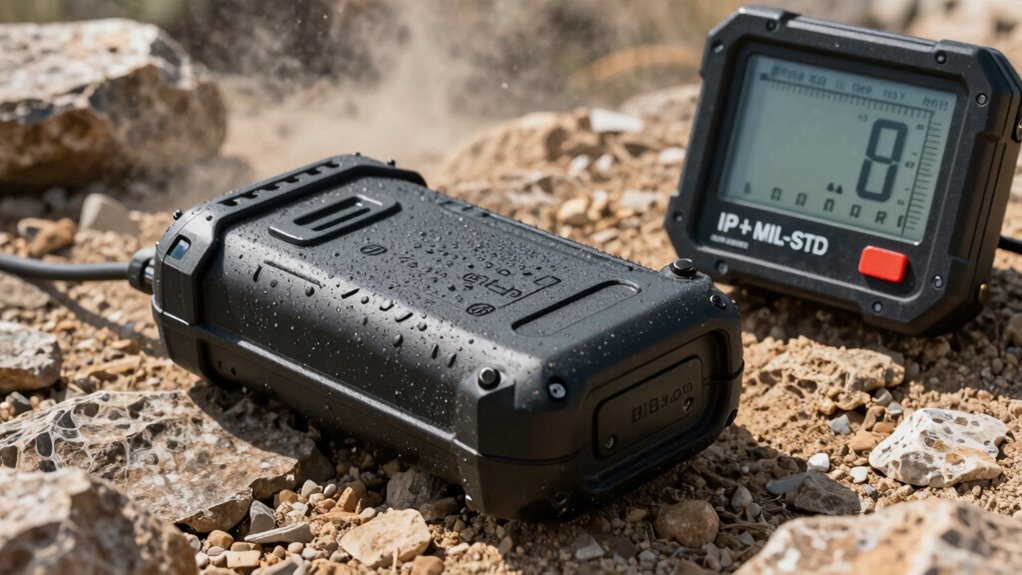
Are you searching for durable devices that can withstand tough conditions? If so, understanding rugged tech ratings is vital. These ratings give you a clear idea of how well a device can handle harsh environments and rough handling. At the core of these ratings are durability standards and environmental testing, which guarantee devices meet strict benchmarks for resilience. By decoding these ratings, you can confidently select equipment that won’t fail when you need it most.
Durability standards are established benchmarks that manufacturers must meet to prove their devices can endure specific challenges. These standards are developed through rigorous testing procedures that simulate real-world conditions. Environmental testing plays a significant role here, exposing devices to extreme temperatures, humidity, dust, water, and vibrations. These tests help verify that a product can operate reliably in demanding environments, whether you’re working outdoors, in a factory, or on a construction site. When a device earns a high durability standard, it has proven its ability to withstand these harsh conditions without compromising performance.
Durability standards ensure devices withstand real-world conditions through rigorous environmental testing.
One of the most common ratings you’ll encounter is the Ingress Protection (IP) rating. It measures a device’s resistance to dust and water. The IP rating consists of two digits: the first indicates protection against solid particles like dust, and the second shows resistance to liquids. For example, an IP68-rated device is dust-tight and can be submerged in water beyond one meter for an extended period, making it suitable for tough outdoor environments. Understanding IP ratings helps you assess whether a device can handle the environmental testing it might face in your line of work or activities.
Another key rating system is MIL-STD, which originates from the U.S. military. Devices tested to MIL-STD standards undergo a series of rigorous tests, including drop tests, vibration tests, thermal shock, and humidity exposure. These tests simulate real-world impacts and environmental conditions that military equipment must survive. If your device is MIL-STD certified, it’s guaranteed to endure rough handling, extreme temperatures, and vibrations—making it ideal for demanding situations.
Drop tests are also a standard part of rugged tech ratings. They evaluate how well a device can withstand falls from specific heights onto different surfaces. Devices that pass these tests are less likely to break if accidentally dropped, a common hazard in active environments. When choosing rugged tech, look for certifications that specify the height and conditions of the drop tests to ensure your device can handle accidental falls. Additionally, the latest innovations in environmental testing improve the accuracy of durability assessments, ensuring devices are tested under conditions that closely mimic real-world scenarios.
Frequently Asked Questions
How Are Rugged Tech Ratings Tested in Real-World Environments?
You test rugged tech in real-world environments by simulating conditions like extreme temperatures, dust, water, and drops, ensuring durability. During these tests, you pay attention to battery longevity to see how long devices last under heavy use, and user ergonomics to confirm they remain easy to handle and operate. These practical assessments help verify that the device can withstand daily challenges while maintaining performance and comfort.
Do Higher IP Ratings Guarantee Device Durability in All Conditions?
Did you know that devices with IP67 or higher are often more resistant to dust and water? Higher IP ratings don’t guarantee device durability in all conditions, but they do mean better waterproofing and dust protection. Keep in mind, real-world factors like impact, temperature, and wear can still affect performance. So, while higher IP ratings improve device waterproofing, they aren’t a catch-all for every tough environment.
Are MIL-STD Tests Standardized Across Different Manufacturers?
MIL-STD tests aren’t fully standardized across manufacturers, so manufacturing consistency and testing variability can vary widely. While the standards set general guidelines, different companies might interpret or apply them differently, leading to inconsistencies. This means a device passing MIL-STD tests from one manufacturer may not perform identically to another’s, so you should consider additional factors like build quality and real-world testing to gauge durability accurately.
Can a Device Pass Multiple Drop Test Levels Simultaneously?
Think of your device as a fortress, capable of withstanding multiple assaults. Yes, it can pass multiple drop test levels simultaneously if designed to meet various certification standards. This enhances device longevity, ensuring it survives diverse environments. Manufacturers often test for different levels to prove durability. By achieving multiple standards, your device becomes a symbol of resilience, ready for any challenge, and provides you with reliable performance across different rugged conditions.
How Often Should Rugged Devices Be Retested for Compliance?
You should retest your rugged devices according to their retention schedules and testing intervals, typically every 1 to 2 years. Regular testing guarantees continued compliance with standards like IP, MIL-STD, and drop tests, especially if your devices undergo heavy use or environmental changes. Staying up-to-date with retesting helps maintain device durability and ensures they meet safety and performance requirements over time.
Conclusion
Understanding rugged tech ratings helps you choose devices that withstand harsh conditions. Did you know that MIL-STD tests simulate 26 different environmental hazards, from shocks to extreme temperatures? This means your device is tested against more challenges than most scenarios you’ll encounter daily. By decoding IP, MIL-STD, and drop test ratings, you can confidently select gear that’s built to last. Make informed choices and trust your tech to perform, no matter what life throws at you.
Halloween Picks
halloween
As an affiliate, we earn on qualifying purchases.