Choosing a wastewater sampler for automatic composite collection is less about finding one universal machine and more about matching the sampler to the job: refrigerated storage, unattended collection, portable field work, or simple grab sampling. My leading choices are the Global Water WS700R for chilled composite samples, the TRACEABLE WS700 for flexible composite and discrete sampling, and the battery-powered peristaltic sampler when a field crew needs cordless operation and deep intake reach. Each serves a different use case, and none should be treated as interchangeable.

Get travel and outdoor gear delivered free with Prime
- Fast, free delivery on millions of items
- Prime Video, Amazon Music and more included
- Member-only deals all year
The main tradeoff is between sampling control and sample preservation on one side, and mobility or simplicity on the other. The WS700R brings a compressor-cooled compartment and bottle-full shutoff, but it is heavy and needs 115 VAC. The WS700 offers automatic backflush and adjustable timing without refrigeration. The battery-powered model is portable relative to fixed installations, but its listed weight and narrow hose specification still matter. I rank these by how directly their documented features support automatic wastewater sampling—not by claims the available product details cannot verify.
Complete the kit


Key Takeaways
- The Global Water WS700R is the clearest fit when a wastewater composite sample needs compressor cooling, automatic backflush, and a full-bottle shutoff.
- The TRACEABLE WS700 offers the strongest documented balance of composite and discrete sampling, adjustable timing, and automatic line clearing, but refrigeration is not listed.
- The battery-powered peristaltic sampler is the field-oriented pick for cordless operation and intake from as deep as 8 meters; confirm that its tubing dimensions suit the application.
- The floating-ball sampler is a manual collection device, not a programmable automatic composite sampler, so it belongs on this list only for simple grab-sample needs.
- The GOYOJO listing provides too little technical information to verify composite timing, sample capacity, or measurement functions; request full specifications before relying on it.
| Global Water WS700R Refrigerated Wastewater Sampler |  | Best Overall for Refrigerated Composite Sampling | Sampling modes: Time-weighted composite and discrete grab | Pump type: Peristaltic | Bottle: 2-gallon polyethylene | VIEW ON AMAZON | See Our Full Breakdown |
| TRACEABLE Global Water Peristaltic Water Sampler |  | Best Overall Value in Sampling Flexibility | Model: WS700 | Sampling modes: Composite and discrete | Pump and bottle count: One pump and one bottle | VIEW ON AMAZON | See Our Full Breakdown |
| Battery-Powered Peristaltic Water Quality Sampler | 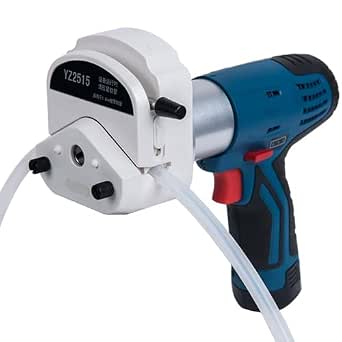 | Best for Cordless Field Sampling | Power: Rechargeable battery | Flow rate: 0–1120 ml/min | Rotational speed: 0–700 RPM | VIEW ON AMAZON | See Our Full Breakdown |
| Water Sampler with Automatic Floating Ball Intake |  | Best for Simple Grab Samples | Intake mechanism: Automatic floating ball | Capacity options: 500 ml or 1000 ml | Rope options: 10 m or 50 m | VIEW ON AMAZON | See Our Full Breakdown |
| GOYOJO Multifunctional Water Monitoring Instrument and Automatic Sampler |  | Best Only After Specification Confirmation | Brand: GOYOJO | Product type: Water monitoring instrument and automatic sampler | Design: Described as compact | VIEW ON AMAZON | See Our Full Breakdown |
| wastewater sampler automatic composite | Weight |
|---|---|
| Global Water WS700R Refrigerat | 55 pounds |
| TRACEABLE Global Water Perista | 27 pounds |
| Battery-Powered Peristaltic Wa | 15.43 lb |
| Water Sampler with Automatic F | — |
| GOYOJO Multifunctional Water M | — |
More Details on Our Top Picks
Global Water WS700R Refrigerated Wastewater Sampler
I rank the WS700R first because it combines the most directly relevant features for unattended wastewater composites: time-weighted composite collection, adjustable sampling intervals, a peristaltic pump, and a refrigerated compartment. The compressor cooling and automatic defrost system matter when a sample must be kept chilled during a collection run; neither the standard WS700 nor the cordless peristaltic sampler lists refrigeration. A float switch stops pumping when the supplied 2-gallon bottle is full, adding a practical safeguard that is not specified for the other automatic options.
The sampler also supports discrete grab sampling, and its automatic 15-second backflush helps clear the intake path between operations. Compared with the WS700, this is the more complete choice when sample preservation is part of the requirement, but it asks for more from the site: 115 VAC power and a 55-pound freestanding unit. The product description says no programming is required, which may suit users who want interval-based operation without a complex setup, although buyers should confirm how the selected sampling schedule is configured.
I would choose it for a fixed or semi-permanent wastewater station where chilled collection and bottle protection outweigh easy relocation. I would skip it for remote sites without mains power, or for crews who need to carry equipment between sampling points. Its included bottle is 2 gallons, so buyers should also check that this volume matches their collection plan rather than assuming it suits every monitoring protocol.
Pros:- Collects time-weighted composite samples and discrete grab samples
- Compressor refrigeration with automatic defrost
- Automatic 15-second backflush and float-switch bottle protection
- Supplied 2-gallon polyethylene bottle
Cons:- Requires 115 VAC power, limiting remote deployment
- At 55 pounds, it is less convenient to move than the cordless sampler
- The listed bottle capacity may not fit every sampling plan
Best for: Wastewater operators who need an AC-powered, refrigerated unit for time-weighted composites or discrete samples, with an included 2-gallon bottle and full-bottle shutoff.
Not ideal for: Field crews working away from 115 VAC, buyers who need a lightweight portable unit, or programs requiring a larger stated bottle capacity.
- Sampling modes:Time-weighted composite and discrete grab
- Pump type:Peristaltic
- Bottle:2-gallon polyethylene
- Intake hose:1/4-inch reinforced PE
- Power:115 VAC, 50/60 Hz
- Cooling:Compressor with automatic defrost
- Backflush:Automatic, 15 seconds
- Weight:55 pounds
Our verdict“My first choice for fixed-site wastewater composites when refrigeration and overflow protection matter more than portability.”
TRACEABLE Global Water Peristaltic Water Sampler
The WS700 is my pick for flexible, non-refrigerated sampling. It is explicitly described for composite or discrete collection across stormwater, industrial discharge, wastewater, and surface-water work. Adjustable sample size and sampling intervals make it a stronger choice for a planned collection sequence than the battery-powered unit, whose supplied details focus on flow, speed, and intake depth rather than a documented composite schedule.
Its automatic 15-second backflush clears the strainer and hose, helping reduce debris buildup between sampling events. A start-delay timer can coordinate the unit with a site schedule or postpone collection until a chosen start time. Those controls give it a useful middle ground: more purpose-built for automatic composite collection than a simple floating-ball sampler, but less demanding to install than the 115-volt refrigerated WS700R.
The tradeoff is sample preservation. The description does not list refrigeration, and the standard unit has one pump and one bottle, so buyers should not assume separate sample containers or chilled storage are included. A stormwater kit with rain sensor, flow sensor, and auto-drain rain gauge is optional, not part of the stated standard configuration. I would also request the instruction manual before purchase if exact programming ranges or operating limits determine compliance with a sampling plan; the available product information does not spell those out.
Pros:- Supports both composite and discrete sampling
- Adjustable sample size and sampling intervals
- Automatic 15-second backflush for the strainer and hose
- Start-delay timer supports scheduled operation
Cons:- Refrigeration is not listed
- Stormwater sensor and rain-gauge features require an optional kit
- Full operating specifications require consulting the instruction manual
Best for: Operators who need adjustable composite or discrete sampling, delayed starts, and automatic line clearing without requiring a refrigerated enclosure.
Not ideal for: Buyers who need a supplied refrigerated compartment, multiple bottles, or a stormwater sensor kit included as standard.
- Model:WS700
- Sampling modes:Composite and discrete
- Pump and bottle count:One pump and one bottle
- Sample controls:Adjustable sample size and intervals
- Start control:Start-delay timer
- Backflush:Automatic, 15 seconds
- Optional kit:Rain sensor, flow sensor, and auto-drain rain gauge
- Weight:27 pounds
Our verdict“My strongest non-refrigerated pick for buyers who want documented timing flexibility and a backflush cycle.”
Battery-Powered Peristaltic Water Quality Sampler
This battery-powered peristaltic sampler suits crews who need to reach a sampling point without a mains outlet. Its stated maximum suction depth of 8 meters sets it apart from the WS700 and WS700R descriptions, which do not provide a depth figure. Adjustable speed, reversible operation, and a flow-rate range from 0 to 1120 ml/min offer control over how liquid moves through the tubing, while tool-free tube replacement can simplify setup changes in the field.
That does not make it the most proven automatic composite option in this lineup. The product information describes water sampling and cordless operation, but does not confirm timed aliquot programming, a supplied composite bottle, or refrigerated storage. By comparison, both Global Water models explicitly identify composite sampling; the WS700 also names adjustable sampling intervals. I would treat this unit as a portable peristaltic sampling tool unless the seller can confirm its automatic composite functions and compatible collection accessories.
Portability is also relative: the listed unit weight is 15.43 pounds, so it is lighter than the WS700R but not a featherweight handheld device. Its stated tubing size—4.8 mm inner diameter and 9.8 mm outer diameter—may restrict hose selection and should be checked against the sampling setup. Choose it for remote access and battery operation; skip it when documented composite scheduling, sample chilling, or a defined bottle system is mandatory.
Pros:- Cordless rechargeable-battery operation
- Maximum stated suction depth of 8 meters
- Adjustable forward and reverse operation
- Tool-free tubing changes
Cons:- Automatic composite timing is not confirmed in the supplied details
- Listed weight of 15.43 pounds can still burden field transport
- Specified hose dimensions limit tubing choices
Best for: Field teams needing battery operation, reversible pumping, and stated suction reach up to 8 meters, provided they verify the collection accessories and automation method.
Not ideal for: Buyers who require confirmed timed composite programming, refrigeration, a specified composite bottle, or broad tubing compatibility.
- Power:Rechargeable battery
- Flow rate:0–1120 ml/min
- Rotational speed:0–700 RPM
- Maximum suction depth:8 m
- Hose dimensions:4.8 mm inner diameter, 9.8 mm outer diameter
- Operation:Adjustable forward and reverse
- Dimensions:237 × 119 × 230 mm
- Weight:15.43 lb
Our verdict“A field-oriented choice for cordless intake work, but not my first pick for a documented unattended composite program.”
Water Sampler with Automatic Floating Ball Intake
The floating-ball sampler is a different kind of tool from the first three picks. It uses an automatic intake when immersed, then releases liquid through a supplied valve. Its one-piece form and rope options can help when a user needs to lower a container into a water body, collect a grab sample, and bring it back without a powered pump. That simplicity may suit basic environmental monitoring or aquaculture checks where the target is a single sample rather than a programmed series.
For automatic wastewater composites, however, this is a substantial step down from the WS700 and WS700R. No interval control, timed aliquots, peristaltic pump, or composite collection sequence is listed. The battery-powered model at least provides active pumping and adjustable flow; the floating-ball design instead relies on immersion and a valve. I would not substitute it for an automatic composite sampler where the sampling plan calls for repeated collection over time.
Capacity and rope length vary by selected version: 500 ml or 1000 ml, with a 10-meter or 50-meter rope option. Buyers need to confirm the chosen configuration before ordering because those options change how much can be collected and how far the sampler can reach. PVC or PE construction is described, but the supplied information does not establish a specific model’s chemical compatibility or intended wastewater limits. Its value is ease of use for straightforward collection, not automated composite control.
Pros:- Intake begins automatically when the sampler is immersed
- Portable one-piece design without a powered pump
- Available in PVC or PE material options
- Capacity and rope-length options support different collection situations
Cons:- No timed or composite sampling sequence is specified
- Capacity and rope length depend on the selected version
- Chemical compatibility for a particular wastewater stream is not established
Best for: Users collecting occasional individual samples from accessible water locations who want a simple, non-powered intake and retrieval setup.
Not ideal for: Wastewater facilities needing timed composite sampling, programmable aliquots, sample refrigeration, or a pump-based intake system.
- Intake mechanism:Automatic floating ball
- Capacity options:500 ml or 1000 ml
- Rope options:10 m or 50 m
- Materials:PVC or PE
- Liquid release:Supplied valve
- Sampling type:Individual collection by immersion
Our verdict“A simple grab-sampling device, not a substitute for the programmable composite capability of the Global Water models.”
GOYOJO Multifunctional Water Monitoring Instrument and Automatic Sampler
The GOYOJO listing presents a combined water-monitoring instrument and automatic sampler, which sounds appealing to buyers hoping to consolidate equipment. Its stated compact design may also suit locations where a large freestanding refrigerated cabinet is impractical. But the available description does not identify what it measures, what its sampling cycle can do, how much sample it holds, or how it is powered. Those omissions make it difficult to judge the product against the clearly described WS700 and WS700R.
For this reason, I place it last for wastewater composite purchasing, despite the potentially useful all-in-one concept. The WS700 specifies adjustable sample size, intervals, a delay timer, and backflush; the WS700R adds refrigeration and a full-bottle switch. GOYOJO’s information confirms none of those particular capabilities. The phrase automatic sampler alone is not enough to establish that it collects timed composite aliquots, nor does a monitoring label establish which water-quality parameters are measured.
I would only shortlist this option after obtaining a full technical sheet that confirms the measurement functions, composite scheduling, collection capacity, intake design, power requirements, and wastewater suitability. It may fit a buyer with modest monitoring needs if those details check out, but it is not a safe specification-led choice from the information provided. Treat the compact format as a possible benefit, not proof that it matches the installation or sampling plan.
Pros:- Described as combining water monitoring and automatic sampling
- Compact design is claimed in the product description
- Potentially useful as a consolidated device if its functions meet the application
Cons:- Measurement capabilities are not specified
- Sample capacity and composite controls are not specified
- Power, intake, and wastewater suitability details are not provided
Best for: Buyers willing to verify a full technical specification before purchase and interested in a compact device that may combine monitoring with sampling.
Not ideal for: Anyone selecting equipment for a defined wastewater composite protocol without access to confirmed capacity, measurement, power, and sampling details.
- Brand:GOYOJO
- Product type:Water monitoring instrument and automatic sampler
- Design:Described as compact
- Measurement functions:Not specified
- Sample capacity:Not specified
- Composite schedule:Not specified
- Power requirements:Not specified
Our verdict“I would not select it for wastewater composites until the seller supplies the operating specifications missing from the listing.”

How We Picked
I ranked these products by how well the supplied information supports the specific job implied by automatic wastewater composite sampling. My main criteria were whether a device can collect composite samples, whether it has controls for timing or sample volume, how it handles the intake path, and whether the sample can be preserved or protected from overflow. I also weighed practical constraints such as power, weight, hose compatibility, and the clarity of the product specifications.
That method puts the WS700R first because its documented refrigeration, composite capability, adjustable intervals, backflush, and float switch address several core unattended-sampling needs. The non-refrigerated WS700 comes next for a more flexible sampling setup with explicit timing controls and both composite and discrete modes. The cordless peristaltic unit ranks below these because its stated depth and power benefits are useful, but the available description does not establish automatic composite programming or a supplied composite bottle system.
I treat the remaining two products as narrower or less certain choices. The floating-ball unit collects a sample when immersed but has no stated timed or composite sequence, while the GOYOJO listing lacks the technical details needed to judge its sampling method. Their placement reflects fit to the requested use, not a claim that they cannot work for other water-monitoring tasks. I have not inferred unstated capacities, certifications, software, or regulatory suitability.
Factors to Consider When Choosing Wastewater Sampler Automatic Composite
I would choose a wastewater sampler by first matching its actual collection method to the sampling plan. The phrase automatic composite can describe a controlled sequence of samples, but product listings vary in how clearly they document timing, volume, preservation, and intake details.Confirm that it collects composites, not just samples
For a true composite program, look for explicit support for composite collection and controls for sample intervals or aliquot size. The WS700 and WS700R state that they support composite and discrete modes, and the WS700 specifically lists adjustable sample size and intervals. The battery-powered unit lists adjustable pumping and reverse flow, but those facts alone do not establish an automatic composite schedule. The floating-ball option is for immersion-based individual collection, while the GOYOJO information does not describe its sequence. I would ask for a clear operating description whenever the listing leaves this distinction open.
Decide whether samples need cooling
If your sampling protocol requires chilled storage, the WS700R is the only listed option with specified refrigeration: it uses a compressor and automatic defrost. The WS700 has useful timing and backflush functions but no refrigeration is listed. Neither the battery-powered unit nor the two simpler options provide stated chilled storage. Before choosing, check the requirements of the monitoring program and the expected time between collection and retrieval. Do not infer refrigeration from the word wastewater or automatic.
Match power and mobility to the site
The WS700R needs 115 VAC and weighs 55 pounds, making it more suitable for a fixed or semi-permanent station. The WS700 weighs 27 pounds, though the supplied details do not state its power requirements. The cordless peristaltic sampler runs on a rechargeable battery and lists an 8-meter maximum suction depth, but its 15.43-pound weight is still relevant for field transport. The floating-ball sampler avoids powered pumping altogether for basic grab collection. I would map the distance to power, access route, and mounting location before choosing a unit.
Check intake, hose, and bottle compatibility
Intake geometry can determine whether a sampler suits a particular channel, tank, or manhole. The WS700R specifies a 1/4-inch reinforced PE hose and a 2-gallon bottle; the cordless unit specifies tubing with a 4.8 mm inner diameter and 9.8 mm outer diameter. The WS700 is described as having one pump and one bottle, but its supplied details do not give bottle volume. I would verify hose lengths, strainer arrangements, bottle capacity, and material compatibility for the liquid being sampled. A stated suction depth is not the same as confirmation that every installation layout will work.
Treat maintenance and backflush as operational features
A backflush cycle can help clear material from an intake line after collection. Both Global Water models list an automatic 15-second backflush, a meaningful distinction from the other options, which do not state an equivalent cycle. Ask how frequently tubing, strainers, bottles, and seals need inspection or replacement, and whether routine cleaning fits the site schedule. For variable or debris-heavy wastewater, this maintenance information matters as much as pump speed. The product details supplied here do not establish cleaning intervals or service procedures, so consult the manuals before deployment.
Verify the details that affect compliance
No product description alone confirms that a sampler meets every permit, laboratory, or agency requirement. Before purchase, compare the proposed sample timing, container material, temperature control, volume, and collection method with the applicable sampling plan. The WS700R offers the most clearly described preservation features; the WS700 provides explicit timing flexibility; the battery model needs confirmation of composite programming. For GOYOJO, request a technical sheet covering measurement functions and sampling specifications before treating it as suitable. I would keep written confirmation of the configuration being supplied, especially when optional kits or model variations are involved.
Frequently Asked Questions
What makes a sampler an automatic composite wastewater sampler?
An automatic composite sampler collects multiple portions according to a set schedule or another defined trigger and combines them into a representative sample. Buyers should confirm that the model supports composite collection and identify how timing, aliquot volume, and start conditions are controlled. The WS700 and WS700R explicitly describe composite sampling; the battery-powered product details do not confirm a composite schedule.
Which option is best when the sample must stay chilled?
The Global Water WS700R is the only option in this comparison with specified sample refrigeration. It uses compressor cooling and automatic defrost, and it includes a 2-gallon polyethylene bottle. It also needs 115 VAC power and weighs 55 pounds, so it is better suited to a fixed or semi-permanent site than a remote field route.
Can the battery-powered peristaltic sampler replace the WS700?
Not on the supplied details alone. The battery-powered model offers cordless operation, reversible flow, and a stated maximum suction depth of 8 meters, while the WS700 explicitly documents composite and discrete modes, adjustable sampling intervals, adjustable sample size, a start-delay timer, and automatic backflush. I would choose the cordless unit for field access only after confirming its composite controls and collection accessories.
Is the floating-ball sampler suitable for unattended composite collection?
The listed floating-ball device is described as filling when immersed and releasing liquid through a valve. No timer, repeated aliquot sequence, pump, or composite bottle arrangement is specified. It may suit a simple individual grab sample, but I would not rely on it for unattended composite collection without additional product documentation confirming that capability.
What should I ask before buying the GOYOJO sampler?
Ask for the measurement parameters, composite scheduling method, sample capacity, intake design, power requirements, tubing details, and confirmation that the device is suitable for the intended wastewater. The available description does not provide those specifications, so it is not possible to compare its operating range with the WS700 or WS700R. I would request a complete technical sheet and verify the exact configuration before using it in a defined sampling program.
Conclusion
For a fixed wastewater site where chilled composites and bottle-full protection are priorities, I recommend the Global Water WS700R. For buyers who want documented composite and discrete modes, adjustable timing, and automatic backflush without specified refrigeration, the TRACEABLE WS700 is the better fit. Field teams that need cordless operation and deep intake reach can consider the battery-powered peristaltic sampler, but I would first confirm its composite controls and collection setup.
Choose the floating-ball device only for straightforward individual grab samples, not as a programmable composite replacement. The GOYOJO may suit a buyer who can obtain and review a full technical specification, but the current details are too limited for a confident wastewater-composite recommendation. My final choice should follow the sampling protocol, site power, temperature needs, and verified equipment configuration—not the product label alone.