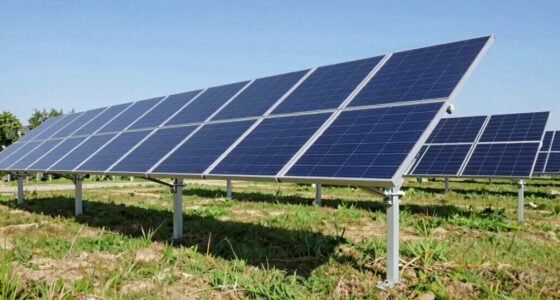
A 2,000W solar generator for RV travel can run many everyday appliances, but the right choice depends on both battery capacity and the loads you plan to power. I’d put the ABOK Ark2000 forward as the best overall balance of 2,000W output and 1,536Wh capacity; the Jackery Explorer 2000 v2 stands out for a larger-capacity setup with two solar panels, while the Anker SOLIX C1000 Gen 2 suits travelers who value a more compact station. The main tradeoffs are runtime versus portability, included solar-panel capacity versus recharge time, and rated output versus appliance startup surges. A generator labeled 2,000W may still fall short for a particular RV appliance or long off-grid stay. Read on for the full comparison and guidance on matching a power station to your travel plans.

Get travel and outdoor gear delivered free with Prime
- Fast, free delivery on millions of items
- Prime Video, Amazon Music and more included
- Member-only deals all year
Complete the kit


Key Takeaways
- Rated output and battery capacity tell different stories: the ABOK Ark2000 pairs 2,000W output with 1,536Wh, while the OUPES Mega 1 pairs 2,000W with 1,024Wh, so their likely runtime profiles differ even when their output ratings match.
- The highest wattage is not automatically the best RV fit: the 2,400W models offer more headroom for demanding appliances, but their larger power capability may bring portability and storage tradeoffs.
- Included panel count changes the charging setup: the Jackery Explorer 2000 v2 includes two 200W panels, while several listed packages include one 200W panel; actual recharge times still depend on sunlight and solar-input limits.
- Built-in solar panels favor convenience over rapid replenishment: the BLAVOR and BROWEY integrate panels, but their smaller built-in panel ratings or unspecified panel capacity make them a different proposition from kits with separate 200W panels.
- RV buyers should check more than the 2,000W label: battery chemistry, surge handling, charging inputs, outlets, weight, and fit in the vehicle all affect whether a unit works for a specific trip.
| Jackery Solar Generator 1000 v2 with 200W Solar Panel |  | Best for Lighter RV Loads | Battery capacity: 1,070Wh | AC output: 1,500W | Surge peak: 3,000W | VIEW ON AMAZON | See Our Full Breakdown |
| ABOK Ark2000 1536Wh 2000W Portable Power Station |  | Best for Expandable RV Power | Battery capacity: 1,536Wh; expandable to 3,072Wh or 4,608Wh | Continuous output: 2,000W | A-Boost output: Up to 2,400W | VIEW ON AMAZON | See Our Full Breakdown |
| 2400W Portable Power Station with 2 × 200W Solar Panels |  | Best for High-Draw RV Appliances | Battery capacity: 1,843.2Wh | Battery type: LiFePO4 | Continuous output: 2,400W | VIEW ON AMAZON | See Our Full Breakdown |
| BLAVOR 1600W Solar Generator with Built-In 40W Panel, 1024Wh |  | Best for Built-In Solar Convenience | Battery capacity: 1,024Wh | Peak output: 3,200W | Battery type: LiFePO4 | VIEW ON AMAZON | See Our Full Breakdown |
| EBL 2400W Portable Power Station with 200W Solar Panel |  | Best for Multi-Device RV Setups | Battery capacity: 1,843.2Wh | Battery type: LiFePO4 | Output wattage: 2,400W | VIEW ON AMAZON | See Our Full Breakdown |
| BROWEY 1600W Portable Power Station with Built-In Solar Panel |  | Best for Simple, Self-Contained Camping | Battery capacity: 1,024Wh | Peak output: 3,200W | Battery chemistry: LiFePO4 | VIEW ON AMAZON | See Our Full Breakdown |
| Anker SOLIX C1000 Gen 2 Portable Power Station with 200W Solar Panel |  | Best for Fast Recharging at Camp | Battery capacity: 1,024Wh | Battery chemistry: LiFePO4 | Peak output: 3,000W | VIEW ON AMAZON | See Our Full Breakdown |
| OUPES Mega 1 Portable Power Station, 1024Wh, 2000W (4500W Surge) |  | Best for Expandable RV Power | Battery capacity: 1,024Wh, expandable to 5,120Wh | Continuous output: 2,000W | Surge output: 4,500W | VIEW ON AMAZON | See Our Full Breakdown |
| Jackery Explorer 2000 v2 Portable Power Station with Two 200W Solar Panels |  | Best for Longer Off-Grid Stays | Battery capacity: 2,042Wh | AC output: 2,200W | AC outlets: 3 | VIEW ON AMAZON | See Our Full Breakdown |
| 2400W Portable Power Station with 200W Solar Panel, 1843.2Wh LiFePO4 Battery |  | Best for Higher-Power RV Appliances | Battery capacity: 1,843.2Wh | Battery chemistry: LiFePO4 | Inverter output: 2,400W | VIEW ON AMAZON | See Our Full Breakdown |
| solar generator 2000w for rv travel | Battery capacity | Weight | Battery chemistry |
|---|---|---|---|
| Jackery Solar Generator 1000 v | 1,070Wh | 23.8 lbs | — |
| ABOK Ark2000 1536Wh 2000W Port | 1,536Wh; expandable to 3,072Wh or 4,608Wh | 29.8 lbs | LiFePO4 |
| 2400W Portable Power Station w | 1,843.2Wh | 56.5 lbs | — |
| BLAVOR 1600W Solar Generator w | 1,024Wh | 26 lbs | — |
| EBL 2400W Portable Power Stati | 1,843.2Wh | 55 lbs | — |
| BROWEY 1600W Portable Power St | 1,024Wh | 26.5 lbs | LiFePO4 |
| Anker SOLIX C1000 Gen 2 Portab | 1,024Wh | — | LiFePO4 |
| OUPES Mega 1 Portable Power St | 1,024Wh, expandable to 5,120Wh | — | LiFePO4 |
| Jackery Explorer 2000 v2 Porta | 2,042Wh | — | LiFePO4 |
| 2400W Portable Power Station w | 1,843.2Wh | — | LiFePO4 |
More Details on Our Top Picks
Jackery Solar Generator 1000 v2 with 200W Solar Panel
The Jackery Solar Generator 1000 v2 is a better fit for RV travelers prioritizing manageable weight over a full 2,000W output class. At 23.8 pounds, it is the lightest option in this group, and its 1,500W output can handle many everyday appliances and charging needs. The 3,000W surge rating adds room for brief startup loads, but it does not make this a 2,000W continuous-output station like the ABOK Ark2000. Its 1,070Wh LFP battery also offers less stored energy than the 1,536Wh ABOK or the 1,843.2Wh EBL. The included 200W panel gives travelers a solar starting point, though the product data notes that the panel and station ship separately. Choose it for easier handling and moderate loads, not extended high-demand RV use.
Pros:- At 23.8 pounds, it is the lightest of these five options.
- LFP battery is rated to retain over 70% capacity after 4,000 charge cycles.
- Three pure sine wave AC outlets and several USB ports support varied devices.
- Included 200W solar panel provides an off-grid charging option.
Cons:- Its 1,500W continuous output falls short of the 2,000W target in this roundup.
- The 1,070Wh capacity is lower than the ABOK, 2400W Portable Power Station, and EBL options.
- The one-hour full-charge claim requires enabling emergency charging in the app.
Best for: RV travelers who need a lighter station for phones, laptops, lights, and moderate-wattage appliances, and who value easy handling over maximum capacity.
Not ideal for: Travelers who need continuous output above 1,500W or longer battery runtime for multiple high-draw appliances; the ABOK Ark2000 offers 2,000W output and more capacity.
- Battery capacity:1,070Wh
- AC output:1,500W
- Surge peak:3,000W
- Battery type:LFP
- Solar panel:200W
- Weight:23.8 lbs
- AC outlets:3 pure sine wave ports
- USB ports:2 USB-C and 1 USB-A; USB-C output up to 100W
Our verdict“Choose the Jackery if carrying ease and everyday RV electronics matter more than 2,000W continuous output or extended runtime.”
ABOK Ark2000 1536Wh 2000W Portable Power Station
The ABOK Ark2000 is the most adaptable pick here for RV owners who may need more stored energy later. Its 2,000W continuous output meets the roundup’s power target, while expansion batteries can raise capacity from 1,536Wh to 3,072Wh or 4,608Wh. That upgrade path is a meaningful difference from the fixed-capacity Jackery 1000 v2 and BLAVOR 1600W. The Ark2000 also accepts up to 1,200W of solar input, useful for travelers building a larger charging setup, and its 10ms UPS function can help keep compatible equipment powered through brief interruptions. The tradeoffs are its 29.8-pound weight and the need to add batteries for longer runtime. Its stated warranty and service support are also more limited than a five-year warranty listed for the Jackery.
Pros:- 2,000W continuous output suits a broader range of RV appliances than the Jackery 1000 v2.
- Capacity can expand up to 4,608Wh with additional batteries.
- Supports up to 1,200W solar input and 1,500W AC input.
- 10ms UPS function and built-in emergency LED add practical backup features.
Cons:- At 29.8 pounds, it is heavier than the Jackery 1000 v2.
- Higher capacity requires purchasing compatible expansion batteries.
- The listed warranty is two years, with three additional years of service support.
Best for: RV owners who want 2,000W continuous power now and a path to substantially longer off-grid runtime through compatible expansion batteries.
Not ideal for: Travelers who want the lightest carry-in station or a complete high-capacity setup without buying expansion batteries; the Jackery 1000 v2 is lighter, while the EBL starts with more capacity.
- Battery capacity:1,536Wh; expandable to 3,072Wh or 4,608Wh
- Continuous output:2,000W
- A-Boost output:Up to 2,400W
- Peak power:3,500W
- Battery chemistry:LiFePO4
- AC charging:1,500W input; 0–80% in 55 minutes
- Solar charging:Up to 1,200W input
- Weight:29.8 lbs
- UPS transfer time:10ms
Our verdict“Pick the ABOK Ark2000 if you want a 2,000W station that can grow with longer or more demanding RV trips.”
2400W Portable Power Station with 2 × 200W Solar Panels
For RV travelers who need more than the 2,000W baseline, this 2,400W Portable Power Station offers the highest continuous output among these five products. Its 1,843.2Wh LiFePO4 battery provides more stored energy than the ABOK Ark2000, though the ABOK can be expanded if a trip calls for much longer runtime. This bundle includes two 200W solar panels, giving it a stronger supplied solar array than the Jackery’s single 200W panel or BLAVOR’s built-in 40W panel. That advantage comes with a serious handling cost: the station weighs 56.5 pounds, making it a poor choice for frequent lifting in and out of an RV. Its solar charging claims also depend on input conditions; one 200W panel may need 6–14 hours for a full charge. Pick it when output and bundled panel capacity outweigh portability.
Pros:- 2,400W continuous output exceeds the 2,000W output of the ABOK Ark2000.
- 1,843.2Wh LiFePO4 battery holds more energy than the ABOK’s base capacity.
- Bundle includes two 200W solar panels for a 400W total panel rating.
- Supports up to 12 devices at once.
Cons:- At 56.5 pounds, it is the heaviest option in this group.
- A single 200W panel may take 6–14 hours to fully recharge the station.
- No battery expansion capability is listed in the supplied product data.
Best for: RV travelers running higher-draw appliances who can keep a heavy station installed in one place and want two 200W panels included.
Not ideal for: Solo travelers who regularly lift their power station or buyers seeking an expandable battery system; the ABOK Ark2000 is lighter and offers a stated expansion path.
- Battery capacity:1,843.2Wh
- Battery type:LiFePO4
- Continuous output:2,400W
- AC outlets:4
- Solar panels:2 × 200W
- Solar conversion efficiency:Up to 23.5%
- AC charging time:1.6–2 hours
- Weight:56.5 lbs
- Simultaneous devices:Up to 12
Our verdict“Choose this model for high-wattage RV loads and a substantial included solar array if you can accommodate its 56.5-pound weight.”
BLAVOR 1600W Solar Generator with Built-In 40W Panel, 1024Wh
The BLAVOR 1600W suits RV travelers who want solar capability built into the unit rather than a separate panel as their only starting point. Its 40W built-in panel can contribute charging without setting up external equipment, but that modest rating is better treated as supplemental than as a fast way to refill a 1,024Wh battery. For meaningful solar replenishment, the station supports up to 200W from a compatible external panel. Its 1,600W output is higher than the Jackery 1000 v2’s 1,500W, yet still below the ABOK Ark2000’s 2,000W and the 2,400W models in this group. The BLAVOR’s 26-pound weight is easier to manage than those larger stations, but its capacity is also among the smallest. I’d choose it for convenience and moderate loads, not long stretches of heavy appliance use.
Pros:- Built-in 40W panel allows supplemental solar charging without setting up a separate panel.
- LiFePO4 battery is rated for more than 4,000 cycles.
- 1,600W rated output is higher than the Jackery 1000 v2’s 1,500W.
- Eight output ports include a 100W bidirectional USB-C port.
Cons:- The built-in panel is only 40W, so faster solar charging requires a compatible external panel.
- Its 1,024Wh capacity is lower than the ABOK, 2400W Portable Power Station, and EBL models.
- At 26 pounds, it is heavier than the Jackery 1000 v2 despite its smaller battery.
Best for: RV campers who value an always-attached, small solar panel for supplemental charging and need a moderately portable station for everyday loads.
Not ideal for: Travelers planning to run high-wattage appliances for long periods or recharge quickly from sunlight; the 40W built-in panel is limited, and capacity is 1,024Wh.
- Battery capacity:1,024Wh
- Peak output:3,200W
- Battery type:LiFePO4
- Built-in solar panel:40W
- Maximum external solar input:200W with compatible panel
- Weight:26 lbs
- Output ports:8
Our verdict“Pick the BLAVOR for convenient supplemental solar and moderate RV power needs, but choose a larger-output model for sustained appliance use.”
EBL 2400W Portable Power Station with 200W Solar Panel
The EBL 2400W Portable Power Station combines high output, a large battery, and a supplied 200W panel for RV travelers powering several devices at once. Its 2,400W output and 1,843.2Wh LiFePO4 battery match the capacity and output figures of the other 2400W model here, while the EBL specifies four AC outlets and USB-C ports rated up to 100W. Compared with the ABOK Ark2000, it starts with more capacity and higher output, but lacks the ABOK’s listed expansion-battery option. The included panel gives it a solar setup unlike the BLAVOR’s small built-in panel, though a 200W array may still recharge slowly when sunlight is limited. At 55 pounds, it is a stationary RV-power choice more than a convenient carry-around unit; the panel and station also ship separately.
Pros:- 2,400W output supports higher-draw devices than the Jackery 1000 v2 or BLAVOR.
- 1,843.2Wh LiFePO4 battery offers more base capacity than the ABOK Ark2000.
- Includes a 200W monocrystalline solar panel.
- Four AC ports and USB-C PD outputs support a broad mix of devices.
Cons:- At 55 pounds, it is difficult to move frequently around an RV or campsite.
- The station and solar panel ship separately.
- No expandable battery capacity is listed, unlike the ABOK Ark2000.
Best for: RV owners who want 2,400W output, substantial battery capacity, and a 200W solar panel for a multi-device setup that can stay in one place.
Not ideal for: Travelers who frequently move their station or want to expand capacity later; the EBL weighs 55 pounds, and the ABOK Ark2000 lists battery expansion.
- Battery capacity:1,843.2Wh
- Battery type:LiFePO4
- Output wattage:2,400W
- AC ports:4
- USB ports:2 USB-A QC 18W and 2 USB-C PD 100W
- Solar panel:200W monocrystalline
- Maximum simultaneous devices:12
- AC charging time:1.6–2 hours
- Weight:55 lbs
Our verdict“Choose the EBL for a high-output, multi-device RV setup with a supplied 200W panel if portability and future battery expansion are secondary.”
BROWEY 1600W Portable Power Station with Built-In Solar Panel
The BROWEY suits RV travelers who value a solar panel that is always with the power station, rather than a separate panel to pack and set up. Its 1,024Wh LiFePO4 battery and 1,600W output cover many personal electronics and modest appliances, but its output is below the 2,000W target offered by the Anker SOLIX C1000 Gen 2 and OUPES Mega 1. That difference can rule it out for higher-draw RV appliances. The built-in 40W panel can add charge when parked in sun, but it is far slower than Anker’s included 200W panel; think supplemental charging, not a quick refill. Eight ports, including 100W USB-C, and several charging methods make it flexible around camp. The tradeoff is carrying a 26.5-pound unit for capacity that some RV travelers may outgrow.
Pros:- Built-in 40W solar panel and MPPT controller avoid packing a separate panel for supplemental charging.
- LiFePO4 battery is rated for 3,000+ cycles to 80% capacity.
- Eight ports include 100W USB-C PD, useful for charging compatible laptops.
- Can recharge from AC, USB-C, a car outlet, or solar.
Cons:- 1,600W output falls short of the 2,000W class offered by the Anker SOLIX C1000 Gen 2 and OUPES Mega 1.
- The 40W built-in panel is much slower for solar replenishment than a larger portable panel.
- At 26.5 lbs, it is not a lightweight carry for its 1,024Wh capacity.
Best for: Solo campers and RV travelers who want a built-in solar trickle option for phones, laptops, lights, and modest appliances without setting out a separate panel.
Not ideal for: RV owners who need a full 2,000W output or expect solar to recharge the battery quickly; its inverter is rated at 1,600W and its built-in panel at just 40W.
- Battery capacity:1,024Wh
- Peak output:3,200W
- Battery chemistry:LiFePO4
- Battery cycle life:3,000+ cycles to 80% capacity
- Built-in solar panel:40W with MPPT controller
- Ports:8, including 100W USB-C PD
- Weight:26.5 lbs
Our verdict“Choose the BROWEY for convenient built-in solar and everyday camp loads, but skip it if your RV appliances need a full 2,000W output or faster solar charging.”
Anker SOLIX C1000 Gen 2 Portable Power Station with 200W Solar Panel
The Anker SOLIX C1000 Gen 2 is a strong match for RV travelers who want 2,000W output without waiting long to recharge between stops. Its 1,024Wh battery is the same capacity as the OUPES Mega 1, but Anker pairs its nine ports with a stated 49-minute AC recharge and an included 200W bifacial solar panel. That combination favors short breaks and regular access to shore power. Solar input can reach 600W, though the included panel alone does not provide that maximum, so the listed 1.8-hour solar recharge depends on stronger input conditions. The under-10ms UPS switchover and app scheduling add useful backup control. Compared with the higher-capacity Jackery Explorer 2000 v2, this is easier to recharge quickly but holds substantially less energy for long stretches off-grid.
Pros:- 2,000W output supports a broad range of RV and camping appliances.
- Included 200W bifacial panel provides a portable solar-charging option.
- Stated AC recharge time is 49 minutes at 1,600W.
- Nine ports, app control, and under-10ms UPS switchover add connection and backup flexibility.
Cons:- The 1,024Wh capacity is much lower than the Jackery Explorer 2000 v2’s 2,042Wh.
- The 1.8-hour solar recharge figure relies on up to 600W input, beyond the included panel’s 200W rating.
- The power station and solar panel ship in separate packages.
Best for: RV travelers who make frequent stops, can use AC charging between trips, and want a 2,000W unit with a portable solar panel included.
Not ideal for: Travelers planning several days away from shore power who need more than 1,024Wh, or buyers expecting the included 200W panel alone to deliver the maximum solar input.
- Battery capacity:1,024Wh
- Battery chemistry:LiFePO4
- Peak output:3,000W
- Ports:9
- Solar input:Up to 600W, 60V maximum
- Included solar panel:200W bifacial portable panel
- AC recharge time:49 minutes at 1,600W
- UPS switchover:Under 10ms
Our verdict“Pick the Anker for quick AC replenishment and included portable solar, but choose a larger-capacity unit for longer off-grid stretches.”
OUPES Mega 1 Portable Power Station, 1024Wh, 2000W (4500W Surge)
The OUPES Mega 1 earns its place for RV travelers who want to begin with a manageable 1,024Wh, 2,000W unit and add battery capacity later. With compatible B2 Extra Batteries, it can expand to 5,120Wh—an upgrade path the Anker SOLIX C1000 Gen 2 does not offer in the supplied product details. Its 4,500W surge rating also gives it more stated startup headroom than Anker’s 3,000W peak, though that does not raise the 2,000W continuous limit. Charging is a standout: the listing gives 36 minutes to 80% on AC and 26 minutes with AC plus solar. Those figures favor travelers with access to the required charging sources, while buyers relying on the base unit still have only 1,024Wh. Extra batteries are required for expansion, so this is less self-contained than the Jackery Explorer 2000 v2, which starts with more capacity.
Pros:- Expandable from 1,024Wh to as much as 5,120Wh with compatible B2 Extra Batteries.
- 4,500W surge rating provides substantial startup headroom over its 2,000W continuous output.
- Stated recharge to 80% takes 36 minutes on AC or 26 minutes with AC and solar combined.
- LiFePO4 battery is rated for 3,500+ cycles and includes UPS protection and app control.
Cons:- The base capacity is only 1,024Wh, less than the Jackery Explorer 2000 v2’s 2,042Wh.
- Expansion depends on buying and carrying compatible extra batteries.
- UPS transfer time is under 20ms, slower than the Anker SOLIX C1000 Gen 2’s stated under-10ms switchover.
Best for: RV owners who want 2,000W continuous output now and the option to build a larger battery system with compatible expansion batteries later.
Not ideal for: Buyers who want higher capacity included from the start or do not want to purchase and transport compatible extra batteries.
- Battery capacity:1,024Wh, expandable to 5,120Wh
- Continuous output:2,000W
- Surge output:4,500W
- Battery chemistry:LiFePO4
- Battery life:3,500+ cycles; retains 80% capacity
- AC recharge:0–80% in 36 minutes
- Combined AC and solar recharge:0–80% in 26 minutes
- USB-C ports:2 × 100W USB-C PD
- UPS transfer time:Under 20ms
Our verdict“Choose the OUPES Mega 1 if you want a 2,000W starting point with a path to much more storage; choose the Jackery for more capacity without expansion.”
Jackery Explorer 2000 v2 Portable Power Station with Two 200W Solar Panels
For RV travelers who prioritize time between recharges, the Jackery Explorer 2000 v2 offers the largest stated battery here: 2,042Wh, paired with 2,200W AC output. That is roughly twice the storage of the 1,024Wh Anker SOLIX C1000 Gen 2 and OUPES Mega 1, making it a better fit for several devices or longer stretches away from hookups. The package includes two 200W solar panels, giving it more panel capacity than Anker’s included 200W panel; the stated solar recharge time is six hours with the full 400W. AC charging reaches 80% in 66 minutes, slower than Anker’s stated 49-minute full recharge. At 39.5 pounds, the power station also asks more of the person moving it, though its capacity makes that weight easier to justify for stationary RV use.
Pros:- 2,042Wh battery capacity exceeds the 1,024Wh Anker SOLIX C1000 Gen 2 and OUPES Mega 1.
- 2,200W AC output and three AC outlets support multiple appliance connections.
- Includes two 200W solar panels for a combined 400W panel rating.
- AC charging reaches 80% in a stated 66 minutes, with 20ms UPS switching.
Cons:- The power station weighs 39.5 lbs, making frequent lifting less convenient.
- Solar charging takes about six hours with the included 400W of panels.
- The power station and solar panels may ship separately.
Best for: RV travelers staying off-grid for extended periods who need more battery capacity and want two portable solar panels included.
Not ideal for: Buyers who need a lighter power station for frequent lifting, or who favor the faster stated AC recharge of the Anker SOLIX C1000 Gen 2.
- Battery capacity:2,042Wh
- AC output:2,200W
- AC outlets:3
- Battery chemistry:LiFePO4
- Included solar panels:2 × 200W
- Solar recharge time:About 6 hours with 400W panels
- AC recharge time:80% in 66 minutes
- Power station weight:39.5 lbs
- UPS switching time:20ms
Our verdict“Choose the Jackery for more stored energy and a two-panel solar setup, but favor a lighter or faster-recharging option if frequent handling matters more.”
2400W Portable Power Station with 200W Solar Panel, 1843.2Wh LiFePO4 Battery
This 2,400W station is aimed at RV travelers who need more continuous inverter output than the 2,000W Anker SOLIX C1000 Gen 2 or OUPES Mega 1 provide. Its 1,843.2Wh LiFePO4 battery also gives it more stored energy than those two models, though it falls short of the Jackery Explorer 2000 v2’s 2,042Wh. Four AC outlets and multiple USB, car, and DC connections let one station serve several devices, while its 4,800W surge rating offers headroom for brief startup demands. The included 200W panel provides a solar option, but it is a modest input for this battery size, and some charging accessories and a solar controller are sold separately. A 10ms UPS transfer time adds backup utility, but its supported UPS load is limited to under 1,800W.
Pros:- 2,400W inverter output exceeds the 2,000W rating of the Anker SOLIX C1000 Gen 2 and OUPES Mega 1.
- 1,843.2Wh battery capacity is larger than those two 1,024Wh models.
- Four AC outlets plus USB-A, USB-C, car, and DC outputs support varied RV gear.
- Includes a 200W monocrystalline panel and provides 10ms UPS transfer.
Cons:- The 200W panel is a limited solar input relative to the battery capacity.
- Some battery-charging accessories and a solar controller are sold separately.
- UPS-supported load is under 1,800W, below its 2,400W inverter rating.
Best for: RV owners running higher-draw appliances who want more than 2,000W continuous output and several types of charging ports.
Not ideal for: Travelers who rely mainly on solar for quick replenishment or need UPS backup for loads above 1,800W.
- Battery capacity:1,843.2Wh
- Battery chemistry:LiFePO4
- Inverter output:2,400W
- Surge output:4,800W
- AC outlets:4
- Included solar panel:200W monocrystalline
- USB-C ports:2 × 100W PD
- AC charging time:1.6–2 hours
- UPS transfer time and supported load:10ms; under 1,800W
Our verdict“Pick this station for higher continuous appliance loads and broad port selection, but look at the Jackery if longer runtime is your priority or Anker if faster stated AC charging matters more.”

How We Picked
I ranked these options for RV travel rather than general emergency backup, weighing usable battery capacity, continuous inverter output, surge capability where specified, solar equipment in the listed package, and practical portability. A 2,000W rating helps indicate which appliances may run, but it cannot predict runtime; I treated watt-hours and output as separate measures and favored products whose stated specifications give buyers a clearer picture of each.
The order also reflects charging flexibility, included accessories, and likely fit for different travel styles. Higher-output 2,400W models can offer extra headroom, while smaller or built-in-panel designs may appeal to travelers with limited storage or modest power needs. I did not treat panel wattage as a guarantee of recharge speed, and I gave no product a blanket advantage where key details—such as weight, solar-input limits, or surge rating—were not specified in the supplied product information.
Factors to Consider When Choosing Solar Generator 2000w For Rv Travel
Choosing a solar generator for an RV means matching the complete power system to your route and habits, not shopping by inverter wattage alone. I’d start with the devices you actually plan to run, then check how you’ll recharge and where the station will ride.
Separate Appliance Power From Trip Runtime
Make two lists: the appliances that may run at the same time, and the ones you’ll use across a full day. Add the running watts of simultaneous loads, then check whether motors or compressors need extra startup power. Next, estimate energy use in watt-hours by multiplying each appliance’s wattage by its expected hours of use. That second calculation is where many RV buyers discover that a high-output unit can still run out of stored energy before bedtime. Leave room for conversion losses and avoid planning around the battery’s full nameplate capacity as though every watt-hour reaches your devices. If you mainly charge electronics and use lights, a smaller battery may be easier to transport than a larger station built for extended appliance use.
Check RV Connections Before Choosing Outlets
Do not assume a portable station can connect directly to every RV circuit just because its inverter rating is high. Check the RV’s plug type, the station’s output sockets, and whether the connection plan requires an adapter or a transfer arrangement. A direct connection may feed more circuits than intended if the RV’s wiring is not set up for that use. Some appliances also draw power from multiple circuits or have startup demands that exceed their normal running wattage. Verify the generator’s continuous output and surge specification against the appliances you expect to operate together. If you only need to run a few plug-in devices, using the station’s individual outlets can be simpler than powering the RV’s entire electrical system.
Treat Solar Panel Wattage as a Starting Point
A panel’s rated wattage is measured under favorable conditions, not as a promise of constant output at a campsite. Shade from trees, changing sun angle, clouds, panel temperature, and cable placement can all reduce what reaches the battery. Before choosing a kit, compare its panel total with the power station’s accepted solar input and connector requirements. Buying extra panel capacity will not speed charging beyond the station’s input limit, while too little panel capacity can make recovery between off-grid days slow. A folding panel kit can be aimed toward the sun, but it takes setup space and may need attention during the day. For RV travel, plan around the weakest likely charging day rather than assuming ideal sunlight.
Balance Battery Chemistry, Weight, and Storage
Battery chemistry affects cycle life, weight, and long-term value, but it should be weighed alongside how often you travel and how you store the unit. A LiFePO4 battery is often chosen for frequent cycling and a long service life, while a lighter station may be easier to move between a vehicle and campsite. Do not compare capacity figures without checking that both products state them in watt-hours. Measure the storage area in your RV and leave access for cables, ventilation, and the controls you use regularly. A station that fits at home but blocks a cupboard or is awkward to lift can become a poor travel companion. Think through where it will sit while charging and while powering appliances, not only where it will be packed.
Choose Solar, Vehicle, and Wall Charging for Your Route
RV travel rarely follows one charging pattern, so check how a station can recharge from wall power, vehicle power, and solar. A quick wall recharge is helpful between trips, while vehicle charging can maintain a reserve during driving if the station supports a suitable input method. Solar is more useful when you have time and a clear place to deploy panels; it may contribute little on a shaded or short stop. Confirm the supported input limits and cables before buying, since the included panel is only one part of the charging setup. Buyers who move campsites often may value simple setup more than the largest possible panel array. For longer stays, the ability to add compatible panels can matter more than a single panel included in the box.
Pay for Headroom Only When Your Loads Need It
A higher inverter rating can run more demanding loads, but it does not automatically provide longer runtime or faster solar charging. Paying for extra output makes sense when you have an appliance with a high running draw or a startup surge that a lower-rated unit cannot handle. If your routine consists mostly of phones, lights, and a laptop, a compact station may be easier to store and carry. Check whether the product lists a surge rating and how long it can sustain that peak; a surge figure is not the same as continuous output. Also compare the number and types of outlets with your actual plug-in needs. The sensible choice is the least cumbersome unit that covers your heaviest planned load with some margin.
Frequently Asked Questions
Will a 2,000W solar generator run my RV air conditioner?
It depends on the air conditioner’s running draw, startup demand, and the station’s continuous and surge ratings. Some RV air conditioners can draw more at startup than their normal operating wattage, so the 2,000W label alone does not settle the question. Check the appliance nameplate or manual and compare both figures with the generator’s specifications. You also need enough battery capacity for the time you want to run it, since high output does not create extra stored energy. If the manufacturer does not publish a suitable surge figure, contact them before relying on the setup for that load.
Is a 1,536Wh station enough for a weekend RV trip?
It can be enough for a light-use weekend, but there is no universal answer without an appliance list. Phones, lights, and occasional small-device charging use far less energy than a refrigerator, microwave, or heating appliance. Estimate daily watt-hours, then account for conversion losses and how much solar or vehicle charging you expect to add. A 1,536Wh battery may offer a useful middle ground between compact 1,024Wh options and larger-capacity stations, but it is not a guarantee of two days of power. If you need to run high-draw appliances for long stretches, prioritize a larger battery or a reliable recharge plan.
Should I choose a model with included panels or buy panels separately?
An included panel package is convenient when its connectors and output suit the station, and it gives you a ready-made starting setup. Compare the total panel wattage, the station’s solar-input limit, and whether the panels are portable enough for your campsite. A single 200W panel may be straightforward to deploy but can take longer to replenish a large battery than a compatible multi-panel setup. Separate panels can give you more flexibility, though compatibility, cables, and storage become your responsibility. For RV trips with frequent stops, convenience may matter more than maximum solar capacity; for longer stays, expansion options deserve more attention.
Can I power my RV through its shore-power inlet with a portable station?
Possibly, but confirm compatibility between the RV inlet, the power station outlet, and the connection method before plugging anything in. The station must support the loads you intend to run, and an adapter does not increase its capacity or make every RV circuit appropriate to power. Avoid connecting a generator to an RV inlet in a way that could send power back toward an external supply. If you are unsure how the RV’s electrical system is wired, ask a qualified RV technician to review the plan. Running selected devices directly from the station’s outlets may be a simpler alternative for some travelers.
Which specification matters more for RV travel: watts or watt-hours?
Neither replaces the other: watts describe how much power the station can deliver at once, while watt-hours describe how much energy it stores. Use watts to check whether the station can run an appliance, including its startup demand when relevant. Use watt-hours to estimate how long your devices can run before the battery needs charging. A high-wattage station with a smaller battery may handle a demanding appliance but offer limited runtime, while a larger battery with a lower output rating may last longer but fail to run that appliance. Compare both figures against your planned loads and trip length.
Conclusion
For the broadest balance of output and stored energy, I’d choose the ABOK Ark2000 as best overall among the listed 2,000W options. The 2400W Portable Power Station with 200W Solar Panel, 1843.2Wh LiFePO4 Battery is my best-value fit for buyers who want a larger stated battery and LiFePO4 chemistry, while the Jackery Explorer 2000 v2 with two 200W panels is the best premium-style package for travelers who prioritize a substantial included solar setup and capacity. For beginners who want a familiar, lower-capacity starting point, I’d look at the Jackery Solar Generator 1000 v2, accepting that its output and battery are below the 2,000W-class options. If your priority is compact carrying and a defined surge rating, the OUPES Mega 1 may fit, though its 1,024Wh capacity calls for realistic runtime expectations. Before deciding, match the station to your heaviest appliance, daily energy estimate, and available charging space.
Halloween Picks
halloween
As an affiliate, we earn on qualifying purchases.