For premium hiking boots, I’d put the KEEN Durand 2 Mid Waterproof first for its balance of trail support, waterproof protection, and everyday hiking practicality. The Asolo TPS 520 GV Evo is a stronger match for demanding terrain and heavier loads, while the Danner Mountain 600 ID GTX suits hikers who want a more flexible boot for varied trails. The main tradeoff is between sturdy support and lower weight, with fit, waterproofing, and intended terrain shaping the right choice. Several boots here are better suited to casual wear or entry-level hikes than to demanding backcountry use. Read on for the full comparison and buying advice for choosing among these 14 options.

Get travel and outdoor gear delivered free with Prime
- Fast, free delivery on millions of items
- Prime Video, Amazon Music and more included
- Member-only deals all year
Complete the kit


Key Takeaways
- The KEEN Durand 2 Mid Waterproof is the best overall balance in this lineup, while the Asolo TPS 520 GV Evo is aimed at hikers who need a more substantial boot for heavy-duty use.
- The Asolo TPS 520 GV Evo and La Sportiva Makalu serve more demanding terrain than the lightweight Columbia and NORTIV 8 options, but their more specialized builds may be excessive for casual day hikes.
- Several Timberland and Columbia models prioritize versatility and approachable trail use, giving casual hikers alternatives to the stiffer, more technical boots.
- Waterproof construction appears across much of the list, but it does not make every boot suitable for every climate. In hot conditions, breathability and drying time can matter more than rain protection.
- This roundup spans distinct use cases rather than one shared definition of premium: the women’s Columbia Newton Ridge Plus Waterproof Amped is the only women’s-specific option, and the low-cut Mammut Mercury IV is the clear choice for hikers who prefer a shoe-like feel.
| Timberland Men’s White Ledge Mid Waterproof Hiking Boots | 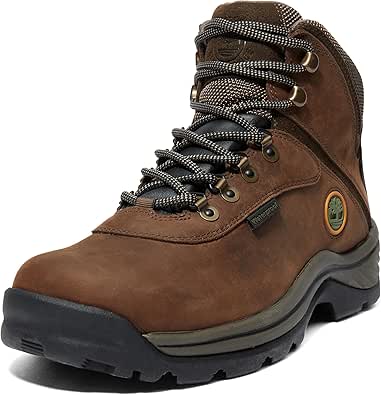 | Best Overall | Upper: Waterproof premium leather | Shaft: Mid | Shaft circumference: 9.75 inches | VIEW ON AMAZON | See Our Full Breakdown |
| Columbia Men’s Newton Ridge Plus II Waterproof Hiking Shoe |  | Best for Beginners | Materials: Full-grain leather and mesh | Waterproof: Yes | Shaft height: Ankle | VIEW ON AMAZON | See Our Full Breakdown |
| Mammut Men’s Mercury IV Low GTX Hiking Shoes, Titanium-Hot Red, Vibram Sole, 3D Memo Foam, Day Hike Comfort |  | Best for Cushioning | Fabric type: Synthetic | Inner material: Synthetic | Insole: Synthetic | VIEW ON AMAZON | See Our Full Breakdown |
| Men’s Waterproof Hiking Boots Non-Slip Lightweight Mid Top Ankle Shoes |  | Best Lightweight Pick | Fabric type: Synthetic suede and fabric | Weight: 1.25 pounds for size 10 | Waterproof membrane: SL-TEX | VIEW ON AMAZON | See Our Full Breakdown |
| Timberland Men’s Premium 6-Inch Waterproof Boot |  | Best for Cold-Weather Wear | Material: Timberland leather | Shaft height: 6 inches | Shaft circumference: 9.75 inches | VIEW ON AMAZON | See Our Full Breakdown |
| KEEN Men’s Durand 2 Mid Height Waterproof Hiking Boots |  | Best Overall for Rugged Day Hikes | Fabric: 100% leather | Shaft height: Mid height | Waterproofing: KEEN.DRY membrane | VIEW ON AMAZON | See Our Full Breakdown |
| Danner Men’s Mountain 600 ID Gore-Tex Hiking Boots |  | Best for Cushioned All-Day Comfort | Outer material: Nylon | Inner material: Gore-Tex | Water resistance: Waterproof | VIEW ON AMAZON | See Our Full Breakdown |
| La Sportiva Makalu Mountaineering and Hiking Boots |  | Best for Technical Alpine Terrain | Origin: Made in USA or imported | Sole material: Rubber | Outer material: Rubber | VIEW ON AMAZON | See Our Full Breakdown |
| Columbia Men’s Transverse Hike Waterproof |  | Best Lightweight Waterproof Pick | Sole material: Rubber | Shaft height: Ankle | Shaft circumference: 1 inch | VIEW ON AMAZON | See Our Full Breakdown |
| NORTIV 8 Men’s Ankle High Waterproof Hiking Boots |  | Best Flexible Option for Casual Outdoor Use | Sole material: Rubber | Shaft height: Ankle | Shaft circumference: Approximately 10 inches | VIEW ON AMAZON | See Our Full Breakdown |
| Asolo Men’s TPS 520 GV Evo Wide Boots |  | Best for Demanding Backpacking | Upper material: Water-resistant full-grain leather | Waterproof lining: GORE-TEX | Outsole: Vibram with Triple Power Structure (T.P.S.) | VIEW ON AMAZON | See Our Full Breakdown |
| NORTIV 8 Men’s Waterproof Lightweight Hiking Boots |  | Best Budget-Conscious Trail Pick | Shaft height: Ankle | Shaft circumference: 30.8 cm | Outer material: Suede and faux leather | VIEW ON AMAZON | See Our Full Breakdown |
| Columbia Women’s Newton Ridge Plus Waterproof Amped Hiking Boot |  | Best Lightweight All-Terrain Choice | Waterproofing: Yes | Midsole technology: TECHLITE | Outsole: Omni-GRIP non-marking rubber | VIEW ON AMAZON | See Our Full Breakdown |
| Timberland Men’s Britton Road Waterproof Boot |  | Best for Cold-Weather Outdoor Wear | Shaft height: Ankle | Shaft circumference: 9.75 inches | Waterproofing: Yes | VIEW ON AMAZON | See Our Full Breakdown |
| premium hiking boot | Sole material | Shaft circumference | Shaft height |
|---|---|---|---|
| Timberland Men’s White Ledge M | — | 9.75 inches | — |
| Columbia Men’s Newton Ridge Pl | Rubber | 1 inch as listed | Ankle |
| Mammut Men’s Mercury IV Low GT | Rubber | 10 inches | Ankle |
| Men’s Waterproof Hiking Boots | Synthetic rubber | — | — |
| Timberland Men’s Premium 6-Inc | — | 9.75 inches | 6 inches |
| KEEN Men’s Durand 2 Mid Height | Rubber | — | Mid height |
| Danner Men’s Mountain 600 ID G | Rubber | — | — |
| La Sportiva Makalu Mountaineer | Rubber | — | — |
| Columbia Men’s Transverse Hike | Rubber | 1 inch | Ankle |
| NORTIV 8 Men’s Ankle High Wate | Rubber | Approximately 10 inches | Ankle |
| Asolo Men’s TPS 520 GV Evo Wid | Rubber | — | — |
| NORTIV 8 Men’s Waterproof Ligh | EVA and rubber | 30.8 cm | Ankle |
| Columbia Women’s Newton Ridge | Rubber | Less than 6 inches | — |
| Timberland Men’s Britton Road | Rubber | 9.75 inches | Ankle |
More Details on Our Top Picks
Timberland Men’s White Ledge Mid Waterproof Hiking Boots
I’d put the White Ledge Mid first for hikers who want a traditional leather boot with practical wet-weather protection and trail-ready grip. Its waterproof premium leather and gusseted tongue help keep water and debris out, while the rubber outsole’s multi-directional lugs offer a sure-footed alternative to a more casual boot such as Timberland’s Premium 6-Inch. The EVA footbed and midsole add cushioning for day hikes without turning this into a technical mountaineering boot. Rustproof speed-lace hardware and hooks also make it easier to get a secure fit. The tradeoff is a mid-height shaft, which offers less coverage than the six-inch Timberland, and the boot may feel heavy over long distances. I’d choose it for general hiking, not weight-conscious fastpacking.
Pros:- Waterproof premium leather and a gusseted tongue help keep feet dry and debris out.
- Multi-directional rubber lugs provide grip across varied trail surfaces.
- EVA footbed and midsole cushion everyday hikes.
- Rustproof speed-lace hardware and hooks support a secure, adjustable fit.
Cons:- Can feel heavy during long hikes or when moving quickly.
- Mid-height shaft provides less ankle and lower-leg coverage than a taller boot.
Best for: Hikers seeking a leather mid-height boot for day trails and damp conditions, with reliable lacing and lugged traction.
Not ideal for: Fast hikers prioritizing a lightweight feel, or buyers who need the higher coverage of a six-inch shaft.
- Upper:Waterproof premium leather
- Shaft:Mid
- Shaft circumference:9.75 inches
- Outsole:Rubber with multi-directional lugs
- Lining:ReBOTL fabric
- Footbed:EVA
- Midsole:EVA
- Hardware:Rustproof speed-lace hardware with lace hooks
Our verdict“Choose the White Ledge Mid for a conventional, waterproof leather hiking boot with useful traction; skip it if low weight or extra shaft coverage is your priority.”
Columbia Men’s Newton Ridge Plus II Waterproof Hiking Shoe
The Newton Ridge Plus II is a straightforward starting point for hikers who want waterproof protection and a familiar lace-up fit without stepping up to a heavier, taller boot. Its mix of full-grain leather and mesh pairs weather coverage with a more ventilated construction, while Columbia’s OMNI-GRIP outsole is intended for grip across different terrain. Compared with the Timberland White Ledge Mid, this model has an ankle-height profile and a versatile, shoe-like feel, so it may suit maintained trails and casual outdoor use better than hikes where extra shaft coverage matters. The tradeoff is that it may still feel heavy to buyers seeking a nimble shoe, and the supplied shaft-circumference figure is unusually small, so I wouldn’t use it to predict fit. It’s a practical entry into waterproof hiking footwear, not the most specialized option here.
Pros:- Waterproof full-grain leather and mesh combine weather protection with a breathable material mix.
- OMNI-GRIP outsole is designed for traction on multiple terrain types.
- Adjustable lace-up closure allows fit tuning.
- Ankle-height profile is less boot-like than the Timberland White Ledge Mid.
Cons:- May feel heavy compared with lighter hiking footwear.
- Ankle-height shaft offers less coverage than a mid-height boot.
- The listed one-inch shaft circumference may not be useful as a fit guide.
Best for: New hikers and casual trail walkers who want waterproof leather-and-mesh footwear for maintained paths and mixed outdoor use.
Not ideal for: Hikers who need a tall, supportive boot for rough terrain, or buyers choosing footwear chiefly by shaft circumference.
- Materials:Full-grain leather and mesh
- Waterproof:Yes
- Shaft height:Ankle
- Shaft circumference:1 inch as listed
- Sole material:Rubber
- Traction system:OMNI-GRIP multi-terrain
- Closure:Adjustable lace-up
Our verdict“Pick the Newton Ridge Plus II for accessible waterproof trail footwear on moderate routes, but choose a taller boot if ankle coverage is a priority.”
Mammut Men’s Mercury IV Low GTX Hiking Shoes, Titanium-Hot Red, Vibram Sole, 3D Memo Foam, Day Hike Comfort
For day hikers who put underfoot comfort ahead of a tall boot shaft, the Mammut Mercury IV Low GTX brings together 3D Memo Foam cushioning, a Vibram rubber sole, and a waterproof GORE-TEX lining. That combination gives it a more comfort-focused, low-profile role than the mid-height Timberland White Ledge: Mammut’s design favors cushioned day-hike walking, while Timberland offers a taller leather upper and a more traditional boot feel. The stated lightweight design can appeal to hikers who want less bulk, but the ankle-height shaft is not a substitute for the coverage of a mid boot. Fit also depends on foot shape, so I’d be cautious if a precise fit is hard to achieve. This is the more specialized choice for comfort on day outings, rather than a general-purpose tall boot.
Pros:- 3D Memo Foam is designed to provide cushioned support for day hikes.
- Vibram rubber sole offers a durable traction-focused platform.
- GORE-TEX lining provides waterproof protection.
- Lightweight design suits hikers who want less bulk than a traditional mid boot.
Cons:- Ankle-height shaft provides less coverage than the Timberland White Ledge Mid.
- Fit and comfort may vary with foot shape.
- The synthetic construction may not appeal to buyers seeking a classic leather boot.
Best for: Day hikers who want cushioned, waterproof low-profile footwear and value a Vibram sole over extra shaft height.
Not ideal for: Buyers seeking a tall boot for added ankle coverage, or hikers whose foot shape makes fit especially difficult to dial in.
- Fabric type:Synthetic
- Inner material:Synthetic
- Insole:Synthetic
- Sole material:Rubber
- Shaft height:Ankle
- Shaft circumference:10 inches
- Cushioning:3D Memo Foam
- Waterproof lining:GORE-TEX
Our verdict“Choose the Mammut Mercury IV Low GTX for cushioned, waterproof day hikes in a lighter ankle-height design, not for the coverage of a mid boot.”
Men’s Waterproof Hiking Boots Non-Slip Lightweight Mid Top Ankle Shoes
This boot earns its place for hikers who want waterproof protection in a lighter package, rather than the more substantial leather build of the Timberland White Ledge Mid. The listed weight is 1.25 pounds for size 10, and its EVA midsole and removable memory-foam insole are aimed at cushioning without adding a heavy leather upper. A SL-TEX waterproof membrane, closed-cell tongue, rubber toe, and sealed construction offer practical barriers against wet conditions and trail debris. The synthetic-rubber sole is described as providing traction, though the product details give less specific outsole information than the Mammut Mercury IV Low GTX’s named Vibram sole. Its synthetic suede and fabric upper may also feel less substantial to buyers who prefer leather. I’d pick it for lighter outdoor outings, while allowing for a possible break-in period.
Pros:- Listed weight of 1.25 pounds for size 10 supports a lighter-footwear choice.
- SL-TEX membrane and waterproof sealing are designed to help keep water out.
- EVA midsole and removable memory-foam insole add cushioning.
- Rubber toe and closed-cell tongue provide added coverage against trail debris.
Cons:- May need a break-in period before reaching a comfortable feel.
- Synthetic suede and fabric upper may feel less substantial than the Timberland White Ledge Mid’s leather.
- Outsole traction details are less specific than the Mammut model’s Vibram specification.
Best for: Hikers who want a lighter waterproof mid-top for day outings and value cushioning over a traditional leather build.
Not ideal for: Buyers who prefer premium leather construction or want a named, clearly specified outsole system for demanding terrain.
- Fabric type:Synthetic suede and fabric
- Weight:1.25 pounds for size 10
- Waterproof membrane:SL-TEX
- Lining:D01 breathable lining
- Insole:Removable memory foam
- Midsole:EVA
- Sole material:Synthetic rubber
- Design features:Lace-up, closed-cell tongue, rubber toe, waterproof sealing
Our verdict“Choose this model for a lighter, cushioned waterproof hiking boot, but favor a more clearly specified or leather-built option for a sturdier feel.”
The Timberland Premium 6-Inch is the most lifestyle-oriented pick in this group: its waterproof leather, 400-gram PrimaLoft insulation, and rubber lug outsole make it suited to cold, wet days when warmth and a recognizable work-boot look matter. Against the hiking-focused Timberland White Ledge Mid, it offers a taller six-inch shaft and insulation, but the supplied details don’t describe the same hiking-specific lacing or multi-directional lug design. That makes it a better fit for outdoor wear and shorter, casual walks than for long hikes where weight and trail-focused support matter. The insulation is a useful advantage in cold conditions, yet the boot may feel heavy and warm in mild weather. I’d choose it for all-season utility and style, not as my first choice for demanding trail mileage.
Pros:- Waterproof leather upper is suited to wet-weather use.
- 400-gram PrimaLoft insulation adds warmth for colder conditions.
- Six-inch shaft offers more coverage than the White Ledge Mid.
- Rubber lug outsole supports grip, while the design works beyond the trail.
Cons:- May feel heavy during long hikes.
- Insulation can be excessive for warm-weather trail use.
- The provided details emphasize workwear and style more than hiking-specific support.
Best for: Buyers who want a waterproof, insulated leather boot for cold-weather outdoor wear, short walks, and workwear-inspired style.
Not ideal for: Hikers covering long distances in mild weather or seeking a lightweight boot with clearly specified hiking-focused features.
- Material:Timberland leather
- Shaft height:6 inches
- Shaft circumference:9.75 inches
- Insulation:400 grams PrimaLoft, 90% recycled
- Outsole:Rubber lug
- Waterproof:Yes
- Insole:Anti-fatigue
- Leather support:Leather Working Group
Our verdict“Pick the Premium 6-Inch for insulated, waterproof outdoor wear and cold-weather utility, but choose the White Ledge Mid for more hiking-focused use.”
KEEN Men’s Durand 2 Mid Height Waterproof Hiking Boots
The Durand 2 is my pick for hikers who want waterproof protection and dependable underfoot support without stepping up to a mountaineering boot. Its KEEN.DRY membrane, dual-density footbed, and stability shank are aimed at long days over uneven ground, while the 4 mm multi-directional lugs add grip on muddy or rocky trails. Compared with the lighter, ankle-height Columbia Transverse Hike, this mid-height KEEN puts more emphasis on support and a protective leather build, but gives up some lightness and quick, casual flexibility. Speed hooks make lacing adjustments easier, though the boot’s weight may feel tiring to hikers who prioritize a nimble stride. Leather also calls for more care than a mesh-heavy upper. I’d choose it for demanding hiking days, not as a lightweight everyday shoe.
Pros:- KEEN.DRY waterproof membrane supports dry feet in wet conditions
- 4 mm multi-directional lugs are suited to muddy and rocky trails
- Dual-density removable footbed and stability shank provide structured support
- Speed hooks make it easier to adjust the lacing
Cons:- Leather upper needs regular care
- Heavier feel may not suit hikers who prefer a nimble boot
Best for: Hikers who regularly cover rugged, wet trails and want mid-height support, a structured footbed, and strong outsole grip.
Not ideal for: Fast hikers and casual walkers who want a lightweight, low-profile boot with minimal leather upkeep.
- Fabric:100% leather
- Shaft height:Mid height
- Waterproofing:KEEN.DRY membrane
- Sole material:Rubber
- Traction:High-traction outsole with 4 mm multi-directional lugs
- Footbed:Removable dual-density cushioning with arch support
- Support:Stability shank
- Lacing hardware:Speed hooks
Our verdict“Choose the Durand 2 for supportive, waterproof hiking on rough trails; skip it if low weight is your main priority.”
Danner Men’s Mountain 600 ID Gore-Tex Hiking Boots
The Mountain 600 ID suits hikers who want a cushioned, waterproof boot for long days on varied terrain. Its Gore-Tex lining blocks water, while the Vibram SPE midsole and Ortholite footbed focus on support and comfort underfoot. Those comfort-oriented components set it apart from the La Sportiva Makalu, which is built around a stiff steel shank and crampon use rather than a flexible hiking feel. The tradeoff is that the Danner may still feel heavy to hikers used to low-cut footwear, and its premium materials can make it a bigger commitment than simpler options such as the Columbia Transverse Hike. I’d put it on the shortlist for hikers who value cushioning and waterproofing on regular trail outings, but not for technical alpine routes where the Makalu’s crampon compatibility is the more relevant advantage.
Pros:- Gore-Tex lining provides waterproof protection
- Vibram SPE midsole adds underfoot support
- Ortholite footbed is designed for cushioning
- Rubber outsole is described as providing traction on rugged terrain
Cons:- May feel heavy compared with lighter hiking footwear
- Premium materials make it a less straightforward choice than simpler trail boots
Best for: Hikers seeking a waterproof, cushioned boot for long days on varied trails and who value midsole and footbed support.
Not ideal for: Alpine hikers who need a stiff crampon-compatible boot, or lightweight-focused walkers who find substantial footwear tiring.
- Outer material:Nylon
- Inner material:Gore-Tex
- Water resistance:Waterproof
- Sole material:Rubber
- Midsole:Vibram SPE
- Footbed:Ortholite cushioning
Our verdict“Pick the Mountain 600 ID for cushioned, waterproof trail hiking, but look to the Makalu for crampon-ready mountain routes.”
La Sportiva Makalu Mountaineering and Hiking Boots
The Makalu earns its place by doing what lighter hiking boots in this roundup are not built to do: support demanding mountain travel and accept automatic crampons. Its full steel shank, aggressive tread, and Vibram rubber toe protection suit steep, rugged terrain, while its resoleable construction may appeal to climbers who prefer a boot designed for extended service. Compared with the KEEN Durand 2, the Makalu is far stiffer and more specialized; the KEEN is the more practical choice for ordinary wet-trail hikes. That specialization brings real costs in comfort and weight: at 34.57 oz / 980 g, it is a substantial boot, and the stiff leather may need a break-in period. I’d reserve it for buyers with alpine objectives, not for casual day hikes where its shank and crampon compatibility add little value.
Pros:- Full steel shank supports automatic crampon compatibility
- Aggressive tread suits demanding mountain terrain
- Resoleable construction can extend the boot’s service life
- Vibram rubber toe protection helps guard against trail impacts
Cons:- Listed weight of 34.57 oz / 980 g makes it a heavy option
- Stiff leather may require a break-in period
- Specialized construction is excessive for casual hiking
Best for: Mountaineers and experienced hikers tackling steep, rugged routes who need automatic-crampon compatibility and a resoleable boot.
Not ideal for: Day hikers seeking a flexible, lightweight boot for ordinary trails or those unwilling to accommodate a stiff leather break-in.
- Origin:Made in USA or imported
- Sole material:Rubber
- Outer material:Rubber
- Inner material:Leather
- Weight:34.57 oz / 980 g
- Crampon compatibility:Accepts automatic crampons
- Resole compatibility:Yes
Our verdict“Choose the Makalu for technical mountain routes and crampon use; for ordinary trail hiking, the KEEN Durand 2 is a more practical fit.”
Columbia Men’s Transverse Hike Waterproof
The Transverse Hike is the clearest choice here for buyers who want waterproof coverage without a tall, heavy-feeling boot. Its ankle-height cut and leather-and-mesh upper make it a lower-profile alternative to the KEEN Durand 2, while Columbia’s TECHLITE impact absorption is intended to soften the feel of each step. OMNI-GRIP traction gives it a multi-terrain focus, so it is better suited to mixed trails than a shoe meant only for casual pavement. The shorter shaft, however, offers less coverage than the KEEN’s mid-height design, and the listed 1-inch shaft circumference may feel restrictive for some wearers. I’d favor it for hikers who value a lighter, more flexible build over added ankle coverage or the Makalu’s specialized mountain support.
Pros:- Waterproof, breathable construction suits changeable weather
- Ankle-height design offers a lower-profile alternative to mid-height boots
- TECHLITE impact absorption is designed to soften footfalls
- OMNI-GRIP outsole targets traction across multiple surfaces
Cons:- Ankle-height shaft provides less coverage than the KEEN Durand 2
- Listed 1-inch shaft circumference may feel restrictive to some wearers
- Lower-profile build is less specialized for demanding mountain travel than the La Sportiva Makalu
Best for: Hikers who want an ankle-height waterproof option with impact absorption for mixed-terrain outings and less boot bulk.
Not ideal for: Hikers who need mid-height coverage for rugged routes or who may find the listed shaft circumference restrictive.
- Sole material:Rubber
- Shaft height:Ankle
- Shaft circumference:1 inch
- Waterproofing:Yes
- Breathability:Yes
- Impact absorption:TECHLITE
- Traction:OMNI-GRIP
- Upper:Leather and mesh
- Hardware:Metal
Our verdict“Choose the Transverse Hike for a lower-profile waterproof trail option, but opt for the KEEN Durand 2 if you want more shaft coverage and support.”
NORTIV 8 Men’s Ankle High Waterproof Hiking Boots
The NORTIV 8 is the most straightforward choice in this group for buyers who want an ankle-high waterproof boot with cushioning and flexibility for general outdoor activities. Its nylon and faux-leather upper differs from the all-leather La Sportiva Makalu and KEEN Durand 2, pointing toward a less specialized, more flexible style of use rather than technical mountain travel. Shock-absorbent insoles and a slip-resistant rubber sole are practical for varied outings, but the supplied details do not name a specific waterproof membrane, tread pattern, or support structure. That leaves less to go on for hikers planning frequent, demanding routes than with the Durand 2’s stated stability shank and 4 mm lugs. I’d choose this for casual trail use where flexibility matters, not for crampon routes or buyers who want clearly specified technical features.
Pros:- Waterproof design and slip-resistant rubber sole suit outdoor use
- Shock-absorbent insoles add cushioning
- Flexible, lightweight construction is suited to all-day wear
- Nylon and faux-leather upper offers an alternative to the leather-heavy KEEN and La Sportiva models
Cons:- Product details do not identify a specific waterproof membrane
- No specific traction pattern or structured support feature is listed
- Less suited to technical mountain travel than the La Sportiva Makalu
Best for: Casual hikers and outdoor users who want a flexible, ankle-high waterproof boot with cushioned insoles for general outings.
Not ideal for: Technical hikers who need crampon compatibility, a named waterproof membrane, or detailed outsole and support specifications.
- Sole material:Rubber
- Shaft height:Ankle
- Shaft circumference:Approximately 10 inches
- Outer material:Nylon and faux leather
- Waterproofing:Waterproof
- Traction:Slip-resistant
- Insole:Cushioned, shock-absorbent
Our verdict“Choose the NORTIV 8 for flexible, general outdoor wear, but pick the KEEN Durand 2 for more clearly specified support and trail grip.”
Asolo Men’s TPS 520 GV Evo Wide Boots
For extended backpacking and rough, technical routes, the Asolo TPS 520 GV Evo Wide offers the most substantial build in this group. Its full-grain leather upper, GORE-TEX lining, and Vibram outsole with Triple Power Structure are aimed at protection, water resistance, and support under a loaded pack. The dual-density PU midsole and anatomical footbed add cushioning for long days, while the rubber toe cap shields against trail impacts. Compared with the lighter, more casual Timberland Britton Road, this Asolo is much more focused on rugged hiking performance, not warmth or everyday wear. That protection comes with tradeoffs: it may feel heavy, its leather construction needs more attention than lighter synthetic options, and the lace-up fit can call for readjustment. Choose it for demanding terrain, not quick, low-effort walks.
Pros:- Full-grain leather upper is built for durable protection on demanding trails.
- GORE-TEX lining adds waterproof protection for wet conditions.
- Vibram outsole with Triple Power Structure combines traction with shock absorption.
- Dual-density PU midsole and anatomical footbed support long hiking days.
Cons:- Heavier construction can feel tiring on fast day hikes.
- Leather upper may require more care and break-in than lighter materials.
- Laces may need readjustment to maintain a secure fit.
Best for: Backpackers carrying heavier loads on rugged, wet trails who want durable leather construction, waterproof protection, and substantial underfoot support.
Not ideal for: Day hikers who prioritize a lightweight, flexible boot or people who want a low-maintenance option that needs little break-in or lace adjustment.
- Upper material:Water-resistant full-grain leather
- Waterproof lining:GORE-TEX
- Outsole:Vibram with Triple Power Structure (T.P.S.)
- Midsole:Dual-density PU
- Insole:Lite 2 footbed with anatomical construction
- Toe protection:Rubber toe cap
- Sole material:Rubber
Our verdict“Choose the Asolo for rugged, long-distance backpacking where leather durability and support matter more than low weight.”
NORTIV 8 Men’s Waterproof Lightweight Hiking Boots
The NORTIV 8 Waterproof Lightweight is a practical pick for hikers who want basic wet-weather protection and ankle coverage without moving up to a more technical boot like the Asolo TPS 520 GV Evo. A waterproof membrane, reinforced toe and heel, and slip-resistant rubber outsole cover useful trail needs, while the removable cushioned insole lets buyers adjust or replace the footbed. Its ankle-height shaft suits everyday walks and moderate trails, though the listed materials—suede and faux leather—do not suggest the same heavy-duty leather construction as the Asolo. The EVA-and-rubber sole keeps the design more straightforward, but waterproof materials can limit breathability, and the boot may still feel heavy over extended distances if the fit is not right. I’d favor this for mixed outdoor use and moderate hikes rather than sustained, technical backpacking.
Pros:- Waterproof membrane helps keep feet dry in wet conditions.
- Reinforced toe and heel add protection in an ankle-height design.
- Slip-resistant rubber outsole is suited to varied trail surfaces.
- Removable cushioned insole allows replacement or fit adjustment.
Cons:- Waterproof construction may feel less breathable during warm, strenuous hikes.
- May feel heavy during extended hikes if the fit is not well matched.
- Suede and faux-leather construction is less substantial than the Asolo’s full-grain leather.
Best for: Hikers seeking an ankle-height waterproof boot for moderate trails, outdoor chores, and occasional wet-weather outings, with a removable insole for fit adjustments.
Not ideal for: Backpackers on long technical routes who need the more substantial leather build and specialized outsole system of the Asolo TPS 520 GV Evo.
- Shaft height:Ankle
- Shaft circumference:30.8 cm
- Outer material:Suede and faux leather
- Sole material:EVA and rubber
- Waterproofing:Waterproof membrane
- Insole:Cushioned and removable
- Protection:Reinforced toe and heel
Our verdict“Pick the NORTIV 8 for moderate hikes and general outdoor use when waterproofing and a removable cushioned insole matter more than technical backpacking support.”
Columbia Women’s Newton Ridge Plus Waterproof Amped Hiking Boot
The Columbia Women’s Newton Ridge Plus Waterproof Amped suits hikers who want waterproof coverage and dependable grip in a lighter-feeling package than the heavy-duty Asolo TPS 520 GV Evo. Columbia’s TECHLITE midsole is intended to cushion steps without the Asolo’s dual-density PU construction, while the Omni-GRIP non-marking rubber outsole provides traction for varied terrain. Reinforced toe and heel areas add protection against trail knocks, and the listed shaft circumference is less than six inches, giving this option a comparatively restrained profile. It is a sensible match for day hikes and general all-terrain use, but its lower shaft may not satisfy hikers seeking more coverage around the ankle. The product details also do not specify a membrane brand or upper material, so buyers seeking the Asolo’s clearly stated leather and GORE-TEX construction may prefer that more technical build.
Pros:- Waterproof construction suits hikes in wet conditions.
- Omni-GRIP rubber outsole is designed for traction across varied terrain.
- TECHLITE midsole adds cushioning in a lighter-oriented design.
- Reinforced toe and heel help protect high-impact areas.
Cons:- Less-than-six-inch shaft circumference may not provide the coverage some hikers prefer.
- Product details do not identify the waterproof technology or upper material.
- Less specialized for heavy-load technical routes than the Asolo TPS 520 GV Evo.
Best for: Women day hikers who want a waterproof boot with traction and cushioning for varied trails, without the more substantial build of a backpacking-focused boot.
Not ideal for: Hikers who want a taller shaft for added ankle coverage or who prioritize specified full-grain leather and GORE-TEX construction.
- Waterproofing:Yes
- Midsole technology:TECHLITE
- Outsole:Omni-GRIP non-marking rubber
- Sole material:Rubber
- Shaft circumference:Less than 6 inches
- Reinforcements:Reinforced toe and heel
- Origin:Imported
Our verdict“Choose the Columbia for waterproof day hikes across varied terrain when a lighter-oriented build matters more than the Asolo’s backpacking-level construction.”
Timberland Men’s Britton Road Waterproof Boot
The Timberland Britton Road stands apart from the more trail-focused Columbia Newton Ridge Plus Waterproof Amped by adding PrimaLoft insulation and anti-fatigue technology. That combination makes it the stronger choice for cold-weather walks and outdoor days when warmth and underfoot comfort matter as much as waterproofing. Its waterproof leather construction and leather lining give it a substantial feel, but the ankle-height shaft and insulation point toward general outdoor wear rather than technical, extended hiking. Compared with the Asolo TPS 520 GV Evo, it does not list a specialized Vibram outsole or technical support structure, so I would not choose it first for rough backpacking routes. Its weight may also become noticeable over long distances. The Britton Road makes more sense for chilly conditions and casual trails than for fast-moving or highly technical hikes.
Pros:- Waterproof leather construction is suited to damp outdoor conditions.
- PrimaLoft insulation adds warmth for cold-weather wear.
- Anti-fatigue technology targets comfort during extended standing and walking.
- Leather lining contributes to a substantial, durable build.
Cons:- Insulation and substantial materials may feel heavy on long hikes.
- Ankle-height shaft offers less coverage than taller hiking boots.
- The listed specs do not identify a specialized hiking outsole or technical support structure.
Best for: Men who need a waterproof, insulated ankle boot for cold-weather walks, casual trails, and outdoor days where warmth and all-day comfort are priorities.
Not ideal for: Technical backpackers or hikers seeking a boot built around specialized trail traction, extended ankle coverage, and a clearly specified hiking support system.
- Shaft height:Ankle
- Shaft circumference:9.75 inches
- Waterproofing:Yes
- Insulation:PrimaLoft
- Lining:Leather
- Sole material:Rubber
- Comfort technology:Anti-fatigue technology
Our verdict“Choose the Britton Road for cold-weather outdoor wear and casual trails, but favor the Asolo for technical backpacking.”
How We Picked
I compared these 14 boots by their stated purpose and the buyer needs that shape a hiking footwear choice: support, traction, weather protection, build, fit options, and likely use. I gave more weight to models that appear suited to sustained trail use and offer a convincing balance of protection and practicality than to options whose names or positioning suggest casual wear or entry-level use. I also treated boot height and construction as meaningful differences: a low-cut shoe, a flexible day-hiking boot, and a more rigid mountaineering boot should not be judged as if they serve the same terrain.
The ranking reflects versatility for the widest range of hikers, followed by specialization and value in the context of intended use. The KEEN Durand 2 Mid leads as a balanced hiking option; the Asolo and La Sportiva models are more compelling for demanding routes, but less suitable as universal picks. Columbia, Timberland, and NORTIV 8 models offer approachable alternatives, though some are better framed as casual or moderate-trail choices than as premium technical footwear. Product specifications and fit can vary by version, so I recommend checking the current manufacturer details and trying boots on with the socks you plan to hike in.
| premium hiking boot | Sole material |
|---|---|
| Timberland Men’s White Ledge M | — |
| Columbia Men’s Newton Ridge Pl | Rubber |
| Mammut Men’s Mercury IV Low GT | Rubber |
| Men’s Waterproof Hiking Boots | Synthetic rubber |
| Timberland Men’s Premium 6-Inc | — |
| KEEN Men’s Durand 2 Mid Height | Rubber |
| Danner Men’s Mountain 600 ID G | Rubber |
| La Sportiva Makalu Mountaineer | Rubber |
| Columbia Men’s Transverse Hike | Rubber |
| NORTIV 8 Men’s Ankle High Wate | Rubber |
| Asolo Men’s TPS 520 GV Evo Wid | Rubber |
| NORTIV 8 Men’s Waterproof Ligh | EVA and rubber |
| Columbia Women’s Newton Ridge | Rubber |
| Timberland Men’s Britton Road | Rubber |
Factors to Consider When Choosing Premium Hiking Boots
Choosing among premium hiking boots is less about finding the most rugged-looking pair and more about matching construction to your routes, load, and feet. I’d settle the questions below before prioritizing brand names or a long feature list.
Match stiffness and support to your trail and pack
A stiff boot can help on rocky ground, steep descents, and routes where a loaded pack increases the work your feet must do. The tradeoff is that a more rigid sole may feel less natural on smooth paths and can take longer to feel comfortable. For short day hikes with a light pack, a flexible mid-height boot or low-cut shoe may be easier to wear. Avoid buying the most supportive construction by default if your usual routes do not call for it. Think about the roughest terrain you hike regularly, not an occasional trip you might take someday. If you often carry a heavy load, prioritize stable footing and a secure heel over a very light feel.
Choose waterproofing for your weather, not by habit
A waterproof membrane is useful in persistent rain, wet grass, and muddy routes, but it can also make a boot warmer and slower to dry once water gets inside over the cuff. For hot, dry hikes, ventilation may matter more than keeping out occasional splashes. A higher collar can help limit debris and shallow water entry, yet it cannot replace gaiters in deep mud or snow. Buyers sometimes focus on waterproof labels while overlooking the boot’s fit and the conditions where it will be worn. Decide whether your common problem is wet feet from outside moisture or heat and sweat from within. That distinction can point toward a waterproof boot, a more breathable option, or a separate pair for different seasons.
Treat fit as a performance feature
Boots that feel comfortable standing still can still cause trouble on long descents, when toes slide forward and strike the front. Try them late in the day, use your hiking socks, and check both heel hold and toe room. A wide-foot option may reduce pressure at the forefoot, but width alone does not guarantee a good match because instep height and heel shape also affect comfort. Do not assume that a familiar size will fit every brand or boot style the same way. If you use custom insoles, test them inside the boot before deciding. A secure fit with room for natural toe movement is more valuable than extra cushioning that masks a poor fit.
Weigh outsole grip against durability and terrain
Traction depends on more than a lugged appearance: rubber compound, lug spacing, and sole shape all affect how a boot behaves on wet rock, loose dirt, or packed trail. Deeper lugs can bite into soft ground but may feel clumsy on hard, smooth surfaces. A durable outsole can make sense for frequent use on rough trails, while a lighter sole may suit easier routes and reduce fatigue. Do not treat a recognizable outsole name as proof that the whole boot matches your needs. Consider the surfaces you hike most and whether you need grip for mud, stability on rocky traverses, or comfortable walking on firm paths. Replacing boots based on worn tread is a better guide than holding onto them because the upper still looks intact.
Pay for the construction you will actually use
Higher-cost, more technical construction is most useful when your hiking demands it: frequent rough terrain, heavier loads, or a need for durable support. It may be wasted on occasional walks, where an approachable and lighter boot can be easier to wear. Premium materials do not remove the need for care; mud should be cleaned off, and wet boots should dry away from direct heat. Check whether the design can be resoled or repaired if long-term service matters to you, since that can affect the cost of ownership. A specialized mountaineering boot is not automatically a better hiking boot for ordinary trails. Spend more for a real benefit in fit, protection, stability, or repairability—not merely for a rugged look.
Keep boot height and use case aligned
Mid-height boots offer more coverage around the ankle and can help keep trail debris out, while low-cut hiking shoes usually feel freer and lighter. Neither style prevents ankle injuries on its own, so do not rely on collar height as a substitute for careful footing or suitable conditioning. A boot built for mountaineering can feel overly rigid for everyday walking, while a casual waterproof boot may not provide the stability a demanding route calls for. Consider whether you need one pair for mixed use or separate footwear for hiking and daily wear. Also check that the product is designed for your intended activity rather than inferring performance from its name. This roundup includes both hiking-specific models and boots better suited to casual or specialized roles.
Frequently Asked Questions
Which boot in this roundup makes the most sense for one pair of boots across different hikes?
I’d start with the KEEN Durand 2 Mid Waterproof because it sits closer to a versatile hiking boot than the specialized Asolo TPS 520 GV Evo or La Sportiva Makalu. The Danner Mountain 600 ID GTX is another candidate if you prefer a more flexible feel for varied trails. Your route difficulty, pack weight, and foot shape still matter more than a general-purpose label. If most of your hikes are easy and dry, a lighter or less technical option may be more comfortable. For frequent rugged routes, one versatile boot may not replace a more supportive specialist.
Are the Timberland Premium 6-Inch and Britton Road suitable substitutes for hiking-specific boots?
I would treat them as different choices from boots explicitly positioned for hiking. The Timberland Premium 6-Inch Waterproof Boot and Britton Road can appeal to buyers who want waterproof protection and a style that works beyond the trail, but that does not establish how they will perform on long, uneven hikes. Hiking-specific designs tend to make terrain, support, and trail use central to their purpose. If you plan regular hikes, compare the sole grip, comfort under a pack, and fit over a long walk before choosing a casual-style boot. For everyday wear with occasional easy paths, the broader styling may be a better fit for your needs.
Should I choose the low-cut Mammut Mercury IV or a mid-height boot?
Choose the Mammut Mercury IV Low GTX if you favor freedom of movement and a shoe-like profile on day hikes where ankle coverage is not a priority. A mid-height model may suit you better when you want more coverage from debris and a more substantial feel around the foot and ankle. Collar height alone does not prevent a sprain, and a low shoe can still be appropriate on suitable trails. Consider your pack weight, terrain, and preference for flexibility alongside your need for protection from mud or brush. If you often hike through wet vegetation or rough ground, compare the low-cut design carefully with the mid-height alternatives.
When is a mountaineering-oriented boot too much for ordinary hiking?
A more rigid, specialized boot such as the La Sportiva Makalu may be more boot than you need for smooth day trails and casual walks. Stiffer construction is valuable when the terrain and activity demand a stable platform, but it can feel less natural on easy paths. The Asolo TPS 520 GV Evo also sits toward the more substantial end of this selection. If you hike mostly on maintained trails with a light pack, a more flexible option can be easier to wear. Let your regular terrain—not the most extreme route you can imagine—guide whether that extra structure is worth the tradeoff.
How should I choose between waterproof boots and lighter footwear for warm-weather hikes?
Start with the conditions you encounter most often. Waterproof boots can help in rain, mud, and wet vegetation, but they may feel warmer and can take longer to dry after water enters from above. In consistently dry, hot conditions, breathability and low weight may matter more than a waterproof membrane. For changeable weather or cooler seasons, waterproof construction can provide useful protection. Fit and sock choice affect comfort as much as the membrane, so try the boot in the conditions and with the socks you expect to use. If your seasons vary widely, separate footwear may work better than asking one pair to cover every climate.
Conclusion
For the best overall balance, I’d choose the KEEN Durand 2 Mid Waterproof; it is the clearest all-around hiking pick in this group. The best premium choice for demanding use is the Asolo TPS 520 GV Evo, while the La Sportiva Makalu is the more specialized alternative for hikers whose terrain calls for a mountaineering-oriented boot. For a best value-style pick among approachable options, I’d compare the Columbia Newton Ridge models and NORTIV 8 boots against your fit and trail needs rather than assuming they match the technical support of the premium specialists. Beginners who mainly hike maintained trails can start with the Columbia Newton Ridge Plus II or Timberland White Ledge Mid, provided the fit works and their routes are not especially demanding. For specific needs, consider the Mammut Mercury IV for a low-cut feel, the women’s Columbia Newton Ridge Plus Waterproof Amped for a women’s-specific option, and the wide Asolo for shoppers who need a roomier fit. The right choice is the boot that matches your feet and regular terrain, not simply the most rugged model on the list.
Fall Picks
fall essentials
As an affiliate, we earn on qualifying purchases.