
Among these 50mm and 85mm portrait prime lenses, I rank the Sony 85mm F1.8 as the best overall balance of portrait reach, wide aperture, and practical size for compatible full-frame Sony cameras. The Canon RF 50mm f/1.8 STM is a compact, approachable choice for RF users, while the Nikon NIKKOR Z 85mm f/1.2 S stands out for buyers who want an exceptionally bright premium portrait lens. The main choice is between a 50mm’s flexible framing and an 85mm’s tighter perspective and greater subject separation; mount compatibility, price tier, and carrying weight narrow the field further. Read on for the full comparison, including value alternatives and important differences between similar listings.

Get travel and outdoor gear delivered free with Prime
- Fast, free delivery on millions of items
- Prime Video, Amazon Music and more included
- Member-only deals all year
Complete the kit



Key Takeaways
- The 50mm and 85mm focal lengths solve different portrait problems: 50mm is easier to use in tighter spaces and for environmental portraits, while 85mm gives more working distance and tighter framing.
- The Sony 85mm F1.8 earns the strongest all-around position by pairing full-frame portrait reach and a bright aperture without the size and cost burden of the Nikon Z 85mm f/1.2 S.
- Native mount matters more than a small spec advantage: the RF, Z, EF, and E-mount lenses are not interchangeable without checking camera compatibility and adapter needs.
- There are two distinct 85mm choices for Sony E: Sony’s own FE 85mm f/1.8 is the straightforward reference pick, while the TTARTISAN and Brightin Star options offer alternatives whose support and feature details deserve close checking.
- Some listings are especially use-specific: the Canon RF85mm F2 Macro IS STM adds close-focus versatility and stabilization, while the Nikon Z 85mm f/1.2 S prioritizes a very bright aperture over portability.
| Nikon NIKKOR Z 85mm f/1.8 S Portrait Prime Lens |  | Best Premium 85mm for Nikon Z | Focal length: 85 mm | Maximum aperture: f/1.8 | Minimum aperture: f/22 | VIEW ON AMAZON | See Our Full Breakdown |
| Canon RF 50mm f/1.8 STM Lens |  | Best Compact Prime for Canon RF | Focal length: 50 mm | Maximum aperture: f/1.8 | Mount: Canon RF | VIEW ON AMAZON | See Our Full Breakdown |
| TTARTISAN AF 85mm f/1.8 Neo Full-Frame Portrait Lens for Sony E-Mount |  | Best Lightweight 85mm for Sony E | Focal length: 85 mm | Maximum aperture: f/1.8 | Minimum aperture: f/16 | VIEW ON AMAZON | See Our Full Breakdown |
| Sony E 50mm F1.8 OSS Portrait Lens, Black (SEL50F18/B) | 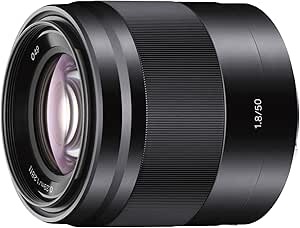 | Best Stabilized 50mm for Sony E | Focal length: 50 mm | Maximum aperture: f/1.8 | Minimum aperture: f/22 | VIEW ON AMAZON | See Our Full Breakdown |
| Nikon Nikkor Z 50mm f/1.8 S Premium Large Aperture Prime Lens – Black |  | Best Detailed 50mm for Nikon Z | Focal length: 50 mm | Maximum aperture: f/1.8 | Minimum aperture: f/16 | VIEW ON AMAZON | See Our Full Breakdown |
| Sony FE 50mm F1.8 Standard Prime Lens (SEL50F18F/2) |  | Best Lightweight Full-Frame 50mm for Sony E | Focal length: 50mm | Maximum aperture: f/1.8 | Minimum aperture: f/22 | VIEW ON AMAZON | See Our Full Breakdown |
| Nikon AF-S FX NIKKOR 50mm f/1.8G Lens |  | Best Compact 50mm for Nikon DSLR Portraits | Focal length: 50mm | Maximum aperture: f/1.8 | Minimum aperture: f/16 | VIEW ON AMAZON | See Our Full Breakdown |
| Canon EF 50mm f/1.8 STM Lens for Canon EOS DSLR Cameras |  | Best Canon DSLR 50mm for Quiet Video Autofocus | Focal length: 50mm | Maximum aperture: f/1.8 | Minimum focusing distance: 0.35 m (1.15 ft) | VIEW ON AMAZON | See Our Full Breakdown |
| Nikon NIKKOR Z 85mm f/1.2 S Portrait Lens |  | Best Premium 85mm for Maximum Background Separation | Focal length: 85mm | Maximum aperture: f/1.2 | Minimum aperture: f/16 | VIEW ON AMAZON | See Our Full Breakdown |
| Meike 85mm f/1.8 II Portrait Lens for Canon EF |  | Best Third-Party 85mm for Canon EF Portraits | Focal length: 85mm | Maximum aperture: f/1.8 | Minimum aperture: f/16 | VIEW ON AMAZON | See Our Full Breakdown |
| Sony 85mm F1.8 Full-Frame E-Mount Prime Lens |  | Best Overall for Sony E-Mount Portraits | Focal length: 85 mm | Maximum aperture: F1.8 | Minimum aperture: F22 | VIEW ON AMAZON | See Our Full Breakdown |
| Canon EF 85mm f/1.8 USM Medium Telephoto Lens for Canon SLR Cameras (Renewed) |  | Best for Canon EF DSLR Portraits | Focal length: 85 mm | Maximum aperture: f/1.8 | Mount: Canon EF | VIEW ON AMAZON | See Our Full Breakdown |
| Brightin Star AF 85mm f/1.8 Auto Focus Portrait Lens for Sony E-Mount |  | Best for Eye-Tracking Features | Focal length: 85 mm | Maximum aperture: f/1.8 | Mount: Sony E-mount | VIEW ON AMAZON | See Our Full Breakdown |
| Canon RF85mm F2 Macro IS STM Lens |  | Best for Stabilized Portraits and Close-Ups | Focal length: 85 mm | Maximum aperture: f/2 | Minimum aperture: f/29 | VIEW ON AMAZON | See Our Full Breakdown |
| TTArtisan AF 85mm f/1.8 Neo Full-Frame Portrait Lens for Sony E |  | Best Lightweight Third-Party Sony Pick | Focal length: 85 mm | Maximum aperture: f/1.8 | Minimum aperture: f/16 | VIEW ON AMAZON | See Our Full Breakdown |
| portrait prime lenses 50mm and 85mm | Focal length | Maximum aperture | Mount | Minimum aperture |
|---|---|---|---|---|
| Nikon NIKKOR Z 85mm f/1.8 S Po | 85 mm | f/1.8 | Nikon Z | f/22 |
| Canon RF 50mm f/1.8 STM Lens | 50 mm | f/1.8 | Canon RF | — |
| TTARTISAN AF 85mm f/1.8 Neo Fu | 85 mm | f/1.8 | Sony E | f/16 |
| Sony E 50mm F1.8 OSS Portrait | 50 mm | f/1.8 | Sony E | f/22 |
| Nikon Nikkor Z 50mm f/1.8 S Pr | 50 mm | f/1.8 | Nikon Z | f/16 |
| Sony FE 50mm F1.8 Standard Pri | 50mm | f/1.8 | Sony E | f/22 |
| Nikon AF-S FX NIKKOR 50mm f/1. | 50mm | f/1.8 | Nikon F | f/16 |
| Canon EF 50mm f/1.8 STM Lens f | 50mm | f/1.8 | — | — |
| Nikon NIKKOR Z 85mm f/1.2 S Po | 85mm | f/1.2 | Nikon Z | f/16 |
| Meike 85mm f/1.8 II Portrait L | 85mm | f/1.8 | Canon EF | f/16 |
| Sony 85mm F1.8 Full-Frame E-Mo | 85 mm | F1.8 | Sony E | F22 |
| Canon EF 85mm f/1.8 USM Medium | 85 mm | f/1.8 | Canon EF | — |
| Brightin Star AF 85mm f/1.8 Au | 85 mm | f/1.8 | Sony E-mount | — |
| Canon RF85mm F2 Macro IS STM L | 85 mm | f/2 | Canon RF | f/29 |
| TTArtisan AF 85mm f/1.8 Neo Fu | 85 mm | f/1.8 | Sony E | f/16 |
More Details on Our Top Picks
Nikon NIKKOR Z 85mm f/1.8 S Portrait Prime Lens
For Nikon Z photographers who want portrait framing without stepping up to an f/1.2 lens, the NIKKOR Z 85mm f/1.8 S is the lineup’s more polished 85mm choice. Its medium-telephoto view gives faces flattering perspective and more subject-background separation than the Nikon NIKKOR Z 50mm f/1.8 S, while the nine-blade diaphragm supports soft out-of-focus highlights. Nano Crystal coating and two ED elements are aimed at keeping detail and contrast lifelike, and the dust- and moisture-resistant build suits location sessions. The tradeoff is a fixed, close-framing perspective that can feel tight indoors, plus compatibility limited to Nikon Z bodies. Choose it over a 50mm when portrait compression matters more than versatility; skip it if one lens must cover cramped rooms and varied subjects.
Pros:- 85mm perspective offers flattering portrait framing and more background separation than the Nikon NIKKOR Z 50mm f/1.8 S.
- f/1.8 maximum aperture and nine-blade diaphragm support shallow depth of field and soft bokeh.
- Nano Crystal coating and two ED elements are designed to preserve contrast and lifelike detail.
- Dust- and moisture-resistant construction and a customizable control ring suit location work.
Cons:- Nikon Z mount limits use to compatible mirrorless bodies.
- Fixed 85mm framing is less adaptable than a 50mm prime, especially indoors.
- The f/1.8 maximum aperture does not match the light-gathering and blur potential of an f/1.2 portrait lens.
Best for: Nikon Z portrait, wedding, and fashion photographers who want flattering 85mm framing, soft background blur, and weather-resistant construction.
Not ideal for: Nikon Z owners who frequently shoot in small rooms or need one prime for both portraits and everyday wider scenes; the fixed 85mm view may be restrictive.
- Focal length:85 mm
- Maximum aperture:f/1.8
- Minimum aperture:f/22
- Mount:Nikon Z
- Focus:Autofocus and manual focus
- Diaphragm blades:9
- Filter size:67 mm
- Weight:470 g
- Coating:Nano Crystal coating; multicoated
Our verdict“Choose this Nikon Z 85mm if flattering portrait compression and a rugged, refined build matter more to you than indoor flexibility.”
Canon RF 50mm f/1.8 STM Lens
The Canon RF 50mm f/1.8 STM is the everyday-friendly pick here: its standard view is easier to use in tight spaces than the Nikon NIKKOR Z 85mm f/1.8 S, and its compact, lightweight design makes it a practical carry-along portrait lens. The bright f/1.8 aperture helps separate a person from the background and gives Canon RF shooters more room in dim light than a slower kit zoom. Its STM motor is designed for smooth, quiet focus, a useful quality when recording video as well as stills. There are compromises: no optical stabilization means handheld steadiness depends on the camera body and technique, and the seven-blade diaphragm may render blur less round than lenses with more blades. This is a flexible starter prime, not a dedicated long-working-distance portrait lens.
Pros:- Compact, lightweight design is easier to carry than a dedicated 85mm portrait prime.
- f/1.8 aperture supports low-light shooting and background separation.
- STM autofocus is designed for smooth, quiet operation in stills and video.
- Super Spectra coating and an aspherical element help reduce flare and ghosting.
Cons:- No optical image stabilization; steadiness depends on body stabilization or shooting technique.
- Canon RF mount restricts use to compatible Canon mirrorless cameras.
- Seven-blade diaphragm may produce less rounded out-of-focus highlights than higher-blade-count options.
Best for: Canon EOS R users who want a small, straightforward first prime for portraits, indoor family photos, and everyday scenes.
Not ideal for: Photographers who need built-in stabilization on a body without in-body stabilization, or who prefer the tighter working distance and background compression of an 85mm portrait lens.
- Focal length:50 mm
- Maximum aperture:f/1.8
- Mount:Canon RF
- Diaphragm blades:7
- Angle of view:46°
- Filter thread:43 mm
- Image stabilization:No optical stabilization; digital stabilization listed
- Focus motor:STM stepping motor
- Lens coating:Super Spectra
Our verdict“Pick this lens for a light, versatile Canon RF prime, but choose an 85mm if portrait compression is your main goal.”
TTARTISAN AF 85mm f/1.8 Neo Full-Frame Portrait Lens for Sony E-Mount
At 332 g, the TTARTISAN AF 85mm f/1.8 Neo makes long portrait sessions easier to carry than the Nikon NIKKOR Z 85mm f/1.8 S, while retaining the 85mm perspective portrait shooters often choose for flattering face rendering and background separation. Its STM autofocus supports eye and face detection, and the 11-blade diaphragm is intended to keep blur smooth when shooting wide open. A 0.8 m minimum focus distance also allows tighter portraits than some longer portrait lenses. The practical compromise is a more stripped-back control experience: there are no physical focus or aperture rings, so adjustments rely on electronic camera controls. It is a Sony E-mount-only option, too. I’d favor it for a light, autofocus-focused portrait kit, not for photographers who want tactile lens controls.
Pros:- At 332 g, it is lighter than the Nikon NIKKOR Z 85mm f/1.8 S listed here.
- f/1.8 aperture and 11-blade diaphragm support shallow focus and smooth background blur.
- STM autofocus supports eye and face detection for portrait work.
- 0.8 m minimum focus distance allows relatively close portrait framing.
Cons:- No physical focus or aperture rings; adjustments rely on electronic controls.
- Sony E-mount compatibility limits it to compatible Sony cameras.
- Fixed 85mm framing is less useful than a 50mm for cramped interiors and broader everyday scenes.
Best for: Sony E-mount portrait shooters who want a light 85mm for people photography, eye-detection autofocus, and close head-and-shoulders framing.
Not ideal for: Photographers who depend on physical aperture or focus rings, or Sony users who need a wider prime for indoor group portraits and general-purpose shooting.
- Focal length:85 mm
- Maximum aperture:f/1.8
- Minimum aperture:f/16
- Mount:Sony E
- Weight:332 g
- Minimum focus distance:0.8 m
- Optical design:12 elements in 8 groups; 2 ED and 2 high-index elements
- Diaphragm blades:11
- Filter size:62 mm
Our verdict“Choose this TTARTISAN if you want a carry-friendly Sony E 85mm with portrait-oriented autofocus and can work without lens-mounted control rings.”
Sony E 50mm F1.8 OSS Portrait Lens, Black (SEL50F18/B)
The Sony E 50mm F1.8 OSS is the practical choice for Sony E shooters who want a portrait-friendly focal length with stabilization built into the lens. Its Optical SteadyShot can help when photographing still subjects or recording video handheld, a feature the Canon RF 50mm f/1.8 STM does not provide optically. At 202 g, it is also light enough to keep on the camera for everyday portraits. The f/1.8 aperture gives background blur, while the rounded seven-blade diaphragm shapes defocused highlights. Its 50mm view is less compressive than the 85mm options, but more workable in tighter spaces. The tradeoffs are a fixed focal length and no water resistance; its stated 32° angle of view is for APS-C, so buyers should match expectations to their camera format.
Pros:- Optical SteadyShot helps reduce camera shake for handheld stills and video.
- Lightweight 202 g body is easy to carry for everyday portraits.
- f/1.8 aperture supports low-light shooting and subject separation.
- Rounded seven-blade aperture is designed for smooth defocused effects.
Cons:- Fixed 50mm focal length cannot adapt framing like a zoom or offer the tighter perspective of an 85mm.
- Not water resistant, making it less suited to exposed outdoor sessions.
- The listed 32° angle of view is for APS-C, so framing depends on the camera format.
Best for: Sony E APS-C users who shoot handheld portraits or video and value in-lens stabilization in a compact prime.
Not ideal for: Photographers seeking stronger 85mm-style background compression, weather-resistant construction, or a lens that can zoom between portrait framings.
- Focal length:50 mm
- Maximum aperture:f/1.8
- Minimum aperture:f/22
- Mount:Sony E
- Minimum focus distance:0.39 m
- Maximum magnification:0.16x
- Image stabilization:Optical SteadyShot; approximately 4-stop advantage
- Diaphragm blades:7, rounded
- Weight:202 g
Our verdict“Choose this Sony 50mm if handheld stabilization and a light APS-C portrait prime matter more than 85mm compression or weather protection.”
Nikon Nikkor Z 50mm f/1.8 S Premium Large Aperture Prime Lens – Black
For Nikon Z photographers who want a standard prime that can handle portraits and wider everyday scenes, the NIKKOR Z 50mm f/1.8 S is the more versatile framing choice beside the NIKKOR Z 85mm f/1.8 S. Its f/1.8 aperture supports shallow depth of field and dim-light shooting, while the stated sharpness and low distortion make it a strong fit when facial detail and clean lines matter. The quiet stepping motor is helpful for video, and the listed water-resistant construction adds reassurance for outdoor use. The shorter focal length means less compression and background separation than the 85mm, so portraits may include more surroundings. The supplied data also lists optical VR but no dedicated aperture ring. This is the Nikon Z pick for mixed-use shooting, not for those who want the tightest portrait look.
Pros:- 50mm framing is more adaptable for everyday scenes and tighter interiors than the Nikon NIKKOR Z 85mm f/1.8 S.
- f/1.8 maximum aperture supports low-light shooting and subject separation.
- Stepping-motor autofocus is listed as quiet, making it suitable for video use.
- Water-resistant construction and optical VR are listed in the product data.
Cons:- Less portrait compression and background separation than an 85mm prime.
- No dedicated aperture ring on the lens barrel.
- Nikon Z mount limits use to compatible Nikon mirrorless cameras.
Best for: Nikon Z users who want one sharp, quiet-focusing 50mm for portraits, available-light work, and everyday photography.
Not ideal for: Portrait specialists who prioritize strong background compression, or photographers who want direct aperture adjustment on a dedicated lens ring.
- Focal length:50 mm
- Maximum aperture:f/1.8
- Minimum aperture:f/16
- Mount:Nikon Z
- Filter size:62 mm
- Image stabilization:Optical VR (5-axis, as listed)
- Autofocus motor:Stepping motor
- Angle of view:46.8°
- Weight:14.56 oz
Our verdict“Pick this Nikon Z 50mm for sharp, flexible portrait and everyday coverage, and choose the 85mm instead if tighter portrait perspective is your priority.”
Sony FE 50mm F1.8 Standard Prime Lens (SEL50F18F/2)
For Sony E-mount full-frame shooters who want a simple portrait prime, this compact 50mm f/1.8 keeps the kit light while allowing more background blur than a typical kit zoom. Its seven-blade circular aperture and aspherical element support soft defocus and help control aberrations, making it a practical choice for portraits in available light. Compared with the Sony 85mm F1.8 Full-Frame E-Mount Prime Lens, this 50mm is easier to carry and more useful in tight rooms, but it gives less subject separation and a wider perspective. The key compromise is the lack of image stabilization; steady technique or a stabilized camera body matters in dim conditions. It also has no stated water resistance, so it suits fair-weather portrait sessions better than rough outdoor work.
Pros:- f/1.8 aperture supports low-light shooting and background blur.
- Lightweight 6.6-ounce design is easy to carry.
- Aspherical element helps control aberrations and distortion.
- Compatible with Sony E-mount camera models.
Cons:- No built-in image stabilization.
- No water-resistance claim is provided.
- 50mm provides less subject separation than an 85mm portrait lens.
Best for: Sony E-mount full-frame photographers who want a light, everyday portrait prime for indoor spaces, travel, and available-light shooting.
Not ideal for: Portrait photographers seeking strong telephoto compression, built-in stabilization, or a weather-resistant lens for regular outdoor work.
- Focal length:50mm
- Maximum aperture:f/1.8
- Minimum aperture:f/22
- Mount:Sony E
- Focus:Autofocus
- Aperture blades:7, circular
- Image stabilization:None
- Weight:6.6 ounces
Our verdict“Choose this Sony when portability and a versatile 50mm view matter more than the stronger background separation of an 85mm prime.”
Nikon AF-S FX NIKKOR 50mm f/1.8G Lens
This Nikon makes a strong case for a small, straightforward DSLR portrait prime: its 185-gram body is easy to keep in a bag, while f/1.8 gives photographers room to blur busy backgrounds and work in lower light. The Silent Wave Motor supports fast, quiet autofocus, and the lens works on both FX and DX Nikon DSLR formats. On a DX body, its 50mm view is tighter than on full frame, which can help with head-and-shoulders framing. Compared with the Nikon NIKKOR Z 85mm f/1.2 S, this is far lighter and less specialized, but it cannot match that lens’s long portrait perspective or very shallow f/1.2 depth of field. There is no stabilization or water resistance, and the fixed focal length calls for a change of position rather than zooming.
Pros:- f/1.8 aperture supports background blur and low-light work.
- Light 185-gram construction is easy to carry.
- Silent Wave Motor provides quiet autofocus.
- Supports Nikon FX and DX DSLR formats.
Cons:- No image stabilization.
- Not water-resistant.
- Fixed 50mm framing is less suited to tight portrait spaces than a zoom.
Best for: Nikon F-mount DSLR owners who want a lightweight, autofocus 50mm for everyday portraits and low-light family photography.
Not ideal for: Nikon Z mirrorless users without an appropriate adapter, or portrait specialists who want 85mm framing, stabilization, or weather protection.
- Focal length:50mm
- Maximum aperture:f/1.8
- Minimum aperture:f/16
- Mount:Nikon F
- Focus motor:Silent Wave Motor
- Minimum focus distance:0.45 m (1.48 ft)
- Filter size:58mm
- Weight:185 g
Our verdict“Pick this lens for a portable Nikon DSLR 50mm, but choose an 85mm such as the NIKKOR Z 85mm f/1.2 S when portrait separation takes priority.”
Canon EF 50mm f/1.8 STM Lens for Canon EOS DSLR Cameras
The standout reason to choose this Canon is its stepping motor autofocus: it is designed for near-silent focusing during movies and smooth focusing for stills, a useful distinction for portrait creators who also record clips. The f/1.8 aperture brings background blur and low-light flexibility in a familiar 50mm view. On Canon APS-C DSLRs, the field of view is equivalent to about 80mm on full frame, making it a tighter portrait option than the Sony FE 50mm F1.8 on full-frame bodies. That crop can flatter headshots, though it gives less room for environmental portraits indoors. This is an EF-mount DSLR lens, not a native RF model, and the supplied data does not list image stabilization or weather protection. Buyers should match it to their camera system before choosing it.
Pros:- f/1.8 aperture enables background blur and low-light shooting.
- Near-silent STM autofocus is suited to video recording.
- Smooth autofocus supports still portrait shooting.
- Provides an approximately 80mm-equivalent view on APS-C cameras.
Cons:- APS-C and full-frame cameras produce different fields of view.
- No image stabilization is listed in the supplied specifications.
- Designed for Canon EOS DSLR cameras rather than a native RF mount.
Best for: Canon EOS DSLR owners, especially APS-C users, who want a compact 50mm prime with quiet autofocus for both portraits and video.
Not ideal for: Canon RF mirrorless users seeking a native RF lens, or photographers who need stabilization or one consistent field of view across full-frame and APS-C bodies.
- Focal length:50mm
- Maximum aperture:f/1.8
- Minimum focusing distance:0.35 m (1.15 ft)
- Maximum magnification:0.21x
- Autofocus motor:Stepping motor (STM)
- Mount compatibility:Canon EOS DSLR cameras
- APS-C equivalent focal length:80mm
- Lens construction:6 elements in 5 groups
Our verdict“Choose this EF 50mm if quiet video focus and DSLR compatibility matter; APS-C users get a tighter portrait view than with a full-frame 50mm.”
Nikon NIKKOR Z 85mm f/1.2 S Portrait Lens
For Nikon Z portrait photographers who want very shallow depth of field, this lens stands apart with its 85mm focal length and f/1.2 maximum aperture. The combination can separate a subject strongly from the background, while 11 rounded diaphragm blades help keep out-of-focus areas smooth. Near-silent Eye-Detect autofocus, manual focus support, and a customizable control ring make it suited to deliberate portrait, wedding, and fashion work. Compared with the Meike 85mm f/1.8 II for Canon EF, this Nikon offers a wider maximum aperture and a dedicated Z-mount design, but it is limited to Nikon Z cameras and has no image stabilization. Its 82mm filter size and specialized portrait framing also make it a less flexible everyday choice than a 50mm prime. This is a focused tool for photographers who prioritize subject isolation over compactness.
Pros:- f/1.2 aperture creates very shallow depth of field.
- 11 rounded blades support smooth background blur.
- Near-silent Eye-Detect autofocus suits portrait sessions.
- Customizable control ring and manual focus support offer added control.
Cons:- No image stabilization.
- Compatible only with Nikon Z-mount mirrorless cameras.
- 82mm filter size and specialized 85mm framing are less convenient for a compact everyday setup.
Best for: Nikon Z full-frame or APS-C mirrorless portrait photographers who want pronounced subject separation and quiet Eye-Detect autofocus.
Not ideal for: Buyers prioritizing a light, versatile 50mm lens, built-in stabilization, or compatibility with DSLR and non-Nikon systems.
- Focal length:85mm
- Maximum aperture:f/1.2
- Minimum aperture:f/16
- Mount:Nikon Z
- Focus:Autofocus and manual focus
- Diaphragm blades:11
- Filter size:82mm
- Image stabilization:None
Our verdict“Choose this premium Nikon when maximum background separation and Z-mount portrait features outweigh portability and system flexibility.”
Meike 85mm f/1.8 II Portrait Lens for Canon EF
This Meike gives Canon EF DSLR owners a dedicated 85mm f/1.8 portrait view with autofocus, making it a more specialized framing choice than the Canon EF 50mm f/1.8 STM. Its STM motor is designed for quiet, smooth operation, while the bright aperture supports low-light portraits and background blur. Nine diaphragm blades and coated optical elements are described as helping with defocus quality and reducing flare, ghosting, and chromatic aberration. It also supports full-frame and APS-C EF DSLRs, with adapter compatibility for Canon EOS R-series cameras noted in the description. Compared with the Nikon NIKKOR Z 85mm f/1.2 S, it uses a narrower f/1.8 aperture and a different camera mount, so it is not a direct alternative for Nikon shooters seeking the fastest aperture. No stabilization is listed, and firmware updates are limited to Android devices.
Pros:- 85mm focal length gives tighter portrait framing than a 50mm prime.
- f/1.8 aperture supports background blur and low-light portraits.
- STM autofocus is designed for quiet, smooth operation.
- Compatible with Canon EF full-frame and APS-C DSLRs.
Cons:- No image stabilization.
- Firmware updates are supported on Android devices, not Apple devices.
- f/1.8 cannot match the f/1.2 aperture of the Nikon NIKKOR Z 85mm f/1.2 S.
Best for: Canon EF DSLR portrait photographers who want an autofocus 85mm prime for headshots and subject separation, including users adapting EF lenses to EOS R cameras.
Not ideal for: Photographers who need built-in stabilization, Nikon Z compatibility, or firmware-update support through Apple devices.
- Focal length:85mm
- Maximum aperture:f/1.8
- Minimum aperture:f/16
- Mount:Canon EF
- Focus:Autofocus and manual focus
- Autofocus motor:STM
- Diaphragm blades:9
- Image stabilization:None
Our verdict“Choose the Meike for Canon EF-compatible 85mm portrait framing and autofocus, but skip it if stabilization or a wider-than-f/1.8 aperture is a priority.”
Sony 85mm F1.8 Full-Frame E-Mount Prime Lens
For Sony E-mount portrait shooters who want a straightforward 85mm, this is the most balanced pick in the group. Its f/1.8 aperture and nine-blade diaphragm support subject separation and rounded background blur, while dual linear motors are designed for fast, quiet autofocus. At 10.4 ounces, it is lighter than the Canon EF 85mm f/1.8 USM, a practical advantage for portraits at events or on location. Compared with the Canon RF85mm F2 Macro IS STM, though, the Sony lacks both stabilization and close-up capability. It is also tied to Sony E-mount cameras, so it is not a flexible choice across systems. I’d pick it for a compact, dedicated portrait lens, but skip it if handheld stabilization matters for your shooting.
Pros:- Bright f/1.8 aperture supports background blur and low-light shooting
- Nine-blade diaphragm creates rounded out-of-focus highlights
- Dual linear motors support fast, quiet autofocus
- Compact 10.4-ounce design is easier to carry than the Canon EF 85mm f/1.8 USM
Cons:- No image stabilization
- Sony E-mount limits use to compatible cameras
- Lacks the close-focusing versatility of the Canon RF85mm F2 Macro IS STM
Best for: Sony E-mount photographers who want a lightweight full-frame 85mm for portraits, events, and shallow-depth-of-field shots.
Not ideal for: Sony shooters who regularly photograph handheld in low light and need lens-based stabilization, or anyone who wants macro close-ups.
- Focal length:85 mm
- Maximum aperture:F1.8
- Minimum aperture:F22
- Mount:Sony E
- Autofocus:Dual linear motors
- Diaphragm blades:9
- Filter size:67 mm
- Weight:10.4 oz
- Image stabilization:None
Our verdict“Choose this Sony for a light, dedicated 85mm portrait prime, but look to the Canon RF85mm F2 Macro IS STM if stabilization and close-ups matter more.”
Canon EF 85mm f/1.8 USM Medium Telephoto Lens for Canon SLR Cameras (Renewed)
This renewed lens makes the most sense for Canon EF DSLR owners who want a classic portrait focal length without moving to the RF system. The 85mm perspective gives portraits a tighter framing than a 50mm prime, and its f/1.8 aperture can separate a subject from a softer background. Ultrasonic autofocus is another practical benefit for still photography. Compared with the Sony 85mm F1.8, however, this lens is heavier at 15 ounces and does not add stabilization; neither lens stabilizes the image, but Sony’s is the more portable option. The renewed condition also comes with a listing whose warranty duration is inconsistent, so I would check the specific seller terms before buying. It is a system-specific value for EF users, not a good fit for shoppers seeking a new RF lens.
Pros:- 85mm focal length gives portraits tighter framing than a 50mm prime
- f/1.8 maximum aperture supports subject separation
- Ultrasonic autofocus is suited to still photography
- Compatible with Canon EF SLR cameras
Cons:- Renewed condition may not suit buyers who require a new lens
- Listing gives conflicting warranty durations
- No image stabilization and heavier than the Sony 85mm F1.8
Best for: Canon EF DSLR owners who want an autofocus 85mm for portraits and are comfortable buying a renewed lens.
Not ideal for: Canon RF mirrorless users, buyers who require a clearly stated warranty, or photographers who need lens-based stabilization.
- Focal length:85 mm
- Maximum aperture:f/1.8
- Mount:Canon EF
- Focus:Ultrasonic autofocus
- Closest focusing distance:2.8 ft
- Angle of view:28.5 degrees
- Filter size:5.8 cm
- Weight:15 oz (also listed as 1.1 lb)
- Condition:Renewed
Our verdict“Choose this renewed Canon when you already shoot with an EF DSLR and want an 85mm portrait prime, but verify warranty terms before committing.”
Brightin Star AF 85mm f/1.8 Auto Focus Portrait Lens for Sony E-Mount
The Brightin Star is the feature-led Sony E-mount alternative here, pairing an f/1.8 aperture with face and eye recognition and AI subject tracking. Those focusing tools may appeal to portrait and video shooters who want help keeping a moving subject in focus. Its 11-blade aperture is a differentiator beside the Sony 85mm F1.8’s nine blades, though blade count alone does not settle which lens will render blur more pleasingly. The optical design lists two ED and three HD elements, but there is no stabilization information in the supplied specifications, so I would not choose it for steadier handheld results. Like the TTArtisan AF 85mm f/1.8 Neo, it is restricted to Sony E-mount cameras. It suits buyers drawn to tracking features, while those prioritizing a lighter, simpler option may prefer Sony’s own lens.
Pros:- f/1.8 aperture supports low-light work and subject separation
- STM autofocus includes face and eye recognition
- AI subject tracking is aimed at keeping moving subjects in focus
- 11 aperture blades and specified ED and HD elements distinguish its design
Cons:- Sony E-mount compatibility limits use to compatible cameras
- 85mm framing can be restrictive in small rooms
- Supplied specs do not state image stabilization
Best for: Sony E-mount portrait and video shooters who want face and eye recognition plus AI subject tracking in an 85mm prime.
Not ideal for: Photographers who need a verified stabilization feature, broad camera-system compatibility, or a 50mm field of view for tight spaces.
- Focal length:85 mm
- Maximum aperture:f/1.8
- Mount:Sony E-mount
- Focus motor:STM stepper motor
- Aperture blades:11
- Optical construction:10 elements in 7 groups
- Special elements:2 ED and 3 HD lenses
- Focus features:Face and eye recognition; AI subject tracking
Our verdict“Pick the Brightin Star if eye-recognition and tracking features are your priority on Sony E-mount; choose Sony’s 85mm F1.8 for a lighter, more straightforward alternative.”
Canon RF85mm F2 Macro IS STM Lens
This Canon is the most versatile 85mm in the batch for RF mirrorless users. Its f/2 aperture is slightly slower than the f/1.8 options, but the difference is balanced by optical stabilization rated up to five stops and 0.5x macro capability. That combination helps when handheld shutter speeds fall or a portrait session includes close detail shots; the Sony 85mm F1.8 and Canon EF 85mm f/1.8 USM offer wider apertures but no stabilization or comparable macro function. The minimum focus distance of 1.15 feet adds flexibility that ordinary portrait primes lack. The tradeoff is system lock-in to Canon RF cameras, along with a fixed focal length and no water resistance. I’d favor it for an RF owner who wants one lens for portraits and close-ups, rather than a pure portrait specialist.
Pros:- Optical stabilization is rated for up to 5 stops of shake correction
- 0.5x magnification supports detailed close-up photography
- 1.15 ft minimum focusing distance adds versatility beyond portraits
- Customizable control ring allows direct setting changes
Cons:- f/2 is slightly slower than the f/1.8 alternatives
- Compatible with Canon EOS R-series mirrorless cameras, not EF DSLRs
- Not water resistant
Best for: Canon EOS R-series photographers who want an 85mm portrait lens that can also handle close-ups and handheld shooting.
Not ideal for: Canon EF DSLR owners, photographers who need water resistance, or buyers seeking the widest aperture among these 85mm options.
- Focal length:85 mm
- Maximum aperture:f/2
- Minimum aperture:f/29
- Mount:Canon RF
- Magnification:0.5x
- Minimum focusing distance:1.15 ft
- Image stabilization:Optical, up to 5 stops; Hybrid IS for macro shooting
- Filter size:67 mm
- Weather resistance:Not water resistant
Our verdict“Choose this Canon RF lens if you want stabilization and close-up range alongside portrait framing, rather than the faster f/1.8 aperture of the Sony 85mm F1.8.”
TTArtisan AF 85mm f/1.8 Neo Full-Frame Portrait Lens for Sony E
For Sony E-mount owners comparing third-party 85mm primes, the TTArtisan AF 85mm f/1.8 Neo keeps the proposition simple: full-frame coverage, autofocus, and an f/1.8 aperture for portrait separation and low-light work. Its listed 322 g weight makes it a relatively portable choice, while the one-year warranty gives buyers a stated coverage period. Compared with the Brightin Star AF 85mm f/1.8, the TTArtisan listing is less focused on tracking features: it does not specify face recognition or AI subject tracking. Sony’s own 85mm F1.8 is another direct rival, with dual linear motors and a nine-blade diaphragm described in its specs, while TTArtisan’s supplied details are leaner. I’d choose this model for a compact third-party option, but skip it if you need stabilization or more detailed performance specifications.
Pros:- f/1.8 maximum aperture supports low-light shooting and background blur
- Autofocus supports still photography and video
- 322 g listed weight suits a portable portrait kit
- One-year warranty is specified
Cons:- Sony E-mount compatibility limits use to compatible cameras
- No image stabilization is listed
- Supplied specifications omit details such as aperture blade count and focus motor type
Best for: Sony E-mount photographers seeking a portable, third-party full-frame 85mm autofocus prime for portraits and events.
Not ideal for: Buyers who need image stabilization, specified eye-tracking features, or compatibility outside Sony E-mount.
- Focal length:85 mm
- Maximum aperture:f/1.8
- Minimum aperture:f/16
- Mount:Sony E
- Coverage:Full-frame
- Focus:Autofocus
- Angle of view:29 degrees
- Weight:322 g
- Warranty:1 year
Our verdict“Choose the TTArtisan for a portable third-party Sony E-mount 85mm, but favor the Brightin Star if subject-tracking features are a higher priority.”

How We Picked
I compared the lenses by the factors that change portrait-making decisions: focal length, maximum aperture, camera-mount fit, stabilization or close-focus features, and the likely balance of handling and capability. I gave preference to lenses with a clearly defined role, such as a compact 50mm for everyday portraits, an 85mm for flattering head-and-shoulders framing, or a brighter premium option for shooting in dimmer light and shaping background blur.
The ranking favors useful performance without asking every buyer to pay for the most specialized specification. Native compatibility, practical versatility, and meaningful differences from other lenses in this lineup matter more than headline aperture alone. I also treat similarly named products as separate listings where the mount or model differs, and advise checking the exact version before purchase; the renewed Canon EF 85mm is ranked with its condition status in mind. This is a feature-based comparison, not a claim of firsthand testing.
| portrait prime lenses 50mm and 85mm | Maximum aperture | Minimum aperture | Mount | Image stabilization |
|---|---|---|---|---|
| Nikon NIKKOR Z 85mm f/1.8 S Po | f/1.8 | f/22 | Nikon Z | — |
| Canon RF 50mm f/1.8 STM Lens | f/1.8 | — | Canon RF | No optical stabilization; digital stabilization listed |
| TTARTISAN AF 85mm f/1.8 Neo Fu | f/1.8 | f/16 | Sony E | — |
| Sony E 50mm F1.8 OSS Portrait | f/1.8 | f/22 | Sony E | Optical SteadyShot; approximately 4-stop advantage |
| Nikon Nikkor Z 50mm f/1.8 S Pr | f/1.8 | f/16 | Nikon Z | Optical VR (5-axis, as listed) |
| Sony FE 50mm F1.8 Standard Pri | f/1.8 | f/22 | Sony E | None |
| Nikon AF-S FX NIKKOR 50mm f/1. | f/1.8 | f/16 | Nikon F | — |
| Canon EF 50mm f/1.8 STM Lens f | f/1.8 | — | — | — |
| Nikon NIKKOR Z 85mm f/1.2 S Po | f/1.2 | f/16 | Nikon Z | None |
| Meike 85mm f/1.8 II Portrait L | f/1.8 | f/16 | Canon EF | None |
| Sony 85mm F1.8 Full-Frame E-Mo | F1.8 | F22 | Sony E | None |
| Canon EF 85mm f/1.8 USM Medium | f/1.8 | — | Canon EF | — |
| Brightin Star AF 85mm f/1.8 Au | f/1.8 | — | Sony E-mount | — |
| Canon RF85mm F2 Macro IS STM L | f/2 | f/29 | Canon RF | Optical, up to 5 stops; Hybrid IS for macro shooting |
| TTArtisan AF 85mm f/1.8 Neo Fu | f/1.8 | f/16 | Sony E | — |
Factors to Consider When Choosing Portrait Prime Lenses 50mm And 85mm
Choosing a portrait prime is less about finding one universally best focal length and more about matching the lens to your camera, shooting space, and preferred portrait style. These broader checks can help you avoid buying an impressive lens that proves awkward for the way you actually photograph people.
Choose focal length around your working space
A 50mm is generally easier to use indoors, in small studios, or when you want a person’s surroundings to remain part of the photograph. An 85mm asks for more distance between you and your subject, which can be difficult in a narrow room but useful outdoors or for tighter portraits. The common mistake is choosing 85mm solely for background blur without checking whether you can step back far enough. Camera sensor size also changes the angle of view, so a 50mm on an APS-C body can frame more tightly than a 50mm on full frame. Before buying, think about where you take portraits most often and how much room you have behind the camera.
Match the lens to your exact camera mount
Lens names can look similar while fitting entirely different camera systems: RF and EF are Canon mounts, Z is Nikon mirrorless, and E is Sony. An adapter can make some lens-and-camera combinations possible, but it may add bulk and can affect autofocus or handling depending on the pairing. Do not assume that a lens designed for a brand’s DSLR mount is a native fit for that brand’s mirrorless body. Check the camera’s exact model and the lens listing’s mount before comparing features. If you plan to change camera systems later, weigh the cost and inconvenience of replacing lenses against any savings today.
Treat maximum aperture as a creative and practical choice
A wider maximum aperture can help in dimmer conditions and make it easier to separate a subject from a busy background, but it is not a guarantee of a better portrait. At very shallow depth of field, small focus errors can leave an eye soft, and a group portrait may need a narrower aperture to keep faces sharp. A bright lens can also be larger, heavier, and more demanding to focus accurately. Many portrait photographers will get more consistent results by learning how distance, background placement, and aperture work together than by buying the widest aperture available. Pay extra for a faster lens when low-light shooting or shallow-focus control is a regular need, rather than an occasional preference.
Compare stabilization with the kind of movement you photograph
Optical stabilization can reduce blur caused by camera movement, which is useful for still subjects when you shoot handheld at slower shutter speeds. It cannot freeze a person who is moving, so it does not replace an adequately fast shutter for children, events, or expressive gestures. Some camera bodies provide in-body stabilization, making lens stabilization less decisive than it would be on an unstabilized body. Check whether the lens offers stabilization and whether your camera does too, then judge the combination rather than the lens feature alone. For portraits, reliable focus and a shutter speed suited to subject movement often matter more than stabilization by itself.
Decide whether close focus or portability deserves priority
An 85mm portrait prime is not automatically a macro lens, and minimum focusing distance can limit how tightly it frames details. A lens with closer-focus capability can also serve for flowers, objects, or detail shots, giving a portrait-focused kit more range. That versatility may come with compromises in aperture, size, or cost, so decide whether those extra subjects are part of your routine. Portability matters too: a lens left at home cannot help, even if its specifications are appealing. Compare the whole kit’s weight and balance, especially if you carry the camera for long sessions or travel.
Check listing condition and version before choosing value
Value is not just a low purchase cost; it also depends on condition, included accessories, support, and how well the lens fits your needs. A renewed or refurbished listing may be a sensible route to a specialized focal length, but its return terms, warranty, and stated condition deserve careful review. Third-party lenses can broaden a mount’s options, yet buyers should confirm autofocus compatibility, firmware support, and local service availability. Compare the exact model designation, not only the brand and focal length, since a name may cover different versions or mounts. Spend more when an upgrade provides a feature you will use often, not simply because the lens sits higher in a product family.
Frequently Asked Questions
Should I choose a 50mm or an 85mm for indoor portraits?
A 50mm is usually easier to position in a small room because it needs less distance for a similar framing. An 85mm can give a tighter portrait perspective, but you may have to stand farther back than the space allows. If you want environmental portraits that show the room or setting, 50mm is often the more flexible starting point. For close headshots indoors, check the room dimensions before committing to 85mm. Sensor size also affects framing, so compare the angle of view on your actual camera.
Can I use a DSLR-mount 50mm or 85mm lens on a mirrorless camera?
Sometimes, but compatibility depends on both the camera body and the lens mount, and an adapter may be required. A Canon EF lens and a Canon RF body, for example, use different mounts; Nikon F and Nikon Z do as well. Adapters can preserve useful functions, but autofocus behavior and handling can vary by lens, adapter, and body combination. Confirm compatibility for the exact models rather than relying on brand names alone. A native mirrorless lens is often the simpler choice if you value straightforward setup and support.
Is a wider aperture worth choosing for portraits?
A wider aperture can help when light is limited and can soften a distracting background, which is useful for some individual portraits. It also makes focus more exacting, since a person can move slightly and fall outside the sharp area. For couples, groups, or portraits where clothing and facial detail should remain sharp, stopping down may produce a more dependable result. Consider how often you shoot in low light and how much background separation you want before paying for a faster lens. Lighting and subject-to-background distance can also change the look without requiring the widest aperture.
Do I need image stabilization in a portrait prime?
Stabilization can help when camera shake is the main source of blur, especially with still subjects and slower handheld shutter speeds. It does not stop subject movement, so it will not by itself solve blur from a person turning or gesturing. If your camera has in-body stabilization, the lens feature may be less important for your setup. For active subjects, shutter speed and autofocus performance are usually the more direct priorities. Treat stabilization as a helpful extra rather than a substitute for choosing exposure settings that suit the portrait.
Is the Canon RF85mm F2 Macro IS STM a sensible alternative to a faster 85mm?
It can make sense if you want an 85mm portrait lens that also supports close-up work and handheld shooting with stabilization. Its f/2 maximum aperture is less wide than the f/1.8 options and far less wide than the Nikon Z 85mm f/1.2 S, so it will not serve the same low-light or shallow-focus priority. The close-focus capability adds practical range for detail subjects, but only matters if you expect to use it. Compare the lens’s multiple roles with the handling and aperture benefits of a simpler portrait prime. The right choice depends on whether versatility or maximum background separation matters more to you.
Conclusion
For the best overall balance in this lineup, I would start with the Sony 85mm F1.8 if you use a compatible full-frame Sony E camera. The best value direction is a mount-matched 50mm such as the Canon RF 50mm f/1.8 STM for RF users who want a compact everyday portrait prime. Beginners may find a 50mm easier to use across portraits and general photography, provided its framing suits their camera and shooting space. For a best premium pick, the Nikon NIKKOR Z 85mm f/1.2 S is the standout for buyers who prioritize a very wide aperture and accept a more specialized lens. Choose the Canon RF85mm F2 Macro IS STM for close-focus versatility and stabilization, and check the Sony E, Nikon Z, Canon RF, and EF mount details before settling on any model.
Columbus Day / Indigenous Peoples' Day Picks
long weekend sales
As an affiliate, we earn on qualifying purchases.