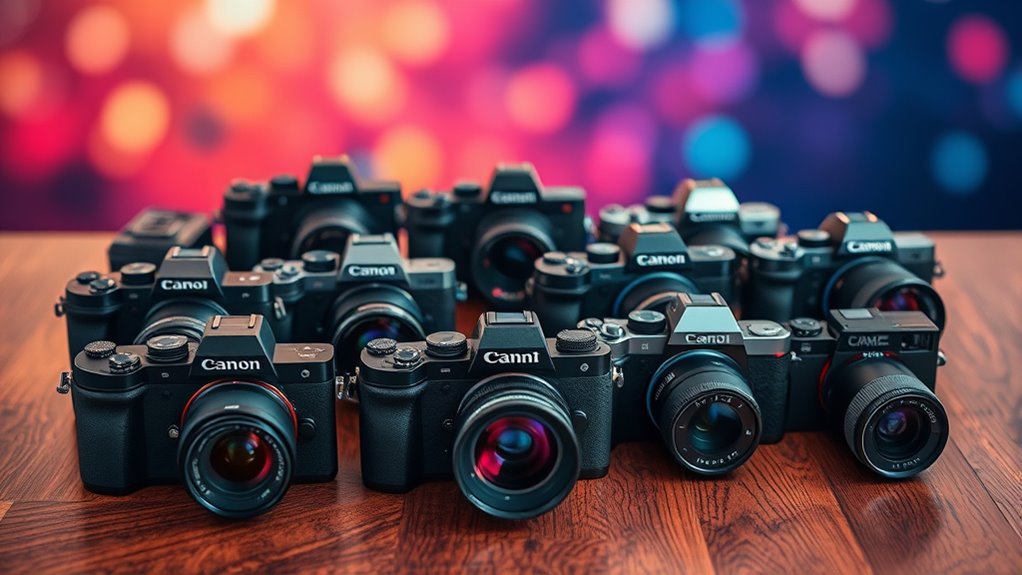

Among mirrorless cameras for creators, I rank the Canon EOS R50 V with RF-S 14-30mm lens as the best overall fit for video-led work, while the Sony ZV-E10 II stands out for a compact creator-focused setup and the Sony a6700 for creators who want a more capable hybrid body. The main tradeoff is between a camera designed to make video production straightforward and a more flexible system for stills, growth, or demanding work. Lens bundles can save setup effort, but they may add bulk or include focal lengths you will not use. Read on for the full breakdown of all 13 options, including where each one fits and what to weigh before choosing.

Get travel and outdoor gear delivered free — and shop member deals
- Fast, free delivery on millions of items
- Access to Prime Big Deal Days deals on October 6–7
- Prime Video, Amazon Music and more included
Complete the kit


Key Takeaways
- The Canon EOS R50 V lens bundle leads this roundup for creators who want a video-oriented camera paired with a wide lens suited to self-shot and close-range content.
- Sony’s ZV-E10 II and original ZV-E10 prioritize creator-friendly simplicity, while the a6700 offers a more hybrid-focused choice for people making both video and stills.
- Full-frame options split by kit needs: the Alpha 7 IV body suits buyers who already have lenses, while the 24-105mm bundle starts with a broad everyday zoom.
- Included lenses change the practical value of a kit: the Nikon Z50 II two-lens bundle covers a wider range of shooting situations than a basic standard-zoom setup.
- There is no single best body for every creator: the R50 V emphasizes video, the Nikon Z 30 favors a light creator kit, and the Alpha 7 V targets buyers seeking a premium full-frame body.
| Canon EOS R50 V Mirrorless Camera (Body Only) |  | Best for Vertical-First Video | Sensor: 24.2 MP APS-C CMOS | Processor: DIGIC X | Video: 4K 59.94p cropped; 4K 29.97p full-width; Full HD 119.8p full-width | VIEW ON AMAZON | See Our Full Breakdown |
| Nikon Z 30 Compact and Lightweight Mirrorless Camera with NIKKOR 16-50mm Lens and Creator’s Kit |  | Best for Long-Form Beginner Vlogging | Sensor: 20.9 MP CMOS | Image processor: EXPEED 6 | ISO range: 100–51200 | VIEW ON AMAZON | See Our Full Breakdown |
| Canon EOS R50 V Mirrorless Camera with RF-S 14-30mm Lens Bundle |  | Best Ready-to-Shoot Vlogging Kit | Sensor: 24.2 MP APS-C CMOS | Processor: DIGIC X | Lens: Canon RF-S 14-30mm f/4-6.3 IS STM PZ | VIEW ON AMAZON | See Our Full Breakdown |
| Nikon Z50 II Mirrorless Camera with 16-50mm and 50-250mm Lenses |  | Best Two-Lens Kit for Travel Creators | Sensor: 20.9 MP DX-format APS-C | Video: 4K UHD/60p and Full HD 120p | Included lenses: NIKKOR Z DX 16-50mm f/3.5-6.3 VR and NIKKOR Z DX 50-250mm f/4.5-6.3 VR | VIEW ON AMAZON | See Our Full Breakdown |
| Canon EOS R50 V Mirrorless Camera with RF-S 14-30mm Lens and Content Creator Bundle (Renewed) |  | Best Accessory-Rich Creator Bundle | Condition: Renewed | Sensor: 24.2 MP APS-C CMOS | Processor: DIGIC X | VIEW ON AMAZON | See Our Full Breakdown |
| Sony Alpha 7 IV Full-Frame Mirrorless Camera with Sony FE 24-105mm f/4 G OSS Standard Zoom Lens |  | Best Full-Frame Kit for One-Lens Versatility | Mount: Sony E | Sensor: 33MP full-frame CMOS | Included lens: FE 24-105mm f/4 G OSS | VIEW ON AMAZON | See Our Full Breakdown |
| Sony ZV-E10 II APS-C Mirrorless Creator Camera (Black) |  | Best Lightweight Creator Camera | Sensor: 26MP BSI CMOS APS-C | Mount: Sony E | Video: 4K up to 60 fps; Full HD up to 120 fps | VIEW ON AMAZON | See Our Full Breakdown |
| Sony Alpha 7 IV Full-frame Mirrorless Interchangeable Lens Camera |  | Best Full-Frame Hybrid Body | Sensor: 33MP full-frame Exmor R CMOS | Processor: BIONZ XR | Video: 4K 60p, 10-bit 4:2:2 | VIEW ON AMAZON | See Our Full Breakdown |
| Sony Alpha a6400 Mirrorless Camera with 16-50mm Lens |  | Best Compact Starter Kit | Sensor: 24.2MP APS-C Exmor CMOS | Mount: Sony E-mount | Included lens: 16-50mm | VIEW ON AMAZON | See Our Full Breakdown |
| Sony Alpha a7 V Full-Frame Mirrorless Camera Body |  | Best Premium Action and Video Body | Sensor: 33MP Exmor RS CMOS | Processor: BIONZ XR2 | Video: 4K 120p | VIEW ON AMAZON | See Our Full Breakdown |
| Canon EOS R50 Content Creator Kit |  | Best Creator Kit for Beginners | Sensor: 24.2 MP APS-C CMOS | Processor: DIGIC X | Lens mount: Canon RF | VIEW ON AMAZON | See Our Full Breakdown |
| Sony Alpha a6700 Mirrorless Camera (APS-C, 26 MP, 4K) |  | Best for Advanced Video Creators | Sensor: 26 MP APS-C Exmor R back-illuminated CMOS | Processor: BIONZ XR with dedicated AI processor | Video recording: 4K/60p, oversampled from 6K | VIEW ON AMAZON | See Our Full Breakdown |
| Sony Alpha ZV-E10 APS-C Mirrorless Camera Kit |  | Best for Desk-Based Vlogging and Streaming | Sensor: 24.2 MP APS-C Exmor CMOS | Processor: BIONZ X | Video: 4K, oversampled from 6K | VIEW ON AMAZON | See Our Full Breakdown |
| mirrorless cameras for creator | Sensor | Video | Processor |
|---|---|---|---|
| Canon EOS R50 V Mirrorless Cam | 24.2 MP APS-C CMOS | 4K 59.94p cropped; 4K 29.97p full-width; Full HD 119.8p full-width | DIGIC X |
| Nikon Z 30 Compact and Lightwe | 20.9 MP CMOS | — | — |
| Canon EOS R50 V Mirrorless Cam | 24.2 MP APS-C CMOS | 4K at 30p; Full HD at 120p | DIGIC X |
| Nikon Z50 II Mirrorless Camera | 20.9 MP DX-format APS-C | 4K UHD/60p and Full HD 120p | — |
| Canon EOS R50 V Mirrorless Cam | 24.2 MP APS-C CMOS | 6K-oversampled 4K at 30p; 4K up to 60p with crop | DIGIC X |
| Sony Alpha 7 IV Full-Frame Mir | 33MP full-frame CMOS | 4K 60p | — |
| Sony ZV-E10 II APS-C Mirrorles | 26MP BSI CMOS APS-C | 4K up to 60 fps; Full HD up to 120 fps | — |
| Sony Alpha 7 IV Full-frame Mir | 33MP full-frame Exmor R CMOS | 4K 60p, 10-bit 4:2:2 | BIONZ XR |
| Sony Alpha a6400 Mirrorless Ca | 24.2MP APS-C Exmor CMOS | 4K | — |
| Sony Alpha a7 V Full-Frame Mir | 33MP Exmor RS CMOS | 4K 120p | BIONZ XR2 |
| Canon EOS R50 Content Creator | 24.2 MP APS-C CMOS | 4K 30p, oversampled from 6K; Full HD up to 120 fps | DIGIC X |
| Sony Alpha a6700 Mirrorless Ca | 26 MP APS-C Exmor R back-illuminated CMOS | — | BIONZ XR with dedicated AI processor |
| Sony Alpha ZV-E10 APS-C Mirror | 24.2 MP APS-C Exmor CMOS | 4K, oversampled from 6K | BIONZ X |
More Details on Our Top Picks
Canon EOS R50 V Mirrorless Camera (Body Only)
The EOS R50 V body-only kit is the most purpose-built video option here: its front record button and vertical tripod mount make solo social filming more direct than with the Nikon Z 30. Canon’s Dual Pixel CMOS AF II detects people, animals, and vehicles, helping keep moving subjects in focus while you concentrate on delivery. Full-width 4K at 29.97p and Full HD at 119.8p give creators room for sharp standard footage and slow motion. The tradeoff is that 4K 59.94p is cropped, which narrows the view, and this version includes no lens. I’d choose it over the bundled Canon EOS R50 V if I already own compatible RF lenses; new creators need to budget for a lens separately.
Pros:- Vertical tripod mount and front record button suit solo video workflows
- Dual Pixel CMOS AF II detects people, animals, and vehicles
- Full-width Full HD recording reaches 119.8p for slow motion
- Slow and Fast modes make frame-rate effects easier to control
Cons:- No lens is included
- 4K 59.94p recording uses a crop
- Creators who need a broad focal range must add compatible lenses
Best for: Solo creators who shoot vertical social video and already own a compatible Canon RF or RF-S lens
Not ideal for: First-time camera buyers who need a ready-to-shoot kit or want uncropped 4K at 60p
- Sensor:24.2 MP APS-C CMOS
- Processor:DIGIC X
- Video:4K 59.94p cropped; 4K 29.97p full-width; Full HD 119.8p full-width
- Autofocus:Dual Pixel CMOS AF II
- Subject detection:People, animals, and vehicles
- Included lens:None; body only
Our verdict“Choose this body if vertical video is central to your work and you already have a lens; otherwise, the lens-included Canon EOS R50 V bundle is the more complete starting point.”
Nikon Z 30 Compact and Lightweight Mirrorless Camera with NIKKOR 16-50mm Lens and Creator’s Kit
The Nikon Z 30 Creator’s Kit is a practical entry point for vloggers who want a compact setup and the flexibility to record for over two hours continuously. Its vari-angle touchscreen makes framing yourself straightforward, while eye detection for people, dogs, and cats helps keep a presenter or pet in focus. Compared with the Canon EOS R50 V, the Z 30 is less tailored to vertical-first shooting and lacks the same listed slow-motion frame rate, but it pairs built-in stereo audio with an external mic input and HDMI streaming options. That makes it a sensible pick for talking-head videos and live sessions. The main constraint is battery endurance: long shoots may need power planning, and its video tops out at 4K/30p.
Pros:- Vari-angle touchscreen simplifies self-framing
- Eye detection supports people, dogs, and cats
- Continuous video recording exceeds two hours
- Built-in stereo mic, external mic input, and HDMI streaming support
Cons:- Video recording is limited to 4K/30p
- Battery life is limited to just over two hours of continuous video capture
- The listed kit details do not specify the Creator’s Kit accessories
Best for: New vloggers and home-based creators who want a compact camera for presenter videos, pet content, and streaming
Not ideal for: Creators who prioritize high-frame-rate slow motion, 4K/60p, or a vertical-video-focused camera design
- Sensor:20.9 MP CMOS
- Image processor:EXPEED 6
- ISO range:100–51200
- Autofocus:Auto Area AF with eye detection for people, dogs, and cats
- Screen:Vari-angle touchscreen
- Video recording time:Over two hours continuous
- Audio:Built-in stereo microphone and external mic input
- Streaming:1080/60p or 4K/30p via HDMI
- Included lens:NIKKOR 16-50mm lens
Our verdict“Pick the Z 30 for approachable, long-form vlogging and streaming, but choose the EOS R50 V if vertical video and slow motion matter more.”
Canon EOS R50 V Mirrorless Camera with RF-S 14-30mm Lens Bundle
This EOS R50 V bundle is the straightforward Canon choice for creators starting without a compatible lens: it includes the RF-S 14-30mm power-zoom lens, memory card, bag, battery, and charger. The articulating screen and subject-aware Dual Pixel autofocus suit solo filming, while full-width 4K at 30p and Full HD at 120p cover standard video and slow-motion clips. Compared with the body-only EOS R50 V, this package gets a creator filming sooner; compared with the Nikon Z50 II two-lens kit, it is more focused on compact vlogging than broad telephoto reach. The lens’s optical stabilization can help smooth handheld footage, but the camera is not water resistant, has no built-in flash, and its listed 4K/30p ceiling may not suit creators seeking higher frame rates.
Pros:- Includes RF-S 14-30mm power-zoom lens and core accessories
- Full-width 4K recording at 30p and Full HD at 120p
- Articulating touchscreen helps with self-recording and unusual angles
- Autofocus detects eyes, faces, and subjects
Cons:- Not water resistant
- No built-in flash
- Listed 4K video tops out at 30p
Best for: New Canon-system vloggers who want a wide-angle lens and basic recording accessories in one kit
Not ideal for: Creators who need weather protection, built-in flash, or 4K recording above 30p without a crop
- Sensor:24.2 MP APS-C CMOS
- Processor:DIGIC X
- Lens:Canon RF-S 14-30mm f/4-6.3 IS STM PZ
- Video:4K at 30p; Full HD at 120p
- Autofocus:Dual Pixel CMOS AF with eye, face, and subject detection
- Display:Articulating capacitive LCD
- Image stabilization:Optical stabilization in the lens
- Connectivity:USB-C
- Included accessories:Battery, charger, camera cover, neck strap, lens caps, shoulder bag, and 64 GB SDXC UHS-I U1 card
Our verdict“Choose this bundle if you want a lens-included Canon vlogging setup, while the Nikon Z50 II kit is a better fit for creators who need two-lens coverage.”
Nikon Z50 II Mirrorless Camera with 16-50mm and 50-250mm Lenses
The Nikon Z50 II two-lens kit is the most versatile choice here for creators who shoot a mix of travel video, portraits, and distant subjects. Its 16-50mm and 50-250mm lenses cover wide scenes through telephoto framing without requiring an immediate lens purchase. 4K UHD/60p, Full HD 120p, and subject tracking for people, animals, and vehicles give it broader capture options than the Nikon Z 30, while built-in electronic VR can help steady footage. The tradeoff is a less compact carry once both lenses are packed, and this kit is less specifically tailored to solo vertical recording than the Canon EOS R50 V. SnapBridge supports wireless sharing, though some advanced presets require Nikon Imaging Cloud. I’d choose it for varied subjects, not a minimalist one-lens vlogging setup.
Pros:- Two lenses cover wide-to-telephoto shooting
- 4K UHD/60p and Full HD 120p support different video styles
- Autofocus tracks people, dogs, cats, birds, and vehicles
- Built-in electronic VR and SnapBridge wireless sharing
Cons:- Carrying two lenses adds bulk compared with a compact single-lens setup
- Some advanced preset features require Nikon Imaging Cloud
- Built-in flash may not meet professional lighting needs
Best for: Travel and outdoor creators who film varied subjects and want wide-to-telephoto coverage in the box
Not ideal for: Minimalist vloggers who want the lightest possible one-lens setup or a camera designed around vertical recording
- Sensor:20.9 MP DX-format APS-C
- Video:4K UHD/60p and Full HD 120p
- Included lenses:NIKKOR Z DX 16-50mm f/3.5-6.3 VR and NIKKOR Z DX 50-250mm f/4.5-6.3 VR
- Autofocus subjects:People, dogs, cats, birds, and vehicles
- Stabilization:Built-in electronic VR
- Connectivity:Wireless sharing via Nikon SnapBridge
- Model:Z50 II, USA model
Our verdict“Choose the Z50 II kit for flexible travel coverage and higher-frame-rate 4K, but pick the Canon EOS R50 V bundle for a simpler vlogging-first package.”
Canon EOS R50 V Mirrorless Camera with RF-S 14-30mm Lens and Content Creator Bundle (Renewed)
This renewed EOS R50 V bundle puts more of the video setup in one package than the standard Canon lens bundle, adding wireless microphones, a light, tripod, memory card, and other accessories alongside the RF-S 14-30mm power-zoom lens. Its strongest camera-side advantage is 6K-oversampled 4K at 30p, which gives creators detailed footage at standard frame rates; 4K at 60p is available, but cropped. Compared with the Nikon Z50 II, this kit is more centered on solo content production than interchangeable focal-length coverage. The tradeoff is its renewed condition, which buyers should weigh against a new kit, and the supplied accessories may not match the quality or flexibility of dedicated gear. It also lacks a built-in flash, though that matters less for video-focused work.
Pros:- Includes RF-S 14-30mm power-zoom lens and a broad creator accessory set
- 4K/30p is oversampled from 6K
- Vari-angle touchscreen supports self-recording
- Wi-Fi and Bluetooth provide wireless connectivity
Cons:- Renewed condition may not suit buyers who want a new product
- 4K/60p recording is cropped
- No built-in flash
Best for: Budget-conscious video creators who want a lens, basic audio, lighting, and support accessories bundled together
Not ideal for: Buyers who require a new camera condition, want uncropped 4K/60p, or prefer to choose each accessory themselves
- Condition:Renewed
- Sensor:24.2 MP APS-C CMOS
- Processor:DIGIC X
- Lens:Canon RF-S 14-30mm f/4-6.3 IS STM PZ
- Video:6K-oversampled 4K at 30p; 4K up to 60p with crop
- Continuous shooting:Up to 15 fps
- Display:3-inch vari-angle touchscreen
- Connectivity:Wi-Fi and Bluetooth
- Bundle accessories:Wireless microphones, 128 GB SD card, tripod, bag, LED video light, filters, lens attachments, and more
Our verdict“Choose this renewed bundle if a ready-made video kit matters more than new condition or uncropped 4K/60p.”
Sony Alpha 7 IV Full-Frame Mirrorless Camera with Sony FE 24-105mm f/4 G OSS Standard Zoom Lens
This kit suits creators who want a full-frame camera and a practical everyday zoom in one package. The 33MP sensor captures detail for cropping and still photography, while 4K 60p video gives creators room for smooth motion and flexible edits. Its 24-105mm lens covers wide scenes, portraits, and tighter framing without a lens change, and the constant f/4 aperture keeps exposure consistent as you zoom. Compared with the body-only Sony Alpha 7 IV, this version is ready to shoot across more situations; the ZV-E10 II is lighter and more creator-focused, but has a smaller APS-C sensor. The tradeoff is a heavier kit and a lens that is less suited to dim interiors than a brighter prime. The listed data also gives no weather resistance, so I would keep it protected outdoors.
Pros:- 33MP full-frame sensor supports detailed images and flexible cropping.
- 24-105mm zoom covers a broad range of shooting situations.
- Constant f/4 aperture maintains exposure across the zoom range.
- 4K 60p recording and an electronic viewfinder serve both video and stills.
Cons:- The f/4 lens is less capable in low light than a brighter prime.
- The listing specifies no water resistance, limiting confidence in wet conditions.
- The full-frame body and zoom make a less compact carry than the ZV-E10 II.
Best for: Hybrid creators who want full-frame stills and video with a single zoom for travel, interviews, and everyday shoots.
Not ideal for: Creators who prioritize a light vlogging setup, frequent low-light shooting, or a weather-resistant kit.
- Mount:Sony E
- Sensor:33MP full-frame CMOS
- Included lens:FE 24-105mm f/4 G OSS
- Maximum aperture:f/4
- Video:4K 60p
- Continuous shooting:10 fps
- Stabilization:Optical, lens-based
- Memory slots:2 SD slots
Our verdict“Choose this kit if you want a capable full-frame hybrid camera with a versatile zoom already included.”
Sony ZV-E10 II APS-C Mirrorless Creator Camera (Black)
The ZV-E10 II is the more direct fit for creators who make video often and want to travel light. Its 10.3-ounce body, articulating touchscreen, and eye-tracking autofocus make it easier to frame and focus on yourself without carrying the bulk of the full-frame Sony Alpha 7 IV. It records 4K at up to 60 fps and Full HD at 120 fps, giving social video and slow-motion clips useful flexibility. Unlike the Alpha 7 IV kit, it uses an APS-C sensor, so the smaller body comes with less sensor area for low-light work. There is also no electronic viewfinder, which can make framing awkward in bright sun. The included kit zoom’s f/3.5-5.6 range is another limit in dim rooms; creators who need dependable indoor footage may prefer a brighter lens.
Pros:- Light 10.3-ounce body suits handheld and travel content.
- Articulating 3-inch touchscreen helps with self-framing.
- 4K up to 60 fps and Full HD 120 fps support varied video styles.
- Real-time Eye AF and tracking help keep people in focus.
Cons:- No electronic viewfinder makes bright-sun framing less convenient.
- APS-C sensor gives up the full-frame capture area of the Alpha 7 IV models.
- The kit zoom’s f/3.5-5.6 aperture range can constrain low-light shooting.
Best for: Solo vloggers and social-video creators who want an interchangeable-lens camera that is light to carry and easy to frame from the front.
Not ideal for: Photographers who rely on an electronic viewfinder, or creators who regularly film in dim light with the kit lens.
- Sensor:26MP BSI CMOS APS-C
- Mount:Sony E
- Video:4K up to 60 fps; Full HD up to 120 fps
- Continuous shooting:11 fps
- Display:3-inch articulating touchscreen
- Weight:10.3 ounces
- Connectivity:Wi-Fi, Bluetooth, HDMI, USB 3.0
- Maximum shutter speed:1/8000 sec
Our verdict“Pick the ZV-E10 II if portability and self-shot video matter more to you than a viewfinder or full-frame sensor.”
Sony Alpha 7 IV Full-frame Mirrorless Interchangeable Lens Camera
For creators who want room to develop a mixed photo-and-video workflow, this Alpha 7 IV body balances high-resolution stills with advanced recording tools. Its 33MP full-frame sensor supports detailed images and cropping, while 4K 60p 10-bit 4:2:2 offers more color information for grading than a basic video setup. The 759-point phase-detection system and 5-axis in-body stabilization help with moving subjects and handheld shooting. Compared with the bundled Alpha 7 IV kit, this version leaves lens choice to you, which is useful if you already own Sony E-mount glass but adds a separate lens decision. The ZV-E10 II is a lighter, simpler creator option, though it lacks this model’s full-frame sensor and listed in-body stabilization. The Alpha 7 IV’s feature set and 0.99 kg weight are a bigger commitment for casual vlogging.
Pros:- 33MP full-frame sensor provides detail for stills and cropping.
- 4K 60p 10-bit 4:2:2 recording supports more flexible color grading.
- 5-axis in-body stabilization helps steady handheld footage.
- 759 phase-detection AF points and Real-time Eye AF support subject tracking.
Cons:- Body-only package requires a separate lens purchase.
- At 0.99 kg, it is less convenient for lightweight vlogging than the ZV-E10 II.
- Its advanced controls and recording options may take time for beginners to learn.
Best for: Experienced hybrid creators who want full-frame image quality, graded 4K footage, and the flexibility to choose their own lenses.
Not ideal for: New creators seeking a simple, lightweight camera or anyone who needs a complete kit with a lens included.
- Sensor:33MP full-frame Exmor R CMOS
- Processor:BIONZ XR
- Video:4K 60p, 10-bit 4:2:2
- Autofocus:759 phase-detection points
- Image stabilization:5-axis SteadyShot
- Viewfinder:Electronic, 0.78x magnification
- Display:3-inch tilting LCD
- Weight:0.99 kg
Our verdict“Choose this body if you already have a lens plan and want a full-frame camera for demanding photo and video work.”
Sony Alpha a6400 Mirrorless Camera with 16-50mm Lens
The Alpha a6400 with 16-50mm lens is a straightforward choice for creators who want a compact camera for travel, casual video, and everyday photography. Its 24.2MP APS-C sensor and Real-Time Eye AF give it a useful foundation for portraits and people-focused content, while 4K recording and a tilting screen cover basic vlogging needs. The included zoom means a beginner can start shooting without selecting a separate lens. Compared with the newer ZV-E10 II, the a6400 is a more traditional compact camera choice, but the provided listing does not specify 4K frame rates or the newer model’s 120 fps Full HD option. It also has no listed in-body stabilization, so walking footage may need a stabilized lens or support. The screen tilts, but the listing does not describe a fully articulating display.
Pros:- 24.2MP APS-C sensor offers useful resolution for stills and creator content.
- Real-Time Eye AF helps keep people in focus.
- Included 16-50mm lens gives beginners a flexible starting range.
- Compact design and tilting LCD suit travel and simple vlogging setups.
Cons:- No in-body image stabilization is listed for handheld video.
- The screen is described as tiltable, not fully articulating for front-facing framing.
- Video frame-rate details are less specific than those listed for the ZV-E10 II.
Best for: Beginning creators and travelers who want a compact interchangeable-lens camera with a standard zoom for stills and occasional 4K video.
Not ideal for: Vloggers who need a fully articulating screen, dependable handheld stabilization, or clearly specified high-frame-rate video modes.
- Sensor:24.2MP APS-C Exmor CMOS
- Mount:Sony E-mount
- Included lens:16-50mm
- Video:4K
- Continuous shooting:Up to 11 fps
- Autofocus:Real-Time Eye AF
- Display:Tiltable LCD
Our verdict“Choose the a6400 kit for compact everyday shooting with a lens included, but look to the ZV-E10 II for more video-focused features.”
Sony Alpha a7 V Full-Frame Mirrorless Camera Body
The Sony Alpha a7 V is the ambitious pick here for creators who shoot fast action, high-frame-rate video, or subjects that demand persistent tracking. Its listed 30 fps blackout-free shooting, AI-based Real-time Recognition AF, and 4K 120p recording give it capabilities beyond the Alpha 7 IV models, whose listed video tops out at 4K 60p. Up to 7.5-step central stabilization also supports handheld work, while the stated 16-stop dynamic range points to broad exposure latitude. This performance comes with a steeper learning curve and a body-only package: you must select a lens before shooting. Compared with the ZV-E10 II, it is a more advanced full-frame tool, not the easier lightweight choice for casual vlogging. The supplied product data describes ambitious specifications but provides little detail about the display, viewfinder, or connectivity.
Pros:- 4K 120p recording supports high-frame-rate video and slow motion.
- 30 fps blackout-free shooting suits fast action and decisive moments.
- AI-based subject recognition AF is designed to track subjects.
- Up to 7.5-step central stabilization supports handheld shooting.
Cons:- Body-only package requires a separate lens and added setup decisions.
- Complex feature set may be a steep learning curve for beginners.
- The supplied specifications give limited detail on screen, viewfinder, and connectivity.
Best for: Experienced creators filming fast-moving subjects or slow-motion 4K content who are ready to choose lenses and learn a more advanced camera system.
Not ideal for: First-time creators, casual vloggers, and buyers who want a ready-to-shoot kit with a lens included.
- Sensor:33MP Exmor RS CMOS
- Processor:BIONZ XR2
- Video:4K 120p
- Continuous shooting:Up to 30 fps, blackout-free
- Dynamic range:Up to 16 stops
- Image stabilization:Up to 7.5-step central, 6.5-step peripheral
- Still-image ISO:100-51200; expandable to 50-204800
- Maximum shutter speed:1/16000 sec
Our verdict“Pick the a7 V if you need high-speed capture and 4K 120p, and are comfortable building a lens kit around an advanced body.”
Canon EOS R50 Content Creator Kit
The Canon EOS R50 Content Creator Kit is the easiest of these three to start using for on-camera video because it bundles a lens, tripod grip, Bluetooth remote, and stereo microphone. Its uncropped, 6K-oversampled 4K gives creators room for detailed footage, while the articulating touch screen helps when framing yourself. Compared with the Sony ZV-E10, this kit includes more of the gear needed to record away from a desk; the Sony a6700, by contrast, offers more advanced high-frame-rate and color-depth options for demanding video work. The R50 also tracks people, animals, and vehicles, which helps keep moving subjects in focus. Its tradeoffs are the single card slot and APS-C sensor, which offers less low-light latitude than the full-frame options elsewhere in the roundup.
Pros:- Includes a lens, tripod grip, Bluetooth remote, and stereo microphone
- Uncropped 4K video oversampled from 6K
- Full HD recording at up to 120 fps for slow motion
- Subject detection autofocus covers people, animals, and vehicles
Cons:- Single memory card slot limits in-camera backup options
- APS-C sensor has less low-light latitude than full-frame alternatives
- Included RF-S lens has a variable f/4.5–6.3 maximum aperture
Best for: New vloggers who want a compact camera kit with a lens, microphone, grip, and remote included.
Not ideal for: Creators who need dual-card backup or regularly shoot in dim light and want the extra latitude of a full-frame camera.
- Sensor:24.2 MP APS-C CMOS
- Processor:DIGIC X
- Lens mount:Canon RF
- Video:4K 30p, oversampled from 6K; Full HD up to 120 fps
- Autofocus:Dual Pixel CMOS AF II, 651 zones
- Display:3-inch articulating touch LCD
- Connectivity:Wi-Fi, Bluetooth, USB, HDMI
- Weight:1.6 lb
- Included accessories:RF-S 18-45mm F4.5-6.3 IS STM lens, HG-100BTR tripod grip, Bluetooth remote, DM-E100 stereo microphone
Our verdict“Choose the R50 kit if you want an approachable vlogging setup with key accessories in the box rather than the a6700’s more advanced video controls.”
Sony Alpha a6700 Mirrorless Camera (APS-C, 26 MP, 4K)
The Sony a6700 is the strongest fit here for creators who want detailed control over video, not a ready-made starter kit. It records 10-bit 4:2:2 footage and supports 4K/60p and 4K/120p, giving editors more flexibility with color and slow motion than the Canon EOS R50 Content Creator Kit or Sony ZV-E10. Its dedicated AI processor also handles real-time subject tracking, a useful advantage for solo creators moving around the frame. The 26 MP back-illuminated APS-C sensor rounds out a capable hybrid setup. The main catch is that this is a body-only camera: you need to choose and buy a lens separately, unlike the R50 kit. Its advanced recording options may also be more than casual vloggers need, so the ZV-E10 is a simpler route for basic 4K and streaming.
Pros:- Records 10-bit 4:2:2 video for more flexible color grading
- Offers 4K/60p and 4K/120p capture
- Dedicated AI processor supports real-time subject tracking
- 26 MP back-illuminated APS-C sensor
Cons:- Body-only package requires a separate lens purchase
- Advanced video formats can create a more involved editing workflow
- Lacks the bundled microphone and grip included with the Canon EOS R50 Creator Kit
Best for: Video-focused creators and hybrid shooters who plan to edit seriously, want 10-bit recording, and are ready to select their own lenses.
Not ideal for: First-time vloggers seeking a complete kit, or creators who only need straightforward 4K and do not expect to use advanced recording formats.
- Sensor:26 MP APS-C Exmor R back-illuminated CMOS
- Processor:BIONZ XR with dedicated AI processor
- Video recording:4K/60p, oversampled from 6K
- Color depth and sampling:10-bit 4:2:2
- High-frame-rate video:4K/120p
- Recording formats:Long GOP or All-Intra
- Body color:Black
- Lens included:No; camera body only
Our verdict“Pick the a6700 if advanced video formats and high-frame-rate 4K matter more than getting a lens and creator accessories in the box.”
Sony Alpha ZV-E10 APS-C Mirrorless Camera Kit
The Sony ZV-E10 suits creators whose main camera jobs are vlogging, filming at home, and streaming. Its 6K-oversampled 4K delivers detailed footage, while a dedicated background defocus button makes it quick to shift emphasis toward a blurred background without digging through menus. USB live streaming is another practical advantage for creators who want a simple camera-to-computer setup. Compared with the Canon EOS R50 Creator Kit, the ZV-E10 is more centered on streaming and quick vlogging controls, but the Canon package includes a microphone, grip, remote, and lens. The a6700 is the better match for 10-bit color and high-frame-rate 4K; the ZV-E10 keeps the feature set simpler. Its interchangeable-lens design leaves room to grow, but also means lens choice and added gear are part of the setup.
Pros:- 4K video oversampled from 6K
- Dedicated background defocus button for quick adjustments
- Supports live streaming over a single USB cable
- Interchangeable-lens design allows the setup to change with creative needs
Cons:- Interchangeable lenses add selection and setup requirements
- Does not offer the a6700’s listed 10-bit 4:2:2 or 4K/120p recording
- No bundled microphone, grip, or remote is listed
Best for: Solo vloggers and home-based creators who want interchangeable lenses, a quick background-defocus control, and USB streaming.
Not ideal for: Creators who need 4K/120p, 10-bit 4:2:2 recording, or a complete accessory bundle like the Canon EOS R50 Creator Kit.
- Sensor:24.2 MP APS-C Exmor CMOS
- Processor:BIONZ X
- Video:4K, oversampled from 6K
- Lens type:Interchangeable
- Live streaming:USB connection
- Background control:Dedicated background defocus button
- Color:Black
Our verdict“Choose the ZV-E10 for straightforward vlogging and USB streaming, but choose the a6700 if your work calls for advanced color grading or high-frame-rate 4K.”
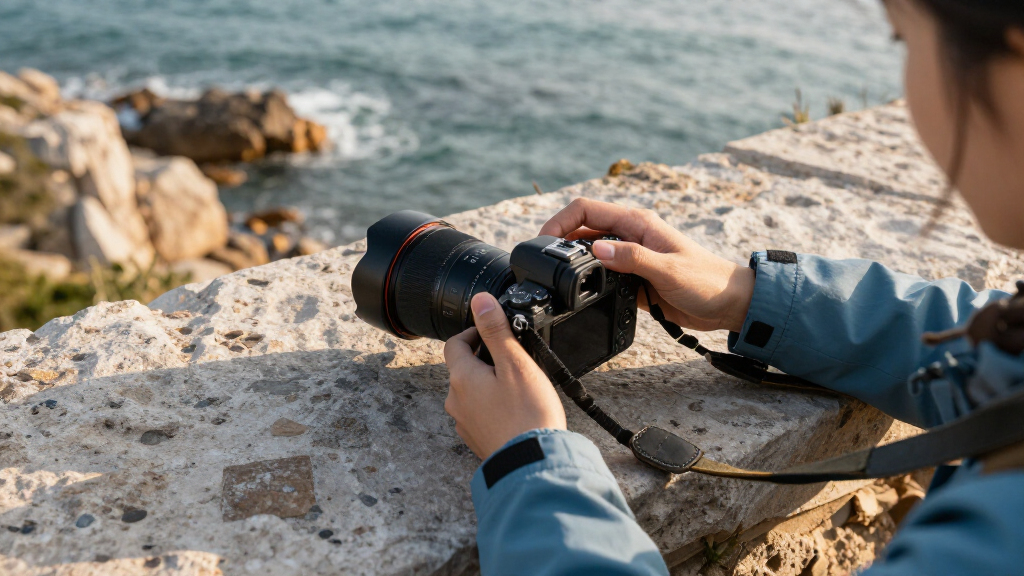
How We Picked
I ranked these mirrorless cameras for creators by how well their body, video-oriented features, included lens, and kit format support common creator work: self-shot video, short-form content, livestream or studio setups, travel, and hybrid photo-video use. I also weighed handling and portability, the flexibility of the lens system, and whether the bundle gives a new owner a useful starting point or assumes they already own compatible gear. A camera’s headline specs matter less if the controls, lens choice, or included accessories do not match the way a creator works.
The order favors practical creator fit and versatility, not simply sensor size or product age. The Canon EOS R50 V lens kit ranks ahead of its body-only and renewed bundle versions because it pairs the video-focused body with a useful lens and a clear starting setup. Sony’s creator-focused ZV models rank well for approachable video use, while the a6700 and full-frame Alpha bodies suit buyers who value broader hybrid or system capability. Kit contents, condition, and intended use can change which listing makes the most sense, so I call out the tradeoffs rather than treating bundles as interchangeable.
| mirrorless cameras for creator | Processor |
|---|---|
| Canon EOS R50 V Mirrorless Cam | DIGIC X |
| Nikon Z 30 Compact and Lightwe | — |
| Canon EOS R50 V Mirrorless Cam | DIGIC X |
| Nikon Z50 II Mirrorless Camera | — |
| Canon EOS R50 V Mirrorless Cam | DIGIC X |
| Sony Alpha 7 IV Full-Frame Mir | — |
| Sony ZV-E10 II APS-C Mirrorles | — |
| Sony Alpha 7 IV Full-frame Mir | BIONZ XR |
| Sony Alpha a6400 Mirrorless Ca | — |
| Sony Alpha a7 V Full-Frame Mir | BIONZ XR2 |
| Canon EOS R50 Content Creator | DIGIC X |
| Sony Alpha a6700 Mirrorless Ca | BIONZ XR with dedicated AI processor |
| Sony Alpha ZV-E10 APS-C Mirror | BIONZ X |
Factors to Consider When Choosing Mirrorless Cameras For Creators
Choosing a creator camera is partly a question of how you shoot and partly a question of what you want to carry and build around it. I would settle the workflow and lens plan before chasing sensor size or a long feature list.
Match the camera to your main format
Start by naming the work you make most often: talking-head video, handheld travel clips, interviews, product shots, or a mix of stills and video. A creator-oriented body can make self-shot recording easier, while a hybrid camera may offer more flexibility when photography matters just as much. Do not assume that a camera marketed for video will suit every setup; check whether its controls, screen articulation, inputs, and recording options fit your actual routine. A tripod-based studio creator may value connection options over a compact body. Someone filming on the move may prefer a light camera and lens even if a larger model offers more headroom. Pick for the footage you regularly need, not a rare project you might make someday.
Choose lenses before you choose a sensor size
The lens often shapes the look and usability of creator footage more directly than a body upgrade. For self-recording in a small room, a wide angle of view can make framing easier; for interviews or portraits, a standard or longer focal length can give more subject separation and working distance. Bundles are convenient, but check the exact lens model and focal range rather than assuming every kit covers the same jobs. A two-lens bundle can add reach, yet those extra lenses also take space and require more lens changes. Before buying, map your usual camera-to-subject distance and shooting locations to the lens range you need. That simple check can prevent paying for coverage that stays in the bag.
Treat full frame as a workflow choice, not a default upgrade
Full-frame bodies can make sense for creators who want a broad lens selection, particular depth-of-field options, or a system suited to varied professional work. They can also bring larger lenses, more weight, and a higher commitment to a compatible kit. APS-C models in this roundup can be easier to carry and pair with smaller lenses, which matters for travel and self-shot video. A common mistake is spending more on the body and leaving too little room for a lens, microphone, lighting, or spare batteries. Compare the complete kit you will carry, not just the camera body. Choose full frame when its benefits solve a real creative or production need.
Budget for the whole recording setup
A camera alone does not make a dependable creator setup. Memory cards, batteries, a microphone, a tripod or grip, lighting, and storage can all affect whether recording feels practical. Bundles may include useful creator accessories, but check precisely what is included and whether those items match your workflow. A kit label is not a substitute for confirming lens, accessory, and condition details, particularly for renewed products. If you stream or record for long sessions, connections and power options may matter more than a small difference in image specifications. Set aside room for the supporting gear before settling on a body.
Check comfort, controls, and growth needs
Creator cameras are often used while the operator is also the subject, so screen visibility, button access, and easy framing can have a daily impact. Try to anticipate whether you will usually work alone, with a camera operator, or in both situations. Also consider the lens system you may want to grow into; changing systems later can mean replacing more than the body. Beginners may benefit more from a straightforward kit and a camera they are comfortable using than from advanced features they will not reach for. Experienced creators may favor broader controls or a higher-capability body if those features support paid or varied work. Make the choice around the next few years of use, not only your first shoot.
Frequently Asked Questions
Should I choose the Canon EOS R50 V kit or a Sony ZV-E10 II for solo video?
Both are aimed at video creators, so the better match depends on the lens and shooting routine you want. The Canon EOS R50 V bundle pairs its video-focused body with the RF-S 14-30mm lens, a useful starting point for creators who need room to frame themselves at close range. The Sony ZV-E10 II is another compact, creator-oriented option, especially if you are choosing into Sony’s APS-C system. Compare the included lens and any accessories in the exact listing before deciding. If you already own compatible lenses, a body-only or differently bundled option may make more sense than buying a second starter lens.
Is a full-frame camera worth choosing over an APS-C model for creator work?
It is worth paying attention to full frame when its look, lens options, or broader hybrid capabilities match work you actually do. It is not an automatic upgrade for every creator: an APS-C camera can make a lighter, more manageable kit, particularly for travel and self-shot video. Full-frame systems can also lead to larger lenses and a heavier overall setup. Compare complete camera-and-lens combinations, not sensor formats in isolation. If portability and simple solo production rank highest, an APS-C option may be the more practical choice.
Which of these cameras makes the most sense for a beginner starting from scratch?
A beginner should look first at a complete, straightforward kit rather than a body-only camera that requires several extra purchases. The Canon EOS R50 Content Creator Kit and the Nikon Z 30 Creator’s Kit are worth comparing for their starter-kit approach, while the R50 V lens bundle suits a beginner whose main goal is video creation. Check each bundle’s exact contents, since kit names do not guarantee the same accessories. Also consider the kind of content you plan to make: a kit lens may be enough for everyday clips but not every interview or distant subject. Choose the package that gets you recording in your usual setting with the fewest missing pieces.
Should I buy a camera body only or a bundle with lenses?
A body-only purchase can be sensible if you already own compatible lenses or have a particular lens in mind. For a first camera, a bundle may reduce setup friction, but only if the included lens fits your shooting distance and content style. Some bundles add reach through a second lens, while others keep the setup focused on a more creator-oriented range. Check the precise model, mount compatibility, and included items before treating two bundles as equivalent. If a bundle includes accessories you will not use, compare it with a simpler kit and plan for the gear you need separately.
What should I check before choosing the renewed Canon EOS R50 V bundle?
First, confirm that the renewed listing names the exact R50 V body and RF-S 14-30mm lens, then verify which creator accessories are included. Read the seller’s condition and return terms so you know what recourse applies if the camera or an accessory does not match the listing. Compare the package with the new lens bundle and the body-only version based on the contents you actually need, not the word “bundle.” A renewed option may suit a buyer comfortable checking condition and kit details, but it is a less direct choice for someone who wants a simple, clearly specified new setup. If any listing details remain unclear, choose a package with confirmed contents.
Conclusion
For most video-led creators who want a clear starting setup, I recommend the Canon EOS R50 V with RF-S 14-30mm lens as the best overall pick. The best value depends on the kit you need: compare the Nikon Z 30 Creator’s Kit and Canon EOS R50 Content Creator Kit by their confirmed contents and your preferred lens system. For beginners, a complete creator kit is a more practical start than a body-only camera. For a premium full-frame option, consider the Sony Alpha 7 V body; for a ready-to-shoot full-frame zoom setup, look at the Alpha 7 IV with 24-105mm lens. Creators who want a compact, video-first Sony camera can choose the ZV-E10 II, while hybrid shooters should compare the Sony a6700 and Nikon Z50 II kits. Pick the camera and lens combination that fits your usual shoots, then leave room in the setup for sound, support, and lighting.
Halloween Picks
halloween
As an affiliate, we earn on qualifying purchases.