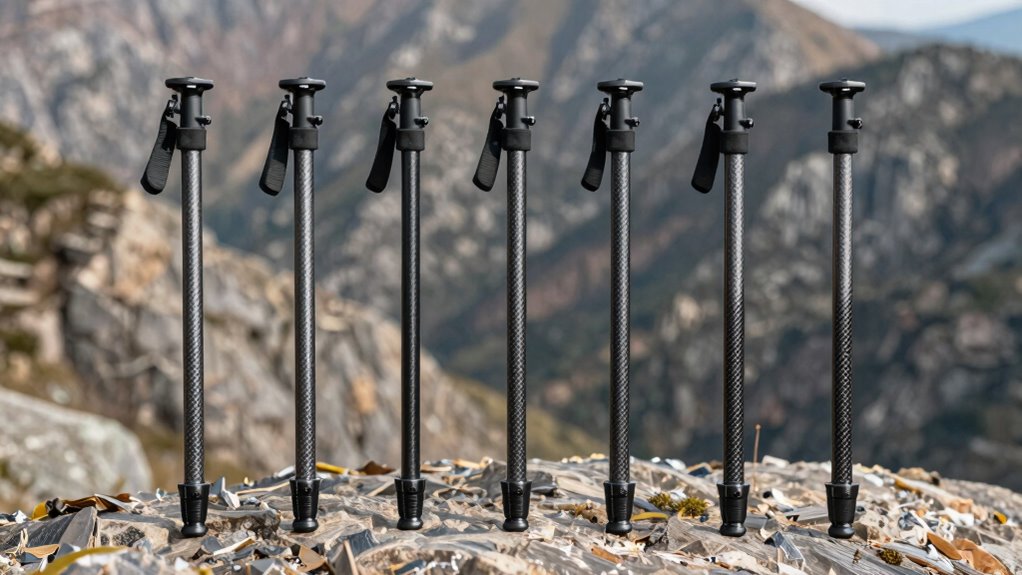
A carbon fiber travel tripod under 3 lbs can cut carry weight without giving up useful height or stability. My best overall pick is the K&F Concept 60-Inch Carbon Fiber Travel Tripod, a balanced choice for photographers who want a portable general-purpose setup. The Manfrotto Befree Advanced stands out as a more polished premium kit, while the SmallRig Portable Carbon Fiber Travel Video Tripod suits people who need video-oriented control. The main tradeoff is between lighter packing, sturdy support, and a head suited to your camera work; a tripod’s weight alone does not tell you how it will carry or operate. Read on for the full breakdown and a guide to choosing the right fit.

Get travel and outdoor gear delivered free with Prime
- Fast, free delivery on millions of items
- Prime Video, Amazon Music and more included
- Member-only deals all year
Complete the kit


Key Takeaways
- The K&F Concept 60-Inch is my best overall pick for buyers who want a straightforward travel tripod rather than a specialized video setup.
- The Manfrotto Befree Advanced is the premium choice for shoppers prioritizing a recognizable, refined travel kit over extra versatility.
- The SmallRig video tripod serves a different purpose: its fluid-head design favors controlled camera movement, not the quick framing most still photographers want.
- The NEEWER Basics TP17B and N55CR both add monopod functionality, but that extra use case may matter more than shaving down a travel kit.
- The Cayer CH35 pairs carbon-fiber legs with a ball head, making head style and the complete kit’s carry weight key checks before choosing it.
| NEEWER Basics Carbon Fiber Travel Tripod and Monopod, 64-Inch, TP17B |  | Best for Flexible Travel Setups | Material: Carbon fiber | Weight: 3.2 lb | Maximum load: 13.2 lb (6 kg) | VIEW ON AMAZON | See Our Full Breakdown |
| SmallRig Portable Carbon Fiber Travel Video Tripod with Fluid Head |  | Best for Travel Video | Materials: Carbon fiber, aluminum alloy, ABS | Weight: 1.34 kg (2.95 lb) | Maximum load: 5 kg (11 lb) | VIEW ON AMAZON | See Our Full Breakdown |
| K&F Concept 60-Inch Carbon Fiber Travel Tripod |  | Best Lightweight Pick | Material: Carbon fiber | Weight: 2 lb (920 g) | Maximum load: 13.2 lb (6 kg) | VIEW ON AMAZON | See Our Full Breakdown |
| Manfrotto Befree Advanced Carbon Fiber Travel Tripod Kit |  | Best for Heavier Camera Kits | Material: Carbon fiber | Weight: 2.76 lb | Load capacity: 17.64 lb | VIEW ON AMAZON | See Our Full Breakdown |
| NEEWER N55CR Carbon Fiber Camera Tripod and Monopod |  | Best for Maximum Reach and Load | Material: Carbon fiber | Maximum load: 26.5 lb (12 kg) | Maximum tripod height: 80.7 inches (205 cm) | VIEW ON AMAZON | See Our Full Breakdown |
| Cayer CH35 Carbon Fiber Travel Tripod with Ball Head |  | Best Lightweight Pick | Material: Carbon fiber | Weight: 1.54 lbs (0.7 kg) | Maximum height: 53.6 inches (136 cm) | VIEW ON AMAZON | See Our Full Breakdown |
| carbon fiber travel tripod under 3 lb | Minimum height | Material | Weight | Maximum load |
|---|---|---|---|---|
| NEEWER Basics Carbon Fiber Tra | 21.3 inches (54 cm) | Carbon fiber | 3.2 lb | 13.2 lb (6 kg) |
| SmallRig Portable Carbon Fiber | 49.5 cm (19.5 inches) | — | 1.34 kg (2.95 lb) | 5 kg (11 lb) |
| K&F Concept 60-Inch Carbon Fib | 15.6 inches | Carbon fiber | 2 lb (920 g) | 13.2 lb (6 kg) |
| Manfrotto Befree Advanced Carb | 16.14 inches | Carbon fiber | 2.76 lb | — |
| NEEWER N55CR Carbon Fiber Came | 26.8 inches (68 cm) | Carbon fiber | — | 26.5 lb (12 kg) |
| Cayer CH35 Carbon Fiber Travel | 6.1 inches | Carbon fiber | 1.54 lbs (0.7 kg) | 11 lbs |
More Details on Our Top Picks
NEEWER Basics Carbon Fiber Travel Tripod and Monopod, 64-Inch, TP17B
The TP17B earns its place for travelers who want one support system to work as both a tripod and a monopod. At 3.2 lb, it exceeds the roundup’s under-3-lb target, so I would choose it only if that extra versatility matters more than meeting the weight limit. Its 16.3-inch folded length is travel-friendly, and the 13.2-lb capacity suits many compact and mid-sized camera kits. Compared with the lighter K&F Concept 60-Inch, it weighs more but reaches higher and includes a phone holder. The reversible column also enables inverted macro framing. The tradeoff is a weight that misses the roundup’s defining threshold, plus no stated water resistance and less capacity than the NEEWER N55CR. I’d skip it if strict sub-3-lb packing is non-negotiable.
Pros:- Converts into a monopod for situations where tripod legs are inconvenient.
- Folds to 16.3 inches for packing.
- Reversible center column supports inverted macro shots.
- Includes a phone holder and 360° ball head.
Cons:- At 3.2 lb, it does not meet the roundup’s under-3-lb weight target.
- Its 13.2-lb load limit is lower than the NEEWER N55CR’s 26.5-lb capacity.
- Water resistance is not specified.
Best for: Travel photographers who value switching between tripod and monopod use and can accept a 3.2-lb kit.
Not ideal for: Buyers enforcing a strict under-3-lb limit or carrying camera setups heavier than 13.2 lb.
- Material:Carbon fiber
- Weight:3.2 lb
- Maximum load:13.2 lb (6 kg)
- Maximum height:63.8 inches (162 cm)
- Minimum height:21.3 inches (54 cm)
- Folded size:16.3 inches (41.5 cm)
- Head and plate:Ball head; Arca-type 1/4-inch quick-release plate
- Warranty:1 year
Our verdict“Choose the TP17B for monopod flexibility and a phone-ready kit, but skip it if staying under 3 lb is essential.”
SmallRig Portable Carbon Fiber Travel Video Tripod with Fluid Head
The SmallRig 5877 is the video-focused pick for buyers who need controlled pans and tilts without crossing the roundup’s weight ceiling: it weighs 2.95 lb. Its fluid head offers 360° panning and a broad +90°/-70° tilt range, giving it a different purpose from the ball-head K&F Concept 60-Inch, which is better aligned with quick still-photo framing. The SmallRig also folds to 20.28 inches and includes a bag and phone holder, though its folded length is noticeably greater than the K&F’s 16.5 inches. A reversible center column helps reach low angles, but the 11-lb load limit is the lowest among these options, so larger camera rigs may be a poor fit. Warranty details are unclear in the supplied listing.
Pros:- Weighs 2.95 lb, meeting the under-3-lb target.
- Fluid head provides 360° panning and a broad tilt range for video movement.
- Reversible center column supports low-angle framing.
- Includes a carrying bag and smartphone holder.
Cons:- The 11-lb load limit is lower than the 13.2-lb K&F Concept and TP17B limits.
- Its 20.28-inch folded length is longer than several travel-focused options here.
- Warranty details are unclear in the supplied listing.
Best for: Travel videographers using a lightweight camera setup who prioritize smoother pans and tilts over a compact folded length.
Not ideal for: Photographers with heavier rigs, or travelers who want a short pack length and a higher load limit.
- Materials:Carbon fiber, aluminum alloy, ABS
- Weight:1.34 kg (2.95 lb)
- Maximum load:5 kg (11 lb)
- Maximum height:161.5 cm (63.58 inches)
- Minimum height:49.5 cm (19.5 inches)
- Folded length:51.5 cm (20.28 inches)
- Head movement:360° pan; +90°/-70° tilt
- Center column:180° reversible
Our verdict“Pick the SmallRig for lightweight travel video work, not for heavy rigs or the shortest packed setup.”
K&F Concept 60-Inch Carbon Fiber Travel Tripod
At just 2 lb, the K&F Concept is the clearest choice when keeping tripod weight low matters more than having extra reach. It still supports 13.2 lb, matching the NEEWER TP17B’s stated load limit while weighing substantially less and folding to a similarly compact 16.5 inches. The 60-inch maximum height is shorter than the TP17B and far below the NEEWER N55CR, so tall shooting positions are not its strength. A reversible center column, short column, and adjustable leg angles give it useful low-angle flexibility, while rubber feet and metal spikes help adapt to different ground. The tradeoff is a more modest height and capacity than the N55CR, along with limited supplied detail about compatibility beyond its Arca-Swiss-style plate system.
Pros:- At 2 lb, it is the lightest option in this lineup.
- Supports up to 13.2 lb despite its low weight.
- Reversible and short center-column options support low-angle shooting.
- Rubber feet and metal spikes suit varied terrain.
Cons:- Its 60-inch maximum height is lower than the TP17B and NEEWER N55CR.
- The 13.2-lb load limit is well below the N55CR’s 26.5-lb rating.
- Compatibility details beyond the Arca-Swiss-compatible system are not specified.
Best for: Hikers and travel photographers who want a very light carbon-fiber tripod for compact or mid-sized camera gear.
Not ideal for: Tall photographers who need substantial working height or users with equipment exceeding 13.2 lb.
- Material:Carbon fiber
- Weight:2 lb (920 g)
- Maximum load:13.2 lb (6 kg)
- Maximum height:60 inches
- Minimum height:15.6 inches
- Folded length:16.5 inches (42 cm)
- Ball head:28 mm metal head with 360° panoramic base
- Quick-release system:Arca-Swiss compatible
Our verdict“Choose the K&F Concept when minimizing carried weight matters more than maximum height or heavy-rig capacity.”
Manfrotto Befree Advanced Carbon Fiber Travel Tripod Kit
The Manfrotto Befree Advanced is the strongest fit for travelers who want more stated load capacity without exceeding the 3-lb limit: it weighs 2.76 lb and supports 17.64 lb. That capacity gives it an advantage over the 13.2-lb K&F Concept and TP17B for heavier camera setups, while its 16.14-inch folded length remains compact. The 494 center ball head has independent controls, which can make framing adjustments more deliberate than a basic single-lock arrangement. Its compromise is reach: the 59-inch maximum height is shorter than the SmallRig, TP17B, and NEEWER N55CR. Unlike the N55CR, it does not convert to a monopod or offer the same tall extension. I’d choose it for a sturdier-capacity travel kit, not for maximum height or accessory versatility.
Pros:- Weighs 2.76 lb, within the roundup’s weight limit.
- 17.64-lb load capacity exceeds the K&F Concept and TP17B ratings.
- Folds to 16.14 inches for travel.
- Ball head offers three independent controls.
Cons:- Maximum height of 59 inches is shorter than several competing options.
- Does not provide the monopod conversion offered by the TP17B and N55CR.
- The supplied specs do not state a warranty.
Best for: Travel photographers carrying heavier camera equipment who want a carbon-fiber tripod under 3 lb.
Not ideal for: Buyers who need a tall tripod, monopod conversion, or a maximum height above 59 inches.
- Material:Carbon fiber
- Weight:2.76 lb
- Load capacity:17.64 lb
- Maximum height:59 inches
- Minimum height:16.14 inches
- Folded length:16.14 inches
- Head and plate:494 center ball head; 200PL PRO plate
- Leg sections and angles:4 sections; 22°, 54°, 89°
Our verdict“Choose the Befree Advanced for a sub-3-lb travel tripod with more capacity than the lightweight K&F Concept, provided 59 inches is tall enough.”
NEEWER N55CR Carbon Fiber Camera Tripod and Monopod
The NEEWER N55CR leads this group on reach and stated load capacity, but it falls outside the roundup’s defining weight limit: its weight is not provided in the supplied specs, so I can’t verify that it is under 3 lb. Its 26.5-lb capacity and 80.7-inch tripod height far exceed the Manfrotto Befree Advanced’s 17.64-lb limit and 59-inch reach. It also converts to a monopod, extending as high as 83.8 inches, making it a more versatile choice for tall framing or heavier equipment. That capability comes with a clear buying caveat: without a listed weight, travelers who need a confirmed sub-3-lb tripod should favor the K&F Concept or Manfrotto instead. A phone holder is not included, and the center-column hook requires buyers to supply their own sandbag.
Pros:- Supports up to 26.5 lb, the highest stated load capacity in this lineup.
- Extends to 80.7 inches as a tripod and up to 83.8 inches as a monopod.
- Converts between tripod and monopod configurations.
- Reversible center column and 360° ball head support varied framing.
Cons:- Weight is not specified in the supplied product data, so compliance with the under-3-lb target cannot be confirmed.
- A phone holder is not included.
- Sandbags for the center-column hook must be supplied separately.
Best for: Photographers with heavier camera rigs who need exceptional height and monopod conversion and can confirm the tripod’s packed weight before buying.
Not ideal for: Travelers who require verified weight under 3 lb or want a phone holder included.
- Material:Carbon fiber
- Maximum load:26.5 lb (12 kg)
- Maximum tripod height:80.7 inches (205 cm)
- Minimum height:26.8 inches (68 cm)
- Monopod height range:22.2–83.8 inches (56.5–213 cm)
- Tripod legs:4 telescopic sections
- Center column:2 telescopic sections; reversible
- Mount:1/4-inch quick-release plate with 3 additional 1/4-inch screw holes
Our verdict“Pick the N55CR for its height, capacity, and monopod function only if you can verify its weight meets your travel limit.”
Cayer CH35 Carbon Fiber Travel Tripod with Ball Head
At 1.54 lbs, the Cayer CH35 is the lightest choice in this roundup by the listed specifications, making it a strong fit for travelers who want a full tripod without carrying much extra weight. Its 17.7-inch folded length is compact, while the included ball head, phone clamp, and Arca-type plate let you start shooting without assembling a separate accessory kit. Compared with the taller NEEWER Basics TP17B, the CH35 gives up maximum height: its 53.6-inch reach may leave some users below eye level. In return, a short center column lets it drop to 6.1 inches for low-angle compositions. The tradeoff is a five-section leg design and no stated water resistance, so I would choose it for weight-sensitive trips in fair conditions, not rough-weather work.
Pros:- At 1.54 lbs, it is exceptionally light for a carbon-fiber tripod with a head included.
- The short center column supports low-angle shooting down to 6.1 inches.
- Includes a ball head, Arca-type plate, phone clamp, short column, and carrying case.
- The 11 lb maximum load accommodates many travel camera setups.
Cons:- Its 53.6-inch maximum height is shorter than the NEEWER Basics TP17B’s listed 64-inch reach.
- Five-section legs require more extensions to reach full height than a design with fewer sections.
- No water resistance is stated, limiting confidence in wet-weather use.
Best for: Photographers packing for hiking or air travel who prioritize a very light tripod, shoot low-angle scenes, and use a compact camera or phone setup.
Not ideal for: Tall photographers who need a tripod that reliably reaches eye level, or outdoor shooters who need stated water resistance for wet conditions.
- Material:Carbon fiber
- Weight:1.54 lbs (0.7 kg)
- Maximum height:53.6 inches (136 cm)
- Minimum height:6.1 inches
- Folded size:17.7 inches (45 cm)
- Maximum load:11 lbs
- Head:42 mm ball head; 45° tilt, 360° pan, 90° side tilt
- Leg sections:5
- Included accessories:Short center column, phone clamp, Arca-type quick-release plate, carrying case
Our verdict“Choose the CH35 if carrying the least possible weight and getting low-angle flexibility matter more than maximum height or wet-weather protection.”
How We Picked
I ranked these six options around the needs behind the phrase carbon fiber travel tripod under 3 lbs: manageable carry weight, useful working height, practical folding for travel, and a head that matches the intended camera work. I also weighed setup and adjustment needs, leg and head versatility, and whether added features such as monopod conversion or video control solve a real problem for the buyer. A claimed weight should be checked for the complete kit, since a head or accessory can change what you actually carry.
The ranking favors balanced travel use over any single standout specification. The K&F Concept leads as the most approachable general-purpose option; the Manfrotto earns its place for buyers seeking a more premium kit, while SmallRig ranks for a narrower video use case. The NEEWER and Cayer options offer distinct functions, but buyers should weigh those against simplicity, setup preferences, and complete-kit carry weight. Product details can vary by configuration, so I recommend checking the manufacturer’s specifications for the exact version before buying.
Factors to Consider When Choosing Carbon Fiber Travel Tripod Under 3 Lbs
Tripod shopping is easy to reduce to one number: weight. I’d compare the full packed system instead, then match its support and controls to how I shoot. These factors can prevent a light travel tripod from becoming an awkward compromise once it is on a trail or beside a camera.
Check the Weight of the Complete Kit
Confirm whether the advertised weight includes the head, quick-release plate, and any removable center column or accessories. A bare-leg figure can make two tripods look more comparable than they are when packed for a real shoot. If your goal is to stay below three pounds, compare the exact kit configuration rather than relying on the product family name. Also account for the camera plate and any adapter you routinely leave attached. A small difference in the spec may matter less than whether you need to carry a separate head or support part.
Match the Head to Your Camera Work
A ball head is usually a good fit for still photography because it allows quick repositioning with relatively few controls. A fluid head is designed for smoother movement while filming, but it can add bulk and may feel less direct for rapid still-photo framing. Buyers who switch between photo and video should decide which task needs the better control rather than expecting one head to excel at both. Check how the plate attaches to your camera and whether it works with your existing quick-release system. A light tripod with the wrong head can slow every setup.
Balance Height Against Packed Length
Maximum height affects whether you can frame comfortably without relying on a fully extended center column, while folded length affects how easily a tripod fits inside a bag or attaches outside it. These measurements solve different problems, so do not use one as a stand-in for the other. Extending a center column can provide extra reach, but it may make a setup less steady than using the legs at a lower height. Compare the tripod’s folded dimensions with your actual luggage and camera bag, including room for the head. Frequent flyers may prefer a shorter packed form even if it means accepting less maximum height.
Treat Load Capacity as More Than a Camera-Body Number
Include your heaviest lens, camera plate, microphone, monitor, or other mounted gear when estimating the load a tripod must support. A setup that sits below a maker’s stated capacity can still feel poorly balanced if a long lens shifts the center of gravity. For long exposures or windy locations, a stable stance and sensible leg spread matter alongside capacity claims. Avoid choosing a tripod solely because its capacity figure looks large; consider whether the head can hold your particular setup without slipping. Buyers with heavier telephoto lenses may need to favor rigidity over the lightest possible carry weight.
Decide Whether Extra Functions Earn Their Carry
Monopod conversion can be useful for crowded venues or situations where a full tripod is impractical, but it adds little value if you rarely shoot that way. Similarly, a video-oriented head makes sense for camera movement but may be unnecessary for stills-only travel. Think through the settings where each extra feature would replace another piece of gear, rather than treating more functions as automatically better. Every added mechanism can also mean more parts to adjust and maintain. A simpler setup may be the better travel choice if speed and fewer loose components matter most.
Choose for the Surfaces and Conditions You Shoot On
Tripod performance depends on where you set it up, not only on the material of its legs. Smooth indoor floors, uneven trails, and breezy overlooks place different demands on leg locks, stance, and setup time. Check whether the feet suit your usual surfaces and whether the legs can be positioned independently enough for uneven ground. Carbon fiber can reduce carry weight, but it does not make a compact tripod immune to wind or an overloaded head. If you often shoot in exposed conditions, plan to use a lower stance and avoid extending every section unnecessarily.
Frequently Asked Questions
Can I trust a tripod listed under 3 pounds to stay below that weight in my camera bag?
Not without checking what the listed figure includes. Some specifications may describe the legs alone, while others refer to a complete kit with its head and plate. Compare the manufacturer’s stated weight for the exact configuration you plan to buy, then add any adapter or accessory you keep attached. That gives you a more realistic carry figure than the headline number. If the three-pound limit is firm, leave a margin for small configuration differences.
Should I pick the SmallRig fluid-head tripod if I take both photos and video?
Choose it if smooth camera movement is a regular part of your filming and you are willing to carry a video-oriented head. For mostly still photography, a ball-head setup is generally quicker to reposition and may feel less cumbersome. Mixed-use buyers should consider how often they pan or tilt during recording compared with how often they make still frames. Also check the complete kit’s weight and packed dimensions against your travel limits. If video control is occasional, a more general-purpose tripod may be the easier companion.
Is a monopod conversion worth choosing over a simpler travel tripod?
It can be worthwhile if you often work in crowded places or need support that is faster to reposition than a full tripod. The NEEWER Basics TP17B and N55CR are the lineup’s options to examine for that added function. If you rarely use a monopod, the conversion feature may add complexity without changing your day-to-day setup. Compare the full kit’s weight and operating steps with a straightforward tripod before deciding. The best reason to choose one is a repeated shooting situation, not the appeal of having another feature available.
What should I prioritize if my camera has a long or heavy lens?
Start with the weight and balance of your complete camera setup, not just the camera body. A long lens can put leverage on the head even when the total load is within a stated capacity. Favor a head that holds your framing reliably and a leg stance that feels secure at the heights you use. You may need to accept a little more carry weight for steadier support. Avoid extending the center column fully when a lower, wider stance can do the job.
Which of these tripods makes the most sense for a first-time buyer?
I’d start with the K&F Concept 60-Inch if you want a general-purpose travel tripod without making video movement or monopod conversion the main requirement. The Manfrotto Befree Advanced may suit a beginner who values a more premium kit, while the SmallRig is better reserved for someone who already knows they need fluid video control. Before choosing, check how the legs fold and how the head attaches to your camera. A simple setup that matches your usual shooting is easier to learn than a feature-rich one you rarely use.
Conclusion
For most travelers, I recommend the K&F Concept 60-Inch as the best overall because it is the roundup’s balanced general-purpose choice. The NEEWER options are the best value-oriented picks for buyers who will actually use monopod conversion; check the exact model’s full-kit weight and features before choosing between them. For a best premium direction, consider the Manfrotto Befree Advanced, while beginners seeking a straightforward still-photo setup can start with the K&F Concept. For specific needs, choose the SmallRig when smooth video movement matters or the Cayer CH35 if its ball-head configuration fits your stills workflow. My final check would be the complete packed weight, folded size, and head compatibility—not carbon fiber alone.
Halloween Picks
halloween
As an affiliate, we earn on qualifying purchases.