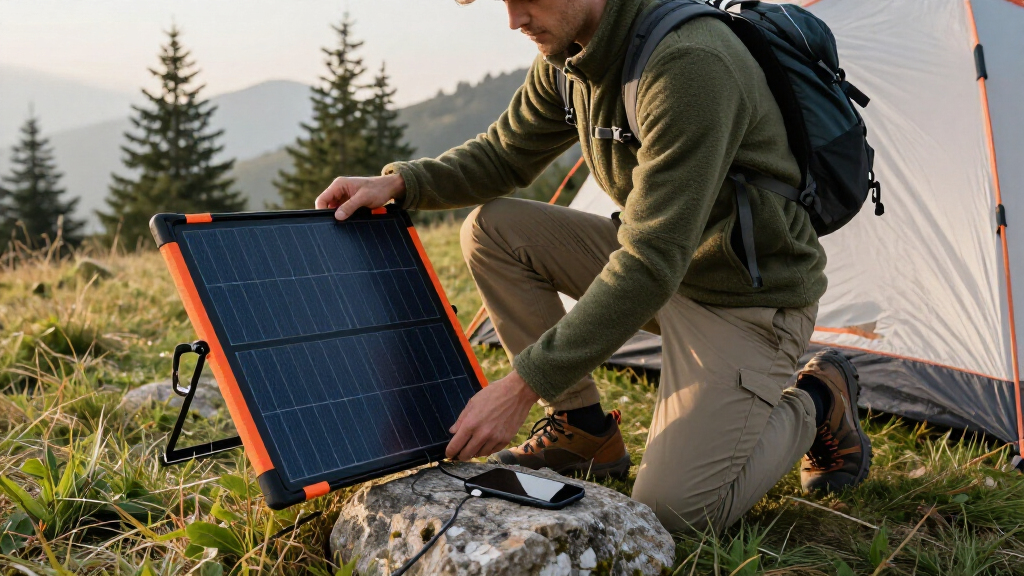
For most camping trips, I’d choose the Jackery Explorer 300 as the best overall pick for its 292Wh capacity and 300W AC output, while the Daran 89.6Wh LiFePO4 suits campers who want a compact station with a long-life battery chemistry. The BLAVOR 10,000mAh power bank is a simpler fit for phone-only charging and lighter packs. The main tradeoff is between portable size and useful capacity: small banks are easy to carry but limited, while power stations can run more gear and take up more space. Built-in solar panels on small banks also tend to be better as backup charging than as a reliable way to refill them quickly. Read on for how all 15 options compare and which type makes sense for your campsite.

Get travel and outdoor gear delivered free — and shop member deals
- Fast, free delivery on millions of items
- Access to Prime Big Deal Days deals on October 6–7
- Prime Video, Amazon Music and more included
Complete the kit


Key Takeaways
- The Jackery Explorer 300 leads for mixed campsite gear: its 292Wh capacity and 300W AC output give it more flexibility than the 88Wh and 89.6Wh stations, at the cost of extra weight and bulk.
- Solar panels bundled with a power station change the equation: the ZeroKor’s 60W panel and Jackery’s 40W panel offer a more practical solar setup than relying on the tiny panels built into power banks.
- Small solar power banks are mainly phone backups: the BLAVOR 10,000mAh options prioritize pocketable charging, but their built-in solar charging is unlikely to replace a wall or larger panel recharge on a trip.
- Capacity claims need context: 40,000–50,000mAh power banks can sound like station-level power, but their USB-focused output and lack of AC outlets limit what they can run compared with even compact power stations.
- Battery chemistry and output separate the compact stations: the Daran’s LiFePO4 chemistry may appeal to frequent users, while the MARBERO and HOWEASY 88Wh models suit modest loads; check each device’s port output before packing.
| MARBERO M82 Portable Power Station, 88Wh |  | Best for Lightweight, Multi-Device Campsites | Battery capacity: 88Wh | Output wattage: 80W | Surge wattage: 120W | VIEW LATEST PRICE | See Our Full Breakdown |
| ZeroKor 300W Portable Power Station with 60W Solar Panel | 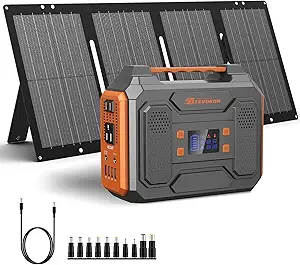 | Best Solar Bundle for Beginners | Maximum station output: 300W | Included solar panel: 60W monocrystalline | Panel conversion efficiency: 20.5% | VIEW LATEST PRICE | See Our Full Breakdown |
| BLAVOR 10,000mAh Solar Power Bank with Wireless Charging |  | Best Compact Phone Backup | Battery capacity: 10,000mAh | USB-C output: Up to 20W | Wireless charging: Qi | VIEW LATEST PRICE | See Our Full Breakdown |
| BLAVOR 20,000mAh Solar Power Bank with Wireless Charging |  | Best for Charging a Group’s Small Devices | Battery capacity: 20,000mAh | Charging output: 20W | Total USB ports: 3 | VIEW LATEST PRICE | See Our Full Breakdown |
| Jackery Explorer 300 Portable Power Station, 292Wh |  | Best for Longer Trips and Higher Capacity | Capacity: 292Wh | Peak surge: 600W | AC outlets: 2 | VIEW LATEST PRICE | See Our Full Breakdown |
| SOARAISE 48000mAh Solar Power Bank with 4 Built-in Cables and Wireless Charging |  | Best for Groups | Battery capacity: 48,000mAh | Battery type: Lithium polymer | Solar panels: 4 | VIEW LATEST PRICE | See Our Full Breakdown |
| BLASOUL Solar Power Bank, 49800mAh Wireless Portable Charger with 4 Built-in Cables, 22.5W Fast Charging |  | Best for Rough Weather | Battery capacity: 49,800mAh | Battery type: Lithium polymer | Maximum fast charging output: 22.5W | VIEW LATEST PRICE | See Our Full Breakdown |
| FEELLE Solar Power Bank 50000mAh Magnetic Portable Charger with Hand Crank |  | Best Emergency Backup | Battery capacity: 50,000mAh | Battery type: Lithium polymer | Wireless charging: Magnetic, 15W maximum | VIEW LATEST PRICE | See Our Full Breakdown |
| Daran 89.6Wh LiFePO4 Portable Power Station, 100W |  | Best Compact Power Station | Battery capacity: 89.6Wh | Battery chemistry: LiFePO4 | Weight: 2.54 lbs | VIEW LATEST PRICE | See Our Full Breakdown |
| Portable Power Station, 300W (600W Surge), 192Wh |  | Best for Higher-Demand Camp Gear | Battery capacity: 192Wh | Battery chemistry: LiFePO4 | Surge output: 600W | VIEW LATEST PRICE | See Our Full Breakdown |
| BLAVOR 10,000mAh Solar Power Bank with Portable Wireless Charging |  | Best for Quick Phone Top-Ups | Capacity: 10,000mAh | USB-C output: 20W fast charging | Wireless charging: Yes | VIEW LATEST PRICE | See Our Full Breakdown |
| HOWEASY 88Wh Portable Power Station, 120W (240W Peak) Solar Generator |  | Best Compact Power Station for Small Gear | Capacity: 88Wh | Continuous output: 120W | Peak output: 240W | VIEW LATEST PRICE | See Our Full Breakdown |
| MINRISE 40,000mAh Solar Power Bank with 20W PD Fast Charging |  | Best High-Capacity Power Bank | Battery capacity: 40,000mAh | USB-C output: 20W | Solar panel: 1.8W | VIEW LATEST PRICE | See Our Full Breakdown |
| BLAVOR Solar Power Bank 10,000mAh Portable Wireless Charger |  | Best for Wireless Charging at Camp | Capacity: 10,000mAh | USB-C output: 20W fast charging | Wireless charging: Yes | VIEW LATEST PRICE | See Our Full Breakdown |
| Jackery Explorer 300 Solar Generator with 40W Solar Panel, 292Wh, 300W AC |  | Best Premium Solar Setup | Capacity: 292Wh | AC output: 300W | Peak surge: 600W | VIEW LATEST PRICE | See Our Full Breakdown |
| portable solar chargers for camping | Battery capacity | Weight |
|---|---|---|
| MARBERO M82 Portable Power Sta | 88Wh | 3.2 lbs |
| ZeroKor 300W Portable Power St | — | — |
| BLAVOR 10,000mAh Solar Power B | 10,000mAh | 9.3 oz |
| BLAVOR 20,000mAh Solar Power B | 20,000mAh | — |
| Jackery Explorer 300 Portable | — | 7.1 lbs |
| SOARAISE 48000mAh Solar Power | 48,000mAh | — |
| BLASOUL Solar Power Bank | 49,800mAh | — |
| FEELLE Solar Power Bank 50000m | 50,000mAh | — |
| Daran 89.6Wh LiFePO4 Portable | 89.6Wh | 2.54 lbs |
| Portable Power Station | 192Wh | 8.8 lbs |
| BLAVOR 10,000mAh Solar Power B | — | — |
| HOWEASY 88Wh Portable Power St | — | 2.3 lbs |
| MINRISE 40,000mAh Solar Power | 40,000mAh | 1.1 lbs |
| BLAVOR Solar Power Bank 10,000 | — | — |
| Jackery Explorer 300 Solar Gen | — | 7.5 lbs |
More Details on Our Top Picks
MARBERO M82 Portable Power Station, 88Wh
The MARBERO M82 suits campers who want a small power hub for phones, lights, and other modest electronics. At 3.2 pounds with eight output ports, it is easier to pack than the Jackery Explorer 300, though its 88Wh capacity gives you much less stored energy for a longer trip. Its 80W output covers low-draw devices, but rules out many appliances that a larger station might handle. The M82 can recharge while powering devices, which helps when you have intermittent access to a compatible solar panel or wall adapter. That panel is sold separately, so it is less ready for off-grid use than the ZeroKor bundle, which includes a 60W panel. I’d choose the M82 for compact charging and built-in light, not as a high-capacity camp power source.
Pros:- Eight ports let several small devices share one power station.
- Compact 3.2-pound design is easier to carry than the Jackery Explorer 300.
- Pass-through charging allows devices to draw power while the station recharges.
- Three-level LED light includes an SOS mode.
Cons:- The 88Wh capacity is limited for multi-day trips or frequent device charging.
- 80W output cannot support many higher-power appliances.
- Compatible solar panels are sold separately.
Best for: Light-packers on short camping trips who need to charge several phones or small electronics and want a built-in emergency light.
Not ideal for: Campers relying on solar out of the box or powering higher-draw appliances, since the panel is separate and output is limited to 80W.
- Battery capacity:88Wh
- Output wattage:80W
- Surge wattage:120W
- Output ports:8
- Weight:3.2 lbs
- Dimensions:6.5 x 4.6 x 3.1 in
- Solar compatibility:MARBERO 30W or 60W panels
- Included accessories:Power adapter, cigarette lighter output cable, user manual
Our verdict“Choose the M82 for compact, low-draw campsite charging with built-in lighting; pick the ZeroKor if you want a solar panel included.”
ZeroKor 300W Portable Power Station with 60W Solar Panel
The ZeroKor 300W bundle is the most straightforward entry here for campers who want solar charging hardware in the same kit: its 60W monocrystalline panel is included, while the panels for the MARBERO M82 and Jackery Explorer 300 are separate purchases. The station offers AC, DC, and USB outputs, so it can serve a broader mix of campsite electronics than a phone-focused power bank. Its 300W maximum output still sets a firm ceiling, and the supplied data does not state battery capacity, which makes it hard to judge how long it can run devices between charges. The foldable panel adds convenience, but its junction box is not waterproof; I’d keep it protected from rain and damp ground. This is a practical starter kit if bundled solar matters more than a clearly stated energy reserve.
Pros:- Includes a 60W monocrystalline solar panel.
- AC, DC, and USB outputs support a range of small campsite devices.
- Can recharge from an AC outlet, a car port, or compatible solar input.
- Flashlight offers reading and SOS modes.
Cons:- Battery capacity is not specified in the provided product data.
- The 300W maximum output excludes devices with higher draw.
- The panel junction box is not waterproof.
Best for: First-time solar campers who want a foldable panel and a power station together for phones, lights, and modest AC devices.
Not ideal for: Campers who need a known battery capacity for planning multi-day power, or who may leave the panel exposed to rain.
- Maximum station output:300W
- Included solar panel:60W monocrystalline
- Panel conversion efficiency:20.5%
- AC outlets:2, up to 300W
- USB ports:3 x 5V/3A USB-A; 1 quick-charge USB port
- DC output:9V–12.6V, up to 10A
- Recharge options:AC outlet, 12V car port, or 13V–23V DC5521 solar input
- Included accessories:60W solar panel kit, AC adapter, cigarette lighter adapter, car charging cable, 2 user manuals
Our verdict“Pick the ZeroKor if you want a ready-to-use solar bundle and can work within its 300W ceiling and unspecified battery capacity.”
BLAVOR 10,000mAh Solar Power Bank with Wireless Charging
For a camper carrying a phone power bank rather than a campsite power station, the BLAVOR 10,000mAh is the smallest, simplest option in this group. Its 9.3-ounce weight and IPX5 water resistance make it easier to keep close on a hike than the MARBERO M82 or Jackery Explorer 300. Qi charging and a 20W USB-C output give you flexible ways to top up a phone, and three ports can serve multiple small devices. The tradeoff is limited stored energy: it cannot replace a larger station for a group or extended trip. Although it is described as a solar power bank, the provided data does not specify solar charging performance, so I would treat solar input as uncertain and plan around its stated battery and USB charging instead.
Pros:- Lightweight 9.3-ounce design suits day hikes and compact kits.
- Qi wireless charging and USB-C output up to 20W offer flexible phone charging.
- Can charge up to three devices at once.
- IPX5 water resistance plus dustproof and shockproof design suits outdoor carry.
Cons:- 10,000mAh capacity is limited for extended trips or several users.
- Solar charging performance is not specified.
- The stated battery charge time is about seven hours.
Best for: Solo campers and day hikers who want a lightweight, water-resistant backup for a phone and a few small USB devices.
Not ideal for: Groups, multi-day campers, or anyone counting on the bank to recharge reliably from sunlight, since capacity is modest and solar performance is unspecified.
- Battery capacity:10,000mAh
- USB-C output:Up to 20W
- Wireless charging:Qi
- Number of ports:3
- Water resistance:IPX5
- Weight:9.3 oz
- Dimensions:5.91 x 3.07 x 0.87 in
- Battery charge time:About 7 hours
Our verdict“Choose this BLAVOR for lightweight phone backup on short outings, while longer trips call for a power station such as the Jackery Explorer 300.”
BLAVOR 20,000mAh Solar Power Bank with Wireless Charging
The BLAVOR 20,000mAh is aimed at campers juggling several phones and accessories: its built-in cables, three USB ports, and wireless charging are listed as supporting up to six devices. That gives it a group-friendly advantage over the 10,000mAh BLAVOR, while its power-bank format stays simpler to pack than a station such as the Jackery Explorer 300. Its 20W output is suited to phones and similar electronics, not to appliances that need AC power. The outdoor extras—camping light, flashlight, compass, and thermometer—can reduce small gear needs, but the product data does not give a solar charging rate or panel output. I’d see “solar” as a secondary feature until you confirm its charging behavior; for dependable campsite energy planning, the Jackery’s stated capacity and panel charging time are more informative.
Pros:- Can charge up to six devices using built-in cables, USB ports, and wireless charging.
- 20W USB-C fast charging supports compatible phones.
- Outdoor lighting, compass, and thermometer add campsite utility.
- Designed with water, shock, and dust resistance.
Cons:- 20W output is not suitable for higher-draw appliances.
- Solar charging speed is not specified.
- 20,000mAh remains a power-bank capacity rather than a power-station reserve.
Best for: Small camping groups that need to top up several phones, watches, and USB accessories from one compact power bank.
Not ideal for: Campers who need to run AC appliances or depend on predictable solar replenishment, since output and solar speed are limited or unspecified.
- Battery capacity:20,000mAh
- Charging output:20W
- Total USB ports:3
- Built-in cables:2 USB-C, 1 iOS, 1 USB-A
- Wireless charging:Qi; compatible with phones and Apple Watch
- Devices supported simultaneously:Up to 6
- Protection:Overcharge, over-discharge, over-current, short circuit
- Outdoor features:Flashlight, camping light, compass, thermometer, carabiner, rope
Our verdict“Choose this BLAVOR to share phone and accessory charging among several campers; choose the Jackery Explorer 300 for higher capacity and AC output.”
Jackery Explorer 300 Portable Power Station, 292Wh
The Jackery Explorer 300 is the strongest fit here when a camping trip needs more stored energy and AC outlets, rather than just phone charging. Its 292Wh capacity is far above the MARBERO M82’s 88Wh and gives campers more room to run several small devices between recharges. The two AC outlets and 100W USB-C PD port also make it more versatile than either BLAVOR power bank. At 7.1 pounds, however, it is a larger pack item than those banks, and its 300W continuous output still excludes many high-draw appliances. Solar charging can reach 80% in about 2.8 hours with a compatible 100W panel, but that panel is not included. I’d rank it highest for energy capacity, with the ZeroKor a better pick for buyers who want a panel in the box.
Pros:- 292Wh capacity provides substantially more stored energy than the MARBERO M82.
- Two AC outlets and a 100W USB-C PD port support a broad range of small electronics.
- LiFePO4 battery is rated for over 4,000 charge cycles before reaching 70% capacity.
- Can charge up to six devices through its multiple output options.
Cons:- Solar panel is not included.
- 300W continuous output may not run higher-draw appliances.
- At 7.1 pounds, it is heavier than either BLAVOR power bank.
Best for: Campers on multi-day trips who need a larger energy reserve, AC outlets, and USB-C charging for several small devices.
Not ideal for: Ultralight hikers or buyers seeking a complete solar kit, since it weighs 7.1 pounds and the solar panel is sold separately.
- Capacity:292Wh
- Peak surge:600W
- AC outlets:2
- USB-C port:100W PD
- Battery chemistry:LiFePO4
- Solar charge time:About 80% in 2.8 hours with a 100W panel
- Weight:7.1 lbs
Our verdict“Choose the Explorer 300 for a larger campsite energy reserve and AC output, or the ZeroKor if an included solar panel matters more.”
SOARAISE 48000mAh Solar Power Bank with 4 Built-in Cables and Wireless Charging
The SOARAISE suits camping groups that want one shared phone-charging hub: its four built-in cables, wireless pad, and ports let it connect to as many as seven devices at once. That’s a more cable-free setup than the Daran 89.6Wh Portable Power Station, which offers more varied outputs for small electronics but is a separate, heavier power-station format. The SOARAISE’s four solar panels are intended to collect more sunlight than a single-panel power bank, though actual charging still depends on sun and placement; I wouldn’t treat them as a dependable way to refill its 48,000mAh battery during a short trip. Its large capacity helps a group share phone charging over several days, but also makes it less appealing to carry on long hikes. Choose it for a campsite with several phones, and skip it if low pack weight is the priority.
Pros:- 48,000mAh capacity can provide multiple phone charges between recharges.
- Four built-in cable types reduce the loose accessories a group needs to pack.
- Wireless charging adds another way to connect a compatible phone.
- Four solar panels offer more collection area than a single-panel power bank.
Cons:- The large battery capacity likely makes the unit bulky and heavy for hiking.
- Solar charging depends on strong sunlight and may not replenish the battery quickly.
- Its USB-C charging is listed at 5V/3A, without a higher-wattage output specified.
Best for: Camping groups with several phones and mixed charging cables who want to share one power bank at a fixed campsite.
Not ideal for: Backpackers who need a lightweight charger or campers relying on solar panels to quickly refill a large battery.
- Battery capacity:48,000mAh
- Battery type:Lithium polymer
- Solar panels:4
- Built-in cables:USB-C, Lightning, USB-A, Micro
- Output ports:2 USB-A; 1 USB-C input/output
- Wireless charging:Yes
- Maximum simultaneous devices:7
- USB-C charging:5V/3A
Our verdict“Pick the SOARAISE for shared campsite phone charging across several devices, provided its size and sun-dependent recharging suit your trip.”
BLASOUL Solar Power Bank, 49800mAh Wireless Portable Charger with 4 Built-in Cables, 22.5W Fast Charging
The IP65-rated build gives the BLASOUL a camping advantage when dust, splashes, or rough handling are part of the plan. Its 22.5W fast charging and 15W wireless charging also make it a more capable phone charger on paper than the SOARAISE, whose listed USB-C output is 5V/3A. Four built-in cables, including three outputs and one input, reduce the cable bundle in a shared camp kit. The tradeoff is familiar for a power bank near 50,000mAh: it is likely to feel bulky on a hike, and solar charging is described as slow compared with adapter recharging. The flashlight’s SOS and strobe modes add practical emergency signaling, but don’t turn it into a general-purpose power station for AC appliances. I’d choose it for rugged phone charging, not for lightweight travel.
Pros:- IP65 water and dust resistance suits exposed outdoor use.
- 22.5W maximum fast charging is specified alongside PD 3.0 and QC 3.0.
- Four built-in cables cover several common phone connections and charging input.
- Flashlight includes steady, SOS, and strobe modes.
Cons:- The 49,800mAh capacity likely makes it heavy and bulky for a long hike.
- Solar charging is slow compared with recharging from an adapter.
- The listed outputs are aimed at personal electronics rather than AC-powered camping equipment.
Best for: Campers who want a high-capacity phone charger with dust and water resistance for exposed campsites and variable conditions.
Not ideal for: Lightweight backpackers or campers who need AC outlets to run appliances or recharge larger gear.
- Battery capacity:49,800mAh
- Battery type:Lithium polymer
- Maximum fast charging output:22.5W
- Wireless charging:15W maximum
- Built-in cables:iOS, Type-C, Micro output; USB-A input
- Fast charging protocols:PD 3.0, QC 3.0
- Water and dust resistance:IP65
- Flashlight modes:Steady, SOS, strobe
Our verdict“Choose the BLASOUL if weather-resistant phone charging and emergency light matter more than keeping your pack light.”
FEELLE Solar Power Bank 50000mAh Magnetic Portable Charger with Hand Crank
With a hand crank, compass, and SOS flashlight, the FEELLE is built around backup options when a campsite loses access to ordinary charging. The crank is best treated as an emergency measure, not a practical way to refill its 50,000mAh battery, and solar input remains dependent on usable sunlight. For routine charging, magnetic wireless charging can make phone placement simpler than the cable-heavy SOARAISE, though thick cases may weaken the connection. The FEELLE also supports up to six devices through its built-in cables and ports, one fewer than the SOARAISE’s stated seven-device capacity. That makes it a sensible contingency tool for campers who value redundant features, but its large capacity and rugged design are a poor fit for minimal-pack trips. I’d bring it to a fixed camp or outage kit, rather than count on it as a hiker’s compact charger.
Pros:- Magnetic wireless charging can align compatible phones without a cable.
- Hand crank provides an additional emergency charging option.
- Built-in cables and ports support up to six devices at once.
- Compass, flashlight, SOS and strobe modes add campsite utility.
Cons:- Hand-crank charging is intended for emergency backup rather than fast replenishment.
- Solar charging speed depends on available sunlight.
- Thick phone cases may weaken magnetic attachment and wireless charging.
Best for: Car campers and emergency-kit builders who want several charging methods and basic signaling tools in one rugged unit.
Not ideal for: Minimalist hikers seeking a light power bank or anyone expecting the hand crank or solar panels to quickly refill the battery.
- Battery capacity:50,000mAh
- Battery type:Lithium polymer
- Wireless charging:Magnetic, 15W maximum
- Power sources:Solar, hand crank, wired recharge
- Ports:USB-C input/output, USB-A output, Micro-USB input
- Built-in cables:USB-C, phone cable, Micro-USB, USB-A
- Simultaneous device support:Up to 6 devices
- Special features:Compass, LED flashlight with SOS and strobe, hook design
Our verdict“Take the FEELLE for a fixed campsite or emergency kit where backup features matter more than weight and fast recharging.”
Daran 89.6Wh LiFePO4 Portable Power Station, 100W
The Daran is the most useful fit here when camping power needs extend beyond phones but a full-size station would be excessive. At 2.54 pounds, it pairs a compact footprint with seven outputs, including two AC outlets and USB-C ports, which gives it more connection options than the SOARAISE phone-focused power bank. Its 89.6Wh LiFePO4 battery and 100W maximum output suit small electronics and compatible low-draw devices; check appliance requirements before packing, since equipment above that limit is out of scope. Unlike the BLASOUL, it does not offer a built-in solar panel, and an optional solar panel is not included. That adds gear and planning for off-grid trips. The fanless design keeps operation quiet at camp, while its limited capacity means it works best for a short list of essentials rather than powering a whole campsite.
Pros:- At 2.54 pounds, it is light for a power station with AC outlets.
- Seven outputs cover AC, USB, and DC devices.
- LiFePO4 chemistry is rated for more than 3,500 cycles.
- Fanless operation avoids adding fan noise at camp.
Cons:- The 100W maximum output excludes higher-draw appliances.
- The optional solar panel and cable are not included.
- Its 89.6Wh capacity limits how long it can supply multiple devices.
Best for: Campers who want AC and USB outputs for small electronics in a lightweight station and can bring their own charging source.
Not ideal for: Campers who need to run devices over 100W, want an included solar panel, or need a high-capacity station for multiple days of power.
- Battery capacity:89.6Wh
- Battery chemistry:LiFePO4
- Weight:2.54 lbs
- Dimensions:6.5 × 3.3 × 4 inches
- Maximum output:100W
- Peak output:200W
- Output ports:7
- Charging methods:AC wall outlet, USB-C PD, car, optional solar
Our verdict“Choose the Daran for quiet, lightweight power to small AC and USB devices when you can manage its 100W limit and provide your own recharge source.”
Portable Power Station, 300W (600W Surge), 192Wh
For campers bringing gear with a higher power draw, this station’s 300W rated output and 192Wh capacity offer more headroom than the Daran’s 100W unit. Two AC outlets, a 65W USB-C port, USB-A ports, and a car outlet let several devices connect at once, while the LiFePO4 battery is rated for 4,000+ cycles. The added output and capacity come with a clear packing tradeoff: at 8.8 pounds, it is better suited to a car campsite than a backpack. Its UPS function and short AC recharge time may help when using it at a base camp, but neither removes the need to plan power use. Solar charging needs a separate panel, and appliances above 300W remain unsuitable even with the 600W surge rating.
Pros:- 192Wh capacity and 300W rated output exceed the Daran’s capacity and 100W limit.
- Multiple AC, USB-C, USB-A, and car outputs support varied camp electronics.
- LiFePO4 battery is rated for 4,000+ charge cycles.
- UPS transfer time is specified at 10ms or less.
Cons:- At 8.8 pounds, it is intended for car camping rather than long hikes.
- The compatible solar panel is sold separately.
- Devices requiring more than 300W exceed its rated output.
Best for: Car campers who need more output for compatible camp gear and want several AC, USB, and car connections from one station.
Not ideal for: Backpackers, campers with appliances rated above 300W, or anyone expecting solar charging equipment to come in the box.
- Battery capacity:192Wh
- Battery chemistry:LiFePO4
- Surge output:600W
- Battery cycle life:4,000+ cycles
- Weight:8.8 lbs
- Outputs:2 AC outlets, 65W USB-C, 2 USB-A, car outlet
- Solar charging:Compatible panel sold separately
Our verdict“Pick this station for car camping with compatible higher-demand gear, and bring a separate solar panel if you need off-grid recharging.”
BLAVOR 10,000mAh Solar Power Bank with Portable Wireless Charging
Compact size, 20W USB-C charging, and outdoor extras make this BLAVOR a practical choice when camping means carrying a phone, headlamp backup, and little else. Its 10,000mAh capacity and ability to charge three devices suit short trips or a day hike, while the IPX5-rated build adds protection from splashes. Compared with the much larger MINRISE 40,000mAh, it is easier to pack but offers far less stored energy for multiple days off-grid. Wireless charging and dual flashlights add flexibility, though wired charging is the better bet for speed and efficiency. The built-in solar feature is best treated as an emergency trickle-charge option; a power bank this small still needs a reliable outlet or car charge before a longer trip.
Pros:- 20W USB-C output supports fast charging for compatible phones.
- Compact 10,000mAh capacity is easy to carry on day trips.
- Can charge up to three devices at once.
- IPX5 protection, dual flashlights, and a compass carabiner add campsite utility.
Cons:- Solar recharging is slow compared with charging from an outlet.
- 10,000mAh capacity may not cover repeated device charging on longer trips.
- Wireless charging is less efficient than a cable.
Best for: Solo campers and day hikers who want a compact phone backup with a flashlight and wireless charging.
Not ideal for: Multi-day campers who need to recharge several phones repeatedly or run larger devices away from outlets.
- Capacity:10,000mAh
- USB-C output:20W fast charging
- Wireless charging:Yes
- Simultaneous charging:Up to 3 devices
- Water resistance:IPX5
- Battery type:Lithium-cobalt
- Additional features:Dual flashlights and compass carabiner
Our verdict“Choose this BLAVOR for short camping trips where easy phone top-ups and compact outdoor features matter more than high capacity.”
HOWEASY 88Wh Portable Power Station, 120W (240W Peak) Solar Generator
For campers who want AC outlets without carrying a full-size station, the 2.3-pound HOWEASY packs 88Wh into a small enclosure and offers eight output ports. That gives it a different job from the BLAVOR 10,000mAh: the BLAVOR is a simpler phone backup, while this unit can also power compatible small AC devices and serve several USB users at once. Its 120W continuous output sets a firm ceiling, so it is suited to lights, phones, and modest electronics rather than cooking gear or larger appliances. Solar, car, and wall recharging provide useful flexibility, but the solar panel is not included, adding bulk to the setup if you plan to recharge at camp. The LED display and SOS light help with nighttime use and emergency signaling.
Pros:- Eight ports include two AC sockets, USB-C, USB-A, and DC outputs.
- Light 2.3-pound design with a hidden handle is easy to stow in a car.
- Can recharge from an outlet, car socket, or a compatible solar panel.
- Built-in display and LED light with SOS mode support campsite use.
Cons:- Solar panel is not included.
- 120W continuous output limits the devices it can run.
- 88Wh capacity is modest for extended off-grid power.
Best for: Car campers who need AC and USB ports for phones, lights, and other small electronics in a compact package.
Not ideal for: Backpackers prioritizing minimum weight or campers who need to run appliances above 120W.
- Capacity:88Wh
- Continuous output:120W
- Peak output:240W
- Output ports:8
- AC sockets:2 (110V)
- USB-C output:18W
- Weight:2.3 lbs
- Dimensions:6.6 x 4 x 3 inches
Our verdict“Pick the HOWEASY if you want a very compact power station for small electronics and can work within its 120W output limit.”
MINRISE 40,000mAh Solar Power Bank with 20W PD Fast Charging
The MINRISE stands out for campers who want more stored phone-charging capacity without moving up to a box-style power station. Its 40,000mAh rating, 20W USB-C output, and built-in cables make it easier to share power among compatible phones and tablets than the 10,000mAh BLAVOR models. The tradeoff is weight: at 1.1 pounds, it is a noticeable addition to a backpack, and its many connectors do not replace the AC outlets found on the HOWEASY 88Wh. Dual flashlights and a rugged, drop-resistant body fit campsite use, but the 1.8W solar panel is only for emergency replenishment; the product data recommends an adapter for everyday charging. It makes most sense when capacity and cable convenience outweigh pack weight.
Pros:- 40,000mAh capacity provides a larger device-charging reserve than 10,000mAh banks.
- 20W USB-C output supports fast charging for compatible devices.
- Built-in Type-C, iOS, and Micro USB output cables reduce loose accessories.
- Dual flashlights and silicone corner protection suit outdoor carry.
Cons:- At 1.1 pounds, it is heavy for a phone-focused power bank.
- The 1.8W solar panel is intended for emergency backup, not routine recharging.
- It has no AC outlets for devices that need wall-style power.
Best for: Car campers or shared-device campers who want a large phone-and-tablet reserve with cables built in.
Not ideal for: Ultralight backpackers or anyone who expects its small solar panel to refill the battery quickly.
- Battery capacity:40,000mAh
- USB-C output:20W
- Solar panel:1.8W
- Ports:10
- Built-in cables:Type-C, iOS, and Micro USB output; USB-A input
- Weight:1.1 lbs
- Dimensions:6.67 x 3.35 x 1.22 inches
- Flashlights:2 LED lights; up to 25 hours
Our verdict“Choose the MINRISE when you need a substantial phone-and-tablet reserve and accept the extra weight and slow solar input.”
BLAVOR Solar Power Bank 10,000mAh Portable Wireless Charger
This BLAVOR is a close match for the B07FDXDB3W BLAVOR 10,000mAh: both combine 20W USB-C, wireless charging, a three-device limit, and outdoor-focused extras. Its clearest role is for campers who want to set a compatible phone on the bank instead of managing a cable around a tent or camp chair. The MINRISE 40,000mAh is the stronger fit for a longer trip with several devices, but it weighs more and is bulkier; this BLAVOR keeps the load small. That compactness also means less reserve, so it is better for a night or short outing than several days away from outlets. IPX5 protection, flashlights, and a compass carabiner are useful additions, while solar recharging remains too uncertain to serve as the main charging plan.
Pros:- 20W USB-C and wireless charging cover wired and cable-free phone top-ups.
- Can charge up to three devices simultaneously.
- IPX5-rated build is suited to splash-prone outdoor use.
- Dual flashlights and compass carabiner add practical campsite features.
Cons:- 10,000mAh capacity is limited for extended off-grid use.
- Solar charging speed varies with sunlight and is not a dependable primary source.
- Wireless charging can be less efficient than wired charging.
Best for: Short-trip campers with a wireless-charging phone who want a compact backup and minimal cable handling.
Not ideal for: Groups or multi-day campers who need a large shared power reserve or dependable solar replenishment.
- Capacity:10,000mAh
- USB-C output:20W fast charging
- Wireless charging:Yes
- Simultaneous charging:Up to 3 devices
- Water resistance:IPX5
- Battery type:Lithium-cobalt
- Material:Flame-retardant ABS and PC
- Additional features:Dual flashlights and compass carabiner
Our verdict“Choose this BLAVOR for short camps where wireless phone charging and a small rugged package are more useful than extra capacity.”
Jackery Explorer 300 Solar Generator with 40W Solar Panel, 292Wh, 300W AC
For campers bringing laptops, cameras, or a small drone, the Jackery offers the most capable setup in this group: 292Wh capacity, 300W AC output, and a 100W USB-C port, plus a 40W panel in the box. That is a substantial step up from the HOWEASY 88Wh, which is lighter but has less than a third of the stored energy and a lower output ceiling. The Jackery’s 7.5-pound weight is still manageable for car camping, though it is not a backpacking power bank. Its LiFePO4 chemistry is rated for 4,000-plus cycles to 70% capacity, favoring repeated use over time. The included panel reaches 80% in 7.5 hours under stated conditions, so cloudy weather or power-hungry devices can leave less charge than hoped.
Pros:- 292Wh capacity and 300W AC output support more demanding small devices than compact banks.
- 100W USB-C PD port suits compatible laptops and other high-draw USB-C gear.
- Includes a 40W solar panel for off-grid recharging.
- LiFePO4 battery is rated for 4,000-plus cycles to 70% capacity.
Cons:- At 7.5 pounds, it is too heavy for most backpacking setups.
- The included 40W panel is a relatively slow way to refill 292Wh.
- 300W continuous output cannot handle larger appliances.
Best for: Car campers and creators who need AC power and a strong USB-C connection for laptops, cameras, or drones.
Not ideal for: Backpackers, or campers who need to run appliances above 300W or recharge quickly from a small panel.
- Capacity:292Wh
- AC output:300W
- Peak surge:600W
- Battery chemistry:LiFePO4
- Charge cycles:4,000+ cycles to 70% capacity
- USB-C output:100W PD
- Weight:7.5 lbs
- Included solar panel:40W Air Solar Panel
- Solar charging time:80% in 7.5 hours with included panel
Our verdict“Choose the Jackery for car camping when you need higher-capacity AC and USB-C power with a panel included.”
How We Picked
I ranked these products around what matters at a campsite: usable capacity, output types, portability, charging options, and how clearly each one fits a trip. A station with AC outlets and several hundred watt-hours can serve more than phones, while a lightweight power bank is a better match for a small device load. I also separated products that include a dedicated solar panel from models with small built-in panels, since those setups serve different expectations for solar recharging.
The order reflects those differences rather than treating every high capacity figure as equal. The Jackery Explorer 300 earns the lead for its balance of capacity and AC output; compact stations follow for campers with smaller loads, and power banks rank by convenience and device-charging features. Tradeoffs such as weight, limited output, panel size, and unclear suitability for larger gear lower a product’s fit for general camping use.
Factors to Consider When Choosing Portable Solar Chargers For Camping
Before choosing, I’d work backward from the devices you plan to bring and the number of days between reliable recharging opportunities. A large capacity figure alone won’t tell you whether a charger can run your gear, recharge quickly from the sun, or fit comfortably in your pack.
Match Output to the Devices You’ll Bring
List each device, its wattage or charging method, and how often you’ll use it. Phones, headlamps, and small USB devices can often share a power bank, while laptops, camera batteries with AC chargers, and some camp appliances may call for a power station. Check both the total output and the rating of each port; a 300W AC limit still rules out devices that draw more than that. Surge ratings describe brief peaks and should not be treated as steady operating power. A common mistake is buying by battery capacity alone, then discovering the available ports cannot run the intended device.
Estimate Energy for the Whole Trip
Think in watt-hours and daily use, not just a battery’s milliamp-hour label. Milliamp-hour figures depend on voltage, so they are hard to compare directly between a USB power bank and a power station. Add the energy needs of your devices over a day, then leave room for conversion losses and less-than-ideal charging conditions. Multi-day trips without dependable sun call for more stored capacity or a way to recharge from a vehicle or outlet. If your needs are mostly emergency phone top-ups, carrying a large station can add bulk without giving you much practical benefit.
Treat Solar Recharging as Weather-Dependent
Solar output changes with cloud cover, season, shade, panel angle, and how long the panel stays in direct sun. A small panel built into a power bank is convenient for trickle charging, but it is not equivalent to a separate panel designed to collect more energy. Bundled panels make power stations more useful off-grid, though their rated output describes favorable conditions rather than a guaranteed daily recharge. Plan to place a panel in open sun while keeping the battery itself in a safer, shaded spot when possible. For trips where a dead battery would be a problem, carry a backup charging route instead of assuming the sun will refill it on schedule.
Balance Capacity Against What You’ll Carry
A power station can run more kinds of gear, but its weight and shape may be awkward on a hike from the trailhead to camp. A power bank is easier to put in a pocket or daypack, though it generally offers fewer output options and less stored energy. Separate the drive-in campsite from the backpacking leg when you choose: a heavier station may be comfortable at a car campsite but a poor fit when every ounce matters. Check the listed weight and dimensions, not just the word “portable.” If the charger will stay at a base camp, you can prioritize ports and capacity more heavily than packability.
Check Battery Chemistry, Care, and Trip Conditions
Battery chemistry can affect cycle life, weight, and how a unit handles repeated use, so it matters more to frequent campers than to someone packing occasional emergency backup. LiFePO4 models are often chosen for cycle longevity, but the specific product’s operating limits and charging guidance still matter. Keep electronics within the manufacturer’s stated temperature and moisture limits; a water-resistant phone bank is not the same as a weatherproof power station. Dust, condensation, and direct heat can complicate campsite use, especially when a unit sits outside during the day. Review the care instructions and protect ports from dirt before deciding that a rugged-looking case can handle any conditions.
Frequently Asked Questions
Can a small solar power bank recharge itself enough during a camping trip?
It may collect some charge in steady direct sun, but a small built-in panel is best treated as a backup feature. Shade, clouds, panel angle, and short daylight windows can sharply reduce energy collection. I’d charge the bank fully before leaving and use its solar surface to stretch that charge rather than plan around a full refill. If you need regular solar recharging for several devices, compare separate panel output and compatibility instead.
Should I choose a power bank or a portable power station for a weekend campsite?
Choose a power bank when your main loads are phones, earbuds, or other USB devices and keeping your pack light matters most. A power station makes more sense when you need AC outlets, want to charge larger gear, or are staying at a drive-in campsite where weight is less restrictive. The 88Wh and 89.6Wh stations in this roundup bridge part of that gap, but they still cannot match the Jackery 300’s capacity. Count your devices and charging sessions before deciding; “weekend” alone does not determine the right size.
Is a bundled solar panel worth carrying if the weather may be cloudy?
A bundled panel gives you a ready solar input and can help extend a station’s use when conditions cooperate. Cloud cover can reduce generation, so it should not be the only plan for keeping essential devices powered. Consider the panel’s output, how easily it can be positioned in sun, and whether its cable works with the station. For cloudy or shaded campsites, stored capacity and a vehicle or outlet recharge option may matter more than the panel’s headline wattage.
Can these camping chargers run a cooler, coffee maker, or other appliance?
Some power stations have AC outlets, but whether they can run an appliance depends on its continuous wattage, startup surge, and the station’s limits. The Jackery Explorer 300’s 300W AC rating rules out many high-draw appliances, even if the battery has enough energy to run a smaller device for a while. USB power banks are meant for compatible personal electronics and do not replace an AC power station. Check the appliance label and compare it with both the station’s output rating and capacity before packing it.
What should I prioritize for a backpacking trip rather than car camping?
For backpacking, weight, pack shape, and the minimum energy needed for essential devices usually matter more than AC outlets. A compact power bank is easier to carry, while a power station can become a burden unless you need its extra output. Solar charging also needs enough exposed daylight, which can be hard to get on shaded trails or short winter days. Estimate your phone and navigation use, then bring a capacity buffer that does not force you to carry gear you will not use.
Conclusion
I’d pick the Jackery Explorer 300 as the best overall option for campers who want a useful mix of capacity and AC output. For a more solar-ready station, the ZeroKor 300W with its 60W panel is a strong alternative; the Jackery Explorer 300 Solar Generator with 40W panel suits buyers who want a bundled setup from the same product line. The best value fit depends on your actual loads: the MARBERO M82 or HOWEASY 88Wh can suit modest station needs, while the BLAVOR 10,000mAh is a lighter choice for phone charging. Beginners can start with a simple USB power bank if they only need personal-device backup; frequent campers may prefer the Daran LiFePO4 station for its battery chemistry. For built-in cables and wireless charging, consider the SOARAISE or BLASOUL banks, but choose a dedicated panel or station when dependable off-grid energy is the priority.
Fall Picks
fall essentials
As an affiliate, we earn on qualifying purchases.