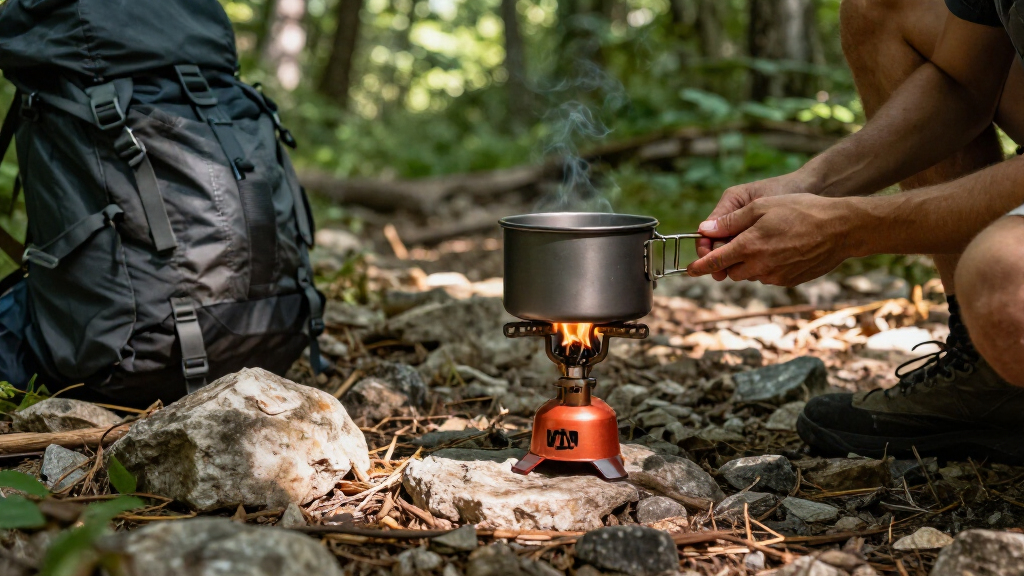

Portable camping stoves come down to one core tradeoff: cooking power versus packability. The Coleman Triton+ earns my best overall pick for its push-button InstaStart ignition, dual burners and proven campsite durability. For backpackers and minimalists, the GasOne GS-3400P is a standout dual-fuel option that folds into a hard carrying case, while the Chef Master butane stove is the easiest entry point for casual camp cooking. Budget two-burner units like the ODSD undercut the big names but demand more care with wind and simmering. Read on for the full breakdown of all 14 stoves.

Get travel and outdoor gear delivered free with Prime
- Fast, free delivery on millions of items
- Prime Video, Amazon Music and more included
- Member-only deals all year
Complete the kit


Key Takeaways
- Two-burner propane stoves (ODSD, Coleman Triton+, Triton) dominate for family camping, but the gap between the budget models and the Coleman units shows up mainly in ignition reliability and simmer control, not raw BTU output.
- Single-burner butane stoves are the value champions here — Chef Master and Gas One butane models deliver near two-burner cooking performance at a fraction of the size, but lose ground in cold weather and wind.
- Dual-fuel flexibility (propane or butane) on the GasOne GS-3400P and SHINESTAR proved to be the most underrated feature: it lets you switch fuel based on season and availability rather than being locked into one canister type.
- Included accessories — windshields, frying pans, coffee stands and carry bags on the ODSD and generic two-burner models — add real value for car campers but mean nothing for anyone counting ounces.
- The GasOne high-pressure single burner is a category outlier: it out-powers everything else in the lineup but belongs at cookouts and basecamps, not on a picnic table at a family campground.
| ODSD 2 Burner Camping Stove with Windshield |  | Best Complete Kit | BTU: 20,000 total | Number of Burners: 2 | Weight: 3.98 lbs | VIEW LATEST PRICE | See Our Full Breakdown |
| 2 Burner Propane Camping Stove, 20,000 BTU Dual Burners |  | Best for Group Cooking | BTU: 20,000 total | Number of Burners: 2 | Fuel Type: Propane | VIEW LATEST PRICE | See Our Full Breakdown |
| Chef Master Portable Butane Camping Stove |  | Best Single-Burner Powerhouse | Power: 15,000 BTU | Number of Burners: 1 | Fuel Type: Butane | VIEW LATEST PRICE | See Our Full Breakdown |
| Vivicreate 7000 BTU Portable Butane Camping Stove |  | Best Budget Pick | BTU: 7000 (8500 BTU heat output) | Number of Burners: 1 | Fuel Type: Butane | VIEW LATEST PRICE | See Our Full Breakdown |
| SHINESTAR 7800 BTU Dual Fuel Camping Stove |  | Best Fuel Flexibility | BTU: 7800 | Number of Burners: 1 | Fuel Compatibility: Butane canisters and propane tanks | VIEW LATEST PRICE | See Our Full Breakdown |
| GasOne 15,000 BTU Propane or Butane Portable Camping Stove with Carrying Case |  | Best Dual-Fuel Versatility | BTU Output: 15,000 | Fuel Compatibility: Propane and butane | Ignition System: Piezo-electric | VIEW LATEST PRICE | See Our Full Breakdown |
| Coleman Triton+ 2-Burner Propane Camping Stove with InstaStart |  | Best Overall for Group Camping | Total BTUs: 22,000 | Burners: 2, independently adjustable | Ignition: Push-button InstaStart | VIEW LATEST PRICE | See Our Full Breakdown |
| Coleman Classic 1-Burner Butane Stove, Portable with Carry Case |  | Best for Beginners | BTUs: 7,650 | Burn Time: Up to 1.25 hours per 8.8 oz. cylinder | Pan Capacity: Fits one 10-inch pan | VIEW LATEST PRICE | See Our Full Breakdown |
| Portable Camping Stove with Piezo Ignition, Lightweight and Wind-Resistant |  | Best for Backpacking | Material: High-precision aluminum alloy | Dimensions: 3.1 x 2 x 1.6 inches | Weight: 0.24 pounds | VIEW LATEST PRICE | See Our Full Breakdown |
| Coleman Triton 2-Burner Propane Stove, Portable Camping Cooktop |  | Best Value Two-Burner | Brand: Coleman | Burners: 2, independently adjustable | Total BTUs: 22,000 | VIEW LATEST PRICE | See Our Full Breakdown |
| Gas One GS-3400P Propane or Butane Portable Camping Stove with Carrying Case |  | Best Dual-Fuel Flexibility | Fuel Compatibility: Butane and Propane (both sold separately) | Fuel Capacity: 8 oz butane cartridge or 16.4 oz propane cylinder | Ignition: Automatic piezo-electric | VIEW LATEST PRICE | See Our Full Breakdown |
| 2 Burner Propane Camping Stove with Windshield, 20000 BTU Camp Stove |  | Best Wind-Ready Two-Burner Kit | BTU: 20,000 total | Number of Burners: 2 | Fuel Type: Propane | VIEW LATEST PRICE | See Our Full Breakdown |
| Gas One Portable Butane Camping Stove with Case (GS-1000G) |  | Best Budget Butane Pick | Model: Gas One GS-1000G | BTU: 7,650 | Fuel Type: Butane (8 oz canister, sold separately) | VIEW LATEST PRICE | See Our Full Breakdown |
| GasOne High Pressure Single Propane Burner with Heat Shield and Guard |  | Best for High-Heat Outdoor Cooking | Type: Single high-pressure propane burner | Fuel Type: Propane (tank not included) | Material: Heavy-duty metal with cast iron burner head | VIEW LATEST PRICE | See Our Full Breakdown |
| portable camping stove | Ignition | Fuel Type | Included |
|---|---|---|---|
| ODSD 2 Burner Camping Stove wi | — | Propane | Frying pan, coffee stand, windshield, carry bag |
| 2 Burner Propane Camping Stove | — | Propane | Stove, racks, gas pipe, storage bag, user manual |
| Chef Master Portable Butane Ca | Piezo electric | Butane | Hard-shell carrying case |
| Vivicreate 7000 BTU Portable B | Automatic | Butane | — |
| SHINESTAR 7800 BTU Dual Fuel C | Auto-ignition | — | Stove, carrying case (fuel and propane hose sold separately) |
| GasOne 15,000 BTU Propane or B | — | — | — |
| Coleman Triton+ 2-Burner Propa | Push-button InstaStart | — | — |
| Coleman Classic 1-Burner Butan | Instastart | — | — |
| Portable Camping Stove with Pi | Piezoelectric | — | — |
| Coleman Triton 2-Burner Propan | — | — | — |
| Gas One GS-3400P Propane or Bu | Automatic piezo-electric | — | Stove, carrying case |
| 2 Burner Propane Camping Stove | — | Propane | Stove, 2 racks, gas pipe, windproof shield, storage bag, user manual |
| Gas One Portable Butane Campin | Automatic piezo-type electric starter | Butane (8 oz canister, sold separately) | Stove, carrying case, user manual |
| GasOne High Pressure Single Pr | — | Propane (tank not included) | — |
More Details on Our Top Picks
ODSD 2 Burner Camping Stove with Windshield
Most two-burner stoves in this roundup ship as bare units, but this ODSD model comes as a full cooking kit — frying pan, coffee stand, windscreen, and carry bag all included. For campers who don’t want to assemble gear piece by piece, that bundled approach saves real money and packing headaches. The 20,000 BTU dual burners put it in the same power class as the 2 Burner Propane Camping Stove, yet it folds down smaller and weighs under four pounds. The integrated windshield is a genuine advantage over the Chef Master, whose guards help but don’t fully enclose the cooking area. The tradeoff: the compact footprint means tight burner spacing, so two large pots won’t fit comfortably side by side.
Pros:- Full accessory kit included — pan, coffee stand, windscreen, and bag
- 20,000 BTU across two independently adjustable burners
- Folds compactly and stores in the included carry bag
- 304 stainless steel construction resists rust and wipe-clean messes
Cons:- Propane only — no butane flexibility like the SHINESTAR
- Small folded dimensions limit simultaneous large-pot cooking
Best for: Car campers and family cooks who want a stove, pan, and windscreen in one purchase
Not ideal for: Backpackers — even at 3.98 lbs, a two-burner folding frame is too heavy and bulky to carry on foot
- BTU:20,000 total
- Number of Burners:2
- Weight:3.98 lbs
- Dimensions:10.63 × 9.06 × 5.12 in
- Material:304 stainless steel
- Fuel Type:Propane
- Included:Frying pan, coffee stand, windshield, carry bag
Our verdict“Buy this if you want a ready-to-cook two-burner setup straight out of the box rather than piecing together accessories.”
2 Burner Propane Camping Stove, 20,000 BTU Dual Burners
This stove’s pitch is capacity and durability over portability. Compared with the ODSD, it trades the bundled accessories for a more traditional camp-kitchen layout with racks and a standard propane hose — the format most tailgaters and base-camp cooks already know. The corrosion-resistant build and one-year warranty suggest it’s built to survive seasons of weather, not just a few weekends. Heat control across the two independent burners is precise enough for simmering a pot of chili on one side while boiling water on the other, something single-burner options like the Chef Master simply can’t do. The honest drawback is size: it’s built for the trunk, not the backpack, and unlike the ODSD it doesn’t fold, so it eats cargo space.
Pros:- Two independent burners with precise, separate heat control
- Corrosion-resistant materials suited to repeated outdoor exposure
- Padded carry bag and full travel kit included
- Backed by a 1-year warranty
Cons:- Bulkier than folding rivals like the ODSD, with no collapse for storage
- Requires a propane connection and canisters sold separately
Best for: Tailgaters and base-camp groups who cook real meals for several people at once
Not ideal for: Solo travelers and hikers — the rigid two-burner frame is too bulky to carry far
- BTU:20,000 total
- Number of Burners:2
- Fuel Type:Propane
- Material:Corrosion-resistant steel
- Included:Stove, racks, gas pipe, storage bag, user manual
- Warranty:1 year
Our verdict“This pick makes the most sense for groups who need two dishes cooking at once and don’t mind carrying the weight.”
Chef Master Portable Butane Camping Stove
Among single-burner stoves here, this Chef Master stands out for sheer output: 15,000 BTU doubles the Vivicreate’s rating and brings it close to two-burner territory in a box small enough for a tote. The Piezo ignition lights without matches, and the double wind guard keeps the flame steady where the Vivicreate’s open design would struggle in a breeze. Safety engineering is a real differentiator too — the pressure-sensing shut-off and in-line regulator add protection that budget butane stoves often skip. The hard-shell case protects it better than the soft bags included with most rivals. The compromise is fuel logistics: butane canisters aren’t included and are harder to find in some regions than propane, where the propane-native Coleman Triton line has the advantage.
Pros:- 15,000 BTU output rivals dual-burner stoves in a compact body
- Piezo electric ignition lights reliably without matches
- Double wind guard maintains flame in gusty conditions
- Hard-shell case offers more protection than soft carry bags
Cons:- Butane canisters not included and less widely stocked than propane
- Single burner prevents cooking two dishes simultaneously
Best for: Camp cooks and tailgaters who want two-burner-level heat from a single-burner footprint
Not ideal for: Cold-weather campers — butane performs poorly in freezing temperatures, making propane models the safer bet
- Power:15,000 BTU
- Number of Burners:1
- Fuel Type:Butane
- Ignition:Piezo electric
- Wind Protection:Double wind guard
- Safety Features:Pressure-sensing shut-off, in-line regulator
- Included:Hard-shell carrying case
Our verdict“Choose this if one powerful burner and serious safety features matter more than dual-burner flexibility.”
Vivicreate 7000 BTU Portable Butane Camping Stove
This is the simplest, most affordable entry point in the lineup, and it earns its place by covering the basics without extras you pay for elsewhere. Automatic ignition, a safety shut-off, and a locking mechanism are all here — features not always found at this tier. But the 7000 BTU burner is less than half the Chef Master’s output, so expect longer boil times and no searing power; it’s a water-and-soup stove, not a stir-fry stove. Unlike the SHINESTAR, it’s locked to butane only, with no propane adapter option. That said, compared with similar budget single-burners, the compact 4.45-inch profile and one-piece design make it the easiest thing in this roundup to toss in a crate and forget about until the next trip.
Pros:- Automatic ignition with no matches required
- Safety shut-off and locking mechanism included at an entry-level price
- Slim, lightweight one-piece design stores anywhere
- Simple setup with virtually no learning curve
Cons:- Lowest heat output in the lineup — expect slow cooking
- Butane-only fuel with no dual-fuel flexibility
Best for: Casual or occasional campers who need basic hot meals at the lowest possible complexity
Not ideal for: Impatient cooks and large groups — 7000 BTU means slow boiling and one pot at a time
- BTU:7000 (8500 BTU heat output)
- Number of Burners:1
- Fuel Type:Butane
- Dimensions:13.5 × 11 × 4.45 in
- Ignition:Automatic
- Safety Features:Auto shut-off, locking mechanism
- Color:Blue
Our verdict“A sensible choice if you cook simple meals occasionally and want to spend as little as possible to do it.”
SHINESTAR 7800 BTU Dual Fuel Camping Stove
The SHINESTAR’s dual-fuel compatibility is its whole argument, and it’s a good one: it runs on butane canisters or propane tanks, meaning you can burn whatever fuel your local store actually stocks. Neither the Chef Master (butane only) nor either two-burner option (propane only) offers that freedom, which matters most for RV travelers and remote-trip planners who can’t predict fuel availability. At 7800 BTU, output sits slightly above the Vivicreate but well below the Chef Master — fine for one-pot meals, limiting for big groups. The catch is that propane use requires a separately purchased adapter hose, so the flexibility isn’t free, and the cooktop accommodates only 6-to-10-inch pots, ruling out large family cookware.
Pros:- Runs on both butane canisters and propane tanks for fuel availability anywhere
- Auto-ignition eliminates the need for matches
- 4.15 lb compact body is easy to stash in an RV or car kit
- Quick-heating 7800 BTU burner for its size class
Cons:- Propane use requires a separate adapter hose sold on its own
- Limited to small and medium cookware up to 10 inches
Best for: RV campers and road-trippers who want to burn whichever fuel is available along the way
Not ideal for: Campers with large cookware — the 6 to 10 inch compatibility ceiling excludes bigger pots and pans
- BTU:7800
- Number of Burners:1
- Fuel Compatibility:Butane canisters and propane tanks
- Weight:4.15 lbs
- Ignition:Auto-ignition
- Cookware Compatibility:6 to 10 inches
- Included:Stove, carrying case (fuel and propane hose sold separately)
Our verdict“Pick this if fuel flexibility is your priority and you accept a modest single-burner output in exchange.”
GasOne 15,000 BTU Propane or Butane Portable Camping Stove with Carrying Case
This GasOne model stands out for one reason above all: it burns either propane or butane, which means one stove covers you whether the camp store only stocks one fuel or your emergency kit runs on the other. That flexibility is something the Coleman Triton+ simply cannot match, since it locks you into propane cylinders. The 15,000 BTU output sits below Coleman’s 22,000, but for boiling water and frying for two or three people it gets the job done with patience. The built-in Windblocker and pressure-sensing safety cutoff give it an edge over cheaper single-fuel butane stoves like the Chef Master, which lacks that dual-fuel escape hatch. The tradeoff is fuel logistics: nothing comes in the box, so budget for canisters on day one.
Pros:- Runs on both propane and butane for fuel flexibility
- 15,000 BTUs handles most two-to-three-person meals
- Pressure sensor and gas-flow cutoff add real safety margin
- Carrying case makes transport and storage tidy
Cons:- Fuel canisters not included, so it is not ready on arrival
- Lower output than the 22,000 BTU Coleman Triton models
Best for: Preppers and multi-trip campers who want fuel flexibility in one stove for both planned trips and emergency kits
Not ideal for: Anyone who wants to cook out of the box — fuel canisters are sold separately, and group cooks will want more than 15,000 BTUs
- BTU Output:15,000
- Fuel Compatibility:Propane and butane
- Ignition System:Piezo-electric
- Safety Features:Pressure sensor, gas flow cut-off
- Wind Protection:Heavy-duty Windblocker
- Includes:Carrying case
Our verdict“Buy this if you want one stove that adapts to whatever fuel you can find; skip it if you need maximum burner power.”
Coleman Triton+ 2-Burner Propane Camping Stove with InstaStart
If I were recommending a single stove for family campouts, this would be the default. Two independently adjustable burners and 22,000 total BTUs mean you can simmer a sauce on one side while boiling pasta on the other — something no single-burner pick in this roundup, like the GasOne dual-fuel, can do. Compared with the standard Coleman Triton, the Triton+ earns its premium through push-button InstaStart ignition and PerfectFlow pressure regulation, which keeps the flame steady as the cylinder empties or the temperature drops. The aluminized steel cooktop resists rust better than chrome grates, and the 3-year warranty signals Coleman expects it to last. The cost of that capability is bulk: this is a car-camping stove, not something you would strap to a backpack.
Pros:- 22,000 BTUs across two independently controlled burners
- InstaStart push-button ignition means no matches
- PerfectFlow technology keeps heat steady in cold weather and low fuel
- Rust-resistant aluminized steel cooktop with wind guards
Cons:- Roughly 1 hour of burn time on high per 16 oz. propane cylinder
- Bulkier and heavier than single-burner alternatives
Best for: Families and group campers who cook real multi-dish meals and drive to their campsite
Not ideal for: Backpackers and solo minimalists — the two-burner footprint and weight make it impractical to carry far
- Total BTUs:22,000
- Burners:2, independently adjustable
- Ignition:Push-button InstaStart
- Material:Aluminized steel cooktop
- Wind Guards:Yes
- Pan Compatibility:Fits 12-inch and 10-inch pans
- Warranty:3-year limited
Our verdict“The most complete cooking platform here for car-camping families, provided you carry spare propane.”
Coleman Classic 1-Burner Butane Stove, Portable with Carry Case
For a first camping stove, simplicity beats raw power, and that is where this Coleman Classic wins. Butane canisters click in without threading or hoses, the Instastart button lights it without matches, and the removable porcelain-coated grate wipes clean — three things that remove the fumbling from a newcomer’s first cookout. At 7,650 BTUs it is the gentlest stove in this batch, roughly half the output of the GasOne dual-fuel, so expect slower boils and plan simple one-pot meals. Burn time tops out around 1.25 hours per 8.8 oz. cylinder, which is adequate for a weekend of breakfasts but means packing spares. Unlike the backpacking-sized B0DFQ4JQT8, the included carry case and full-size pan support make it feel like a real kitchen stove, just smaller.
Pros:- Tool-free butane canister loading ideal for beginners
- Matchless Instastart ignition
- Removable porcelain-coated grate simplifies cleaning
- Lightweight, compact, and includes a carry case
Cons:- Lowest heat output in the lineup at 7,650 BTUs
- Butane cylinders must be purchased separately and burn through in about 1.25 hours
Best for: First-time campers and occasional picnickers who value easy setup and cleanup over raw power
Not ideal for: Impatient cooks and larger groups — 7,650 BTUs and single-pan capacity make multi-dish meals slow
- BTUs:7,650
- Burn Time:Up to 1.25 hours per 8.8 oz. cylinder
- Pan Capacity:Fits one 10-inch pan
- Ignition:Instastart
- Grate:Removable porcelain-coated
- Includes:Carry case
Our verdict“The least intimidating entry point into camp cooking — buy it for simplicity, not speed.”
Portable Camping Stove with Piezo Ignition, Lightweight and Wind-Resistant
At 0.24 pounds and roughly the size of a matchbox, this stove belongs in a different category than everything else here — it is the only true backpacking option in the batch. The aluminum alloy build and 3000W output bring serious heat for its size, and its 7/16 threaded fitting accepts butane, propane, or isobutane canisters, echoing the fuel flexibility of the GasOne dual-fuel in a pocketable format. The compromises are structural: the 8-inch maximum pot diameter rules out family-size cookware, and reviewers of this stove type note piezo igniters can fail, so carry a lighter as backup. Unlike the Coleman Classic, there is no carry case or built-in windscreen housing — wind resistance comes from burner design, which helps but does not replace a proper windbreak in exposed conditions.
Pros:- Featherweight at 0.24 pounds, packs to matchbox size
- Accepts butane, propane, and isobutane canisters
- 3000W output boils water quickly for its size
- Wind-resistant burner design performs in exposed campsites
Cons:- Supports pots only up to 8 inches in diameter
- Piezo igniter can be unreliable, so a backup lighter is wise
Best for: Thru-hikers and weight-conscious backpackers who count ounces and cook for one
Not ideal for: Car campers and families — the tiny pot support and single-flame design cannot handle real cookware or group meals
- Material:High-precision aluminum alloy
- Dimensions:3.1 x 2 x 1.6 inches
- Weight:0.24 pounds
- Heat Output:3000W
- Max Pot Diameter:8 inches
- Fuel Compatibility:7/16 threaded butane, propane, or isobutane mix
- Ignition:Piezoelectric
Our verdict“The only pick here that disappears into a pack — buy it for the trail, not the campground kitchen.”
Coleman Triton 2-Burner Propane Stove, Portable Camping Cooktop
The standard Triton delivers the same 22,000 BTUs and dual independent burners as its Triton+ sibling, minus the push-button ignition and pressure regulation — and that is a tradeoff many campers will happily make to save money. You light it with a match, and the flame may run slightly less evenly as a cylinder drains, but the wind guards and chrome-plated grate carry over intact, as does the 3-year warranty. Compared with the third-party 20,000 BTU two-burners in this roundup, the Triton’s tighter pan fit (10- and 12-inch) and removable grate make cleanup after greasy breakfasts noticeably easier. Like every propane stove here, fuel is a separate purchase, and the roughly one-hour burn time on high per 16 oz. cylinder means a weekend of cooking demands multiple canisters.
Pros:- Full 22,000 BTU dual-burner output at a lower price than the Triton+
- Wind guards protect flames in breezy conditions
- Removable chrome-plated grate cleans up easily
- Backed by a 3-year limited warranty
Cons:- Match-lit, with no push-button ignition
- Consumes a 16 oz. cylinder in about an hour on high
Best for: Budget-minded families who want two-burner capability without paying for electronic ignition
Not ideal for: Anyone who wants matchless lighting or cold-weather pressure regulation — step up to the Triton+ for those
- Brand:Coleman
- Burners:2, independently adjustable
- Total BTUs:22,000
- Pan Compatibility:Fits 10-inch and 12-inch pans
- Burn Time:Up to 1 hour on high per 16 oz. cylinder
- Grate:Chrome-plated, removable
- Warranty:3-year limited
Our verdict“The smart spend for campers who will trade a match for savings and still get genuine two-burner performance.”
Gas One GS-3400P Propane or Butane Portable Camping Stove with Carrying Case
The GS-3400P’s dual-fuel design is what sets it apart in a lineup full of single-fuel options. Where the Gas One GS-1000G locks you into butane cartridges, this model runs on either butane or propane, which matters when a camp store is out of one fuel type or you’re building an emergency kit around whatever is available. The piezo-electric ignition fires reliably, and the pressure sensor with cartridge ejection adds a layer of safety rarely found at this size. Compared with the SHINESTAR 7800 BTU dual-fuel stove, the GS-3400P offers a similar flexibility pitch but with more robust safety engineering. The tradeoff: you’re buying fuel separately either way, and the stove is limited to 8 oz butane cartridges or 16.4 oz propane cylinders, so no big-tank cooking.
Pros:- Runs on both butane and propane for fuel flexibility
- Automatic piezo ignition — no matches needed
- Pressure sensor and cartridge ejection system for safety
- Carrying case included for transport and storage
Cons:- Fuel cartridges sold separately, adding to the real cost
- Limited to specific fuel sizes — no large propane tanks or bulk fuel
- Single burner limits you to one pot or pan at a time
Best for: Emergency preppers and campers who want to hedge against fuel shortages by running whichever canister is available
Not ideal for: Backpackers counting grams — the dual-fuel hardware and case make it heavier than minimalist butane-only stoves
- Fuel Compatibility:Butane and Propane (both sold separately)
- Fuel Capacity:8 oz butane cartridge or 16.4 oz propane cylinder
- Ignition:Automatic piezo-electric
- Safety Features:Pressure sensor, cartridge ejection system, gas flow cut-off
- Burners:1
- Included:Stove, carrying case
Our verdict“This pick makes the most sense for anyone who wants one stove that adapts to whatever fuel they can find, especially for emergency preparedness.”
2 Burner Propane Camping Stove with Windshield, 20000 BTU Camp Stove
This model competes directly with the Coleman Triton and the ODSD 2-Burner stove, and its edge is everything included in the box: racks, gas pipe, windproof shield, splash guard, and a padded carry bag. The 20,000 BTU dual burners let you boil pasta on one side while simmering sauce on the other — something no single-burner option here can do. The integrated windshield translates to real-world results: stable flames and faster boil times at exposed campsites, where the Coleman’s open design struggles in gusts. The tradeoff is portability. This is a car-camping and tailgating stove, not something you’d strap to a backpack, and it still needs a separate propane connection to run.
Pros:- 20,000 BTU across two burners for simultaneous cooking
- Windproof shield keeps flames stable in exposed conditions
- Corrosion-resistant coating stands up to outdoor wear
- Complete kit with racks, gas pipe, and padded carry bag
Cons:- Bulkier and heavier than single-burner alternatives
- Requires a propane connection purchased separately
- Outdoor use only — no indoor cooking
Best for: Car campers and tailgaters who cook full meals outdoors and need two burners plus wind protection
Not ideal for: Backpackers and solo travelers — the bulk and two-burner footprint make it impractical to carry
- BTU:20,000 total
- Number of Burners:2
- Fuel Type:Propane
- Wind Protection:Windproof shield and splash guard
- Material:Corrosion-resistant coated metal
- Included:Stove, 2 racks, gas pipe, windproof shield, storage bag, user manual
Our verdict“This option stands out for group campers who want a fully equipped two-burner setup straight out of the box.”
Gas One Portable Butane Camping Stove with Case (GS-1000G)
The GS-1000G is the straightforward, low-commitment option in this lineup. Its 7,650 BTU output is modest next to the Chef Master 15,000 BTU butane stove, but it still boils water for two reasonably fast, and the precise heat control handles delicate tasks like eggs or rice better than higher-output burners that jump straight to scorching. The piezo ignition and automatic canister ejection mirror the safety of its sibling, the GS-3400P, minus the dual-fuel flexibility — that’s the core tradeoff here. You save money and complexity by committing to butane only, but you lose the fallback of propane. With the included carrying case, it slips easily into a tote or emergency bin, making it a sensible first stove or backup unit.
Pros:- Precise heat control handles simmering and delicate cooking
- Automatic piezo ignition for matchless startup
- Automatic canister ejection if a defect is detected
- Lightweight with included carrying case
Cons:- Butane canister sold separately
- Outdoor use only due to safety restrictions
- Lower heat output than competing butane stoves
Best for: Casual campers and first-time stove buyers who want simple butane cooking without extra features to pay for
Not ideal for: Speed-focused cooks feeding a group — the single 7,650 BTU burner lags behind higher-output models
- Model:Gas One GS-1000G
- BTU:7,650
- Fuel Type:Butane (8 oz canister, sold separately)
- Ignition:Automatic piezo-type electric starter
- Safety Features:Fuel cartridge injection safety, automatic ejection if defect detected
- Included:Stove, carrying case, user manual
- Warranty:1 year
Our verdict“This model is better suited to buyers who value simplicity and fine heat control over raw power and fuel flexibility.”
GasOne High Pressure Single Propane Burner with Heat Shield and Guard
This burner occupies a different niche than every other stove in this roundup. With its cast iron burner head and high-pressure propane delivery, it’s built for fast, aggressive heat — think searing, wok cooking, or heating large pots at a tailgate — rather than the gentle simmering the GS-1000G excels at. The top heat guard and bottom heat shield protect surfaces from damage and contain spills, which matters if you’re setting it on a picnic table or tailgate. Compared with the 2 Burner Propane Camp Stove, it trades a second burner and windshield for raw single-burner power and a tougher build. The tradeoffs are real: no tank included, no ignition system mentioned, and zero indoor capability. This is a specialty tool, not an all-rounder.
Pros:- High-output flame for fast, even heating
- Heavy-duty cast iron burner head built to last
- Top heat guard and bottom shield protect surfaces and contain spills
- Versatile for camping, tailgating, and outdoor events
Cons:- No propane tank included — requires a separate fuel source
- Outdoor use only
- No windshield or carrying case, unlike the two-burner kits
Best for: Tailgaters and outdoor cooks who need serious single-burner heat for searing, frying, or large-pot cooking
Not ideal for: Campers wanting gentle, precise meal cooking — the high-pressure flame is overkill for simmering and lacks fine control
- Type:Single high-pressure propane burner
- Fuel Type:Propane (tank not included)
- Material:Heavy-duty metal with cast iron burner head
- Heat Shields:Top heat guard and bottom heat shield
- Hose:High-quality gas hose assembly
- Burners:1
- Use:Outdoor only
Our verdict“This pick makes the most sense for high-heat outdoor cooking tasks where power matters more than portability or finesse.”

How We Picked
I ranked these 14 stoves on five factors that actually matter at a campsite: heat output and control (raw BTUs mean little without usable simmer settings), fuel type flexibility, wind and weather performance, portability (packed size, weight and whether a case is included), and build quality versus price. Stoves that paired reliable piezo or InstaStart ignition with stable pot supports ranked higher than cheaper units with the same BTU rating but flimsier hardware.
The ranking logic is role-based rather than a single score. Two-burner propane models were judged against each other for family cooking, single-burner butane units were compared on convenience and cold-weather limits, and dual-fuel models got extra weight for versatility. The high-pressure GasOne burner sits last for general camping because it serves a narrower purpose — it excels at one job rather than being a well-rounded camp stove.
| portable camping stove | Fuel Type |
|---|---|
| ODSD 2 Burner Camping Stove wi | Propane |
| 2 Burner Propane Camping Stove | Propane |
| Chef Master Portable Butane Ca | Butane |
| Vivicreate 7000 BTU Portable B | Butane |
| SHINESTAR 7800 BTU Dual Fuel C | — |
| GasOne 15,000 BTU Propane or B | — |
| Coleman Triton+ 2-Burner Propa | — |
| Coleman Classic 1-Burner Butan | — |
| Portable Camping Stove with Pi | — |
| Coleman Triton 2-Burner Propan | — |
| Gas One GS-3400P Propane or Bu | — |
| 2 Burner Propane Camping Stove | Propane |
| Gas One Portable Butane Campin | Butane (8 oz canister, sold separately) |
| GasOne High Pressure Single Pr | Propane (tank not included) |
Factors to Consider When Choosing Portable Camping Stoves
Before settling on a stove, it helps to understand the bigger forces at play — fuel systems, burner configurations and the hidden costs that don’t show up on a product listing.Propane vs. Butane: The Fuel Decision That Shapes Everything
Fuel choice affects cold-weather performance, cost per cook session and where you can even buy refills. Propane vaporizes reliably down to around -40°F, which is why nearly every two-burner camp stove in this roundup runs on it — it is the safe default for spring through fall camping in most climates. Butane performs beautifully above freezing and burns slightly hotter per ounce, but pressure drops sharply below 40°F, leaving butane-only stoves sputtering on chilly mornings. The common mistake is buying a butane stove for high-elevation or shoulder-season trips based on price alone. Dual-fuel models sidestep the question entirely, which is why I weighted them heavily. Also check fuel availability near your camping region: butane canisters are common in Asian grocery stores and some hardware chains, but propane is stocked at virtually every campground store.
One Burner or Two: Matching Configuration to How You Actually Cook
A second burner sounds like pure upside until you carry it a quarter mile from the car. Two-burner stoves make sense if you cook full meals — pasta on one side, sauce on the other — but they roughly double packed size and cost. Single-burner stoves force sequencing: coffee first, then eggs, then bacon. Plenty of campers live happily with that rhythm, and solo travelers often prefer it. The honest question is whether your camp cooking is parallel (multiple dishes at once) or sequential (one pot meals). Families of three or more almost always regret a single burner by the second morning of a trip. Also remember that two burners sharing a single propane tank split the gas flow — combined BTU ratings on budget models can be optimistic when both burners run on high.
BTU Ratings: Why More Isn’t Always Better
BTU numbers are the most abused spec in this category. A 20,000 BTU two-burner stove is really two 10,000 BTU burners — and 10,000 BTU is plenty to boil water or fry bacon. What matters more is heat control at the low end: can the stove hold a gentle simmer without the flame blowing out? This is where premium models separate themselves from budget clones with identical output specs. Cheap needle valves often jump from full blast to nearly off with a quarter turn, scorching rice and pancakes. High-pressure burners like the GasOne single unit push serious heat for crawfish boils and wok cooking, but they are overkill — even a liability — for camp coffee and oatmeal. Judge a stove by its turndown ratio and flame stability, not its headline number.
Wind Resistance and Ignition: The Details That Ruin Trips
Wind is the silent killer of camp cooking. An unprotected flame can lose half its effective heat in a modest breeze, stretching a ten-minute boil into thirty. Built-in or included windshields — like those on the ODSD and the wind-resistant piezo model in this lineup — are worth more than an extra 2,000 BTUs in real conditions. Position matters too: never cook in a tent or vestibule, and angle the stove so the wind hits the side with the shield. On ignition, piezo starters are convenient until they fail, which is why I still recommend packing matches or a lighter regardless of what the stove includes. Push-button systems like Coleman’s InstaStart have a track record of surviving seasons of use, while no-name piezo igniters are the first component to quit on budget units.
The Real Cost of Ownership
The sticker price is only the entry fee. Every stove here needs fuel canisters, which run anywhere from a few dollars for butane to more for 1-pound propane cylinders — and those cylinders often cost more per BTU than refillable tanks. If you camp more than a few times a year, a refillable propane tank with an adapter hose pays for itself quickly and keeps disposable cylinders out of landfills. Factor in accessories too: a stove that ships with a carry bag, frying pan and coffee stand (like the ODSD) saves you from buying those separately, which can narrow the gap to a name-brand equivalent. Finally, consider replacement parts — Coleman burners and regulators are widely available, while generic imports usually mean replacing the whole unit when a valve fails.
Frequently Asked Questions
Can I use a butane stove for winter or high-elevation camping?
Butane is a poor choice once temperatures drop below roughly 40°F, because the fuel loses pressure inside the canister and the flame weakens or dies — often mid-cook on a cold morning. Elevation compounds this, since overnight temperatures at altitude regularly fall below that threshold even in summer. Propane vaporizes reliably in far colder conditions, which is why it dominates the two-burner segment of this lineup. If you already own a butane stove, you can keep the canister warm inside your jacket or sleeping bag until cooking time, which helps considerably. For regular shoulder-season or mountain trips, though, a propane or dual-fuel model like the GasOne GS-3400P is the smarter purchase from the start.
Are the budget two-burner stoves really as good as a Coleman Triton+?
On paper, budget models match or beat Coleman on BTU output and often include extras like windshields and cookware that Coleman omits. In practice, the differences show up in the details: ignition reliability, valve precision at low flame, regulator consistency and long-term parts availability. A budget stove that simmers poorly will burn pancakes and scorch rice, which is frustrating enough that some campers end up buying the name-brand unit anyway. If you camp only a few nights a year and mostly boil water, the budget route is genuinely fine. If you cook real meals most weekends, the Triton+’s InstaStart system and smoother heat control justify the premium.
Is a high-pressure burner like the GasOne single-propane unit ever the right choice for camping?
It can be, but only for specific cooking styles. High-pressure burners excel at jobs that need sustained, violent heat: boiling large pots of water, frying turkey, stir-frying in a wok, or cooking for a large group from a basecamp. For typical campsite meals — eggs, pasta, coffee — the output is difficult to control and mostly wasted. These units are also heavier and bulkier than standard camp stoves, with an open frame that demands a stable, non-flammable surface. A reasonable strategy is pairing a high-pressure burner for group boil-ups with a small butane stove for everyday cooking. If you can only carry one stove, a standard-pressure model is the better all-around choice.
How important is a dual-fuel stove — is propane-or-butane flexibility worth paying for?
Dual-fuel capability matters most for campers who travel to varied destinations or cook across seasons. If your trips span summer car camping and chilly fall weekends, being able to run butane in warm weather (cheaper, slightly more efficient) and propane when it cools down removes a real limitation. It also provides a backup when a campground store stocks one canister type but not the other. The tradeoff is that dual-fuel single burners still carry the inherent limits of a single burner — you cannot cook two things at once. If all your trips are warm-weather and close to stores that sell butane, a single-fuel stove is simpler and cheaper. For everyone else, the flexibility costs little and eliminates a common packing-list failure.
What should I do about wind if my stove doesn’t include a windshield?
You have several options, and they matter more than most campers expect. A folded aluminum windscreen placed on the upwind side can dramatically cut boil times, but with canister-top stoves you must leave clearance so the canister doesn’t overheat — that is a genuine safety hazard with butane cartridge stoves. Positioning is the free fix: cook behind a vehicle, rock outcrop or picnic-table windbreak whenever possible. Some campers upgrade to a stove with integrated wind protection, which is exactly why the ODSD and the wind-resistant piezo model rank where they do in this lineup. A lid on your pot is nearly as effective as a windscreen for retaining heat, so use one whenever you are boiling water. If you frequently camp on exposed beaches, ridgelines or plains, treat wind protection as a must-have feature rather than an accessory.
Conclusion
The right pick depends less on specs and more on how you camp. For the best overall choice, the Coleman Triton+ balances power, ignition reliability and durability for the widest range of campers. The best value belongs to the GasOne GS-3400P — dual-fuel flexibility and a hard case at a single-burner price — with the generic two-burner models close behind for car campers who want maximum cooking surface per dollar. For beginners, the Chef Master butane stove or Coleman Classic removes every barrier to entry: simple controls, automatic ignition and nothing to assemble. Campers wanting the best premium experience for family cooking should stay with the Triton+, since the budget clones give up simmer control to hit their price point. And for specific needs: the ODSD for its bundled cookware and windshield, the Vivicreate and Gas One butane models for ultralight simplicity, and the GasOne high-pressure burner strictly for group boil-ups and basecamp cooking. Match the stove to your trip style and fuel access, and you cannot go far wrong with any of these fourteen.
Halloween Picks
halloween
As an affiliate, we earn on qualifying purchases.