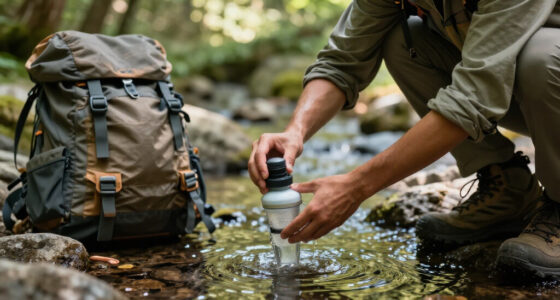
Outdoor camping gear covers a wide range of essentials, and the right picks depend on how you camp: car camping with the family, weekend backpacking, or keeping an emergency kit ready at home. After comparing 12 popular items across categories like shelter, lighting, water, and safety, the 3 Season Waterproof Sleeping Bag stands out as the best overall pick because a warm, dry night’s sleep is the foundation every other piece of gear supports. Two other standouts: the LifeStraw Personal Water Filter for its unmatched portability at a low price, and the Durapower 2000 Lumen Rechargeable Lantern for replacing three separate devices with one. The main tradeoff in this category is weight and price versus versatility — rugged multi-tools and full survival kits offer everything but weigh down a pack, while ultralight items like mylar blankets and straw filters do one job extremely well. Keep reading for the full breakdown of what each item does best, who should buy it, and who should skip it.

Get travel and outdoor gear delivered free with Prime
- Fast, free delivery on millions of items
- Prime Video, Amazon Music and more included
- Member-only deals all year
Complete the kit


Key Takeaways
- Sleep and water gear separated the top of the ranking from the bottom: the 3 Season amazon.com/dp/B0CTJZBJLZ?tag=greentravellist-20&ascsubtag=dc-1059001″ target=”_blank” rel=”nofollow sponsored noopener”>Sleeping Bag and LifeStraw filter won on everyday usability, while the 262-piece survival kit ranked lower for typical campers because most of its contents sit unused on ordinary trips.
- Lighting was the most crowded category, and rechargeable models (Durapower, 3000 Lumen Lantern) beat battery-powered multi-packs on cost per use, but the Lichamp 4-pack and MalloMe lanterns win on upfront value for group or emergency needs.
- Two items in this lineup solve the same problem differently: the LifeStraw is a personal straw filter ideal for solo hikers, while the SurviMate pump filters larger volumes for groups — choosing between them comes down to group size, not quality.
- The cheapest items (mylar blankets, tarp, collapsible water jug) earned their spots as redundancy gear rather than primary gear — smart add-ons but poor standalone purchases for frequent campers.
- Headlamps remain the most underused essential: the Energizer PRO 2-pack frees both hands for camp tasks, something no lantern can replace even at triple the brightness.
| Emergency Mylar Thermal Space Survival Blanket 4-Pack |  | Best Budget Emergency Backup | Material: Aluminized Mylar | Unfolded Size: 82″ x 52″ | Quantity: 4-pack | VIEW LATEST PRICE | See Our Full Breakdown |
| MalloMe Camping Lights LED Lantern Flashlights, Collapsible Tent Lantern |  | Best Value Camp Lighting | Brightness: Up to 300 lumens | Beam: 360° illumination | Power: 3 AAA batteries (not included) | VIEW LATEST PRICE | See Our Full Breakdown |
| Survival Kit, 262-Piece Emergency Gear with First Aid, Tent, Axe, Shovel, and Carrying Bag |  | Best All-in-One Emergency Kit | Total Pieces: 262 | Key Tools: 17-inch axe, survival shovel with pick, hammer, multi-tool | Shelter: Tent and emergency blanket included | VIEW LATEST PRICE | See Our Full Breakdown |
| Sleeping Bags for Adults – 3 Season Waterproof Lightweight Camping Sleeping Bag |  | Best Sleeping Bag for Fair-Weather Campers | Shell Material: 210T microfiber, waterproof | Lining: 190T polyester pongee with hollow microfiber fill | Temperature Range: 55°F to 75°F (limit 41°F to 77°F) | VIEW LATEST PRICE | See Our Full Breakdown |
| Durapower LED Camping Lantern Rechargeable, 2000 Lumen, 5 Modes, 4000mAh Power Bank |  | Best Premium Camp Lighting | Brightness: 2000 lumens | Light Modes: 5 | Battery: Rechargeable, 4000mAh | VIEW LATEST PRICE | See Our Full Breakdown |
| SurviMate Water Purifier Survival Pump, 0.01 Micron 5-Stage Water Filter System |  | Best Water Purifier for Group Camping | Micron Filtration: 0.01 micron ultrafiltration | Filter Stages: 5 | Flow Rate: 1500 ml (58 oz) per minute | VIEW LATEST PRICE | See Our Full Breakdown |
| Rechargeable Emergency Lantern 3000 Lumens Camping Light |  | Brightest Camp Lighting Pick | Lumens: 3000 | Battery Capacity: 7500mAh | Charging: USB-C rechargeable | VIEW LATEST PRICE | See Our Full Breakdown |
| Camping Water Container 2 Gallon Collapsible Water Jug with Spout |  | Best Value Water Storage | Capacity: 2.1 gallons (8 liters) | Material: Durable, odor-resistant plastic | Design: Collapsible, foldable | VIEW LATEST PRICE | See Our Full Breakdown |
| Amazon Basics Waterproof Multipurpose Camping Tarp, 9.5 x 11.3 Feet, Dark Green |  | Best Budget Shelter Multi-Tool | Size: 9.5 x 11.3 feet | Color: Dark Green | Material: Rip-stop fabric with polyethylene lamination | VIEW LATEST PRICE | See Our Full Breakdown |
| Energizer LED Headlamp PRO (2-Pack), IPX4 Water Resistant Head Light |  | Best Hands-Free Lighting Value | Lumens: 260 | Beam Distance: 80 meters | Water Resistance: IPX4 | VIEW LATEST PRICE | See Our Full Breakdown |
| Lichamp LED Camping Lantern 4 Pack |  | Best Budget Lighting Multi-Pack | Light Source: LED | Maximum Light Output: 350 lumens per lantern | Power Source: 3 AA batteries (not included) | VIEW LATEST PRICE | See Our Full Breakdown |
| LifeStraw Personal Water Filter |  | Best Ultralight Emergency Water Backup | Bacteria Removal: 99.999999% | Parasite Removal: 99.999% | Microplastics Removal: Down to 1 micron | VIEW LATEST PRICE | See Our Full Breakdown |
More Details on Our Top Picks
Emergency Mylar Thermal Space Survival Blanket 4-Pack
Not every piece of camping gear needs to be comfortable — some just need to work when things go wrong. This 4-pack of aluminized Mylar blankets is the cheapest insurance a camper can carry, reflecting up to 90% of body heat for less than the cost of a campsite coffee. Each blanket unfolds to 82″ x 52″ and doubles as a ground cover, shelter liner, or signaling surface, which is more versatility than any single-purpose item in this roundup. Compared with the sleeping bag elsewhere in this guide, these won’t keep you cozy on a chilly night — they’re a survival layer, not a comfort layer. The tradeoff is fragility: the foil punctures easily if dragged over rock, and in genuinely cold conditions Mylar alone won’t prevent hypothermia.
Pros:- Retains up to 90% of body heat in emergencies
- Four blankets for the price of one camp chair
- Doubles as ground cover, shelter, or signal
- Weighs almost nothing and packs flat
Cons:- Tears easily if handled roughly
- No real insulation value in sustained cold
- Crinkly and uncomfortable for actual sleeping
Best for: Backpackers and day hikers who want lightweight emergency warmth tucked into every pack
Not ideal for: Campers seeking real sleeping insulation — this reflects heat but provides no padding or loft
- Material:Aluminized Mylar
- Unfolded Size:82″ x 52″
- Quantity:4-pack
- Reusable:Yes, with careful handling
- Heat Retention:Up to 90% of body heat
- Weight:Ultra-lightweight
Our verdict“Buy this as a safety net for every pack you own — not as a substitute for a real sleeping system.”
MalloMe Camping Lights LED Lantern Flashlights, Collapsible Tent Lantern
This is the lantern I’d hand to anyone building a camp kit on a budget. The pull-up collapsible design is the whole story here: no buttons, no modes to memorize — raise the housing and light spills out at 360 degrees and up to 300 lumens, enough to illuminate a family tent or a picnic table. Compared with the Durapower 2000-lumen lantern later in this roundup, it’s far dimmer, but it also costs a fraction of the price, weighs next to nothing, and won’t die on you because someone forgot to recharge it — it runs on readily available AAA batteries. The catch: batteries aren’t included, and 300 lumens won’t light a large campsite. For tent interiors and power outages, though, this is the best price-to-usefulness ratio in the lighting category.
Pros:- Intuitive pull-up operation with no fiddly buttons
- Compact and collapsible for easy packing
- Water-resistant housing for outdoor use
- Inexpensive enough to buy several
Cons:- AAA batteries not included
- Only 300 lumens — insufficient for large areas
Best for: Budget-conscious families and car campers who need simple, reliable tent lighting
Not ideal for: Campers lighting a large group site — 300 lumens covers a tent, not a campfire circle
- Brightness:Up to 300 lumens
- Beam:360° illumination
- Power:3 AAA batteries (not included)
- Height:3.7 inches
- Design:Collapsible pull-up operation
- Durability:Water-resistant housing
Our verdict“The simplest, cheapest way to put light inside a tent — just bring your own batteries.”
Survival Kit, 262-Piece Emergency Gear with First Aid, Tent, Axe, Shovel, and Carrying Bag
For buyers who want one purchase to cover the first 72 hours of an emergency, this 262-piece survival kit is the most complete package in this roundup. It bundles first aid supplies, a tent, a 17-inch axe, a shovel-pick combo, fire starter, flashlight, water container, and more into a MOLLE-compatible crossbody bag that organizes chaos before it happens. Compared with buying pieces separately — say, the Mylar blankets and MalloMe lantern above — you pay a premium for consolidation, but you also get serious tools those items lack, like the carbon steel axe and shovel for shelter building. The tradeoffs are real: this is heavy and bulky for backpackers, casual campers will find items they never touch, and the kit only pays off if you actually learn to use what’s inside.
Pros:- 262 pieces covering first aid, shelter, tools, and fire
- Full-size 17-inch axe and survival shovel, not toy versions
- Organized MOLLE bag with detachable strap and compartments
- Covers the critical first 72 hours of an emergency
Cons:- Bulky and heavy for minimalist or backcountry travel
- Includes redundant items for casual campers
- Requires practice to use the tools effectively
Best for: Families and preppers who want a single grab-and-go bag for emergencies at home or on the road
Not ideal for: Ultralight backpackers — the axe, shovel, and full first aid loadout make this too heavy to carry far
- Total Pieces:262
- Key Tools:17-inch axe, survival shovel with pick, hammer, multi-tool
- Shelter:Tent and emergency blanket included
- Tool Material:Sturdy carbon steel
- Bag:Crossbody with MOLLE straps, D-rings, detachable strap
- Preparedness Window:First 72 hours of emergency
Our verdict“One bag that replaces a dozen separate purchases — ideal for emergency readiness, overkill for a weekend campground trip.”
Sleeping Bags for Adults – 3 Season Waterproof Lightweight Camping Sleeping Bag
This is the piece of gear the emergency blankets at the top of this roundup can never be: an actual, comfortable place to sleep. Rated for 55°F to 75°F with a limit near 41°F, it handles spring through fall for most campers, and the waterproof 210T microfiber shell shrugs off tent condensation and damp ground. Its smartest trick is the ability to zip two bags together for couples, which the 262-piece survival kit’s included blanket simply can’t replicate. The snag-free zippers and adjustable headrest drawstring are thoughtful touches at this price. Be honest about the temperature rating, though: this is a three-season bag, not a winter bag, and anyone camping below freezing will be cold. Colors can also fade with repeated washing.
Pros:- Comfortable 3-season range of 55°F to 75°F
- Waterproof, breathable shell handles condensation
- Two bags zip together for double sleeping
- Snag-free zippers and adjustable headrest drawstring
Cons:- Not warm enough for freezing or winter conditions
- Colors may fade with frequent washing
Best for: Casual and couple campers who trip mostly in mild weather and want comfort without a premium price
Not ideal for: Cold-weather or winter campers — the 41°F limit leaves no margin for freezing nights
- Shell Material:210T microfiber, waterproof
- Lining:190T polyester pongee with hollow microfiber fill
- Temperature Range:55°F to 75°F (limit 41°F to 77°F)
- Season Rating:3 season
- Colors:Pink, Blue, Black
- Special Feature:Zip two bags together for double arrangement
Our verdict“A solid fair-weather sleeping bag with couple-friendly zip-together design — just don’t take it into a freezing night.”
Durapower LED Camping Lantern Rechargeable, 2000 Lumen, 5 Modes, 4000mAh Power Bank
Where the MalloMe lantern is a budget tent light, the Durapower is a basecamp workhorse. At 2000 lumens across five modes, it throws enough light to cook, set up camp, or play cards after dark — roughly six times the output of the MalloMe. The built-in 4000mAh power bank is the differentiator no other light in this lineup offers: it can top off a phone during an outage, making it as much an emergency tool as a lantern. An IP44 waterproof rating and drop-resistant build mean rain and tumbles won’t end the night. The tradeoffs: runtime is quoted around 20 hours but drops fast at maximum brightness, the IP44 rating won’t survive submersion, and the maker doesn’t publish charging times. You’re also tied to a USB source — no swapping batteries in the field like AAA models.
Pros:- 2000 lumens with 5 adjustable modes
- 4000mAh power bank charges phones and devices
- IP44 waterproof and drop-resistant construction
- Two handles for hanging or carrying
Cons:- Runtime drops well below 20 hours at full brightness
- IP44 won’t handle heavy submersion
- No published charging time; no field battery swaps
Best for: Serious campers and households who want serious light output plus phone charging during outages
Not ideal for: Multi-day backcountry trips without power access — once the internal battery dies, it’s dead weight
- Brightness:2000 lumens
- Light Modes:5
- Battery:Rechargeable, 4000mAh
- Power Bank:Yes, charges USB devices
- Waterproof Rating:IP44
- Run Time:Approximately 20 hours (mode-dependent)
- Handles:Two, for hanging and portability
Our verdict“The lantern to buy if your campsite doubles as a living room — bright, rechargeable, and it rescues dead phones.”
SurviMate Water Purifier Survival Pump, 0.01 Micron 5-Stage Water Filter System
Where the LifeStraw Personal Water Filter is built around one person sipping directly from a stream, the SurviMate pump flips the equation: it is designed to fill bottles and containers for a whole camp. The 1500 ml-per-minute flow rate means a 2-gallon jug like the Collapsible Water Container in this roundup can be topped off in minutes, and the 5-stage, 0.01-micron filtration goes beyond LifeStraw’s biological filtration by also addressing heavy metals and chemicals — a genuine advantage near agricultural runoff or old mining areas.
The tradeoffs are real, though. Pumping is manual work, the 793-gallon filter life shrinks fast in silty water, and there is no onboard storage, so this pick makes the most sense for base-camp groups rather than ultralight thru-hikers.
Pros:- 5-stage 0.01-micron filtration removes heavy metals and chemicals, not just bacteria
- High 1500 ml/min flow rate fills multiple bottles quickly
- Large 793-gallon filter lifespan for extended trips
- Includes hoses, clamps, and a carrying bag for a complete setup
Cons:- Manual pumping becomes tedious for large volumes
- Filter life varies dramatically with silty or murky water sources
- No built-in water storage — you need separate containers
Best for: Camping groups and families who need to filter large volumes of water from lakes or rivers for cooking and refilling bottles
Not ideal for: Ultralight backpackers counting grams — a straw-style filter like the LifeStraw is lighter and requires no pumping
- Micron Filtration:0.01 micron ultrafiltration
- Filter Stages:5
- Flow Rate:1500 ml (58 oz) per minute
- Filter Capacity:793 gallons (3000 liters)
- Dimensions:6.1 x 3.54 x 1.96 inches
- Material:Food-grade ABS, BPA free
Our verdict“This pump makes the most sense for groups camped near a water source who need volume and contaminant coverage a personal straw can’t provide.”
Rechargeable Emergency Lantern 3000 Lumens Camping Light
At 3000 lumens, this lantern outshines everything else in the lighting lineup — the Durapower LED Camping Lantern claims 2000 lumens, and the MalloMe collapsible lanterns are not in the same brightness class. That output matters when you are trying to light an entire campsite kitchen or play cards at a picnic table after dark. The 7500mAh battery with USB-C also doubles as a power bank for a phone, something battery-operated options like the Lichamp 4-Pack cannot do.
The catch: cranking it to full brightness drains that battery fast, and the peak lumen figure comes from lab conditions, so real-world output will sit lower. Compared with the MalloMe, it is also a single light, not a set — if you lose it, you lose everything at once.
Pros:- 3000-lumen output lights an entire campsite, not just a tent
- 7500mAh battery doubles as a USB power bank
- Five light modes including red light and strobe for emergencies
- IP54 weather resistance and shock-resistant housing
Cons:- Runtime drops sharply at maximum brightness
- Advertised lumens reflect lab testing, not real-world output
- Single unit — one failure or loss leaves you dark, unlike multi-pack options
Best for: Campers and households who want one powerful lantern that can light a whole site and charge a phone during outages
Not ideal for: Through-hikers and ounce-counters — the large battery makes it heavy for a backpack, and peak brightness eats runtime
- Lumens:3000
- Battery Capacity:7500mAh
- Charging:USB-C rechargeable
- Weather Resistance:IP54
- Light Modes:Warm White, Cool White, Natural White, Red Light, Red COB Strobe
- Illumination:360 degrees
Our verdict“Buy it if one lantern needs to illuminate a full campsite and double as an emergency charger; skip it if you need distributed lighting across multiple tents.”
Camping Water Container 2 Gallon Collapsible Water Jug with Spout
This jug is the quiet workhorse that makes a filter-and-store system work at camp. Pair it with the SurviMate pump in this roundup and you have a complete water station: pump from the lake, store 2.1 gallons at camp, pour cleanly through the spout. The separated inlet and outlet is a smarter design than single-opening jugs because you can refill without unscrewing the dispensing spout — less spillage, less fuss. When empty, it folds flat, which rigid water cubes cannot do.
Be honest about capacity, though. Two gallons is roughly one day of drinking water for two people, so a larger group should carry multiples or accept refill trips. It is also floppy when partially full, so set it on flat ground before pouring. Compared with hard-sided containers, this option trades rigidity for packability — a worthwhile deal for car campers.
Pros:- Collapses flat for minimal packing space between trips
- Separated inlet and outlet makes refilling and pouring spill-free
- Reinforced seams and odor-resistant material prevent leaks and plastic taste
- Extremely lightweight when empty
Cons:- Floppy and hard to handle when partially full
- 2.1-gallon capacity is limiting for groups or multi-day trips
Best for: Car campers and weekend groups who need packable water storage paired with a pump or gravity filter
Not ideal for: Large families or extended trips — 2 gallons won’t last a day for a group of four without constant refills
- Capacity:2.1 gallons (8 liters)
- Material:Durable, odor-resistant plastic
- Design:Collapsible, foldable
- Inlet & Outlet:Separated design for easy refilling
- Seams:Leakproof, reinforced
- Spout:Yes, for controlled pouring
Our verdict“A cheap, sensible storage companion to any filter system — just buy two if you are feeding more than a couple of people.”
Amazon Basics Waterproof Multipurpose Camping Tarp, 9.5 x 11.3 Feet, Dark Green
A tarp is the most versatile square of fabric in a gear kit, and this one covers the basics at a price that is hard to beat. At 9.5 x 11.3 feet, it is big enough to rig a rain fly over a picnic table, wrap firewood, or serve as ground cover under a tent — jobs a dedicated shelter like the tents inside the 262-Piece Survival Kit cannot do. The rip-stop fabric with polyethylene lamination and reinforced corners handles the tie-out tension that cheap tarps fail at.
Two honest limitations: if the fabric tears, repairs are awkward in the field, and the grommets — the weak point of nearly every budget tarp — can pull out after repeated hard staking in wind. Compared with premium sil-nylon tarps, this option sacrifices packability and tear strength, but at a fraction of the cost.
Pros:- Genuinely waterproof rip-stop fabric with polyethylene lamination
- Reinforced corners and edges withstand stake-out tension
- Large enough to shelter a full picnic table or gear pile
- Inexpensive enough to own as a backup
Cons:- Difficult to field-repair if the laminated fabric tears
- Grommets may tear out over time under sustained wind load
Best for: Budget-conscious campers who want one tarp for rain flies, ground cloths, firewood covers, and gear protection
Not ideal for: Backpackers and users in sustained high winds — it is bulkier and less tear-resistant than premium sil-nylon tarps
- Size:9.5 x 11.3 feet
- Color:Dark Green
- Material:Rip-stop fabric with polyethylene lamination
- Reinforced Corners:Yes
- Grommets:Yes
- Waterproof:Yes
- Portability:Lightweight, packs flat
Our verdict“The cheapest insurance policy in this roundup — a do-everything tarp that casual car campers will use on every trip.”
Energizer LED Headlamp PRO (2-Pack), IPX4 Water Resistant Head Light
Lanterns light a campsite; headlamps light what you are actually doing — cooking, fixing a tent zipper, walking to the water jug at 2 a.m. This 2-pack from Energizer delivers that at a price per unit that undercuts most single headlamps. The 260 lumens and 80-meter beam out-throw the ambient glow of the MalloMe or Lichamp lanterns in this roundup, and the adjustable dimming means you are not blinding everyone at the picnic table. Two units means two people get hands-free light — or one lives in the car as an emergency backup.
The drawbacks: IPX4 handles rain splashes but not submersion, and the listed specs are quiet on runtime, so pack spare batteries for multi-day trips. Compared with rechargeable lights like the 3000-lumen lantern, you trade USB convenience for cheap, replaceable batteries.
Pros:- 260 lumens with an 80-meter beam cuts through darkness better than camp lanterns
- Two headlamps included — light for two people or a backup
- Adjustable dimming and multiple modes adapt from camp chores to trail walks
- IPX4 water resistance survives rain and sweat
Cons:- Battery life duration is not specified — carry spares
- IPX4 only — not suitable for submersion or sustained downpours
Best for: Camping pairs and families who need hands-free task lighting for two people at a low price
Not ideal for: Paddlers and heavy-weather users — IPX4 handles rain, not submersion, and runtime figures are unspecified
- Lumens:260
- Beam Distance:80 meters
- Water Resistance:IPX4
- Quantity:2 headlamps
- Modes:Multiple, with adjustable dimming
- Brand:Energizer Vision HD+
Our verdict“The best lighting value here for active campers: two capable headlamps for less than many single competitors.”
Lichamp LED Camping Lantern 4 Pack
Most lanterns in this category are sold solo, which gets expensive fast when a family campsite needs light at the tent, the picnic table, and the trail to the bathroom. This four-pack solves that problem for the price of one premium unit. Each collapsible lantern pushes out 360-degree light at 350 lumens, which is plenty for close-range tasks but far short of the Durapower LED Camping Lantern’s 2000-lumen output or the Rechargeable Emergency Lantern’s 3000 lumens. The tradeoff is scale versus spread: the Durapower lights an entire campsite from one spot, while these work better as distributed task lights. Unlike rechargeable rivals, there is no USB port or power bank function — you are committed to 3 AA batteries per lantern, and they do not ship in the box. The expand-to-turn-on design makes them genuinely one-handed friendly, even with gloves on in a cold tent.
Pros:- Four lights for the price of one premium lantern
- Collapsible, one-handed operation with no fiddly switches
- Water-resistant plastic survives rain and camp mishaps
- 30-hour battery life covers a long weekend per set of batteries
Cons:- Batteries not included — factor in an added purchase and pack spares
- No recharging or power bank feature, unlike rechargeable competitors
- 350 lumens is task-light territory, not whole-campsite illumination
Best for: Families and group campers who need multiple low-cost lights spread across a campsite rather than one powerful beacon
Not ideal for: Anyone wanting a single high-output area light or rechargeable convenience — the lumens and USB charging of pricier lanterns will serve better
- Light Source:LED
- Maximum Light Output:350 lumens per lantern
- Power Source:3 AA batteries (not included)
- Battery Life:Up to 30 hours
- Beam Angle:360 degrees
- Material:Water-resistant plastic
- Quantity:4 lanterns
- Mounting Type:Hanging or portable
Our verdict“Buy this set if you need affordable, redundant lighting for multiple tents or group sites; skip it if you want one bright rechargeable lantern to do everything.”
LifeStraw Personal Water Filter
Weighing almost nothing and smaller than a sunglasses case, this filter is the cheapest insurance policy a camper can carry. It drinks directly from streams and lakes, stripping out bacteria, parasites, and microplastics down to 1 micron across an impressive 4,000-liter lifetime. The obvious comparison is the SurviMate Water Purifier Survival Pump: the pump handles larger volumes and fills bottles for cooking, but it costs more, weighs more, and adds moving parts that can fail. The LifeStraw trades that capability for simplicity and pocketability. Its limits are real, though — it does nothing against viruses or chemical contamination, so it is not a substitute for treated or purified water in questionable urban floodwater or international travel. Sipping through it also takes genuine effort, and it serves exactly one person at a time.
Pros:- Removes 99.999999% of bacteria and 99.999% of parasites
- 4,000-liter capacity outlasts years of trips
- Featherweight and pocket-sized for packs and emergency kits
- BPA-free construction and a charitable mission behind each purchase
Cons:- No protection against viruses or chemical contaminants
- Requires noticeable suction effort to drink
- Personal use only — cannot fill bottles or serve a group
Best for: Solo backpackers and day hikers who want emergency-safe drinking water at minimum weight and cost
Not ideal for: Groups or base-camp cooks needing bulk water — the SurviMate pump or a filtered water jug fits that job far better
- Bacteria Removal:99.999999%
- Parasite Removal:99.999%
- Microplastics Removal:Down to 1 micron
- Turbidity Reduction:Down to 0.2 microns
- Filter Capacity:4,000 liters (1,000 gallons)
- Materials:BPA free
Our verdict“This is the go-to grab-and-go filter for solo adventurers who value weight savings over volume; groups should step up to a pump system instead.”

How We Picked
I evaluated each item through one lens: how well it serves a real camper on a typical trip. That meant judging core performance (does the sleeping bag actually keep you warm at its rated temperature, does the filter meet real purification standards), weight and packed size relative to the job it does, build quality and durability, and value over time — a rechargeable lantern that replaces batteries for years often beats a cheaper battery model. Items that only shine in narrow emergency scenarios ranked lower than gear used every night of a trip.
The ranking also rewards versatility and redundancy. Gear that covers multiple roles, like a lantern that doubles as a power bank or a tarp that works as ground cover, shelter, or rain fly, scored higher than single-purpose items. Where two products overlap — the four lighting options, the two water filters — I ranked them against each other directly and assigned each a distinct role in the lineup so the list works as a shopping guide, not a catalog.
Factors to Consider When Choosing Outdoor Camping Gear
Beyond the individual picks, a few patterns in this category consistently trip up buyers. These are the factors I would weigh before spending anything on camping gear in 2026.Buy Gear in Priority Order, Not All at Once
The most common mistake new campers make is buying the fun stuff first — gadgets, multi-tools, survival kits — before covering the basics. The correct order is sleep system, shelter, water, then lighting, with safety redundancy last. A $100 survival kit does nothing for a camper who is cold and dehydrated at 2 a.m. Mylar blankets and first aid kits are insurance, not infrastructure. If budget is limited, a solid sleeping bag and a water filter deliver more trip-improving value than any other spending. Everything else can be added one trip at a time as you learn what you actually use.
Weight Matters Differently for Car Campers and Backpackers
Every item in this category splits into two audiences, and the same product can be perfect for one and useless for the other. A 262-piece survival kit or a 2-gallon water jug costs little and adds real convenience if it rides in a trunk, but neither belongs in a backpack. Conversely, a mylar blanket weighs almost nothing, which is why it earns a permanent spot in a pack even though it’s miserable as primary bedding. Before buying anything, honestly answer whether you’ll carry it on your back for miles. That single question eliminates roughly half of the impulse purchases in this category.
Rechargeable Versus Battery-Powered Lighting
Lighting is where long-term costs hide. Rechargeable lanterns cost more upfront but eliminate a decade of battery purchases, and models with power-bank features pull double duty charging your phone. The catch: if you camp beyond grid access for more than a couple of nights, rechargeable dies and battery-powered keeps running, because spare batteries are easy to pack. The smartest setup is one primary rechargeable light plus cheap battery backups like a 4-pack of collapsible lanterns. That combination covers a week off-grid for under the price of a single premium lantern.
Understand Water Filter Ratings Before Buying
Not all filtration is equal, and marketing language blurs the differences. Hollow-fiber filters like the LifeStraw remove bacteria and protozoa but not viruses or dissolved chemicals — fine for most North American backcountry water. Pump systems with 0.01-micron ratings and multiple stages handle murkier sources and larger volumes but cost and weigh more. If you’re filtering silty lake water for a family, a pump makes sense; if you’re topping up from a clear stream solo, a straw filter is plenty. Buy filtration matched to your actual water sources, not the most impressive spec sheet.
Temperature Ratings on Sleeping Bags Are Optimistic
Manufacturers rate sleeping bags at survival thresholds, not comfort thresholds. A bag labeled for 30°F will keep most people alive at 30°F but comfortable closer to 40°F. Budget bags like the 3-season models in this lineup are honest for spring through fall use but should not be trusted at their extreme rating. If you camp in genuine cold, the smarter move is a budget bag plus a liner and insulated pad rather than an expensive extreme-rated bag — the pad matters as much as the bag, since the ground pulls heat faster than the air. Sleeping bags also vary wildly in packed size, so check that a ‘lightweight’ claim matches your pack, not just your trunk.
The Redundancy Rule for Safety Gear
Safety items are the one category where duplication is a feature, not waste. A mylar 4-pack costs less than lunch and covers four people against hypothermia; a tarp weighs a pound and becomes shelter, ground cover, or rain protection when primary gear fails. The mistake is treating these cheap items as sufficient on their own. They exist to back up your real gear, and experienced campers carry them precisely because they hope never to use them. If a purchase decision comes down to one premium item or the premium item plus two cheap backups, the second option is almost always safer.
Frequently Asked Questions
Should I buy a LifeStraw or a pump water filter like the SurviMate?
The choice comes down to group size and water volume, not filtration quality — both remove bacteria and protozoa effectively. A straw filter like the LifeStraw is ideal for solo hikers and emergency kits because it weighs ounces, costs far less, and drinks directly from the source. A pump system makes sense once two or more people need filtered water, or when you want to fill bottles and cook pots rather than drink on the spot. Pump filters also handle silty or murky water better because the pre-filter stages keep the main membrane from clogging. If your budget allows only one and you mostly camp alone, start with the straw; a solo camper with a pump is carrying capacity they rarely use.
Are cheap collapsible lanterns good enough, or do I need a rechargeable one?
Cheap battery-powered lanterns are genuinely good enough for tent interiors and short trips, and buying them as a 4-pack means one per person or one per tent for less than a single premium light. Where they fall short is brightness and runtime at a campsite scale — lighting a picnic table, a cooking area, or the inside of a large tent for hours. Rechargeable models in the 2000–3000 lumen range handle those jobs and add USB power-bank charging, which offsets their higher price over a few seasons. My honest recommendation for most families is both: one rechargeable lantern as the primary site light, plus collapsible units as cheap, replaceable backups. Battery models also win on trips longer than a weekend, since spare batteries outlast any rechargeable cell.
Is a big pre packed survival kit worth buying for regular camping?
For most recreational campers, no — and this comparison made that pattern clear. Pre-packed kits bundle an axe, shovel, first aid supplies, and miscellaneous tools at an attractive price, but the individual components are usually budget-grade, and most campers never touch 80% of the contents on a normal trip. The money is better spent on quality versions of the three or four items you’ll actually use: a real first aid kit, a real knife or multitool, and solid sleep and water gear. Where these kits earn their place is as a single-purchase emergency reserve for a car trunk or home disaster bin, where convenience matters more than component quality. Buy one for the glovebox, not for the backpack.
What should my first camping purchase be if I can only afford one thing?
A quality 3-season sleeping bag, without hesitation. Sleep quality determines whether camping feels like an adventure or an ordeal, and a cold, wet night ruins a trip faster than any missing gadget. A good waterproof 3-season bag covers spring through fall use, packs small enough for both car camping and backpacking, and holds its value for years. The second purchase should be a water filter, since hydration is the other non-negotiable, and budget straw filters keep that cost low. Lighting and safety redundancy can wait a trip or two — borrowing a flashlight for one weekend is easy; borrowing a good night’s sleep is not.
Do I really need a headlamp if I already have lanterns?
Yes, and it’s the piece of gear most campers underestimate until their first dark trip. Lanterns light a space, but nearly every nighttime camp task — setting up a tent, cooking, finding gear in a pack, walking to the bathroom — needs a directed beam that moves with your head. A two-pack of headlamps like the Energizer PRO costs about the same as one budget lantern and solves the hands-free problem for two people at once. The IPX4 water resistance also matters more than buyers expect, since rain and condensation kill cheap headlamps quickly. The right setup is layered: a lantern for ambient camp light, a headlamp for tasks, and a spare collapsible lantern in the emergency bin.
Conclusion
After comparing all 12 items, the right choice depends almost entirely on how you camp. For the best overall pick, the 3 Season Waterproof Sleeping Bag earns it because it delivers the one thing every camping trip depends on — warm, dry sleep — at a price that fits most budgets. For best value, the LifeStraw Personal Water Filter is untouchable: life-safety water filtration for the cost of a sandwich. For the best premium buy, the Durapower 2000 Lumen Rechargeable Lantern justifies its higher price by replacing a lantern, flashlight, and phone charger in one waterproof unit.
For beginners, I’d point to the MalloMe Camping Lanterns plus a sleeping bag as a low-risk starting bundle — cheap enough to test whether camping sticks before committing serious money. For specific needs: solo backpackers should grab the LifeStraw and mylar 4-pack; families and groups should choose the SurviMate pump and the 2-gallon collapsible jug; and anyone building a car or home emergency reserve gets the most from the 262-piece survival kit and the Lichamp 4-pack. Buy in the order of sleep, water, light, and safety, and this lineup will cover the rest.
Halloween Picks
halloween
As an affiliate, we earn on qualifying purchases.