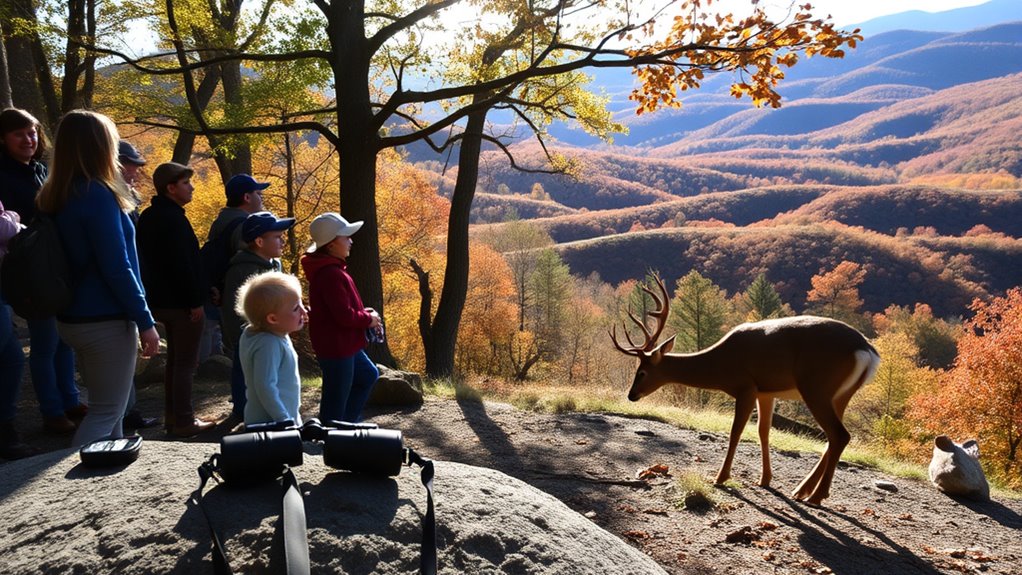

When viewing wildlife in Shenandoah National Park, respect is key. Always maintain a safe distance and use binoculars or a camera to observe animals without disturbing their natural behaviors. Avoid feeding wildlife, as it disrupts their foraging instincts and can lead to dangerous situations. Keep noise to a minimum to prevent stressing the animals. Remember, you’re in their home, so tread lightly and observe quietly. There’s much more to learn about preserving the park’s delicate ecosystem.

Get travel and outdoor gear delivered free with Prime
- Fast, free delivery on millions of items
- Prime Video, Amazon Music and more included
- Member-only deals all year
Key Takeaways
- Observe wildlife from a safe distance using binoculars or cameras to minimize disturbance to their natural behaviors.
- Avoid feeding animals to prevent altering their foraging habits and disrupting ecological balance.
- Maintain a low noise level and speak softly to avoid frightening sensitive wildlife.
- Stay on designated trails and do not approach nests or dens to respect animal habitats.
- Recognize that you are in the animals’ natural environment and prioritize their safety and well-being.
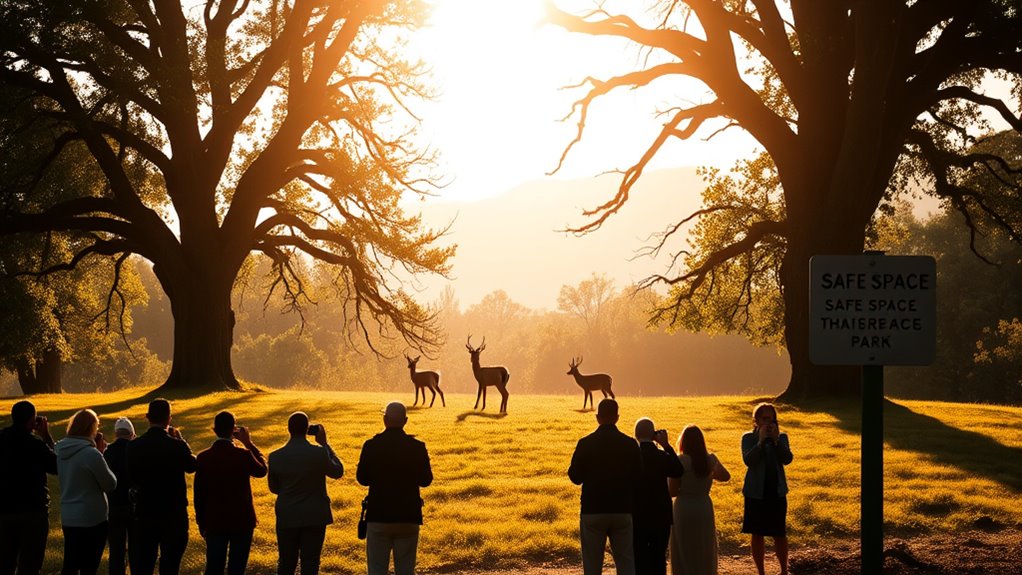
When you venture into nature to observe wildlife, it’s crucial to remember that your actions can profoundly impact the animals and their habitats. Shenandoah National Park offers a stunning array of wildlife, from deer to black bears, and each encounter is an opportunity to appreciate nature’s wonders while respecting its inhabitants. One of the most important aspects of wildlife viewing etiquette is minimizing disturbance. You want to guarantee that your presence doesn’t disrupt the natural behaviors of the animals you’re observing.
Feeding wildlife may seem like a kind gesture, but it can have detrimental effects. When you feed animals, you alter their natural foraging behaviors and can even encourage them to approach humans. This not only puts the animals at risk but can also lead to dangerous situations for you and other park visitors. Wild animals rely on their instincts to find food, and when you interfere, you disrupt their natural cycle. Instead of offering food, allow them to maintain their wildness by observing from a distance, using binoculars or a camera to capture the moment without encroaching on their space.
Feeding wildlife disrupts their natural behaviors and can create dangerous situations for both animals and humans.
You should also be mindful of your noise levels. Animals in Shenandoah are sensitive to sounds, and excessive noise can scare them away or cause stress. Speak softly and avoid sudden movements, especially if you’re near nesting birds or other vulnerable species. Remember, you’re a visitor in their home, and respecting their environment is key to a successful wildlife viewing experience.
Another critical aspect of wildlife viewing is keeping a safe distance. That means staying on designated trails and observing animals from afar. Approaching too closely can lead to stress for the animals and can also put you in harm’s way. Bears, for example, may seem harmless from afar, but they can become aggressive if they feel threatened. By keeping your distance, you’re not only protecting yourself but also allowing the animals to behave naturally. Additionally, understanding the importance of natural foraging behaviors will enhance your appreciation of these incredible creatures in their habitat.
Frequently Asked Questions
What Types of Wildlife Can I Expect to See in Shenandoah National Park?
In Shenandoah National Park, you can expect to see a variety of native species. Look out for black bears, white-tailed deer, and wild turkeys as you explore the trails. The park’s birdwatching hotspots are perfect for spotting species like the cerulean warbler and barred owl. Keep your eyes peeled, and you might even catch a glimpse of other fascinating wildlife, making your visit truly memorable. Enjoy the diverse ecosystem!
Are There Specific Seasons That Are Best for Wildlife Viewing?
Yes, there are specific seasons that’re best for wildlife viewing. Spring and fall are ideal due to seasonal migration; animals are more active during these times as they seek food and mates. Early mornings and late afternoons offer the best viewing times, as animals tend to be more visible then. Keep an eye out for deer in spring and migratory birds in fall to enhance your experience. Enjoy the adventure!
Can I Bring My Pet While Wildlife Viewing in the Park?
You can’t bring your pet while wildlife viewing in the park. For pet safety and the well-being of wildlife, you’re encouraged to leave your furry friends at home. If you do visit with a pet, be aware of leash regulations that apply in certain areas, but most trails and viewing spots prohibit pets altogether to protect both animals and your pet. Always check specific park guidelines before planning your visit.
Are There Guided Tours Available for Wildlife Viewing?
Yes, there are guided tour options available for wildlife viewing in the park! These tours often include expert guides who share valuable wildlife photography tips, enhancing your experience. You’ll get to see various animals in their natural habitats while learning about their behaviors. Just be sure to book in advance, as spots can fill up quickly. Enjoy capturing stunning moments and connecting with nature in a safe and informed way!
What Should I Do if I Encounter an Aggressive Animal?
If you encounter an aggressive animal, stay calm and avoid direct eye contact. Back away slowly while keeping your distance, and don’t turn your back. Understanding animal behavior helps you react properly. Make noise to alert the animal of your presence, and if it approaches, use safety precautions like raising your arms to appear larger. Always have an escape route in mind, and never feed or corner wild animals. Your safety’s the priority!
Conclusion
So, next time you’re in Shenandoah National Park, remember: treating wildlife with respect isn’t just nice, it’s essential! Imagine a deer giving you the stink eye for being too loud or a bear rolling its eyes at your selfie antics. Keep your distance, stay quiet, and let nature unfold its magic without your interruption. If you don’t, you might just find yourself on the wrong side of a very disgruntled squirrel! Happy viewing!
Halloween Picks
halloween
As an affiliate, we earn on qualifying purchases.