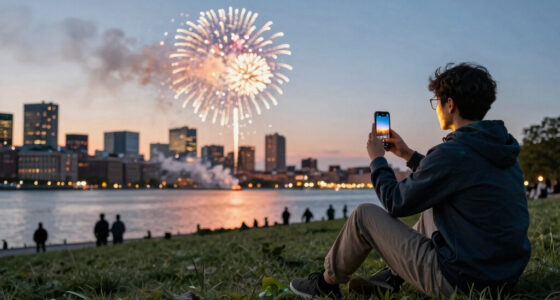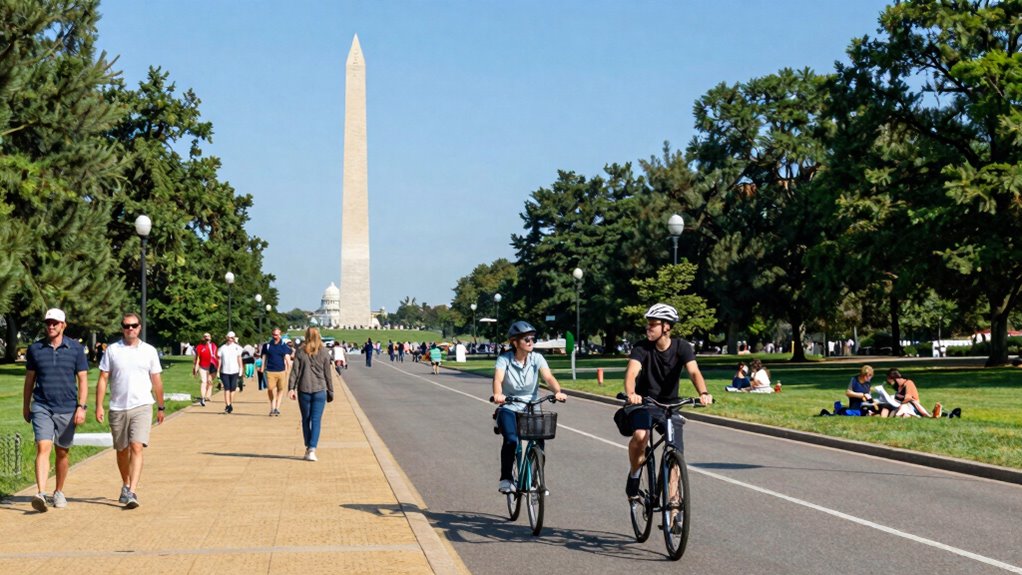

To explore Washington DC at a relaxed pace, walk between major landmarks like the Lincoln Memorial and Washington Monument, and use the Metro or bike-sharing programs to cover more ground comfortably. Stay in neighborhoods like Georgetown or U Street for local dining experiences, and take time to linger at attractions. Public transit and eco-friendly options make your trip smoother and more enjoyable, helping you soak in the city’s vibe without feeling rushed. Keep exploring for more tips on seamless sightseeing.

Get travel and outdoor gear delivered free with Prime
- Fast, free delivery on millions of items
- Prime Video, Amazon Music and more included
- Member-only deals all year
Key Takeaways
- Use the Metro and public transit to efficiently explore neighborhoods without the need for a car.
- Walk or bike between nearby landmarks and dining spots to absorb the city’s atmosphere at a relaxed pace.
- Plan your itinerary around walkable areas like the National Mall, Georgetown, and U Street.
- Take time to linger at each site, allowing for reflection and deeper cultural immersion.
- Choose local eateries and food trucks to experience authentic cuisine without rushing.
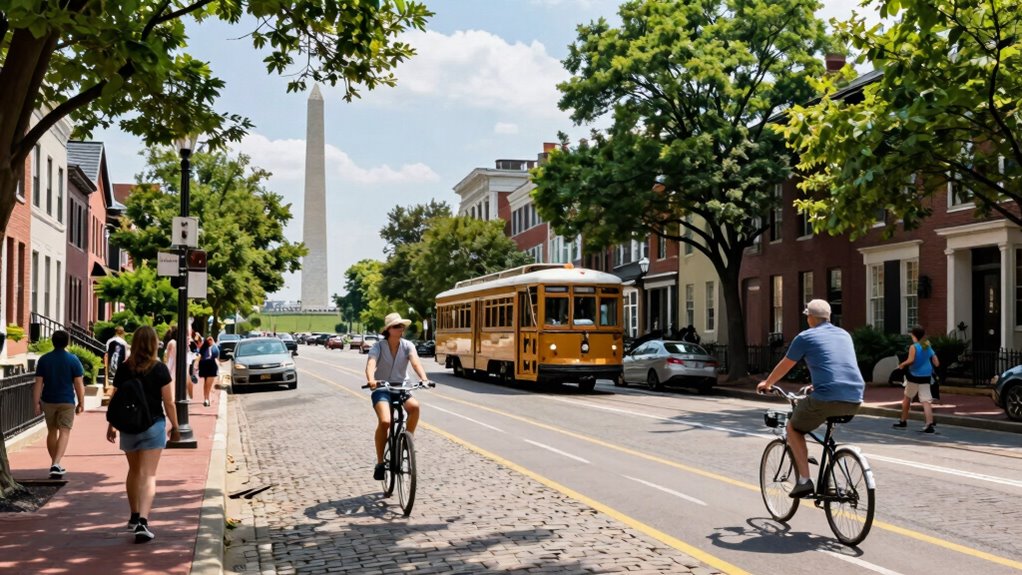
Visiting Washington DC doesn’t have to mean feeling rushed or relying heavily on a car. The city is designed to be walkable and bike-friendly, making it easy to explore at your own pace. Start your day early by heading to some of the city’s renowned historical landmarks. The National Mall is an ideal starting point because it connects many of the key sites, allowing you to take in monuments like the Lincoln Memorial, the Washington Monument, and the World War II Memorial without feeling overwhelmed. These landmarks are best appreciated on foot, giving you time to pause, reflect, and soak in the history that surrounds you. If walking isn’t your thing, consider renting a bike or using the city’s bike-sharing program. This way, you can cover more ground comfortably while still enjoying the outdoor scenery and the architecture that tells stories of the nation’s past.
When it’s time for lunch or a break, turn your attention to local dining options. Washington DC boasts a vibrant food scene, with plenty of eateries that reflect its diverse cultural makeup. Instead of rushing through meals, seek out neighborhood hotspots where locals dine. Areas like Georgetown or U Street are filled with cozy cafes, food trucks, and casual restaurants serving everything from classic American fare to international cuisines. Sampling local dishes isn’t just about satisfying your hunger; it’s about immersing yourself in the city’s culture and taking your time to savor each bite. Many of these spots are within walking or biking distance from major landmarks, so you can easily make your way between sites without feeling hurried.
Throughout your day, use public transportation like the Metro to move efficiently from one neighborhood to another. It’s a quick, cost-effective way to reach distant parts of the city without the stress of parking or traffic. The Metro’s extensive network connects you to key areas, allowing you to plan your visits with ease. When you arrive at each destination, explore the nearby streets by foot, giving yourself the flexibility to linger at sites that catch your interest. This approach prevents the city from feeling like a checklist and instead turns it into an experience you control. Additionally, knowing that the city’s walkable and bike-friendly design supports your leisurely exploration can help you feel more comfortable taking your time. To enhance your experience, consider planning your route with digital mapping tools to find the most scenic and accessible paths through the city. Embracing these urban transportation options can further enrich your day, providing a seamless way to enjoy the city’s diverse neighborhoods at your own pace. Moreover, taking advantage of the city’s public transit can help you maximize your sightseeing without the hassle of parking. Exploring the city using these sustainable transit methods also contributes to a more environmentally friendly visit.
As an affiliate, we earn on qualifying purchases.
Frequently Asked Questions
What Are the Best Walking Tours in Washington DC?
You should try the National Mall walking tour, which covers iconic historical landmarks like the Lincoln Memorial, Washington Monument, and Capitol Building. For museum visits, the Smithsonian Museums offer fantastic options, all within easy walking distance. You’ll enjoy exploring these sites at a relaxed pace, soaking in history and culture without feeling rushed or relying on a car. Comfortable shoes and a good map make your tour enjoyable and manageable.
How Can I Find Affordable Accommodations Near Major Sites?
You can find affordable accommodations near major sites by exploring budget-friendly stays like hostels, guesthouses, or Airbnb rentals in neighborhoods such as Capitol Hill or Foggy Bottom. Look for deals and discounts online, and consider staying slightly outside the city center for lower prices while still being close to attractions. Booking early and checking travel review sites will help you secure the best rates for your trip.
Are There Any Accessible Public Transportation Options for Seniors?
Yes, Washington DC offers accessible transit and senior-friendly options. You can use the Metro’s accessible stations with elevators and ramps, making travel easier. The DC Circulator and WMATA buses also feature priority seating and low floors for easy boarding. Additionally, many rideshare services are equipped for accessibility. These options help you explore the city comfortably without feeling rushed or dependent on a car, ensuring a smooth, enjoyable visit.
What Local Foods Should I Try in Washington DC?
You should definitely try the local foods like half-smokes from local food markets and iconic street eats such as crab cakes and mumbo sauce. Visit Eastern Market or Union Market to sample a variety of regional specialties. Don’t miss the chance to indulge in Maryland blue crabs or enjoy classic DC-style half-smokes. These authentic bites give you a true taste of Washington, DC’s vibrant food scene.
How Safe Is It to Explore DC Alone?
Exploring DC alone can be safe if you follow safety tips and consider solo travel considerations. Stay aware of your surroundings, stick to well-lit areas, and avoid risky neighborhoods at night. Keep your phone charged and share your plans with someone you trust. Use reliable transportation options like official taxis or ride-shares. Being cautious and prepared helps you enjoy the city safely and confidently on your own.
Conclusion
By planning ahead, using efficient transit, and pacing your activities, you’ll enjoy Washington DC without feeling rushed or reliant on a car. Embrace the walk, savor the sights, and take your time exploring each neighborhood. Stay flexible, stay curious, and let the city unfold at your own pace. With these tips, you’ll experience DC fully—without stress, without haste, and without the need for a car. Just relax, explore, and enjoy every moment.
Halloween Picks
halloween
As an affiliate, we earn on qualifying purchases.