
When you hike in Shenandoah National Park, you should focus on low-impact practices to help preserve its stunning landscapes. Stick to established trails to protect native vegetation and wildlife habitats. Always pack out your trash and avoid disturbing plants or animals. Following Leave No Trace principles guarantees a cleaner environment for everyone. By adopting these sustainable practices, you support the park’s conservation efforts. Keep exploring to discover more ways to enjoy your hike responsibly.

Get travel and outdoor gear delivered free with Prime
- Fast, free delivery on millions of items
- Prime Video, Amazon Music and more included
- Member-only deals all year
Key Takeaways
- Research and select designated trails suitable for foot traffic only to minimize environmental impact.
- Always stay on established trails to protect native vegetation and reduce soil erosion.
- Pack out all trash and follow proper disposal methods for human waste to maintain park cleanliness.
- Respect local wildlife and plants by not disturbing or picking them during your hike.
- Promote sustainable practices by sharing knowledge and encouraging others to adopt low-impact hiking principles.
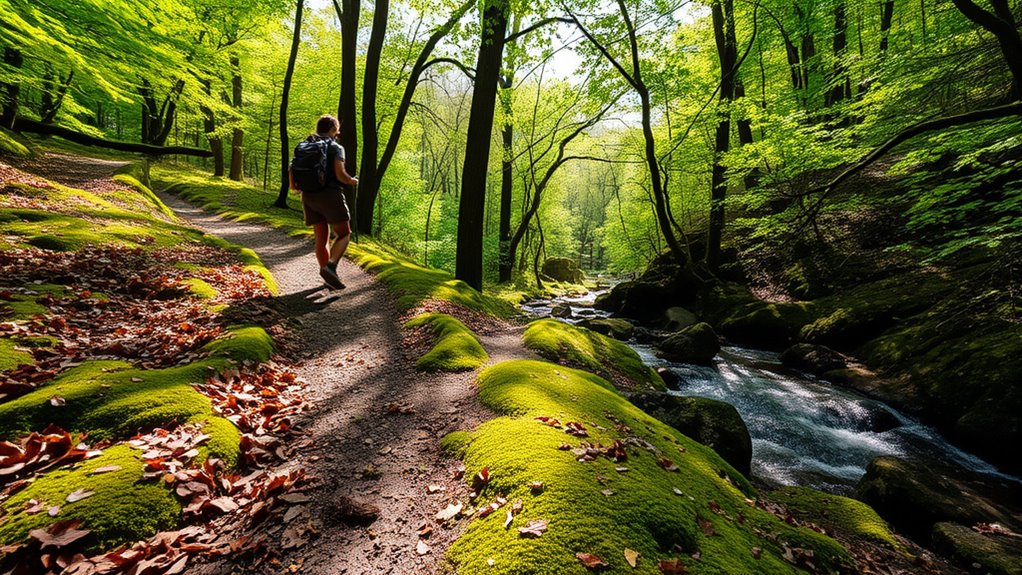
When you venture into Shenandoah National Park, embracing low-impact hiking allows you to enjoy the stunning landscapes while minimizing your footprint on the environment. By adhering to the principles of Leave No Trace, you not only protect the park’s natural beauty but also enhance your own outdoor experience. Each step you take can leave an impact, so it’s vital to be mindful of your surroundings and the trails you choose.
One of the first things to consider is trail compatibility. Not all trails are suitable for every type of hiker. Before you set out, take time to research the areas you plan to explore. Some trails may be designated for foot traffic only, while others might allow bicycles or horses. By sticking to the designated paths, you help preserve delicate ecosystems and prevent erosion. When you choose the right trail, you’re also supporting the preservation efforts of the park, ensuring that future generations can enjoy these breathtaking landscapes.
Consider trail compatibility before hiking; choose paths that preserve ecosystems and support future generations’ enjoyment of the park’s beauty.
As you hike, remember to stay on established trails. This not only minimizes the impact on native vegetation but also reduces soil erosion. If you wander off the path, you risk damaging fragile plants and disrupting local wildlife habitats. Your commitment to low-impact hiking means you respect the environment and the creatures that call it home. When you stick to the trail, you’re creating a sustainable hiking culture that encourages others to do the same.
Another essential aspect of Leave No Trace is managing waste responsibly. Always pack out what you pack in, including food scraps and packaging. If you’re hiking in areas where restrooms aren’t available, know the proper methods for disposing of human waste. By following these guidelines, you contribute to a cleaner, healthier environment for everyone. It’s also vital to leave natural and cultural features as you found them. Picking plants or disturbing wildlife can have long-term effects on the park’s ecosystem. Additionally, understanding the importance of monitoring credit card statements can help you manage your expenses while enjoying your outdoor adventures.
Lastly, educating yourself and others about the principles of low-impact hiking can amplify your efforts. Share your knowledge with fellow hikers, encouraging them to adopt sustainable practices as well. When you make a conscious choice to hike responsibly in Shenandoah National Park, you’re not just enjoying the beauty around you; you’re also becoming a steward of the environment. Your actions today will help preserve this incredible haven for generations to come, allowing everyone to experience its wonders while minimizing their impact.
Frequently Asked Questions
What Are the Best Seasons for Low-Impact Hiking in Shenandoah?
The best seasons for low-impact hiking are spring and fall. In spring, the vibrant seasonal flora bursts into bloom, offering stunning views while minimizing trail erosion. Fall brings crisp air and beautiful foliage, making your hike enjoyable and visually rewarding. During these seasons, trails are often less muddy, reducing your impact on the environment. So, plan your hikes in spring or fall to experience nature’s beauty while practicing low-impact techniques.
Are Pets Allowed on Low-Impact Hiking Trails?
“Curiosity killed the cat, but it won’t hurt your hike!” Pets aren’t allowed on many low-impact trails due to strict pet policies and trail restrictions aimed at protecting wildlife and ecosystems. If you’re considering hiking with your furry friend, check specific trail regulations beforehand. Some areas may allow pets on designated paths, so it’s always best to plan ahead. Enjoy your adventure while keeping nature safe for everyone!
What Should I Wear for Low-Impact Hiking?
For low-impact hiking, wear appropriate footwear like sturdy hiking boots or trail shoes that provide good traction and support. Choose lightweight clothing that wicks moisture away and keeps you comfortable in varying temperatures. A breathable shirt and quick-dry shorts or pants are great options. Don’t forget a hat and sunglasses for sun protection, and always pack a light jacket in case of changing weather. Staying comfortable will enhance your hiking experience!
How Can I Find Guided Low-Impact Hikes in the Park?
Finding guided low-impact hikes is like discovering hidden gems in a treasure hunt. Start by checking the park’s official website for guided tour options, where you’ll find expert-led hikes tailored to your needs. Additionally, look into volunteer hiking programs, which often offer guided experiences while contributing to conservation efforts. Engaging with local outdoor groups can also lead you to unique hikes that enhance your connection with nature and fellow hikers.
Are There Any Camping Options Available for Low-Impact Hikers?
Yes, there are camping options for low-impact hikers! You can find designated campsites that follow campsite regulations and promote Leave No Trace principles. These sites help minimize your impact on the environment while you enjoy your outdoor experience. Make sure to familiarize yourself with the specific rules for camping in the area, including where you can set up camp and how to properly dispose of waste. Happy camping!
Conclusion
As you explore the stunning trails of Shenandoah National Park, remember that every step you take leaves a mark on this beautiful landscape. Just like a gentle breeze caresses the leaves, your low-impact hiking helps preserve the park for future generations. By choosing to tread lightly, you’re not just enjoying nature—you’re protecting it. So lace up your boots, embrace the serenity, and keep the trails as pristine as you found them. Happy hiking!
Halloween Picks
halloween
As an affiliate, we earn on qualifying purchases.