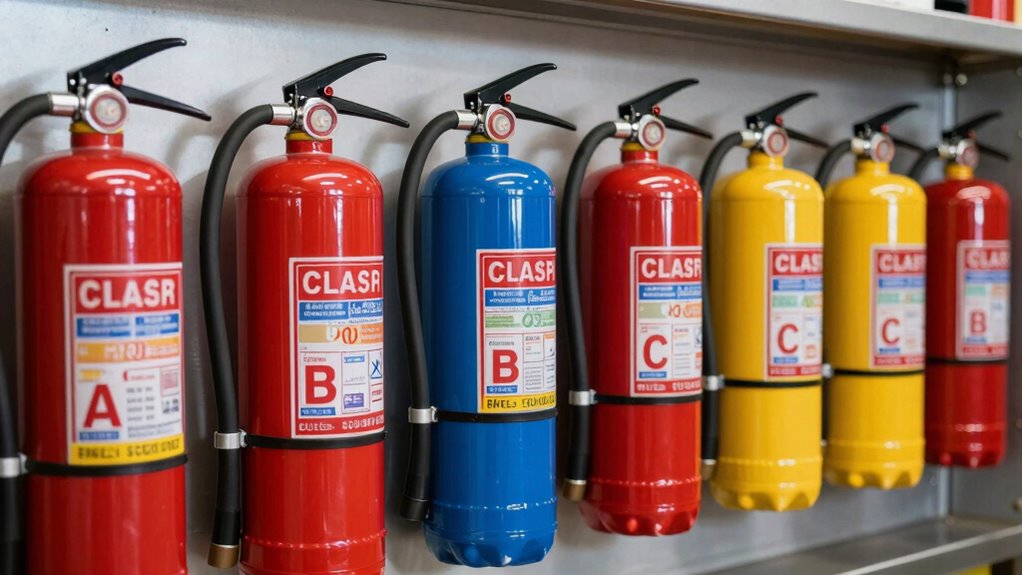

When selecting a fire extinguisher for your vehicle, it’s vital to choose the right class based on potential fire hazards. For most vehicles, a multi-purpose ABC extinguisher offers versatility against common fires involving paper, liquids, and electrical components. If you’re aware of specific risks like flammable liquids, select a class B or a specialized extinguisher. Understanding which class suits your vehicle guarantees you’re prepared for emergencies—keep exploring to discover how to make the best choice.
Key Takeaways
- Choose an ABC multi-purpose extinguisher for versatility in handling various vehicle fires.
- Use Class B extinguishers for fires involving gasoline, oil, or other flammable liquids.
- Select a Class C extinguisher to safely tackle electrical fires in wiring and electronic components.
- Ensure the extinguisher is appropriately rated and compliant with local safety regulations.
- Regularly check and maintain the extinguisher to guarantee readiness in emergency situations.
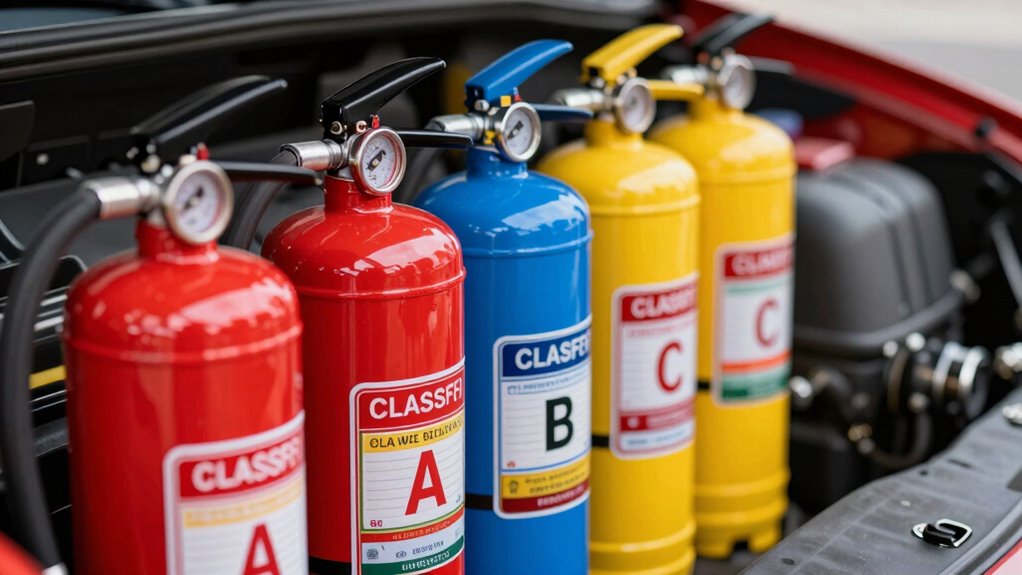
Fire extinguishers are vital safety tools for vehicles, helping you quickly address fires before they escalate. Choosing the right type of extinguisher is fundamental because different fires require different approaches. Not only do you need to select the appropriate class, but you also have to keep it properly maintained to guarantee it functions when needed. Proper maintenance tips include regularly checking the pressure gauge, inspecting the nozzle for obstructions, and ensuring the extinguisher is securely mounted. Remember, a poorly maintained fire extinguisher may not discharge effectively during an emergency. Additionally, staying informed about legal requirements in your area is significant. Many jurisdictions mandate specific types of fire extinguishers for vehicles, especially for commercial or passenger vehicles, and failing to comply can result in fines or penalties.
Fire extinguishers save lives; maintain and choose the right class for vehicle safety and legal compliance.
When selecting a fire extinguisher, you should consider the class of fire it can combat. Class A extinguishers are suitable for ordinary combustibles like paper, wood, and cloth. Class B extinguishers are designed for flammable liquids such as gasoline, oil, and grease. Class C extinguishers target electrical fires, which are common in vehicles due to wiring and electronic systems. Some extinguishers are multi-class, labeled to handle multiple types of fires, providing versatile protection for your vehicle. For most passenger vehicles, a multi-purpose extinguisher labeled ABC is recommended because it covers a broad range of potential fire hazards. Incorporating proper extinguisher selection based on fire class ensures comprehensive safety.
In terms of maintenance, it’s best to perform visual inspections monthly. Check that the pressure gauge needle is in the green zone, indicating adequate pressure. Ensure the safety pin and tamper seal are intact, and the nozzle is clear of debris. If your extinguisher is rechargeable, get it inspected and refilled by a professional after use or at least once a year. Rechargeable extinguishers tend to be more cost-effective over time and are generally more reliable when maintained properly. Regular maintenance not only prolongs the lifespan of your extinguisher but also guarantees its readiness in emergencies.
Frequently Asked Questions
Can I Use a Home Fire Extinguisher on My Vehicle?
You can technically use a home fire extinguisher on your vehicle, but it’s not ideal. Home fire safety extinguishers might not be appropriate for vehicle fires, especially if they’re not the right class. Always check extinguisher maintenance to make certain it’s in good condition. For vehicle safety, use a Class B or C extinguisher designed for flammable liquids and electrical fires, ensuring effective fire suppression and safety.
Are There Size Restrictions for Vehicle Fire Extinguishers?
Think of your vehicle as a ship needing the right size lifeboat. Size restrictions for vehicle fire extinguishers are generally flexible, but they should fit securely in your vehicle storage without hindering access. Keep the extinguisher within legal limits, usually under 10 pounds, and make sure it’s easily accessible in your extinguisher placement. This way, you’ll be prepared without compromising safety or convenience during emergencies.
How Often Should I Replace My Vehicle Fire Extinguisher?
You should replace your vehicle fire extinguisher every 5 to 6 years, even if it looks fine. Follow a regular maintenance schedule, including monthly inspection frequency, to guarantee it’s always ready. Check the pressure gauge, look for corrosion or damage, and ensure the tamper seal is intact. If it’s expired or damaged, replace it immediately to stay compliant and be prepared in case of an emergency.
Do All Fire Extinguishers Work on Electric Vehicle Fires?
Did you know electric vehicle fires are 2.5 times more likely to occur than traditional car fires? Not all fire extinguishers work on EV fires because electric vehicle hazards require specific fire extinguisher compatibility. You should use Class D or specialized foam extinguishers designed for lithium-ion batteries. Always verify your extinguisher’s label to confirm it’s suitable for electric vehicle fires, providing effective safety in emergencies.
Is a Fire Extinguisher Mandatory in All Vehicle Types?
You should know that fire extinguisher regulations vary, but many vehicle safety standards do recommend or require having one, especially for commercial or passenger vehicles. While not all vehicle types mandate a fire extinguisher, carrying one enhances safety and complies with local laws. Check your area’s vehicle safety standards to make certain you’re following the regulations. Having a fire extinguisher on board can be a vital safety measure during emergencies.
Conclusion
Choosing the right fire extinguisher for your vehicle means understanding the class, considering your needs, and acting quickly in emergencies. It’s about being prepared, staying safe, and making smart choices. It’s about knowing the right extinguisher, selecting the right class, and responding promptly. Because when it comes to fire safety, being informed, being ready, and being proactive can make all the difference. Stay safe, stay prepared, and drive with confidence.