
To navigate a train station confidently, arrive early and plan ahead. Buy your tickets via trusted sources, choosing the right type for your journey, and keep them handy. Follow clear signage and station maps to find your platform easily, paying attention to announcements. Stay calm during delays or crowds, keep your belongings secure, and use station amenities to stay comfortable. If you stay prepared, you’ll pass through effortlessly—learn more tips to master your station experience.
Key Takeaways
- Familiarize yourself with station signage, platforms, and amenities to navigate efficiently and comfortably.
- Purchase tickets in advance or via apps, and verify details before boarding to avoid confusion.
- Arrive early, monitor updates, and follow proper etiquette to ensure smooth platform use and travel.
- Stay calm during delays or emergencies by using stress reduction techniques and seeking assistance from staff.
- Keep belongings secure, plan your route, and be aware of station rules for safe, stress-free travel experience.
What You Need to Know About Train Stations Before You Travel
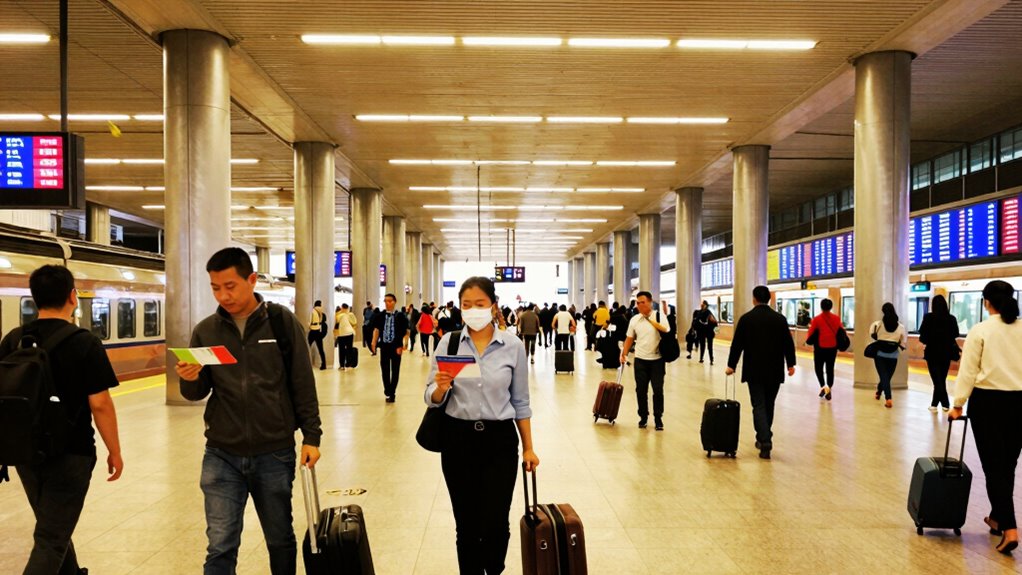
Before you head to the train station, it’s important to understand how it operates. Knowing some local station history helps you appreciate its design and services, making your visit smoother. Many stations have been around for decades, evolving from simple stops to bustling hubs. Ticket agent roles are essential; they assist with purchasing tickets, answering questions, and providing directions. While many stations now offer ticket machines, agents remain available to help travelers navigate complex routes or special fares. Recognizing the station’s history and understanding the roles of staff can reduce stress and prevent confusion. Familiarity with these basics ensures you’re better prepared to handle your journey confidently, whether you’re catching a quick local train or planning a longer trip. Modern station amenities can also enhance your travel experience and help you stay comfortable during your wait. Additionally, understanding station security procedures can further ensure a safe and smooth travel experience. Being aware of ticketing options allows you to choose the most convenient method for your needs. Knowing how to interpret station signage and platform layouts can further streamline your boarding process and reduce last-minute rushes. Gaining a basic understanding of station operations can help you adapt quickly to any unexpected changes or delays.
How to Buy Your Train Tickets Quickly and Avoid Common Mistakes

Getting your train tickets fast can save you time and stress, but it’s easy to make mistakes. Knowing quick tips and common pitfalls helps you buy efficiently and avoid delays. Let’s explore how to speed up the process and steer clear of errors. Being aware of affiliate disclosure policies can also ensure transparency when making online purchases for tickets. For example, understanding the net worth of public figures, such as Kate from Breaking Amish, is less relevant, but being familiar with the reliability of your ticket sources ensures smoother transactions. Additionally, recognizing character development in various narratives can help you appreciate the context behind certain travel themes or stories.
Quick Ticket Purchase Tips
Ever wondered how to buy train tickets in a flash? Here are quick tips to streamline your purchase and avoid stress. First, explore various ticket options—some offer flexible dates, while others are cheaper with advance booking. Second, check for fare discounts, like student, senior, or off-peak deals, to save money. Third, use online platforms or mobile apps; they’re faster and often have exclusive deals. Fourth, always have your payment details ready beforehand to avoid delays at checkout. By knowing your ticket options and fare discounts, you’ll secure your seat quickly and confidently. Staying prepared guarantees you won’t miss your train or get caught up in last-minute rushes. Additionally, understanding simple safety tips can help you stay alert and make responsible choices while traveling. Being aware of train station layouts can also help you navigate more efficiently and reduce travel anxiety. Familiarizing yourself with vacuum features to consider can also be useful for maintaining your luggage or cleaning your travel space, making your journey more comfortable. Master these tips, and buying tickets will feel effortless each time.
Common Buying Mistakes
While mastering quick ticket purchases saves time, many travelers still fall into common traps that slow them down or lead to mistakes. Ticket errors happen when you select the wrong date, time, or class, causing delays or the need to reprint. Fare confusion often leads to paying more than necessary or missing discounts. To avoid these mistakes, double-check your travel details before confirming your purchase. Read the fare rules carefully to understand restrictions and eligibility for discounts. Be cautious with auto-filled information and verify all details on the screen. Using online booking platforms can help prevent errors, but always review your ticket thoroughly before finalizing. Staying attentive ensures you avoid unnecessary fare confusion and ticket errors, making your journey smoother.
Understanding Different Ticket Types to Match Your Journey
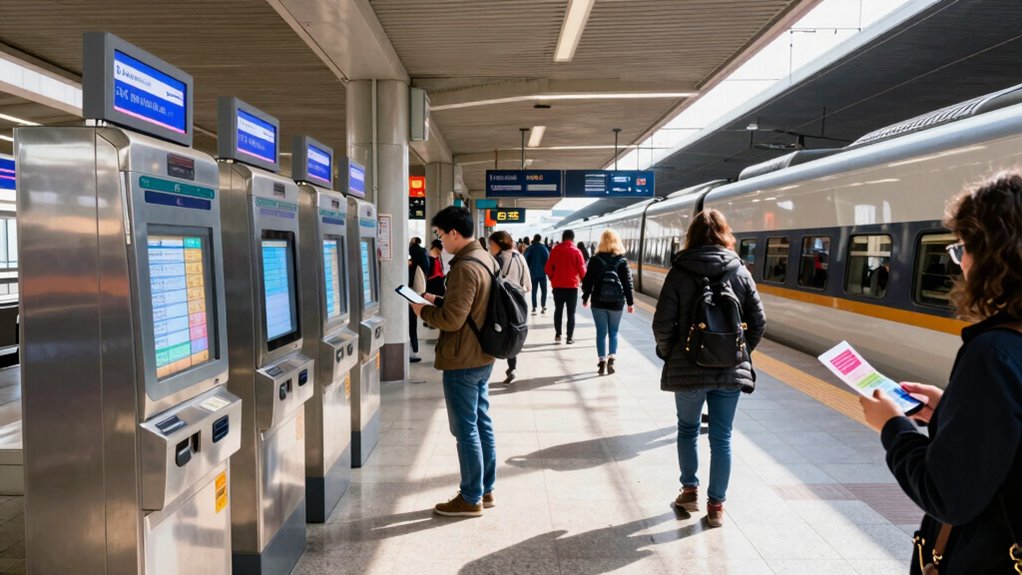
Choosing the right ticket type is essential to making your train journey smooth and cost-effective. Your ticket options and fare classes can dramatically impact your experience. Here’s what you should consider:
- Save money by selecting off-peak tickets for less crowded, cheaper fares.
- Choose flexible fare classes if your plans might change—you won’t be locked in.
- Opt for advance tickets to lock in lower prices for popular routes.
- Consider rail passes if you plan multiple trips—they often offer significant savings.
- Understanding fare classes helps you select the most suitable ticket for your needs and avoid unnecessary costs. Being aware of dynamic pricing strategies can help you secure the best deals at the right times.
- Being familiar with air purifier maintenance dos and don’ts can help ensure your environment stays clean and fresh during your travels. Additionally, acquiring Net+ certification benefits can boost your understanding of systems that might be involved in modern travel amenities and security features. Regularly checking the piercing care and hygiene guidelines ensures your body piercings stay healthy and free from infection during your journey.
Matching the right ticket options to your journey means fewer surprises and more peace of mind. Knowing your fare classes guarantees you get the best value, whether you’re taking a quick ride or an overnight adventure. Your ticket choice sets the tone for a stress-free trip.
How to Find Your Platform and Read Station Signs Confidently

When you arrive at the station, look for clear station signage that shows departure information and platform details. Confirm your platform number before heading in that direction to avoid confusion. Recognizing signs quickly and verifying platform numbers keeps your journey smooth and stress-free. Being aware of art care principles can help you stay calm and confident while navigating busy stations. Additionally, understanding communication security measures can prevent disruptions or misunderstandings during your travels. Familiarity with tactical gear and safety protocols can also enhance your preparedness in unexpected situations. Knowing how to read and interpret station signage effectively can further streamline your experience and reduce anxiety, especially when you are familiar with the importance of reliable infrastructure in public spaces.
Recognize Station Signage
Have you ever struggled to quickly find the right platform at a busy train station? Recognizing station signage can make all the difference. First, spot wayfinding symbols—icons indicating directions for platforms, exits, and services. Second, pay attention to signage colors; they’re often color-coded to guide you efficiently. Third, look for clear, large text displaying platform numbers—these are your primary clues. Fourth, familiarize yourself with station maps and their legends, which often use consistent symbols and colors. Fifth, understanding the standardized signage used across transit systems can further enhance your confidence in navigating stations. Additionally, being aware of support amenities signage, such as assistance points and information booths, can be very helpful. By sharpening your eye for these visual cues, you’ll navigate confidently, even amid crowds. Remember, stations are designed with these signs to help you find your way faster and reduce stress. Recognizing these signals turns a confusing maze into a straightforward path.
Confirm Platform Numbers
Once you’ve learned to recognize station signage, confirming your platform number becomes straightforward. Focus on clear sign reading; station signs typically display the platform numbers prominently, often above or beside the tracks. Look for digital or illuminated boards that update in real-time, especially during busy times. Always double-check the destination and train number to guarantee you’re on the right platform. If you’re unsure, ask station staff—they’re there to help. Pay attention to any directional arrows or color-coded signs that guide you to your platform. Remember, platform confirmation is a key step to a smooth journey. Staying alert and reading signs carefully reduces stress and helps you catch your train confidently. With practice, verifying your platform will become quick and instinctive.
Tips to Manage Your Time and Prevent Delays
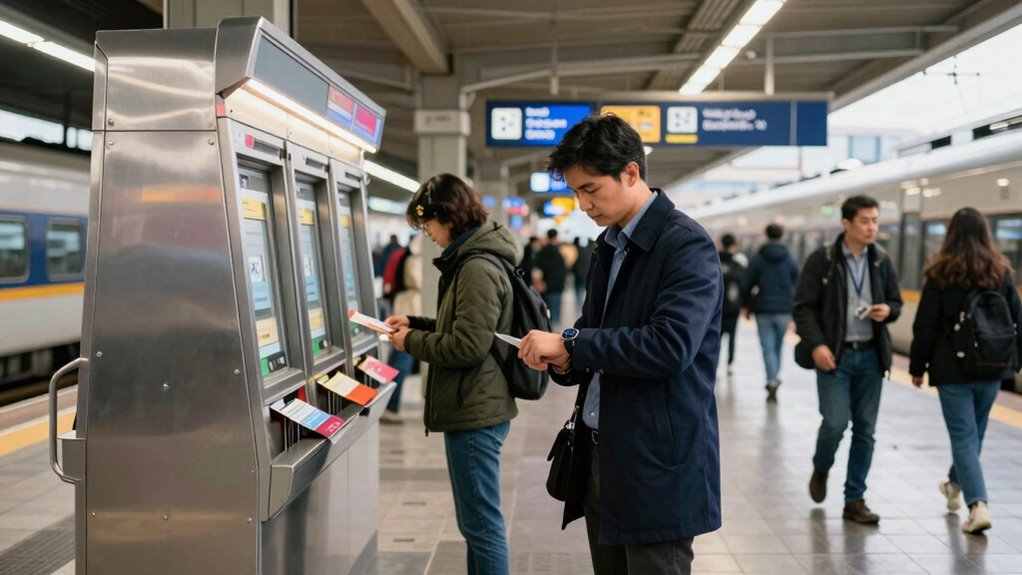
To stay on schedule and avoid delays at the train station, it’s essential to plan ahead and allocate enough time for each step of your journey. Start by organizing your luggage efficiently—know where everything is to save precious minutes. Prepare travel snacks in advance; they keep you energized and prevent last-minute stops. To manage your time effectively, consider these tips:
- Arrive at least 15 minutes before departure to handle unexpected waits.
- Keep your tickets and documents easily accessible to avoid searching.
- Use a checklist to double-check luggage organization before leaving.
- Stay aware of platform updates and monitor train schedules regularly.
With proper planning, you’ll reduce stress, stay calm, and ensure a smooth start to your trip.
Stay Calm and Composed in Crowded Stations

Crowded train stations can quickly become overwhelming, but staying calm and focused helps you steer efficiently. When facing large crowds, take deep breaths to maintain your composure and avoid panic. Pay attention to your surroundings, using clear crowd guidance to find the best routes to your platform without rushing. Keep your personal safety in mind by holding your belongings securely and avoiding crowded spots where pickpockets might operate. Move deliberately and politely, offering space to others when needed. If you feel anxious, step aside briefly to regroup before continuing. Staying calm allows you to make better decisions, reduces stress, and ensures your journey remains smooth, even in busy stations. Confidence and composure are your best tools for guiding crowded environments safely.
Station Services and Amenities to Make Waiting Easier
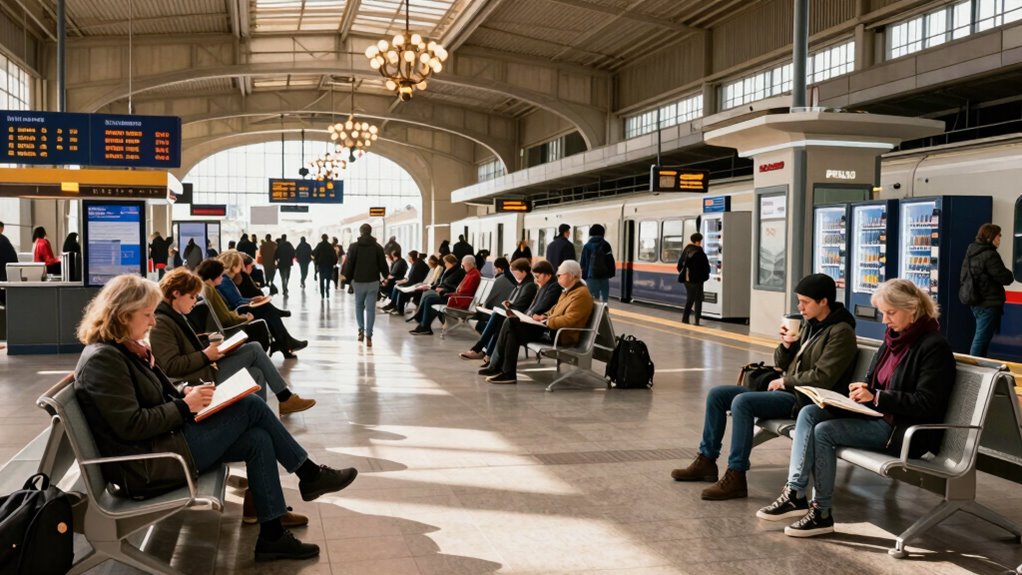
Station services and amenities are designed to make your wait more comfortable and efficient. When you need a moment to relax, head to the station lounge, where plush seating and quiet atmosphere help you unwind. If your bags feel heavy or you want to explore unburdened, baggage storage lets you temporarily leave your belongings safely behind. To make your experience even smoother:
Relax in the station lounge or store your bags to enjoy a stress-free waiting experience.
- Find a cozy station lounge to rest or catch up on work.
- Use baggage storage to free yourself from bulky loads.
- Grab a snack or coffee at nearby cafes to stay energized.
- Access free Wi-Fi to browse or plan your next move.
These amenities turn waiting into a manageable, even pleasant, part of your journey. They’re here to help you stay calm and focused.
What to Do When You Face Delays, Ticket Problems, or Emergencies
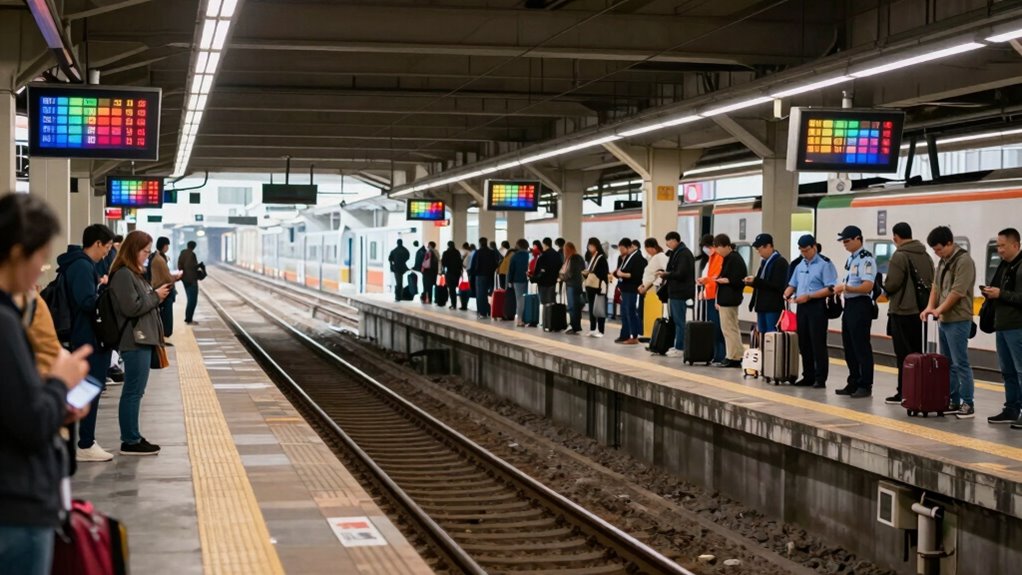
When delays or ticket issues occur, stay calm and act quickly to resolve them. Know who to contact and what steps to take to handle emergencies effectively. Being prepared helps you manage these situations smoothly and get back on track.
Handling Ticket Issues Swiftly
If you encounter delays, ticket problems, or emergencies, acting quickly can make all the difference. Stay calm and follow these steps:
- Speak immediately with station staff—they can guide you toward ticket refunds or solutions for lost tickets.
- Verify your ticket status online or at the counter to avoid unnecessary stress.
- Keep your receipts and identification handy—they support your claim for refunds or replacements.
- Stay patient and polite, even if frustrated; staff are more likely to assist efficiently.
Managing Delays Calmly
Encountering delays or emergencies can be stressful, but staying calm helps you handle the situation more effectively. When faced with a delay, take a few deep, mindful breaths to center yourself and reduce stress. Focus on your breathing rather than panicking or getting frustrated. Remind yourself that delays are often temporary and outside your control. Keep an eye on station announcements or digital displays for updates, and approach station staff politely if you need assistance. Maintaining a composed attitude can prevent tension from escalating and help you think clearly. Use stress reduction techniques like grounding yourself or gentle breathing exercises to stay present. Remaining calm makes it easier to adapt, find solutions, and navigate the situation more smoothly.
Responding to Emergencies
Facing delays, ticket issues, or emergencies can be overwhelming, but knowing how to respond calmly and effectively makes a big difference. Your emergency preparedness and first aid essentials can be lifesavers in critical moments. Stay composed and focus on these steps:
- Assess the situation quickly to determine if anyone needs immediate medical attention.
- Call for help by alerting station staff or dialing emergency services.
- Provide first aid if you’re trained—stop bleeding, perform CPR, or assist the injured.
- Stay calm and reassure others until professional help arrives, reducing panic and chaos.
Being prepared with basic first aid essentials and knowing how to respond helps you stay in control during crises. Your calmness can make all the difference in ensuring safety for everyone around you.
Getting Off at the Right Stop and Connecting Smoothly

Getting off at the right stop is essential for a smooth journey, and paying attention to station announcements and signage makes it easier. As you approach your stop, stay alert and prepare to disembark calmly, respecting platform safety. Keep your belongings close and move toward the door promptly to avoid blocking others. Once off, follow station etiquette by allowing passengers to exit first and avoiding rushes or pushing. If you need to connect to another train, check the station map and signs for the correct platform. Stay aware of your surroundings, especially near moving trains or crowded areas. Connecting seamlessly depends on your attentiveness and respect for others’ space, ensuring a safe and seamless transition to your next destination.
Top Tips to Conquer Any Train Station With Confidence

Knowing how to navigate a train station confidently can make your journey much smoother. To do this, stay alert and prepared. First, always buy your tickets from trusted sources to avoid ticket scams. Second, familiarize yourself with platform etiquette—stand behind the yellow line and keep noise to a minimum. Third, arrive early to find your platform without rushing, reducing stress. Fourth, pay attention to announcements and signs to stay informed. These steps boost your confidence, help you avoid scams, and show respect to other travelers. Remember, confidence comes from preparation—know your ticket, respect station rules, and stay aware of your surroundings. With these tips, you’ll conquer any train station with calm and ease.
Frequently Asked Questions
How Early Should I Arrive Before My Train Departs?
You should arrive at least 30 minutes before your train’s departure to guarantee enough time for you to handle the boarding time and navigate the station crowd comfortably. During busy hours, crowds can slow you down, so arriving early helps you avoid stress. If you’re traveling during off-peak times, 15-20 minutes might be enough. Always check for any station updates or delays to plan accordingly.
What Should I Do if I Lose My Ticket?
Losing your ticket is like losing a treasure map. Don’t panic—head to the station’s ticket office or customer service desk. They’ll guide you through the lost ticket procedures and help with ticket replacement. Bring your ID and any proof of purchase. Acting quickly guarantees you won’t miss your train. Remember, station staff are there to help you navigate this detour and keep your journey on track.
Are There Accessible Facilities for Travelers With Disabilities?
Yes, train stations typically have accessible facilities for travelers with disabilities. You’ll find assistive technology like ramps, elevators, and tactile guides to help navigate the station. Service animal accommodations are usually available, allowing you to bring your support animal with you. If you need specific assistance, it’s best to notify station staff in advance so they can help guarantee a smooth and comfortable journey.
Can I Change or Refund My Train Ticket After Purchase?
You might be surprised to learn that changing or refunding your train ticket is often possible. Check the ticket policies of your train operator, as they vary. Typically, you can request a refund through their website or at the station, following specific refund procedures. Act quickly, because some tickets are non-refundable, but many offer flexibility if your plans change unexpectedly. Always review the terms before purchasing to avoid surprises.
How Do I Navigate Stations With Limited Signage or Language Barriers?
When traversing stations with limited signage or language barriers, rely on visual cues like arrows, symbols, and station maps to find your way. Look for multilingual signs that help interpret directions, and don’t hesitate to ask staff or fellow travelers for assistance. Keep an eye out for familiar landmarks or digital displays, and stay calm—these strategies guarantee you reach your platform smoothly despite language challenges.
Conclusion
Getting around train stations can feel overwhelming, but with these tips, you’re ready for any situation. Imagine missing your train because you didn’t check the platform early—avoiding that is simple if you arrive with time to spare. By understanding ticket types, reading signs confidently, and staying calm during delays, you’ll travel smoothly. With a little preparation, you’ll confidently conquer any station and enjoy stress-free journeys every time.