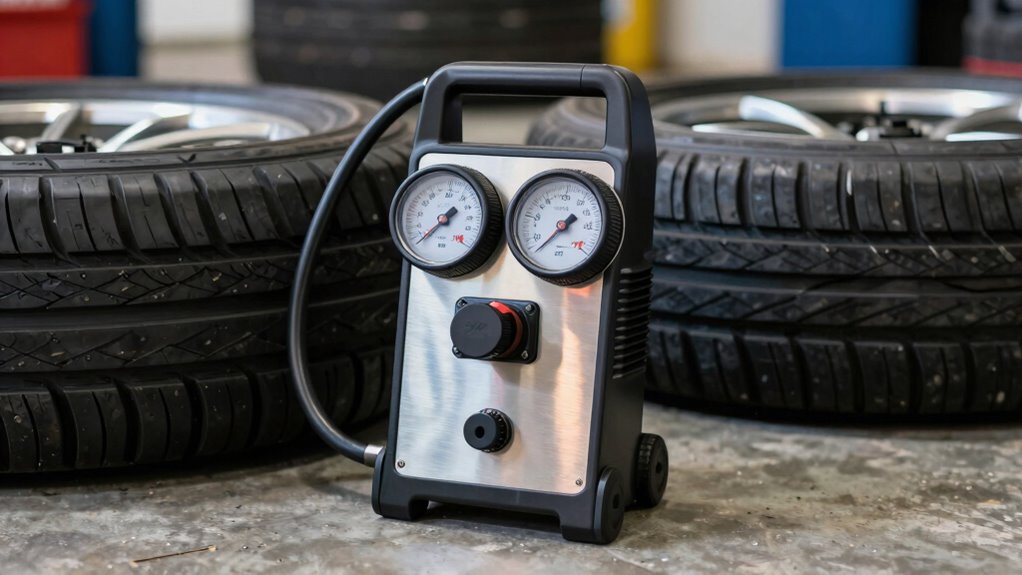
Understanding PSI and CFM helps you use a tire inflator safely and efficiently. PSI measures the air pressure needed for your tires, preventing over- or under-inflation, which can cause damage or reduce fuel efficiency. CFM indicates how quickly the inflator fills your tires, saving you time. Features like automatic shutoff ensure precise inflation without constant monitoring, making your tasks easier. Keep going, and you’ll discover how to select the best inflator for your needs.
Key Takeaways
- PSI measures the pressure needed to properly inflate tires, ensuring safety and optimal tire wear.
- CFM indicates the inflator’s airflow rate, affecting how quickly a tire can be filled.
- Correct PSI prevents tire damage, uneven wear, and improves fuel efficiency.
- Over-inflation or under-inflation can lead to tire failure and safety risks.
- Choosing an inflator with accurate PSI and sufficient CFM ensures quick, safe, and precise tire inflation.
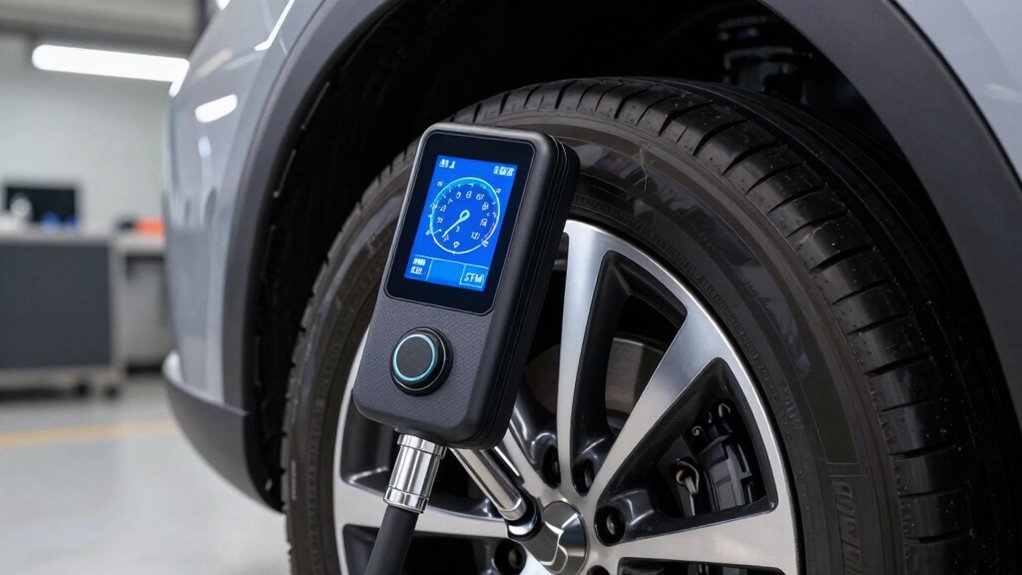
Tire inflators are essential tools for maintaining proper tire pressure, ensuring your vehicle operates safely and efficiently. When choosing a tire inflator, features like digital displays and automatic shutoff can make a significant difference in how easily and accurately you can inflate your tires. Digital displays provide a clear, easy-to-read screen that shows the current tire pressure as you inflate, so you don’t have to guess or rely on a separate pressure gauge. This real-time feedback helps you reach the exact PSI recommended for your vehicle, preventing under- or over-inflation. Plus, digital displays are often backlit, making it simple to check pressure even in low-light conditions.
Digital displays offer easy, real-time tire pressure readings for accurate inflation and safer driving.
Automatic shutoff is another vital feature, especially if you want a hassle-free experience. Once the tire reaches your preset PSI, the inflator automatically stops, saving you the trouble of constantly monitoring the pressure. This feature not only prevents over-inflation, which can be dangerous, but also protects the inflator from damage caused by running continuously. With automatic shutoff, you can set the desired pressure and walk away, confident that the inflator will do the work for you. It’s perfect for quick stops or when you’re juggling multiple tasks.
Beyond these features, understanding PSI and CFM helps you choose the right inflator. PSI, or pounds per square inch, is the measurement of pressure your tires need. Too low, and you risk uneven tire wear, decreased fuel efficiency, and potential blowouts. Too high, and you might damage the tire or cause a blowout. Most vehicles have a recommended PSI listed on the door jamb or in the owner’s manual, so maintaining this pressure is critical. CFM, or cubic feet per minute, indicates how quickly the inflator can fill your tire. If you’re inflating multiple tires or larger tires, a higher CFM means less time spent waiting.
Additionally, being aware of modern kitchen technology principles like automation and precision can help you better understand how these features improve user experience and safety. Investing in a tire inflator with a digital display and automatic shutoff makes maintaining proper tire pressure straightforward and less time-consuming. These features ensure you inflate your tires accurately, safely, and efficiently, helping extend tire life and improve vehicle performance. When you pay attention to PSI and CFM, you’re making smarter choices that keep you safe on the road. Whether you’re topping off tires or dealing with flat emergencies, a reliable inflator with these features provides peace of mind and convenience, making it an indispensable tool for every vehicle owner.
Frequently Asked Questions
How Do I Choose the Right Tire Inflator for My Vehicle?
To select the right tire inflator, consider your vehicle’s tire size and inflator compatibility. Larger tires need an inflator with higher CFM (air flow), while smaller tires can be topped up with a basic model. Make sure the inflator’s PSI range matches your tire’s requirements. Check if the inflator fits your vehicle’s power source, like a 12V plug or an AC outlet. This guarantees safe, efficient inflation every time.
What Safety Precautions Should I Take When Using a Tire Inflator?
When using a tire inflator, always wear personal protective equipment like safety goggles and gloves to protect yourself from debris or accidental sparks. Confirm electrical safety by inspecting the cord and plug for damage before use, and keep the inflator away from water to prevent shocks. Follow the manufacturer’s instructions carefully, and avoid over-inflating tires to prevent accidents. Staying cautious keeps you safe during the process.
Can I Use a Portable Inflator for Large Industrial Tires?
You can use a portable inflator for large industrial tires if it offers sufficient PSI and CFM to match the tire’s requirements. Portable inflator advantages include portability and quick setup, but not all are compatible with industrial tires. Check the inflator’s specs to guarantee it can handle the high pressure and volume demands of industrial tires. Always verify compatibility to prevent damage and ensure safe, efficient inflation.
How Often Should I Check My Tire Pressure?
You should check your tire pressure at least once a month and before long trips. Regular tire pressure monitoring helps you maintain proper inflation, improving safety and fuel efficiency. Confirm your inflator is calibrated correctly to get accurate readings. Keep an eye on tire pressure, especially in varying weather conditions, and use a quality inflator for consistent results. Proper maintenance prevents uneven wear and extends tire lifespan.
What Maintenance Is Required for a Tire Inflator?
Think of your tire inflator as a trusty engine needing regular tune-ups. You should regularly check the air filter for dust and debris, replacing it if necessary. Lubricate moving parts with oil to prevent rust and guarantee smooth operation. Keep the hoses and connections clean and tight, and store your inflator in a dry place. These simple maintenance steps keep your inflator running efficiently whenever you need it most.
Conclusion
Understanding PSI, CFM, and their importance helps you choose the right tire inflator. Did you know that properly inflated tires can improve fuel efficiency by up to 3%? That’s a small change with big savings! By paying attention to these details, you guarantee safer, longer-lasting tires and better vehicle performance. So, next time you check your tires, remember: the right inflator makes all the difference for your driving experience.