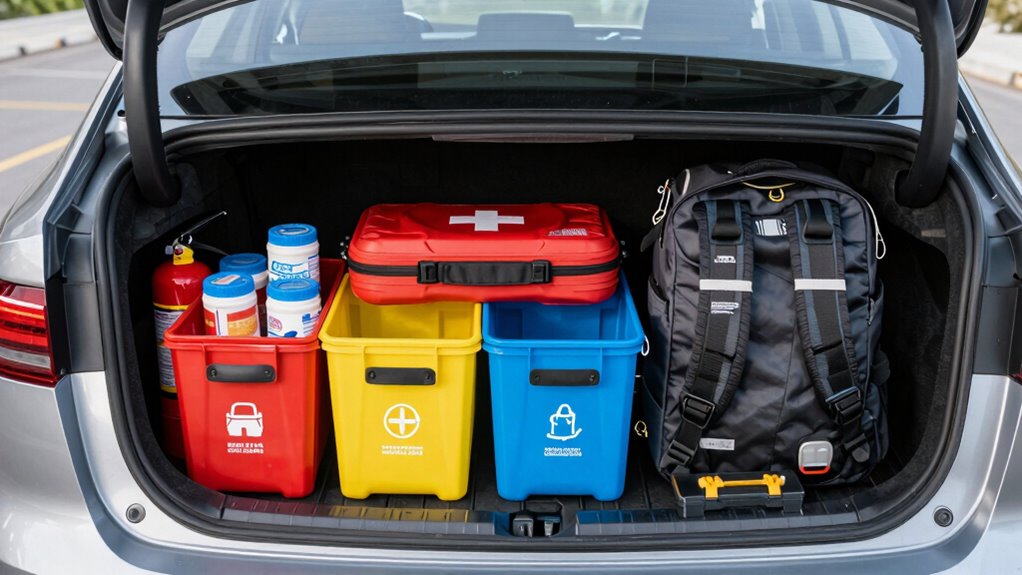

To pack a safer vehicle without turning it into a survival van, focus on organizing essentials in containers and securing valuables out of sight. Distribute heavy items low and close to the center to maintain balance, and use straps or nets to keep cargo from shifting. Keep your emergency kit accessible and store items in designated spots. Regularly check that everything stays secure during travel. For more tips on safe packing, explore the complete guide ahead.

Get travel and outdoor gear delivered free with Prime
- Fast, free delivery on millions of items
- Prime Video, Amazon Music and more included
- Member-only deals all year
Key Takeaways
- Organize items in secure containers or compartments to prevent shifting during travel.
- Distribute weight evenly, placing heavy items low and close to the vehicle’s center.
- Use straps or nets to firmly secure cargo and prevent movement.
- Keep emergency supplies accessible and stored out of sight to reduce theft risk.
- Regularly check that all cargo remains properly secured throughout your trip.
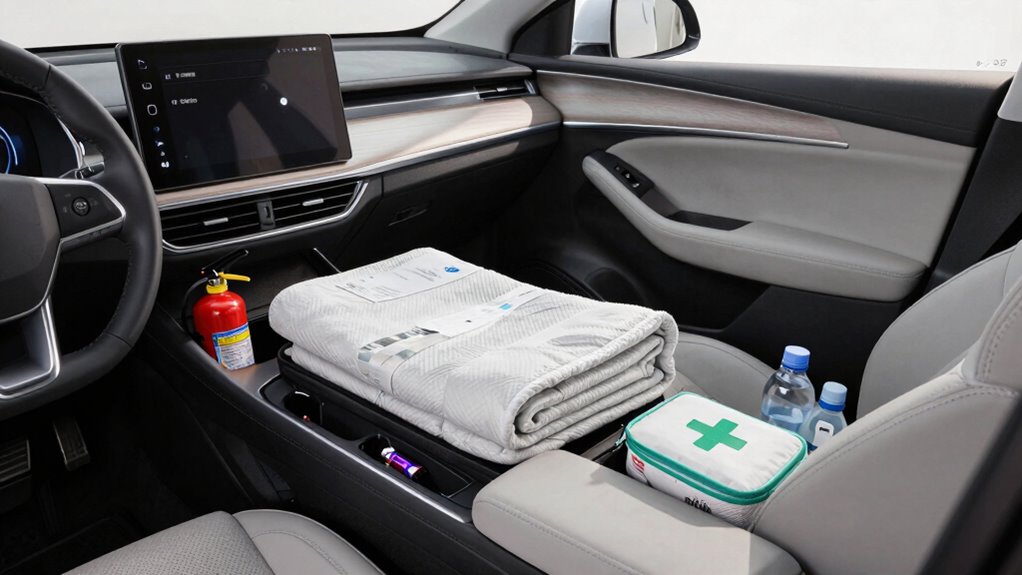
Packing your vehicle safely is vital to prevent injuries and damage during travel. When you’re on the road, your main goal is to keep yourself and your passengers protected, which starts with smart packing strategies. One of the most important steps is guaranteeing you have an emergency kit readily accessible. This kit should include basic items like a first aid kit, flashlight, batteries, bottled water, non-perishable snacks, and any necessary medications. Having an emergency kit in your vehicle means you’re prepared for unexpected situations, whether it’s a flat tire, a minor injury, or getting stuck in bad weather. Keep this kit in a secure and easily reachable spot, like the glove compartment or center console, so you can access it quickly without rummaging through your trunk.
Secure storage is vital when packing your vehicle. Loose items can become dangerous projectiles during sudden stops or accidents. To prevent this, use containers, bins, or compartments to keep everything organized and tightly packed. Avoid piling items loosely in the trunk or backseat, as they can shift and cause damage or injury. Items like luggage, sports gear, or grocery bags should be strapped down or placed in designated storage spaces to prevent movement. When you secure your storage, you also protect your belongings from theft—keeping valuables out of sight or locking them in compartments discourages theft attempts. Properly securing your cargo with straps or nets also helps maintain vehicle stability and handling. Additionally, proper cargo securing can significantly reduce the risk of accidents caused by shifting loads. Ensuring your cargo is properly secured is an essential aspect of safe packing that many overlook.
Balance your load across the vehicle to maintain stability and handling. Heavy items should be placed low and close to the center of the vehicle to lower the center of gravity. This not only improves driving safety but also prevents your car from becoming top-heavy or prone to rollover. Avoid overloading your vehicle; check your owner’s manual for weight limits and confirm you don’t exceed them. Properly securing your cargo with straps or nets ensures everything stays in place during turns or sudden stops, reducing the risk of accidents caused by shifting loads. Additionally, understanding vehicle weight limits can help you pack more safely and avoid potential damage. Being aware of your vehicle’s weight distribution can further enhance driving safety and vehicle longevity. Remember, a well-balanced load improves overall vehicle control and reduces driver fatigue during long trips.
As an affiliate, we earn on qualifying purchases.
Frequently Asked Questions
What Are the Legal Limits for Carrying Safety Gear in a Vehicle?
You need to check your state’s specific laws for carrying safety gear to guarantee legal compliance. Most states require emergency preparedness items like a first aid kit, warning triangles, and fire extinguishers to be on hand. Keep these items accessible without overloading your vehicle. Staying within legal limits helps you avoid fines and ensures you’re prepared for emergencies, making your vehicle safer without turning it into a survival van.
How Often Should Vehicle Safety Supplies Be Inspected or Replaced?
You should inspect your vehicle safety supplies at least every six months as part of your emergency preparedness routine. Regularly update your safety checklist to guarantee all items, like first aid kits, flashlights, and tools, are in good condition and not expired. Replace any worn or outdated supplies immediately to stay prepared for emergencies, and keep a record of inspections to track when replacements are needed, maintaining your vehicle’s safety readiness.
Can Adding Safety Features Void My Vehicle’s Warranty?
Adding safety features through custom modifications or aftermarket accessories can potentially void your vehicle’s warranty, but it depends on the manufacturer’s policies. Some brands are more lenient, while others strictly limit coverage if modifications cause damage or issues. Always research your vehicle’s warranty terms and consult with your dealer before installing aftermarket accessories. This way, you avoid unintentionally nullifying coverage and ensure your safety upgrades stay compliant.
What Items Are Considered Essential for Safety Without Overpacking?
You should prioritize essential safety items that support emergency preparedness without overpacking. Focus on a well-organized cargo setup with a first aid kit, flashlight, bottled water, and basic tools. Keep emergency supplies accessible but avoid clutter by using compartments or containers. This way, you’re ready for unexpected situations, maintaining safety and efficient cargo organization without turning your vehicle into a survival van.
How Do Weather Conditions Influence the Safety Packing List?
They say, “Prepare for the worst, hope for the best.” Weather conditions greatly influence your safety packing list. You should include weather preparedness items like rain gear, extra blankets, or sun protection based on seasonal changes. Seasonal gear, such as snow chains or cooling towels, guarantees you’re ready for sudden storms or heatwaves. Adjust your essentials accordingly, so you’re always equipped to handle whatever Mother Nature throws your way.
Conclusion
So, as you pack your vehicle, remember that safety isn’t just about what you carry but how you prepare. Think of your car as a fortress — every item adds a layer of protection. By staying organized and mindful, you’re not just securing your belongings; you’re safeguarding your journey. Ultimately, it’s not just about survival but about thriving on the road. After all, a prepared traveler is a confident traveler — ready for whatever comes next.
Halloween Picks
halloween
As an affiliate, we earn on qualifying purchases.