
Having a jump starter and tire inflator on hand is a smart way to handle roadside emergencies safely and efficiently. Make certain to understand how to operate each device properly, following safety guidelines like correct clamp connections and checking tire pressure regularly. Portability offers quick access during breakdowns, while safety features protect you from accidents. Planning ahead with these tools ensures you’re prepared for surprises on the road — keep exploring to learn how to use them confidently.
Key Takeaways
- Proper planning ensures safe and effective use of jump starters and tire inflators during roadside emergencies.
- Familiarity with device operation reduces stress and prevents accidents in urgent situations.
- Keeping portable, rechargeable tools ready enhances quick response and independence from roadside assistance.
- Regular maintenance and understanding safety features extend device lifespan and vehicle safety.
- Integrating these tools into your emergency kit improves overall vehicle preparedness and safety.
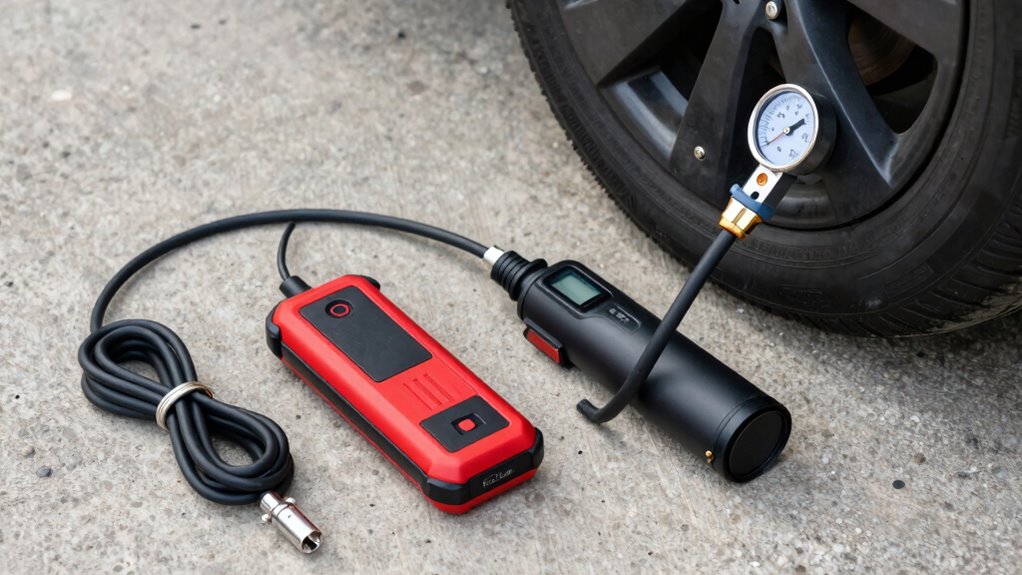
Have you ever been stranded with a dead car battery or a flat tire? If so, you know how frustrating it can be to find yourself stuck somewhere inconvenient, wishing you had the right tools on hand. That’s where jump starters and tire inflators come into play. These compact devices can save you time, money, and stress—if you plan ahead and know how to use them properly.
When it comes to jump starters, safety should be your top priority. Battery safety is essential because mishandling a car battery can lead to sparks, acid leaks, or even explosions. Before using a jump starter, make sure you read the instructions thoroughly. Always connect the clamps in the correct order—positive to positive, negative to negative—and verify your vehicle is turned off. Once connected, start your car promptly and remove the clamps in reverse order. Proper safety precautions can prevent accidents and protect your vehicle’s electrical system. Modern jump starters often feature built-in safety features such as overload protection and spark-proof clamps, making them safer and easier to use than older models. Plus, their portable design means you can store them in your glove box or trunk, ready for emergencies without taking up much space. Additionally, understanding battery safety is crucial to prevent accidents during use and storage. Knowing how to properly maintain and handle batteries can also extend their lifespan and ensure they function when needed.
Prioritize safety when using jump starters—follow instructions, connect clamps correctly, and use built-in safety features to prevent accidents.
The portable design of both jump starters and tire inflators makes them invaluable additions to your car emergency kit. Their lightweight, compact build allows you to keep them in your vehicle without cluttering your space. This portability means you can quickly access these tools when needed, rather than searching for a nearby gas station or roadside assistance. Many models even come with rechargeable batteries, so you can use them multiple times without needing an external power source. Having a reliable, portable device ensures you’re prepared for common roadside issues, especially on long trips or in remote areas. Furthermore, proper knowledge of emergency preparedness can enhance your ability to handle unexpected vehicle problems safely and efficiently. Being familiar with how these devices work and practicing their use can make a significant difference during stressful situations.
Tire inflators are equally essential and straightforward to operate. They help you maintain proper tire pressure, which improves fuel efficiency, extends tire life, and enhances safety. Modern tire inflators often have digital pressure gauges, allowing you to check your tire pressure precisely before and after inflation. Some models are cordless, powered by rechargeable batteries, and designed to fit easily into your trunk or glove compartment. With a little planning, you can keep your inflator ready to use anytime, making sure your tires are always at perfect pressure and avoiding sudden flats or blowouts. Properly maintaining your tires with tire pressure is a simple yet vital step in vehicle safety and performance.
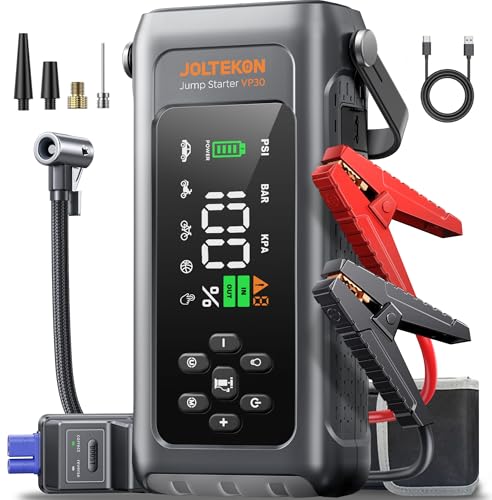
JOLTEKON Car Battery Jump Starter with Air Compressor 4500A 150PSI, Car Jumper Starter Portable (9L Gas/8L Diesel), Jump Box Car Battery with Auto-Shutoff Tire Inflator, Jumper Cables and Light
- 8-in-1 Multi-Function Device: Jump starter, air compressor, power bank, flashlight, SOS, warning lights
- Powerful Starting Capability: 4500A force start for dead batteries
- Universal Compatibility: Suitable for cars, trucks, motorcycles, boats
As an affiliate, we earn on qualifying purchases.
As an affiliate, we earn on qualifying purchases.
Frequently Asked Questions
How Long Do Jump Starters Typically Last on a Single Charge?
A jump starter typically lasts for about 10 to 20 successful jumps on a single charge, depending on its battery capacity. Higher-capacity models can handle more jumps before needing a recharge. Keep in mind, frequent charging cycles can reduce overall battery life, so it’s wise to recharge your jump starter after each use. Proper maintenance guarantees your device stays reliable when you need it most.
Can Tire Inflators Be Used for Bike or Motorcycle Tires?
Think of your tire inflator as a versatile key, opening different vehicle doors. Yes, you can use it for bike compatibility and motorcycle tires. Just make certain it has the right power and nozzle size for smaller tires. Keep in mind, some inflators may lack the precision needed for delicate bike or motorcycle tires, so double-check the specifications before use. This way, you’re ready for any ride, big or small.
Are Portable Jump Starters Safe to Store in Extreme Temperatures?
Portable jump starters are generally safe to store in extreme temperatures if you consider battery safety and proper storage conditions. Avoid exposing them to excessive heat or cold, as extreme temperatures can damage the battery or reduce its lifespan. Keep the device in a cool, dry place, and guarantee it’s fully charged before storage. Proper storage conditions help maintain the jump starter’s effectiveness and safety over time.
Do Tire Inflators Require Additional Accessories for Different Valve Types?
Imagine your tire inflator ready, but you’re faced with different valve types; you’ll need valve adapters to connect properly. Most inflators require these adapters for Schrader or Presta valves. Without them, achieving your desired inflation pressure becomes a challenge. So, keep a set of valve adapters handy, ensuring you can quickly switch and maintain the best pressure, no matter your tire’s valve type.
How Often Should I Maintain or Check My Jump Starter’s Battery?
You should check your jump starter’s battery every 3 to 6 months to guarantee peak battery longevity. Regularly monitor the charging frequency, especially if you rarely use it, and recharge it when it drops below 50%. Proper maintenance prevents battery deterioration and ensures your device’s ready when you need it. Keeping a close eye on the battery helps extend its lifespan and guarantees reliable performance during emergencies.
Conclusion
Think of jump starters and tire inflators as your trusted compass and lantern—guiding you safely through the uncertain roads ahead. With a little planning, these tools become symbols of preparedness, shining a light on potential setbacks before they strike. When you equip yourself with them, you’re not just ready for emergencies; you’re embracing confidence, illuminating your journey, and steering through life’s twists with resilience and peace of mind.