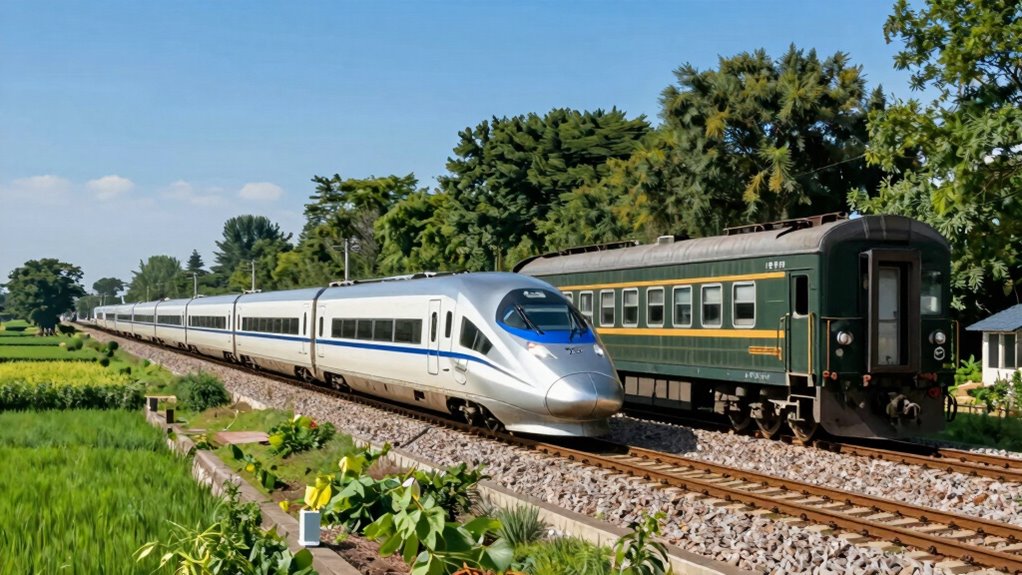

If you’re wondering which rail option is greener, it largely depends on the energy sources behind each system. Both regional and high-speed trains can be eco-friendly if powered by renewable energy like wind or solar. Short trips favor regional rail, which uses less energy, while long journeys are better suited for high-speed trains that can replace more polluting modes like air travel. To discover how infrastructure and technology influence sustainability, keep exploring these factors further.
Key Takeaways
- Both types can be environmentally friendly if powered by renewable energy sources like wind or solar.
- Regional rail is more energy-efficient for short trips, reducing emissions per passenger.
- High-speed rail is greener over long distances, replacing higher-emission air travel.
- Infrastructure upgrades and smart energy management enhance sustainability for both rail types.
- The overall greenness depends on the energy mix behind the train’s power, not just the rail type.
What Are Regional Rail and High-Speed Rail? An Overview
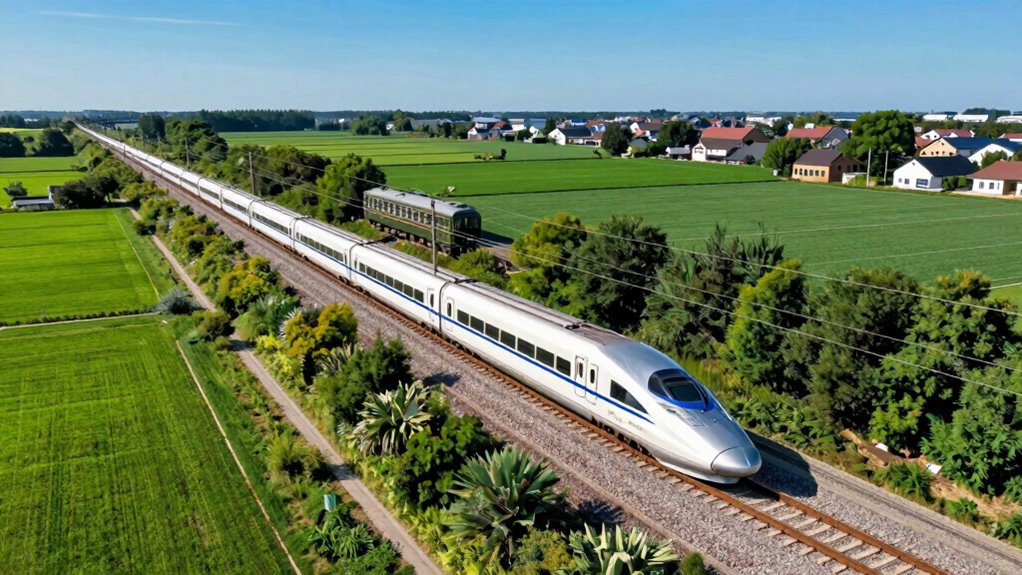
Have you ever wondered how different train systems connect cities and regions? Regional rail and high-speed rail serve distinct purposes within rail network design. Regional rail typically links suburbs and smaller towns to larger cities, emphasizing frequent stops and reliable service. It’s designed for daily commuters, focusing on passenger comfort during short to medium trips. High-speed rail, on the other hand, connects major cities over longer distances at much greater speeds, often with fewer stops. Its design prioritizes speed and efficiency, offering a smooth, comfortable ride with modern amenities. Both systems are vital parts of an extensive transportation network, but they differ markedly in purpose, speed, and passenger experience. Understanding these differences helps reveal how rail infrastructure shapes regional connectivity and train network design. Additionally, considerations such as energy consumption and environmental impact are increasingly factored into the development of these systems, making sustainable transportation a key focus for future rail projects. Moreover, advancements in rail infrastructure technology aim to reduce energy use and improve environmental performance across both types of systems.
How Do Energy Sources and Infrastructure Shape Rail Travel’s Environmental Impact
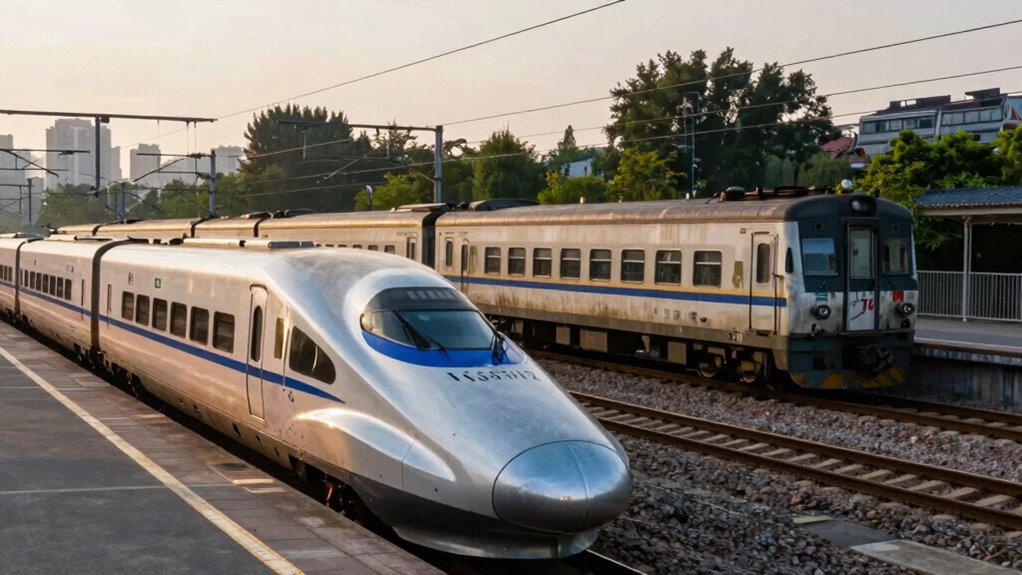
Energy sources and infrastructure considerably influence the environmental impact of rail travel. When your rail system relies on renewable energy, such as wind or solar power, it notably reduces carbon emissions and makes the journey greener. The type of infrastructure development also matters; modern, efficient tracks and stations minimize energy loss and improve sustainability. Upgrading existing infrastructure to support renewable energy integration enhances environmental benefits, while poorly maintained or outdated systems increase energy consumption and emissions. Additionally, electrified rail networks powered by clean energy sources are far more environmentally friendly than diesel-powered trains. Your choices in energy sourcing and infrastructure investment directly shape the overall sustainability of rail travel, determining whether it’s a low-impact transportation option or one with higher ecological costs. Implementing smart infrastructure can further optimize energy use and reduce environmental footprints in rail systems, especially with integrated energy management.
Which Rail Mode Is Greener for Short Trips and Long Journeys?
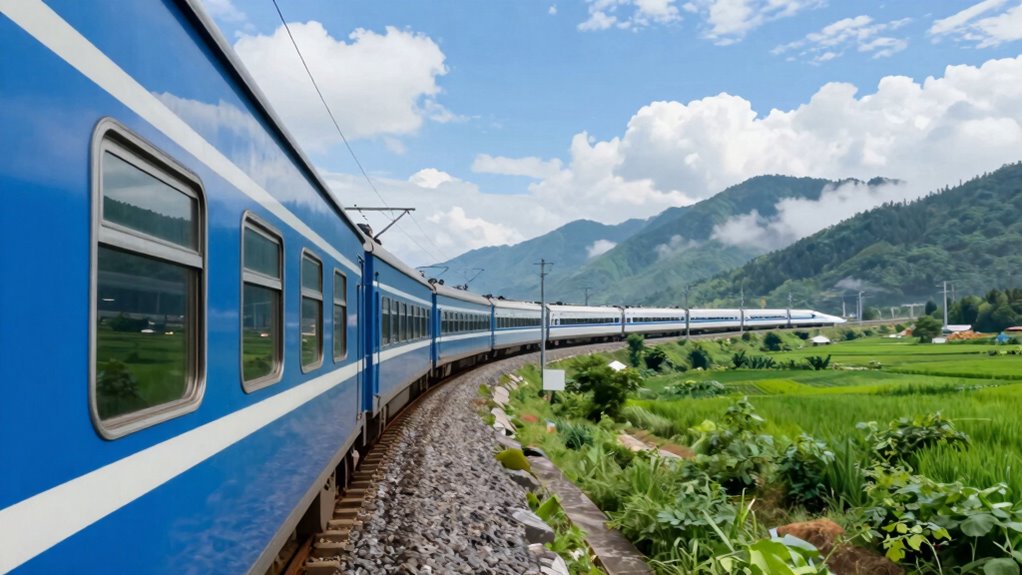
When comparing regional and high-speed rail, energy efficiency plays a big role in how green each option is. You’ll want to contemplate how emissions differ depending on trip length and train technology. Understanding these factors helps you see which mode minimizes environmental impact for short and long journeys. Additionally, energy consumption in different train types influences overall sustainability, making it a crucial aspect to consider. Moreover, soundscapes and immersive audio in advertising demonstrate how engaging multimedia can influence perceptions of technology and sustainability. Recognizing that modern trains often incorporate energy-saving technologies can further enhance their environmental benefits. Furthermore, advances in train design can lead to improved efficiency and lower emissions across different rail systems. Innovations in rail infrastructure also contribute significantly to reducing the overall carbon footprint of rail travel.
Energy Efficiency Differences
Determining which rail mode is greener depends heavily on trip length, as energy efficiency varies between regional and high-speed trains. Regional trains generally use less energy per mile for short trips, thanks to their lighter weight and lower speeds, making them more compatible with renewable energy sources and energy storage solutions. High-speed trains, although faster, consume more energy for shorter journeys due to their higher power demands and aerodynamic resistance. Over longer distances, high-speed rail becomes more efficient because its greater speed offsets energy costs, especially when powered by renewable energy and optimized energy storage systems. Both modes can improve their energy efficiency by integrating renewable energy sources and advanced energy storage, helping reduce overall environmental impact regardless of trip length.
Emissions Impact Factors
The emissions impact of regional versus high-speed rail depends largely on trip length and how each mode’s emissions are measured. For short trips, regional rail often has lower emissions per passenger because it consumes less energy and typically offers better ticket pricing, encouraging more ridership and reducing car use. However, for longer journeys, high-speed rail tends to be greener since its energy efficiency improves with distance, and it can replace higher-emission air travel. Passenger comfort also influences emissions; more comfortable trains attract more passengers, spreading emissions over larger numbers. Ultimately, the mode that’s greener depends on trip length, energy sources, and how you weigh factors like ticket pricing and passenger comfort, which can affect overall ridership and sustainability.
How Do Technology and Operating Efficiency Make Rail Travel More Eco-Friendly
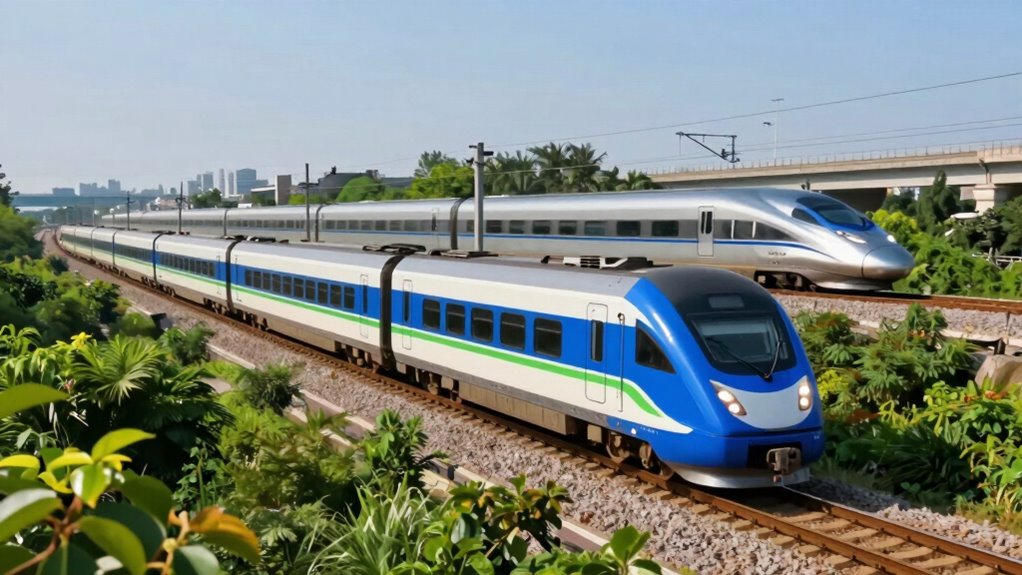
Advances in propulsion tech help trains use less energy and produce fewer emissions, making rail travel greener. When operators optimize their routines, they reduce costs and environmental impact simultaneously. These innovations guarantee railways become more sustainable choices for everyday travel. Additionally, smart appliance technology can be integrated into station operations to further enhance efficiency and reduce waste. Incorporating energy-efficient systems in stations can also contribute significantly to overall environmental benefits. Moreover, implementing free floating strategies in rail networks can optimize scheduling and reduce unnecessary energy consumption. Understanding heat distribution and material properties can further improve the efficiency of train components, leading to even lower emissions. Furthermore, adopting efficient maintenance practices can prolong the lifespan of rail infrastructure while minimizing resource use.
Advanced Propulsion Technologies
Modern rail systems are increasingly adopting advanced propulsion technologies that considerably reduce environmental impact. Battery innovation plays a key role, enabling trains to run on stored energy without relying solely on traditional power sources. These batteries are becoming more efficient and longer-lasting, making electric trains more sustainable. Additionally, integrating renewable energy sources like solar and wind into the power grid allows trains to operate with a greener energy mix. This shift reduces greenhouse gas emissions and decreases reliance on fossil fuels. By leveraging these technologies, rail systems can achieve higher operating efficiency, lowering their carbon footprint. Innovations in rail infrastructure further support sustainable operation, enhancing energy efficiency and reducing environmental impact. Furthermore, the adoption of wave and wind energy sources can provide supplementary power, making rail travel even more eco-friendly. As a result, you benefit from cleaner, more sustainable rail travel options that align with ongoing efforts to combat climate change and promote eco-friendly transportation. Additionally, ongoing research into alternative propulsion methods continues to push the boundaries of what is possible in sustainable rail travel.
Operational Cost Optimization
Ever wonder how technology boosts operational efficiency to make rail travel more eco-friendly? Modern systems enable precise scheduling optimization, reducing delays and unnecessary energy use. By streamlining train timetables, operators can minimize idle time and ensure smoother flows, lowering overall energy consumption. Advanced signaling and real-time monitoring help identify inefficiencies, allowing for targeted cost reduction strategies. These innovations cut operational costs and decrease the environmental impact by optimizing train speeds, reducing fuel consumption, and minimizing emissions. Additionally, predictive maintenance prevents breakdowns, keeping trains running efficiently and avoiding wasteful repairs. Automation technology plays a crucial role in enhancing efficiency and sustainability. Embracing energy management systems further improves operational efficiency by optimizing power usage across rail networks. Altogether, technology-driven operational cost optimization not only saves money but also makes rail travel greener, ensuring that energy is used more effectively and sustainably.
How Do Urban and Regional Planning Affect Rail Sustainability?

Urban and regional planning play a crucial role in shaping the sustainability of rail systems. When you prioritize urban density, you create compact areas where transit becomes more efficient and accessible. Higher density reduces travel distances, encouraging more people to choose rail over cars, which lowers emissions. Land use planning also influences rail sustainability by promoting mixed-use developments that integrate residential, commercial, and recreational spaces near transit stations. This integration increases ridership and decreases reliance on private vehicles. Thoughtful planning ensures that rail infrastructure supports sustainable growth, minimizes urban sprawl, and maximizes land efficiency. When you consider these factors in your planning efforts, you help build rail systems that are not only environmentally friendly but also socially and economically sustainable over the long term.
Which Rail Option Is the Most Environmentally Friendly for Your Travel Needs?
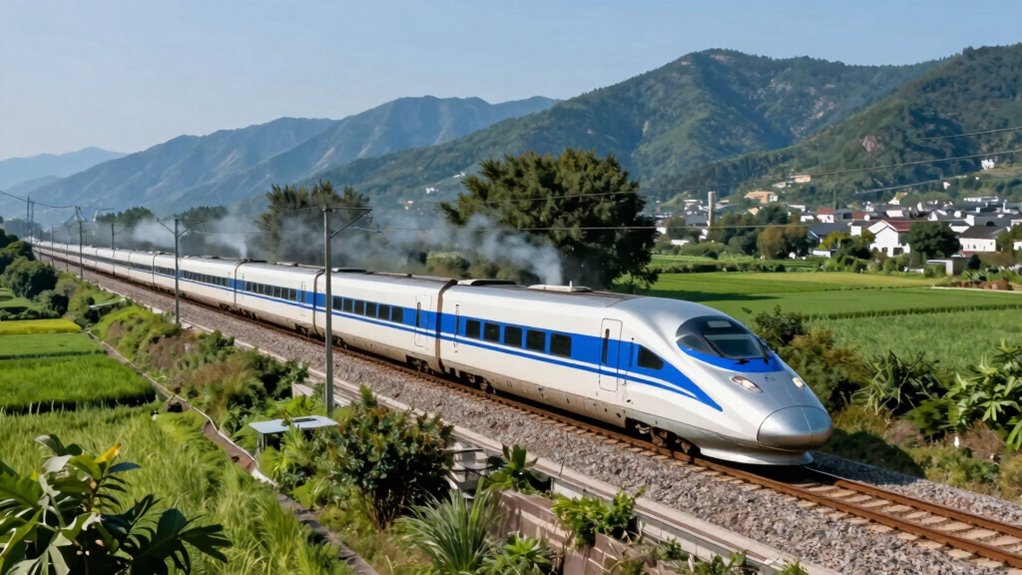
When considering the most environmentally friendly rail options for your travel needs, it’s important to look at how the energy sources and technology used by different systems impact the environment. High-speed rail often has a lower carbon footprint than traditional regional trains, especially when powered by renewable energy sources like wind or solar. Regional rail, while generally more energy-efficient per passenger, may rely on electricity generated from fossil fuels, increasing its carbon footprint. Ultimately, the greener choice depends on the energy mix behind the train’s power supply. If the system uses renewable energy, both regional and high-speed rail can be environmentally friendly. Your best option is to choose rail services powered by clean energy, reducing your overall environmental impact regardless of the train type.
Frequently Asked Questions
How Do Maintenance Practices Influence Rail Environmental Sustainability?
Your maintenance practices directly impact rail sustainability. Regular track maintenance guarantees smoother, more efficient operations, reducing energy consumption and emissions. Implementing sustainability practices like eco-friendly materials and recycling old infrastructure minimizes environmental footprints. Proper maintenance also prolongs rail lifespan, decreasing resource use for replacements. By prioritizing track maintenance and sustainability practices, you help make rail transportation greener, lowering its overall environmental impact and supporting a more sustainable future.
What Role Do Government Policies Play in Promoting Greener Rail Options?
Government policies play a pivotal role in promoting greener rail options by establishing policy frameworks that encourage sustainable practices. You benefit when governments offer incentives like grants or tax breaks for eco-friendly technologies, which motivate rail operators to adopt cleaner energy sources and efficient maintenance routines. These policies help reduce emissions and boost the overall environmental sustainability of both regional and high-speed rail systems, making greener choices more accessible and attractive.
How Does Passenger Behavior Impact Rail Travel’s Ecological Footprint?
Your passenger behavior considerably impacts rail travel’s ecological footprint. By making behavioral shifts, like choosing more eco-friendly ticket options and traveling during off-peak hours, you can reduce energy consumption and emissions. When you favor sustainable ticket purchasing and plan your trips thoughtfully, you help lower the environmental impact of rail travel. Small changes in your habits can collectively make a big difference in making rail transportation greener.
Are There Innovations Reducing Energy Consumption in Rail Systems?
You’re in luck—rail systems are getting smarter with innovative energy-saving technologies like regenerative braking and efficient motors that cut down power use. Plus, more trains now incorporate sustainable materials, reducing their environmental impact. These innovations are a win-win, proving that even when the chips are down, the rail industry is committed to lowering its ecological footprint. Every step forward helps keep our planet greener and cleaner.
How Do Cross-Border Rail Projects Affect Regional Environmental Goals?
Cross-border rail projects substantially impact your regional environmental goals by fostering collaboration and setting unified environmental standards. When countries work together, they can implement cleaner technologies and optimize routes for energy efficiency. This cooperation reduces overall emissions and promotes sustainable development. By aligning standards, you guarantee that cross-border initiatives contribute positively to your broader environmental objectives, making rail transportation a greener and more integrated solution across borders.
Conclusion
Choosing between regional and high-speed rail depends on your travel needs and environmental priorities. Did you know that high-speed trains can be up to 30% more energy-efficient than traditional regional trains for long journeys? By considering factors like energy sources, technology, and planning, you can make greener choices. Ultimately, understanding these differences helps you travel more sustainably and reduce your carbon footprint, making a meaningful impact on our planet’s health with every trip you take.