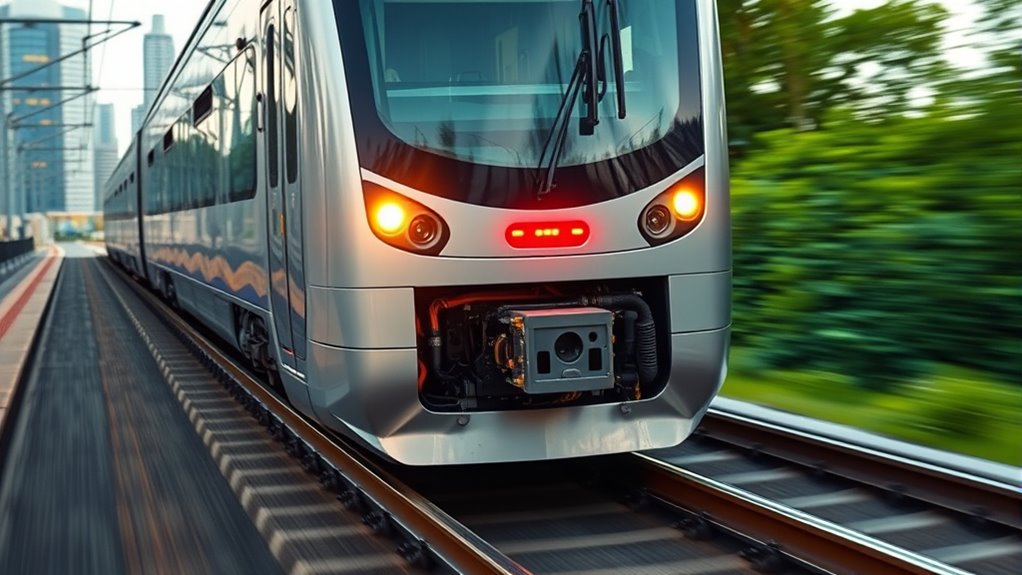

Regenerative braking in modern trains captures kinetic energy during deceleration, converting it into electrical power instead of heat. This process uses sensors and control systems to optimize energy recovery, which is then fed back into the train’s power system or stored for later use. It not only boosts energy efficiency and reduces emissions but also lowers operational costs and maintenance. To understand how this technology is transforming rail transport, keep exploring the details behind these innovative systems.
Key Takeaways
- Regenerative braking captures train kinetic energy during deceleration and converts it into electrical energy.
- Sensors and control systems optimize braking force for maximum energy recovery and safety.
- Recovered energy is fed back into the power system or stored for future use, improving efficiency.
- Advanced technologies like energy storage and wireless charging enhance overall system performance.
- Implementation involves infrastructure upgrades, making it more effective in modern, eco-friendly train operations.
How Regenerative Braking Works in Trains

Have you ever wondered how trains recover energy during braking? It all starts with train sensor integration, which continuously monitors your train’s speed, weight, and braking status. When you apply the brakes, sensors communicate with the train’s control system to optimize braking force, ensuring a smooth and efficient slowdown. Instead of wasting energy as heat, the system converts the kinetic energy into electrical energy through regenerative braking technology. This electricity is then fed back into the train’s power system or stored for later use, improving overall efficiency. By precisely adjusting braking force based on real-time data, the system maximizes energy recovery while maintaining safety and comfort. Additionally, home furnishings components like energy-efficient systems contribute to the overall sustainability of train operations. This seamless coordination between sensors and braking mechanisms is what makes regenerative braking so effective in modern trains.
Benefits of Energy Recovery in Rail Systems
Energy recovery makes train systems more efficient, helping you save power on each trip. It also reduces environmental impact by cutting down on emissions and energy waste. These benefits make modern rail systems more sustainable and cost-effective for everyone involved. Additionally, advancements in regenerative braking technology further enhance the overall performance of train systems.
Energy Efficiency Gains
Regenerative braking markedly boosts the energy efficiency of modern rail systems by capturing and reusing electricity that would otherwise be lost as heat. This recovered energy reduces overall power consumption, leading to lower operational costs and less strain on power plants. As a result, train maintenance becomes easier, since less wear occurs on braking components and electrical systems are better preserved. Additionally, because energy is reused efficiently, trains can accelerate more smoothly, enhancing passenger comfort during trips. You’ll notice a quieter, more stable ride with fewer abrupt stops and starts. This synergy between energy recovery and system performance not only saves money but also guarantees a more reliable, comfortable experience for passengers, making modern trains both eco-friendly and user-friendly. Enhanced system reliability ensures consistent operation, minimizing delays and disruptions.
Reduced Environmental Impact
Ever wondered how modern trains reduce their environmental footprint? Regenerative braking plays a key role by capturing energy that would otherwise be wasted. This recovered energy can be fed back into the train’s electrical system or stored for later use, decreasing reliance on non-renewable energy sources. By integrating energy recovery with renewable energy sources, trains contribute to a cleaner, greener urban infrastructure. This process cuts down on greenhouse gas emissions and reduces overall pollution, making city environments healthier. Additionally, it lessens the strain on power grids, supporting sustainable development. As you ride a modern train, you’re indirectly helping to promote eco-friendly transportation solutions that prioritize renewable energy and minimize environmental impact. Incorporating energy-efficient systems further enhances the sustainability of rail transit.
Technologies Behind Regenerative Braking Systems

Modern regenerative braking systems rely on advanced electrical and mechanical components that efficiently convert kinetic energy into usable electrical power. Key technologies include power inverters, energy storage systems, and control algorithms, which optimize energy capture and reuse. Some trains now feature wireless charging, allowing energy transfer without physical connectors, enhancing efficiency and safety. Aerodynamic design reduces drag, improving overall energy recovery during braking. These innovations work together to maximize energy savings and system performance. Additionally, the integration of smart control systems enables real-time adjustments to optimize energy utilization.
Impact on Energy Efficiency and Emissions
Regenerative braking considerably boosts energy recovery efficiency, helping trains use less power overall. This process also cuts greenhouse gas emissions by reducing reliance on external power sources. Additionally, it leads to operational cost savings, making train systems more sustainable and economical.
Energy Recovery Efficiency
How effectively trains recover and reuse braking energy directly influences their overall energy efficiency and environmental impact. The energy recovery efficiency depends heavily on train speed and braking force. Higher train speeds generate more kinetic energy during braking, offering greater potential for energy capture. Applying ideal braking force ensures maximum energy conversion without compromising safety or passenger comfort. Modern trains equipped with advanced regenerative systems can recover a significant portion of this energy, sometimes exceeding 70%. However, efficiency varies based on operational conditions, such as acceleration patterns and track infrastructure. When energy recovery is maximized, trains consume less electricity and emit fewer greenhouse gases. Energy recovery systems play a crucial role in enhancing sustainability by reducing energy waste and lowering overall carbon footprint.
Reduced Greenhouse Gases
Because trains recover and reuse braking energy effectively, they emit fewer greenhouse gases, making rail transportation more environmentally friendly. Regenerative braking reduces reliance on external power sources, cutting emissions from electricity generation. This not only benefits the environment but also lowers operational energy consumption. As a result, train maintenance becomes easier, since less strain is placed on braking systems and components, prolonging their lifespan. Additionally, passengers enjoy a smoother ride, with fewer abrupt stops and enhanced comfort. Reduced emissions contribute to cleaner air and healthier communities near rail lines. By minimizing greenhouse gases, modern trains support global efforts to combat climate change while promoting sustainable transit options. Incorporating advanced projector technology can further improve passenger experience and operational efficiency. Overall, regenerative braking considerably enhances the environmental profile of rail travel, benefiting both the planet and passenger experience.
Operational Cost Savings
Implementing regenerative braking markedly boosts energy efficiency and reduces operational costs for modern trains. By capturing and reuse of energy during braking, you lower reliance on external power sources, which decreases energy expenses. This system also reduces wear and tear on traditional brake components, leading to lower train maintenance costs. Enhanced energy efficiency contributes to overall savings, allowing operators to allocate resources more effectively. Additionally, regenerative braking can improve passenger comfort by providing smoother deceleration. As a result, your trains operate more efficiently and economically, with less environmental impact. These savings not only benefit your budget but also support sustainability goals, making regenerative braking a smart investment for modern rail systems.
Challenges and Limitations of Implementation
While regenerative braking offers clear benefits, its implementation faces several significant challenges. One major obstacle is the costly infrastructure required to capture and store the recovered energy. Upgrading existing tracks, installing power conversion systems, and integrating energy storage solutions demand substantial investment. Additionally, maintenance challenges arise because the new equipment and systems need regular upkeep to ensure reliability and safety. These components, such as batteries or supercapacitors, can be sensitive to environmental conditions and operational wear, increasing maintenance complexity and costs. Furthermore, not all rail networks are compatible with regenerative systems, limiting widespread adoption. These factors can slow down implementation, especially for older or less-funded rail systems, making it difficult to fully realize the technology’s potential benefits. High-quality equipment is essential to maximize efficiency and ensure safety in regenerative braking systems.
Future Trends and Developments in Rail Braking Technology
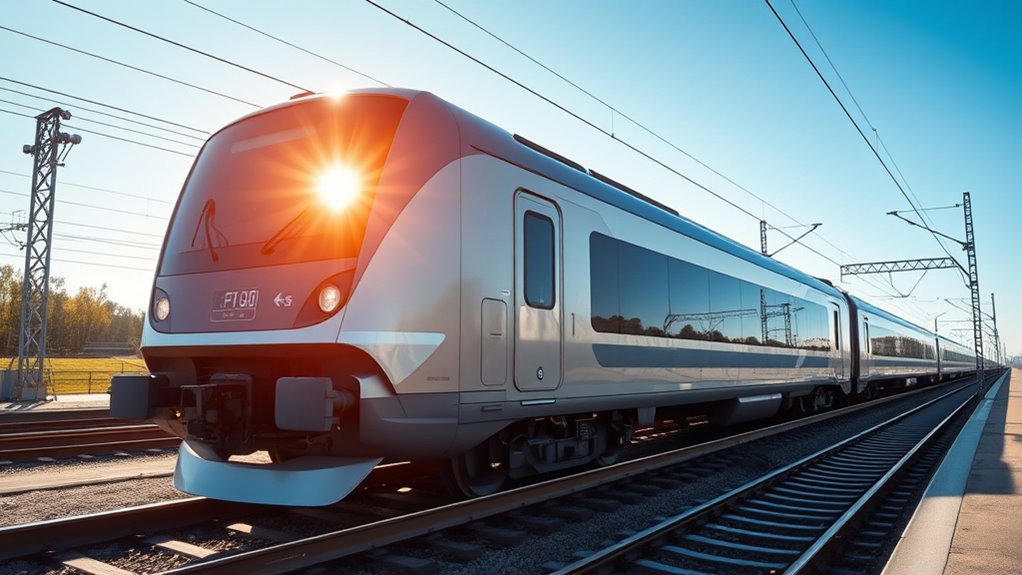
Advancements in rail braking technology are paving the way for more efficient and sustainable train systems. Future developments focus on integrating wireless systems for real-time monitoring and control, reducing wiring complexity and maintenance costs. These wireless solutions enhance safety by providing instant alerts when issues arise, enabling quicker responses. Additionally, brake sensor innovations are improving precision, allowing for smoother, more reliable braking performance. Sensors that detect minute changes in brake conditions help prevent failures and optimize energy recovery, especially in regenerative braking systems. As technology progresses, you’ll see smarter braking systems that adapt dynamically to train loads and track conditions. Furthermore, integrating AI security into these systems can help protect critical safety data from cyber threats. These trends aim to increase safety, reduce energy consumption, and streamline maintenance, making rail transport more sustainable and user-friendly.
Frequently Asked Questions
How Long Does It Take to Install Regenerative Braking Systems on Existing Trains?
You might wonder how long it takes to retrofit trains with regenerative braking systems. Typically, the retrofit timeline varies based on train type and existing infrastructure, often taking several weeks to months. Installation challenges include integrating new components with old systems and upgrading electrical parts. You should plan for a detailed process that involves testing and adjustments, ensuring safety and efficiency before the trains are back in service.
Are There Any Safety Concerns Associated With Regenerative Braking Technology?
You might wonder if regenerative braking introduces safety risks. Generally, it’s designed with robust emergency protocols and system reliability in mind, ensuring safe operation even during failures. While some concerns exist, proper maintenance and safety checks mitigate risks. You should feel confident that modern systems are thoroughly tested, allowing trains to harness energy efficiently without compromising safety or emergency response capabilities.
How Does Regenerative Braking Affect Train Maintenance Schedules?
Imagine your train as a well-oiled machine, where regenerative braking acts like a gentle gardener pruning unnecessary wear. It reduces strain on brake components, leading to less train component wear. As a result, maintenance scheduling becomes more predictable, with longer intervals between repairs. This technology helps you keep trains in top shape, saving time and costs, and ensuring smoother, safer journeys for everyone on board.
Can Regenerative Braking Be Integrated With Other Train Energy Systems?
You can integrate regenerative braking with other train energy systems by ensuring proper energy storage and system compatibility. When you do this, the stored energy from braking can efficiently power acceleration or other functions. It requires compatible components like batteries or supercapacitors and synchronized control systems. By focusing on these aspects, you optimize energy use, reduce costs, and improve overall train performance seamlessly.
What Are the Costs Involved in Retrofitting Trains With Regenerative Braking?
When considering retrofitting trains with regenerative braking, you need a thorough cost analysis to understand expenses. These costs include new equipment, installation, and potential train modifications. Funding sources vary and may involve government grants, private investments, or railway budgets. You should weigh these costs against long-term savings on energy and maintenance. Planning carefully guarantees you secure funding and maximize benefits, making the retrofit financially viable and environmentally friendly.
Conclusion
Now that you see how regenerative braking transforms trains into energy-saving marvels, do you imagine a future where every journey leaves no carbon footprint behind? By harnessing energy you once lost, these systems revolutionize rail travel, making it cleaner and more efficient. As technology advances, you can look forward to even smarter, greener trains that reduce emissions and conserve resources. Isn’t it exciting to think you’re riding on the cutting edge of sustainable transportation?