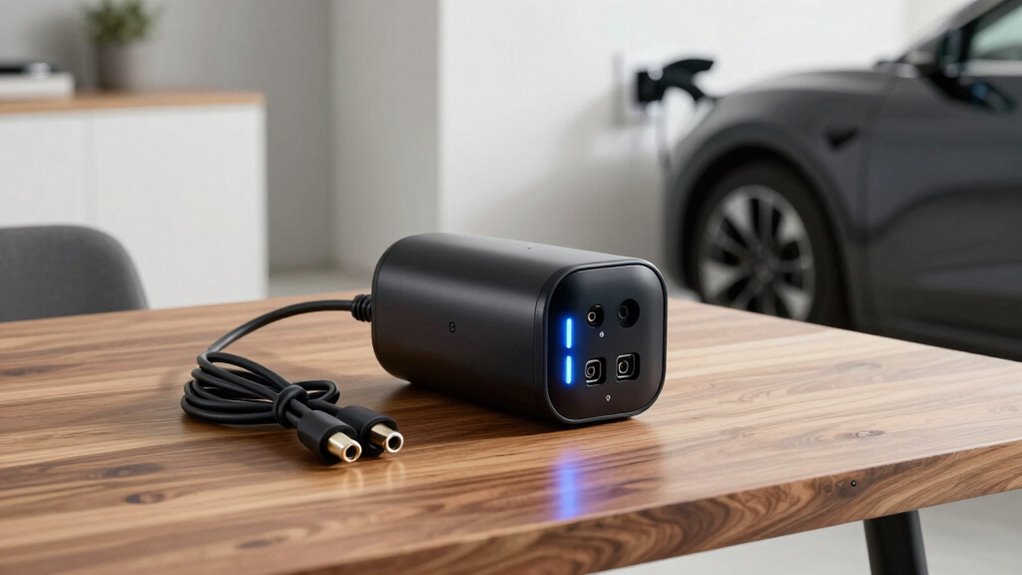

When choosing a portable EV charger, you want to check its charging speed, vehicle compatibility, and safety features. Make sure it matches your car’s plug type and available power sources. Look for durability and weather resistance if you’ll use it outdoors. User-friendly interfaces and clear displays help you monitor progress easily. Prioritize safety features like overcurrent protection, and ensure it’s lightweight for portability. Want to learn more? Keep exploring to find the perfect charger for your needs.
Key Takeaways
- Verify compatibility with your vehicle’s connector type and charging capacity.
- Check the charger’s wattage and charging speed to ensure it meets your needs.
- Ensure the charger has a clear, high-contrast display for easy readability.
- Confirm portability features like size, weight, and weather resistance for outdoor use.
- Review safety features such as overcurrent protection and thermal cutoff for reliable operation.
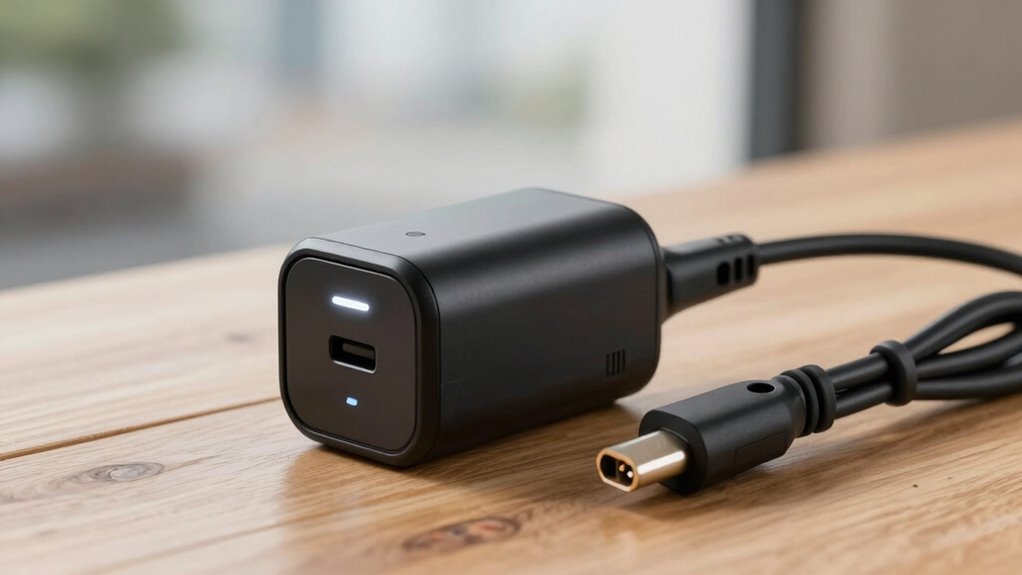
Ever wondered how to keep your electric vehicle charged on the go? Portable EV chargers are a game-changer, offering flexibility and convenience when you’re away from traditional charging stations. But before you make a purchase, it’s essential to consider a few key factors to guarantee you get the right one for your needs. One of the most important aspects is charging speed. You want a charger that can deliver power quickly enough to fit into your busy schedule. Some portable chargers provide slow, trickle charging, which might be fine for overnight top-ups but isn’t ideal if you need to charge in a shorter time frame. Look for options that specify higher charging speeds, typically measured in kilowatts (kW). A charger with a higher wattage output can replenish your battery faster, saving you time on the road. Keep in mind, however, that your vehicle’s compatibility will influence how effectively you can utilize these speeds. Not all EVs can take advantage of rapid charging, so verifying your car’s maximum charging capacity is essential to avoid overestimating what your portable charger can do. Additionally, ensuring the charger has a high contrast ratio can improve readability and ease of use in various lighting conditions, especially outdoors or in low-light environments.
Another critical factor is compatibility features. Your portable charger needs to work seamlessly with your specific EV model. Many chargers come with different connector types, such as Type 1 or Type 2, so double-check your vehicle’s inlet before buying. Compatibility also extends to the charging power supply. Some chargers are designed for standard household outlets, while others require a dedicated circuit or higher voltage sources. Ensuring that your portable charger matches your available power sources can prevent awkward situations or the need for additional adapters. Additionally, consider whether the charger offers adjustable power settings or smart features that communicate with your vehicle. These features can optimize charging efficiency and provide real-time information about the process, giving you better control and peace of mind.
Portability itself is another aspect to evaluate. A compact, lightweight design makes it easier to carry and store, especially if you frequently travel or camp. Durability matters too—look for chargers with weather-resistant casings if you plan to use them outdoors or in varying environments. Safety features shouldn’t be overlooked either; overcurrent protection, thermal cutoff, and robust insulation are essential to prevent accidents or damage to your vehicle and the charger.
Frequently Asked Questions
What Are the Safety Features to Look for in Portable EV Chargers?
When choosing a portable EV charger, look for safety features like overcurrent protection to prevent electrical damage. Make certain it has a sturdy charging cable that resists wear and tear. Check for built-in safety mechanisms, such as ground fault protection, which safeguard against electrical faults. These features help you charge safely and reliably, giving you peace of mind during every use.
How Does Climate Affect Portable EV Charger Performance?
Climate impact can turn your portable EV charger into a temperamental performer. Harsh weather considerations, like freezing cold or scorching heat, affect its efficiency and longevity. Extreme temperatures strain internal components, causing potential malfunctions or reduced charging speed. To keep your charger humming smoothly, choose one with weather-resistant features and use protective covers in extreme conditions. By understanding climate effects, you’re ensuring reliable performance, no matter the weather’s mood swings.
Can Portable Chargers Be Used for Fast Charging?
Yes, some portable EV chargers can support fast charging capabilities, but you need to check charger compatibility first. Not all portable chargers are designed for rapid charging, so confirm the model you choose is compatible with your vehicle’s fast charging standards. Look for features like higher power output and compatibility with CCS or CHAdeMO connectors to maximize charging speed. Always verify these details before making a purchase.
Are There Size or Weight Restrictions for Portable EV Chargers?
You should consider size limitations and weight considerations when choosing a portable EV charger. Most models are designed to be compact and lightweight for easy transport, but larger or more powerful chargers may be heavier and less portable. Check the product specifications for size and weight to guarantee it fits your mobility needs. Keep in mind, a lighter charger might be easier to carry, but ensure it meets your power requirements too.
What Maintenance Is Required for Portable EV Chargers?
Think of your portable EV charger as a garden needing regular care. You should regularly inspect the cord for wear or damage, ensuring safe operation. To maximize battery longevity, keep the charger clean and dry, and store it properly when not in use. Periodic checks help prevent issues, prolonging its lifespan and keeping your charging experience smooth and reliable. Proper maintenance is key to getting the most out of your investment.
Conclusion
Think of a portable EV charger as your trusty sidekick on the road—ready to spring into action when you need it most. Before you buy, check for compatibility, power output, and durability to make certain it’s a reliable companion. With the right charger in your toolkit, you’ll navigate your journeys smoothly, no matter the terrain. Don’t leave your adventure to chance—equip yourself wisely and keep your electric journey flowing like a well-oiled machine.