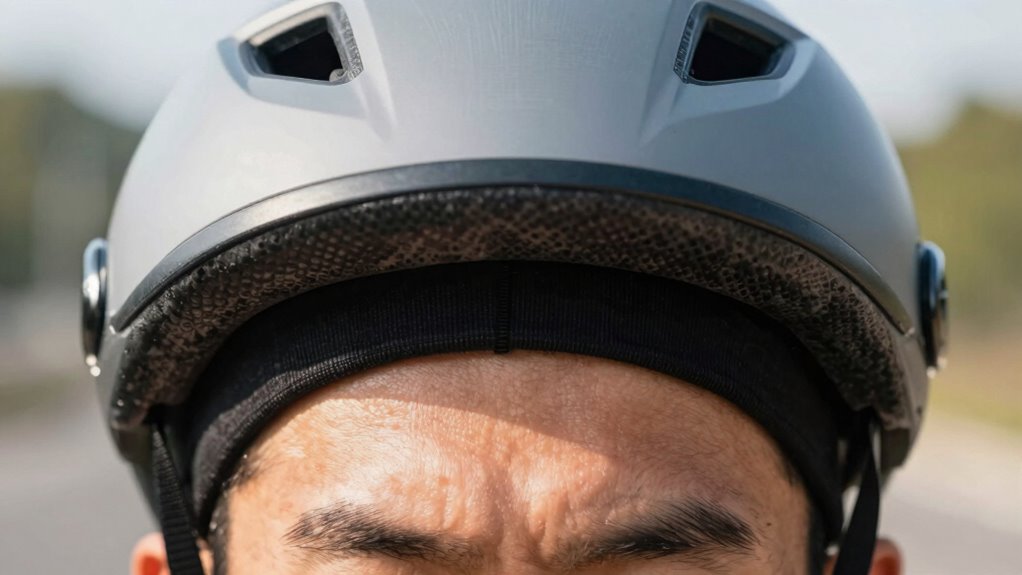

To guarantee your helmet fits properly in just two minutes, start by placing it level on your head so it covers your forehead comfortably. Tighten the straps so there’s only room for one or two fingers beneath the chin strap, forming a snug “V” shape. Shake your head to check it stays in place, with no shifting or pressure points. Want to know how to perfect your helmet fit in seconds? Keep going for more tips.
Key Takeaways
- Ensure the helmet sits level on your head, covering the forehead without tilting forward or backward.
- Check that the helmet feels snug but not painfully tight, requiring minimal force to fit.
- Fasten the chin strap snugly, leaving one or two fingers’ space under the strap.
- Shake your head; the helmet should stay securely in place without excessive shifting.
- Look for comfort without pressure points or discomfort during normal riding motions.
Have you ever wondered if your helmet fits properly? Many riders overlook this crucial step, but ensuring a good fit is essential for helmet safety. A helmet that’s too loose or too tight can compromise its ability to protect you in a crash. The good news is, fitting your helmet correctly doesn’t take much time—just two minutes—and it can make all the difference during an accident. Proper helmet maintenance and fit go hand in hand; a helmet that fits well will also be easier to keep in good condition.
Start by wearing your helmet as you normally would while riding. It should sit level on your head, covering your forehead without tilting backwards or forward. The helmet should feel snug, but not painfully tight. You shouldn’t have to force it down or feel significant pressure points. When you shake or move your head, the helmet should stay securely in place without shifting excessively. This indicates it’s snug enough to absorb impact but comfortable enough to wear for extended periods. If it slides around easily, it’s too loose, and you should consider adjusting the fit or trying a different size or model.
Ensure your helmet sits level, snug but comfortable, without shifting when you move your head.
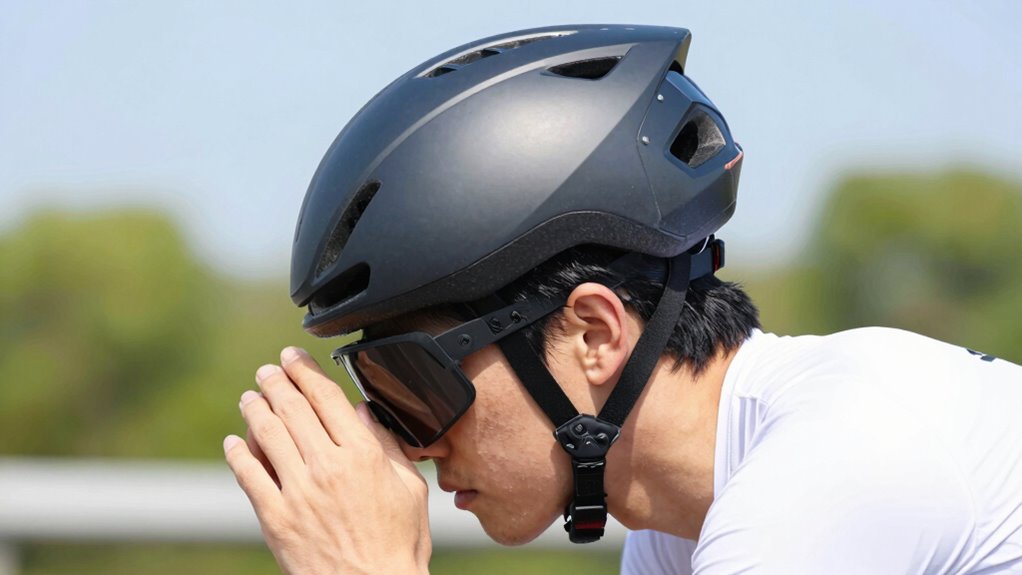
Next, check the straps. They must be fastened snugly under your chin, with just enough room to fit one or two fingers between the strap and your chin. If the straps are loose, the helmet can move around during a crash, reducing its effectiveness. Also, ensure the straps form a “V” shape just below your ears and that the buckle sits comfortably under your chin. This simple check ensures your helmet remains in the correct position during a fall.
Maintaining your helmet is equally important to helmet safety. Regularly inspect it for cracks, dents, or other signs of damage. Even a minor impact can compromise its protective integrity. Replace your helmet if it’s been involved in a crash or if it shows signs of wear. Keep it clean by wiping it down with mild soap and water; avoid using harsh chemicals that can weaken the materials. Store it in a cool, dry place away from direct sunlight, which can degrade the shell and foam over time. Additionally, be aware that helmet fit is crucial for optimal protection, as a poorly fitting helmet may not absorb impacts effectively. Remember, a well-maintained helmet that fits properly offers ideal protection, so don’t neglect either aspect.
Taking just two minutes to perform a quick fit check and routine helmet maintenance can dramatically improve your safety on every ride. It’s a small investment of time that can save you from serious injury. Your helmet should feel comfortable, secure, and ready to shield you when you need it most. Never underestimate the importance of proper helmet safety and maintenance—your head’s safety depends on it.
Frequently Asked Questions
How Often Should I Recheck My Helmet Fit?
You should recheck your helmet comfort and sizing every few months, especially if you notice any changes in fit or after a crash. Your head can change over time, affecting how securely your helmet fits. Always make certain your helmet feels snug but comfortable, with no pressure points. Regularly verifying the fit helps keep your head safe and comfortable, so don’t skip this quick check even if your helmet seems fine.
Can Helmet Padding Be Adjusted for a Better Fit?
Yes, helmet padding can be adjusted for a better fit. You can add or remove helmet padding to customize your fit, ensuring it’s snug but comfortable. Fit adjustment with padding helps distribute pressure evenly, enhances stability, and improves safety. Always check that the padding isn’t too tight or loose, and replace worn padding as needed. Proper fit adjustment makes your helmet more comfortable and effective on every ride.
What Signs Indicate My Helmet Is Too Tight?
If your helmet feels too tight, you’ll notice discomfort, pressure on your temples or forehead, and possibly headaches. Check your helmet padding; it shouldn’t press too hard against your head. Also, make certain the chin strap tension isn’t too tight, causing pinching or restricting movement. A proper fit feels snug but comfortable, with padding and strap tension balanced so your helmet stays secure without causing pain.
Does Helmet Fit Change With Temperature?
Yes, helmet fit can alter with temperature because of helmet material. When it’s hot, your helmet might feel looser due to sweat and expansion, while cold weather can make it feel tighter as materials contract. Helmet color can also impact how hot it gets, affecting comfort and fit. Always check your helmet periodically, especially in extreme weather, to guarantee it stays snug and safe.
Is a Slightly Loose Helmet Safer Than a Tight One?
A slightly loose helmet is like a sail that flaps in the wind—less stable, and less safe. You want your helmet to fit snugly to stay in place during a crash. While helmet material and weight matter, a tight fit ensures maximum protection. Too loose, and it shifts; too tight, and it becomes uncomfortable. Aim for a fit that’s firm but not painful, giving you both safety and comfort.
Conclusion
A proper helmet fit can be the difference between safety and injury, so don’t skip the simple 2-minute test. Did you know that nearly 80% of riders wear helmets that don’t fit correctly? Taking just two minutes to make certain a snug, comfortable fit can vastly improve your protection and confidence on the road. Remember, a well-fitted helmet isn’t an option—it’s your first line of defense every time you ride.