Green airport design innovations focus on integrating renewable energy sources like solar panels and wind turbines to reduce reliance on fossil fuels. They use sustainable materials, such as recycled steel and biodegradable composites, and incorporate smart systems for energy and water management. Biophilic elements like green spaces and water features improve passenger experience and air quality. Waste reduction and recycling efforts further boost sustainability. Continue exploring these strategies to discover how they shape the future of eco-friendly airports.
Key Takeaways
- Integration of solar panels, wind turbines, and energy storage systems to maximize renewable energy use and reduce carbon emissions.
- Incorporation of green spaces, biophilic design, and natural materials to enhance air quality, acoustics, and passenger well-being.
- Implementation of rainwater harvesting and efficient fixtures to conserve water and improve stormwater management.
- Adoption of waste reduction strategies like recycling, composting, and circular economy practices to minimize environmental impact.
- Utilization of smart technologies such as predictive maintenance and automated systems to optimize operational efficiency and sustainability.
Incorporating Renewable Energy Sources

To reduce their environmental impact, airports are increasingly adopting renewable energy sources. You’ll notice many airports integrating solar panels on rooftops and open spaces, harnessing sunlight to generate clean energy efficiently. Solar panel integration not only supplies power for airport operations but also reduces reliance on fossil fuels. Additionally, wind turbine installation is gaining popularity, especially in open areas with strong, consistent winds. Wind turbines produce substantial energy, helping airports cut emissions and lower energy costs. By combining these strategies, airports become more sustainable, reducing their carbon footprint. Incorporating renewable energy technologies further enhances their eco-friendly initiatives. These innovations demonstrate a commitment to eco-friendly practices, ensuring that air travel becomes greener. Embracing solar and wind technologies positions airports as leaders in sustainable infrastructure development.
Sustainable Building Materials and Design
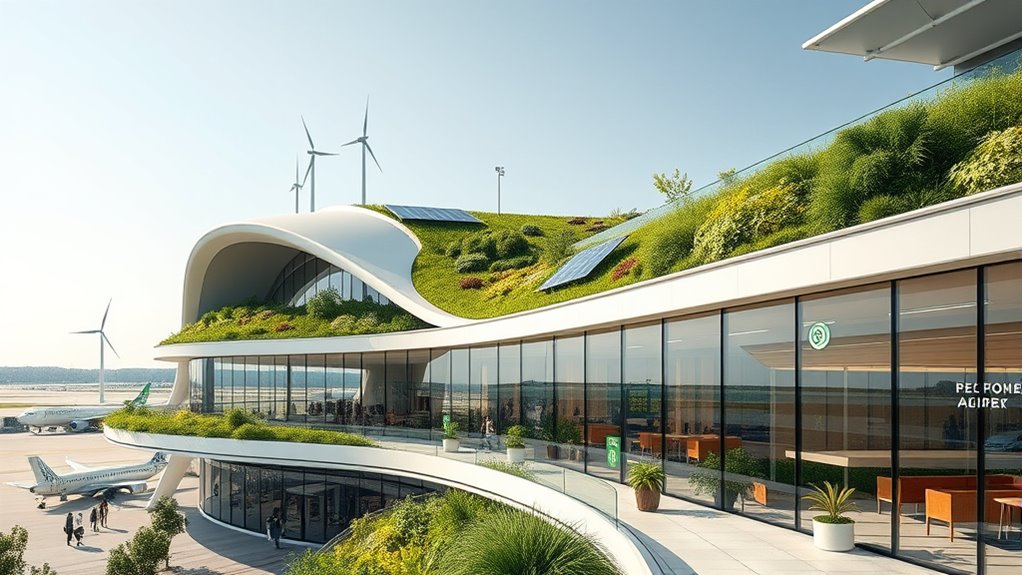
Innovative sustainable building materials and design practices are transforming airport infrastructure by reducing environmental impact and enhancing energy efficiency. You can incorporate biodegradable composites to create eco-friendly structures that decompose naturally, minimizing waste. These materials are lightweight yet durable, helping lower energy consumption during construction and operation. Recycled steel offers another sustainable option, providing a strong, versatile material that reduces the need for virgin metal extraction. Using recycled steel not only cuts down on emissions but also promotes circular economy principles. When you select these materials, you contribute to a greener airport that minimizes resource depletion and waste. Sustainable design also involves optimizing natural light and airflow, further reducing energy use. Incorporating cybersecurity vulnerabilities considerations into the design ensures that digital infrastructure remains protected against emerging threats. Together, these practices create airports that are both environmentally responsible and economically viable.
Advanced Energy Management Systems
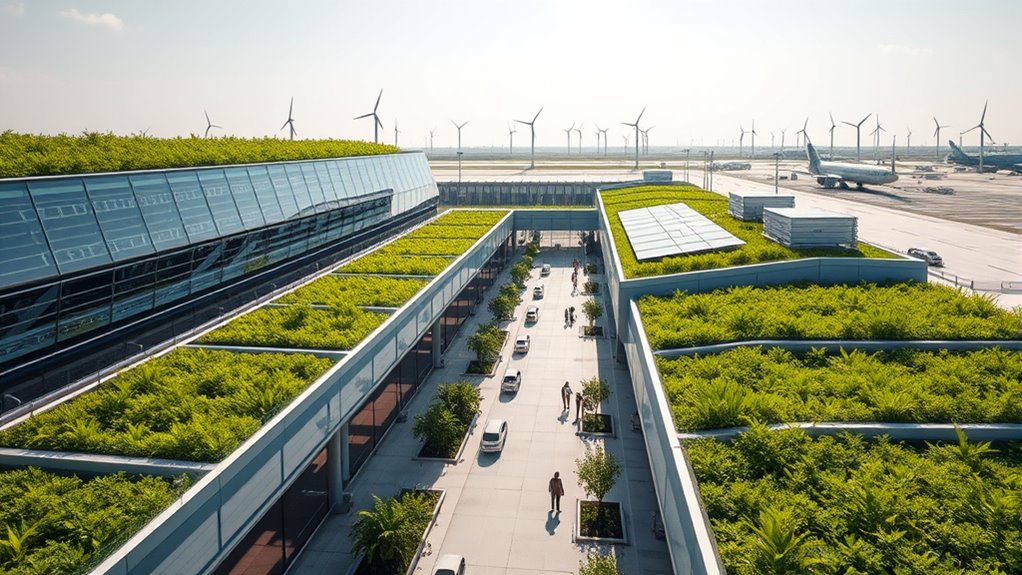
You’ll find that smart energy monitoring helps you track usage in real-time, making it easier to identify inefficiencies. Automated power controls adjust energy flow automatically, reducing waste without your intervention. Together, these systems optimize airport energy use, saving costs and supporting sustainability goals. Incorporating energy-efficient solutions can further enhance overall sustainability efforts by reducing environmental impact.
Smart Energy Monitoring
Smart energy monitoring has become a critical component of modern airport design, enabling facilities to optimize energy use and reduce operational costs. By tracking real-time energy consumption, you can identify inefficiencies and make data-driven adjustments. This system works seamlessly with solar panels, capturing renewable energy during the day, and with energy storage solutions to balance supply and demand. Modern systems also incorporate noise reduction technology, ensuring that operational adjustments do not contribute to noise pollution.
Consider these key aspects:
- Monitoring solar panel output to maximize renewable energy utilization.
- Integrating energy storage to store excess energy for later use.
- Using analytics to identify peak consumption periods and adjust operations.
- Ensuring seamless communication between energy sources and management systems for peak performance.
This approach helps you lower energy costs and supports sustainability goals effectively.
Automated Power Controls
Automated Power Controls, also known as Advanced Energy Management Systems, are transforming how airports regulate energy use. These systems integrate with a smart grid, allowing real-time monitoring and dynamic adjustments to energy consumption. By automating the control of lighting, HVAC, and other systems, you reduce waste and improve efficiency. Automated Power Controls also optimize energy storage, ensuring excess energy generated during low demand periods is stored for later use. This balance minimizes reliance on non-renewable sources and enhances overall sustainability. Incorporating Kia Tuning techniques into the design can further improve system responsiveness and adaptability. You benefit from lower operational costs, increased reliability, and a smaller carbon footprint. As airports adopt these advanced controls, they become more resilient and environmentally friendly, setting new standards for green infrastructure within the aviation industry.
Water Conservation and Management Strategies
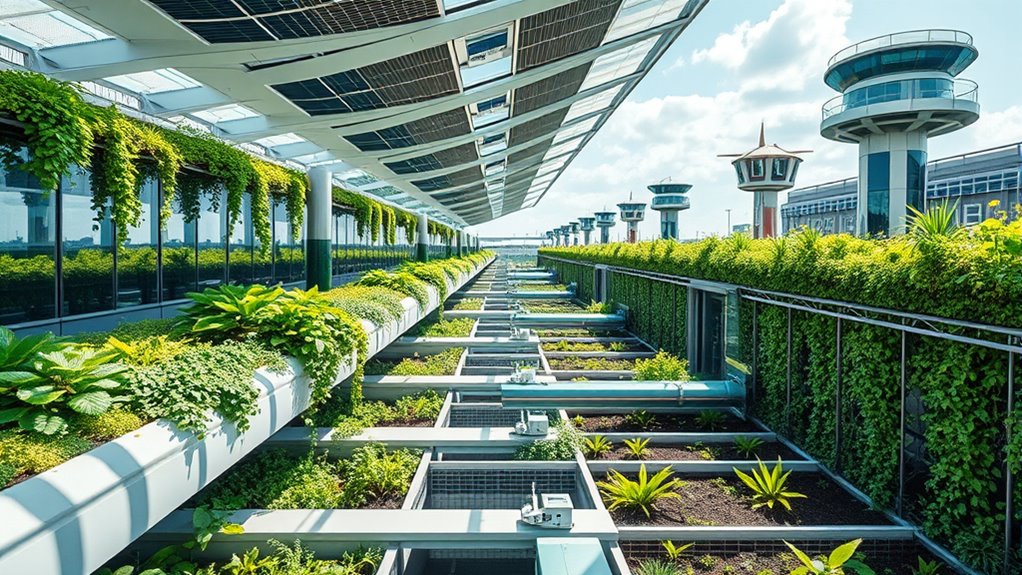
You can ensure reduce water use at airports by implementing rainwater harvesting techniques, capturing runoff for non-potable needs. Using efficient water fixtures, like low-flow toilets and faucets, helps conserve this valuable resource. Incorporating proper maintenance of water systems can prevent leaks and ensure optimal performance. Together, these strategies ensure smarter water management and sustainability in airport design.
Rainwater Harvesting Techniques
Rainwater harvesting has become an essential strategy in airport design, helping to conserve water and reduce reliance on municipal supplies. By capturing and storing rainwater, you can improve stormwater management and promote water recycling. Here are four key techniques:
- Installing large catchment surfaces like rooftops to maximize water collection.
- Using filtration systems to keep debris out of stored water.
- Creating underground reservoirs to store harvested rainwater safely.
- Integrating treatment systems to purify water for non-potable uses, such as irrigation and toilet flushing.
- Proper maintenance of maintenance protocols ensures the longevity and effectiveness of rainwater harvesting systems.
These methods not only reduce demand on local water sources but also help manage stormwater runoff efficiently. Implementing rainwater harvesting techniques makes airports more sustainable and resilient, aligning with green design principles.
Efficient Water Fixture Use
Implementing efficient water fixtures is a straightforward way to markedly reduce water consumption at airports. By installing water-saving fixtures, you minimize waste without sacrificing functionality. Low flow aerators are particularly effective, as they limit water flow while maintaining adequate pressure for handwashing and cleaning. These fixtures can substantially cut water use in restrooms and kitchens, lowering operational costs and conserving resources. Encourage staff and passengers to use these fixtures properly to maximize savings. Upgrading to water-saving fixtures also supports sustainability goals and reduces the airport’s environmental footprint. When choosing fixtures, prioritize durability and ease of maintenance to ensure long-term efficiency. Regular monitoring and maintenance practices help sustain water conservation efforts over time. Overall, integrating low flow aerators and other water-saving fixtures is a practical step toward responsible water management at your airport.
Green Spaces and Biophilic Design Elements

Have airport designs embraced green spaces and biophilic elements to enhance traveler experience and environmental sustainability? Yes. Incorporating gardens, green walls, and natural light improves indoor air quality and creates calming environments. These features also help with noise pollution mitigation by absorbing sound, reducing stress for travelers. Here are some effective strategies:
- Integrate indoor gardens to boost air quality and provide visual relief.
- Use natural materials and plant life for biophilic design, increasing comfort.
- Design open, green spaces that encourage relaxation and reduce noise distractions.
- Incorporate water features that promote serenity and improve acoustics.
Additionally, employing active listening techniques in the design process can ensure that passenger needs and feedback are effectively addressed to optimize the environment.
Innovative Waste Reduction and Recycling Practices

Innovative waste reduction and recycling practices are transforming airport operations by minimizing environmental impact and promoting sustainability. You’ll find composting initiatives that turn organic waste into useful compost, reducing landfill contributions. Trash sorting systems are also key, allowing for efficient separation of recyclables, compostables, and waste at various points throughout the airport. These systems encourage travelers and staff to participate actively in waste diversion efforts. By implementing clear signage and user-friendly bins, airports make recycling straightforward. Additionally, some airports partner with local recycling facilities to ensure maximum waste recovery. Incorporating workaholic tendencies into operational planning can further enhance efficiency and commitment to eco-friendly initiatives. These practices not only cut down on landfill waste but also set a standard for eco-friendly operations, demonstrating your commitment to environmental responsibility while enhancing the airport’s reputation as a sustainable hub.
Smart Technologies for Operational Efficiency
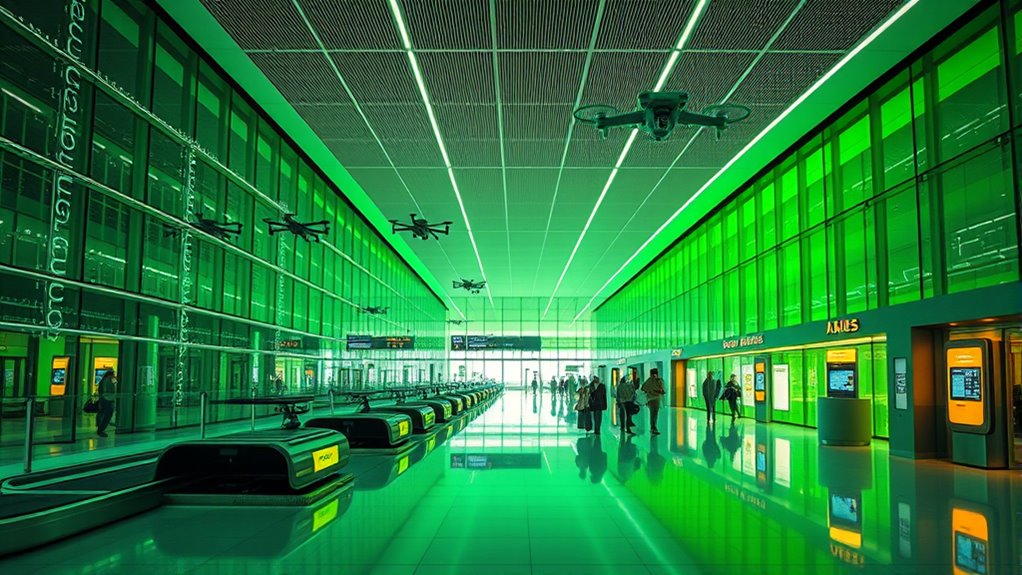
Smart technologies are revolutionizing airport operations by enhancing efficiency and reducing delays. You can now benefit from smart parking systems that optimize space use and guide travelers directly to available spots, saving time and fuel. Predictive maintenance tools analyze equipment data to anticipate failures before they happen, minimizing downtime and disruptions. These innovations streamline daily operations, making airports more sustainable and user-friendly.
Here are some key advancements:
- Smart parking reduces congestion and improves flow.
- Predictive maintenance prevents equipment breakdowns.
- Automated check-in systems speed up passenger processing.
- Real-time data analytics optimize resource allocation.
Frequently Asked Questions
How Do Green Airports Impact Passenger Experience and Satisfaction?
You’ll notice that green airports enhance your passenger experience by offering a more welcoming environment. Green aesthetics create a calming, visually pleasing atmosphere, reducing travel stress. Improved passenger comfort is achieved through better air quality, natural lighting, and eco-friendly design features. These elements make your journey more enjoyable, increasing satisfaction and encouraging positive perceptions of the airport. Ultimately, green airports foster a sense of well-being and environmental responsibility during your travels.
What Are the Cost Implications of Implementing Green Airport Innovations?
When considering the cost implications of green airport innovations, you should conduct a thorough cost analysis to understand initial investments and ongoing expenses. Although these upgrades may require substantial upfront costs, you’ll find significant economic benefits over time, including energy savings and reduced operational costs. Implementing eco-friendly features can boost your airport’s sustainability profile, attract more passengers, and ultimately improve profitability, making green innovations a smart financial move.
How Do Green Initiatives Influence Airport Security Protocols?
Green initiatives influence airport security protocols by encouraging sustainable security measures. You’ll find eco-friendly screening processes that reduce waste and energy use, aligning with sustainability goals. These innovations promote sustainable security practices, like using reusable materials and energy-efficient equipment. As a traveler, you benefit from streamlined, environmentally conscious procedures that maintain safety while minimizing environmental impact, demonstrating how security can be both effective and eco-friendly.
What Certifications or Standards Validate Green Airport Designs?
When you look into green airport designs, certifications like LEED and BREEAM validate their sustainability. These standards emphasize the use of sustainable materials and strict energy efficiency standards, ensuring the airport minimizes environmental impact. Achieving such certifications shows you’re committed to eco-friendly practices, helping you meet regulatory requirements and attract environmentally conscious travelers. These standards serve as reliable benchmarks for evaluating your airport’s sustainability performance effectively.
How Do Green Airports Adapt to Future Technological Advancements?
You can guarantee airports adapt to future technological advancements by focusing on sustainable infrastructure and renewable energy integration. This approach allows you to upgrade systems easily, incorporate new energy sources, and stay efficient as technology evolves. By designing flexible, modular systems, you enable the airport to implement innovations like smart sensors or green energy solutions without major overhauls, keeping it ahead of environmental and operational standards.
Conclusion
By embracing these green airport design innovations, you create a space as vibrant and efficient as a well-tuned ecosystem. Incorporating renewable energy, sustainable materials, and smart technology not only reduces environmental impact but also enhances passenger experience. Water conservation, green spaces, and waste management weave together a holistic approach, much like a lush, thriving garden. Together, these strategies transform airports into sustainable hubs that lead the way toward a greener, more responsible future.